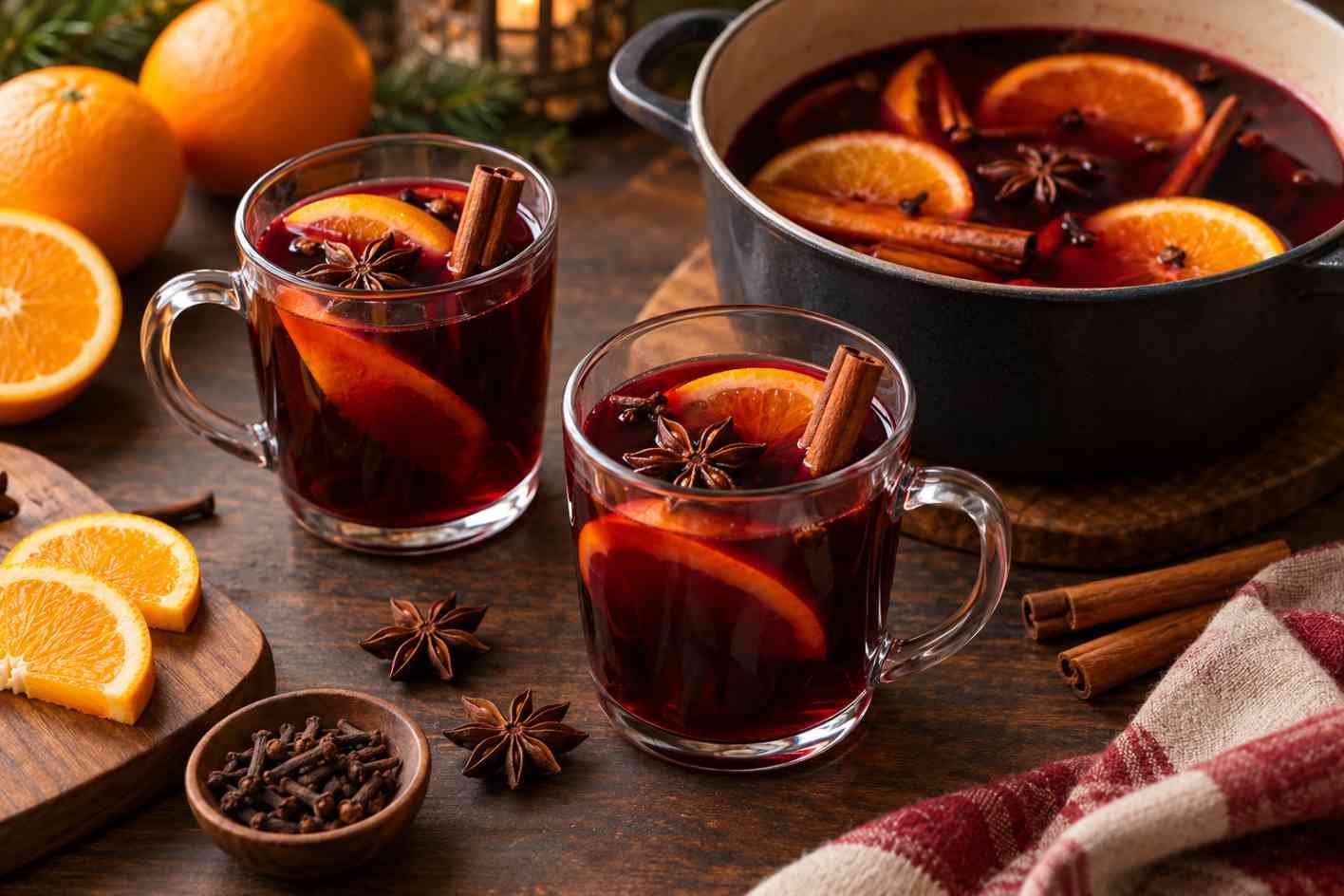
Classic mulled wine is a warm, fragrant drink made with red wine, fresh oranges, cinnamon, star anise, and cloves. A little honey or maple syrup softens the wine’s sharp edges, while orange juice adds a bright, fruity flavor. Popular during the colder months, this comforting drink is perfect for holiday gatherings, dinner parties, or a quiet evening at home. You do not need special equipment or a long list of ingredients. In about 15 minutes, you can prepare a homemade mulled wine with a rich, balanced flavor.
What Is Classic Mulled Wine?
Mulled wine is red wine gently warmed with fruit, spices, and a sweetener. Versions of this drink have been enjoyed in Europe for centuries, with different countries developing their own recipes. Cinnamon and cloves provide warmth, star anise adds a gentle licorice-like flavor, and oranges bring freshness to the wine.
This classic recipe keeps the ingredients simple. Whole spices are used instead of ground spices, making the drink easier to strain and giving it a smoother finish. The aim is to balance the wine, citrus, and spices rather than allow one flavor to overpower the others.
Classic Mulled Wine Recipe Overview
| Recipe Detail | Information |
|---|---|
| Preparation Time | 5 minutes |
| Cooking Time | 10 minutes |
| Total Time | 15 minutes |
| Servings | Approximately 5 |
| Difficulty | Easy |
| Cooking Method | Stovetop |
| Main Ingredients | Red wine, oranges, whole spices, and sweetener |
| Serving Temperature | Warm |
Ingredients for Classic Mulled Wine
This recipe makes approximately five servings. Choose a fruity red wine that you enjoy drinking, but there is no need to spend extra money on an expensive bottle.
- 1 bottle (750 ml) red wine: Merlot, Zinfandel, or Garnacha (Grenache) works well because these wines have a rich, fruity character.
- 2 small oranges or 1 large orange: Use fresh oranges for both the juice and slices.
- 1/4 cup brandy: Adds depth and extra alcoholic strength. It can be omitted if preferred.
- 1 to 2 tablespoons honey or pure maple syrup: Adjust the sweetness to your taste.
- 2 whole cinnamon sticks: Give the drink its familiar warming aroma.
- 3 whole star anise: Add a gentle licorice-like note.
- 4 whole cloves: Bring a warm, slightly sharp spice flavor.
- Optional garnishes: Fresh cranberries, extra orange slices, cinnamon sticks, or star anise.
Choosing the Right Red Wine
A medium-bodied or full-bodied red wine is a good choice because it holds up well to the citrus and spices. Merlot is a dependable option, while Zinfandel and Garnacha offer a fruitier taste. Avoid wines that are very tannic or strongly oaked, as their flavors may become harsh when warmed with spices. A reasonably priced wine with a pleasant fruity flavor is enough for this recipe.
Also Read: Old Fashioned Cocktail
How to Make Classic Mulled Wine
Step 1: Prepare the Oranges
Wash the oranges and pat them dry. Cut one orange into thin rounds and set them aside. If using two small oranges, cut the second one in half and squeeze its juice into a medium-sized, heavy-bottomed saucepan. If using one large orange, slice half of it into rounds and squeeze the juice from the remaining half.
Step 2: Combine the Ingredients
Place the orange slices and fresh orange juice in the saucepan. Pour in the red wine and brandy, then add one tablespoon of honey or maple syrup. Add the cinnamon sticks, star anise, and whole cloves. Stir gently to combine the ingredients.
Step 3: Warm the Wine Slowly
Set the saucepan over medium heat and warm the mixture for about five minutes, watching it closely. When steam rises and tiny bubbles begin to appear around the edges, turn the heat down to its lowest setting. Do not let the wine boil. Gentle heating allows the citrus and spices to release their flavors without making the drink taste overly concentrated.
Step 4: Taste and Adjust
Let the wine warm over low heat for another five minutes. Carefully taste a small amount once it is cool enough to sample. If you prefer a sweeter drink, add the remaining tablespoon of honey or maple syrup. If the spice flavor is too mild, allow the wine to steep for another five minutes over very low heat.
Step 5: Serve Warm
Remove the saucepan from the heat. If you prefer a smoother drink, strain out the whole spices and orange slices before serving. Pour the mulled wine into heatproof mugs or glasses and finish with fresh orange slices, a cinnamon stick, or a few cranberries. Serve while warm.
Step 6: Keep It Warm for Guests
If you are serving mulled wine at a gathering, keep it on the lowest possible heat for a short time, making sure it does not simmer or boil. For longer periods, remove it from the heat and cover the pot. Rewarm gently when needed. Leaving whole spices in the wine for too long can make their flavor overpowering.
Also Read: Ranch Water Cocktail
What You Can Do Better
A few small choices can make the difference between balanced mulled wine and a drink that tastes too sweet or too spicy.
- Use whole spices: Whole cinnamon sticks, cloves, and star anise infuse the wine without leaving a gritty texture. Ground spices are harder to strain out.
- Keep the heat low: Boiling can concentrate the flavors too much and cause some alcohol to evaporate. Gentle warming gives you better control.
- Taste before adding more sweetener: Start with one tablespoon of honey or maple syrup. Different wines have different levels of fruitiness and acidity, so you may not need the full amount.
- Choose fresh oranges: Fresh juice gives the drink a brighter flavor than bottled juice. Slice the fruit thinly so it releases its aroma without dominating the wine.
- Avoid excessive steeping: Cinnamon and cloves become stronger as they sit in hot liquid. Taste the wine as it warms and remove the spices when the flavor is right.
- Skip the brandy if necessary: The wine and spices provide plenty of flavor on their own. Leaving out the brandy makes a simpler version without requiring a replacement.
- Prepare it ahead carefully: You can make the drink in advance, cool it, and refrigerate it. Reheat it slowly before serving instead of boiling it to warm it quickly.
Tips for Serving Classic Mulled Wine
Mulled wine pairs nicely with snacks that balance its fruity and spicy flavor. Serve it with cheese and crackers, roasted nuts, savory pastries, ginger cookies, or cinnamon biscuits. For a festive table, use heatproof glass mugs and add an orange slice to each serving.
If you are making mulled wine for a larger group, the recipe can be doubled or tripled. Keep the spice quantities under control when scaling up, and taste before adding extra sweetener. A larger pot may also take longer to heat, so allow enough time for the wine to become steaming hot.
Can You Make Mulled Wine in a Slow Cooker?
Yes. Add the wine, orange juice, orange slices, brandy, sweetener, and spices to a slow cooker. Cover and heat on low for approximately 30 to 60 minutes, or until steaming. Once warm, switch to the lowest warming setting available. Avoid prolonged high heat, as it can make the drink overly concentrated.
Also Read: Apple Cider Cocktail
How to Store Leftover Mulled Wine
Let leftover mulled wine cool, then transfer it to a covered container and refrigerate it. For the best flavor, drink it within two days. Strain out the orange slices and spices before storing if you do not want the flavor to grow stronger. When ready to serve, reheat it gently in a saucepan until steaming. Do not bring it to a boil.
Nutritional Information
The following values are approximate estimates per serving, assuming the recipe makes five servings and includes the red wine, brandy, oranges, and one tablespoon of honey or maple syrup. The exact nutrition will vary with the wine brand, amount of sweetener, and serving size.
| Nutrient | Estimated Amount per Serving |
|---|---|
| Calories | 190–230 kcal |
| Total Carbohydrates | 10–16 g |
| Total Sugars | 8–13 g |
| Protein | 0–1 g |
| Total Fat | 0–1 g |
| Saturated Fat | 0 g |
| Fiber | 0–1 g |
| Sodium | 5–15 mg |
| Alcohol | Variable |
Nutrition note: These figures are estimates, not laboratory measurements. Wine and brandy contribute most of the calories, while oranges and sweetener contribute carbohydrates and sugars. Gentle heating does not remove all the alcohol, so this drink should be treated as an alcoholic beverage. Nutritional values will change if you omit the brandy, use more sweetener, or change the serving size.
Also Read: French Blond Cocktail
Frequently Asked Questions
What wine is best for classic mulled wine?
Merlot, Zinfandel, and Garnacha are good choices because they tend to have fruity flavors that complement the oranges and spices. Choose a wine you enjoy drinking and avoid bottles that taste excessively oaky or tannic.
Does mulled wine need brandy?
No. Brandy adds depth and extra alcoholic strength, but it is optional. You can make a flavorful batch with red wine, oranges, spices, and a little honey or maple syrup alone.
Can you boil mulled wine?
It is best not to boil it. Heat the wine until it is steaming, then lower the heat. Boiling can cause alcohol loss and make the flavors taste harsh or overly concentrated. Gentle heating also makes it easier to control the sweetness and spice level.
How long does homemade mulled wine take to make?
This recipe takes about 15 minutes from preparation to serving. You can let it warm for a few extra minutes if you want a stronger spice flavor, but check it regularly.
Can I make classic mulled wine without added sugar?
Yes. Leave out the honey or maple syrup, then taste the drink after warming. A naturally fruity wine and fresh orange juice may provide enough sweetness for your preference.
Can mulled wine be made ahead of time?
Yes. Prepare it ahead, let it cool, and refrigerate it in a covered container. Strain out the spices and fruit before storing for a milder flavor, and reheat gently before serving.
Is mulled wine served hot or cold?
Mulled wine is traditionally served warm. It should be hot enough to release its aroma and feel comforting, but it should not be boiling when poured into mugs.