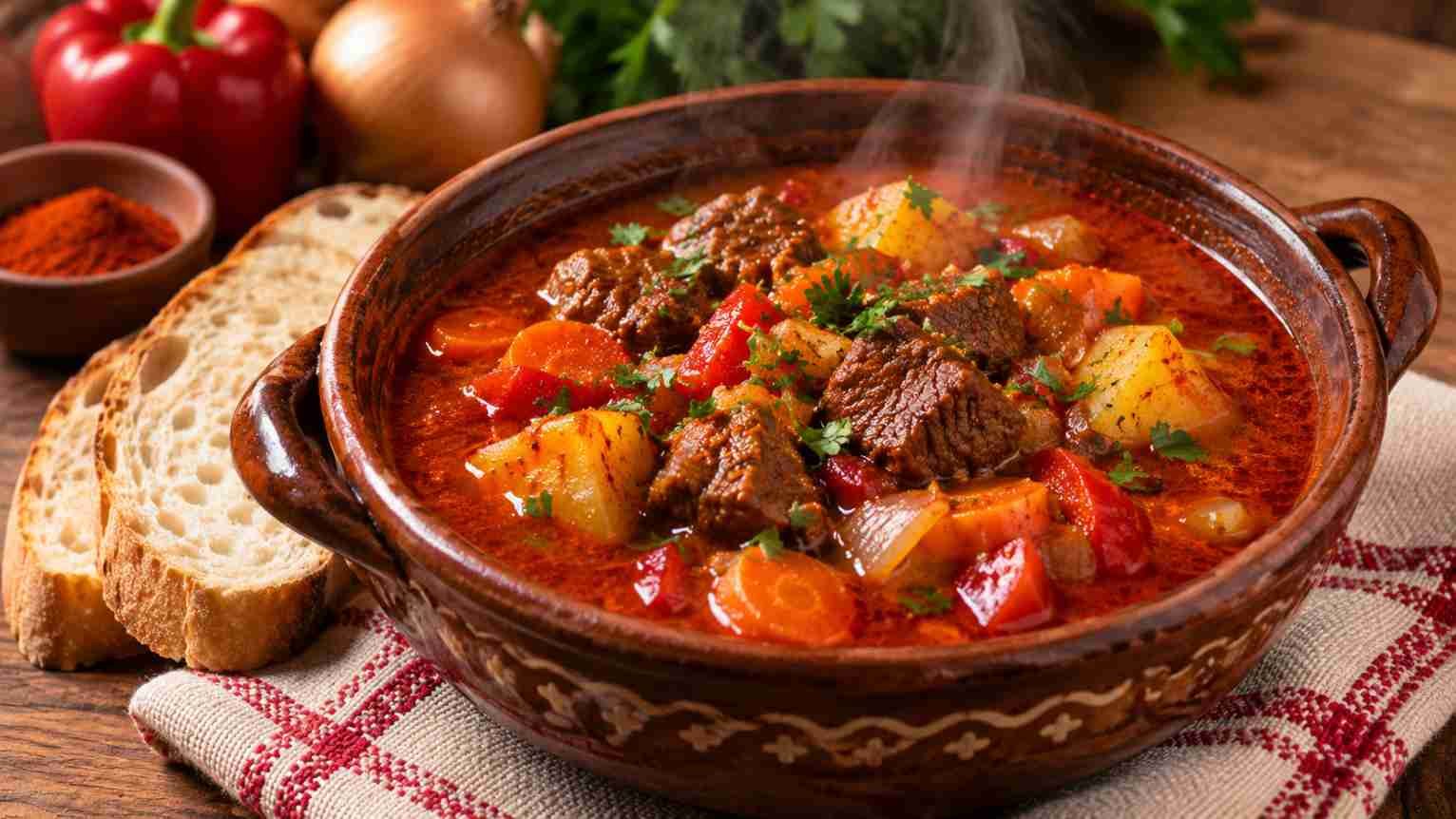
Hungarian Goulash, traditionally known as gulyás, is one of Hungary’s best-known dishes. Unlike the thick beef stews commonly served in other countries, traditional Hungarian Goulash is closer to a hearty soup. It has a generous amount of paprika-flavored broth, tender beef, and vegetables that make it satisfying without needing a heavy sauce. This homemade version keeps those familiar flavors while using ingredients that are easy to find in most supermarkets.
What Is Hungarian Goulash?
Hungarian Goulash began as a practical meal prepared by cattle herders in Hungary. The name comes from the Hungarian word gulyás, meaning herdsman. Over time, it became a staple of Hungarian home cooking, with families developing their own ways of preparing it.
The defining ingredient is paprika. Good Hungarian sweet paprika gives the broth its beautiful red color and mild, earthy sweetness. Onions provide depth, caraway seeds add a distinctive aroma, and slow cooking transforms an inexpensive cut of beef into something remarkably tender. Some versions contain potatoes, carrots, peppers, or small homemade noodles called csipetke. The exact combination varies from one kitchen to another.
Recipe Overview
| Details | Information |
|---|---|
| Recipe Name | Hungarian Goulash |
| Cuisine | Hungarian |
| Course | Main Course, Soup |
| Preparation Time | 20 minutes |
| Cooking Time | 2 hours 15 minutes approximately |
| Total Time | 2 hours 35 minutes approximately |
| Servings | 4 generous portions |
| Cooking Method | Stovetop, One Pot |
| Difficulty | Easy |
Ingredients for Hungarian Goulash
You do not need a long list of complicated ingredients to make good goulash. Fresh vegetables, suitable stewing beef, and quality paprika do most of the work.
For the Beef and Broth
- 800 g (1.75 lb) beef chuck: Cut into roughly 3 cm cubes. Chuck contains connective tissue that softens during slow cooking.
- 2 tablespoons vegetable oil: For cooking the onions and beef. Sunflower oil works well.
- 2 large onions: Finely chopped to create a flavorful base.
- 4 garlic cloves: Minced.
- 2 tablespoons Hungarian sweet paprika: The most important seasoning in the recipe.
- 1 teaspoon caraway seeds: Lightly crushed to release their aroma.
- 1 teaspoon dried marjoram: Adds a gentle herbal flavor.
- 1 bay leaf: For additional depth.
- 700 ml (about 3 cups) low-sodium beef stock: Add a little more if you prefer a soupier consistency.
- 1 teaspoon salt: Or adjust according to taste and the saltiness of your stock.
- 1/2 teaspoon freshly ground black pepper: For seasoning.
For the Vegetables
- 2 medium potatoes: Peeled and cut into bite-sized cubes.
- 2 medium carrots: Peeled and sliced into thick rounds.
- 1 red bell pepper: Deseeded and chopped.
- 2 medium tomatoes: Roughly chopped.
- 1 tablespoon tomato paste: Optional, for a slightly richer tomato flavor.
- 1 tablespoon chopped fresh parsley: For garnishing.
Also Read: One Pot American Goulash
How to Make Hungarian Goulash
The most important ingredient in goulash is patience. There is very little difficult preparation involved, but the beef needs enough time to soften and the broth needs time to develop its flavor.
Step 1: Prepare the Beef and Vegetables
Cut the beef into evenly sized cubes, approximately 3 cm thick. Pat the pieces dry with kitchen paper and season them lightly with salt and black pepper. Chop the onions, garlic, tomatoes, and bell pepper. Peel the potatoes and carrots, but keep them separate because they will be added later in the cooking process. Cutting the beef into similar-sized pieces helps everything cook evenly.
Step 2: Cook the Onions
Place a large heavy-bottomed pot or Dutch oven over medium heat and add the vegetable oil. Once the oil is warm, add the chopped onions. Cook for 8 to 10 minutes, stirring occasionally, until they become soft, translucent, and lightly golden. Do not rush this stage. Slowly cooked onions provide the natural sweetness and depth that form the foundation of a good goulash.
Step 3: Add the Beef
Add the beef cubes to the softened onions and increase the heat slightly. Cook for approximately 5 minutes, stirring regularly, until the outside of the meat loses its raw red color and develops a little browning. The beef does not need to be fully cooked at this stage because it will simmer in the broth for considerably longer.
Step 4: Add the Garlic and Paprika
Reduce the heat to low and stir in the minced garlic. Cook for about 30 seconds until fragrant. Remove the pot briefly from the heat before adding the Hungarian sweet paprika, crushed caraway seeds, and dried marjoram. Stir until the beef and onions are evenly coated. Paprika can become bitter when exposed to excessive heat, so avoid frying it aggressively. If the mixture looks dry, add two tablespoons of stock immediately.
Step 5: Add Tomatoes and Bell Pepper
Return the pot to medium-low heat. Add the chopped tomatoes, red bell pepper, and optional tomato paste. Stir everything together and cook for about 5 minutes. The tomatoes should begin to soften and release their juices, creating a fragrant mixture around the beef. The bell pepper adds sweetness and complements the paprika without overpowering it.
Step 6: Simmer the Goulash
Pour in the beef stock and add the bay leaf. Stir gently, scraping any flavorful bits from the bottom of the pot. Bring the liquid just to a gentle simmer, then reduce the heat to low and cover with a lid. Allow the goulash to cook for approximately 1 hour 30 minutes, stirring occasionally. Keep the liquid at a gentle simmer rather than a vigorous boil. Add a splash of hot water or extra stock if too much liquid evaporates.
Step 7: Add Potatoes and Carrots
Once the beef has started becoming tender, add the potatoes and carrots. Stir gently and continue cooking, partially covered, for another 30 to 45 minutes. The vegetables should become tender without falling apart, and the beef should be soft enough to break easily with a fork. If the meat is still chewy, allow it to cook longer. Tougher cuts sometimes need additional simmering time.
Step 8: Adjust the Seasoning
Remove the bay leaf and taste the broth. Add more salt or black pepper if needed. If the goulash has become too thick, stir in a little hot water or stock until it reaches your preferred consistency. Hungarian Goulash should have enough broth to be served comfortably in a deep bowl, rather than looking like beef covered in thick gravy. Let it rest off the heat for about 5 minutes before serving.
Step 9: Garnish and Serve
Ladle the hot goulash into deep serving bowls and finish with freshly chopped parsley. Serve with slices of crusty bread to soak up the paprika-rich broth. It is a complete meal on its own, especially when prepared with potatoes and carrots.
What You Can Do Better
A few thoughtful adjustments can make an ordinary pot of goulash noticeably better. These are the details worth paying attention to, particularly if you are preparing it for the first time.
Choose Fresh, Good-Quality Paprika
Paprika is not just a background spice in this dish. It provides much of the flavor and color, so an old jar that has been sitting in the cupboard for years will not give you the same result. Hungarian sweet paprika is the best choice. Look for a bright red color and a fresh, slightly sweet aroma. Regular sweet paprika can be substituted, but avoid replacing the entire quantity with hot or smoked paprika because the flavor will change considerably.
Use Beef That Benefits From Slow Cooking
Lean, quick-cooking steaks are not ideal for goulash. Beef chuck, shoulder, or brisket develops a much better texture when simmered gently. These cuts contain connective tissue that gradually breaks down during cooking, making the meat tender and giving the broth more body. Trim away unusually large pieces of hard fat, but do not remove every bit of marbling.
Keep the Paprika From Burning
This is one of the easiest mistakes to make. Paprika burns quickly in very hot fat and develops an unpleasant bitter taste. Lower the heat or remove the pot from the burner before stirring it into the onions and beef. Adding a little liquid soon afterward helps protect its flavor.
Do Not Add Potatoes Too Early
Potatoes cook much faster than stewing beef. If you add them at the beginning, they may disintegrate long before the meat becomes tender. Adding them toward the end allows them to absorb the broth while keeping their shape.
Give the Broth Time to Develop
A gentle simmer produces a better texture than a rolling boil. Keep the lid mostly on, stir occasionally, and allow the meat to soften naturally. If you have time, prepare the goulash a day in advance. After refrigeration, reheating it gently often gives the flavors a chance to come together even more fully.
Adjust the Thickness Naturally
There is usually no need for flour or cornstarch. The onions, tomatoes, and potatoes provide a little natural body. If you want more liquid, add stock or water. If the broth is thinner than you prefer, simmer uncovered for the final few minutes, but remember that traditional goulash is generally more broth-like than a thick Western-style stew.
Also Read: Easy Goulash Recipe
What to Serve With Hungarian Goulash
Because Hungarian Goulash already contains beef, potatoes, and vegetables, it can easily be served as a complete meal. Still, a few simple accompaniments make it even more satisfying.
Crusty bread: Fresh bread with a crisp exterior is probably the easiest accompaniment. It is particularly good for soaking up the last spoonfuls of broth.
Hungarian csipetke: These small pinched noodles are a traditional addition to many versions of goulash. They can be cooked directly in the soup near the end of preparation.
Simple cucumber salad: Thinly sliced cucumber with a light vinegar dressing provides a refreshing contrast to the warm, savory beef.
Pickled vegetables: A small serving of pickles adds acidity and helps balance the richness of the dish.
Fresh parsley: A little parsley just before serving brightens the bowl without competing with the paprika.
Variations You Can Try
Spicy Hungarian Goulash
For a little heat, replace a small portion of the sweet paprika with hot Hungarian paprika or add a pinch of crushed chili flakes. Begin with a modest amount and adjust after tasting. The finished dish should still taste primarily of sweet paprika and beef.
Goulash With Homemade Noodles
For a more traditional soup-style meal, add small pieces of homemade pinched egg dough during the final stage of simmering. These noodles absorb the broth and make the dish especially filling. If adding noodles, consider reducing the potatoes slightly.
Extra-Vegetable Goulash
Parsnips, celery root, or additional carrots work well if you would like to increase the vegetable content. Add firm root vegetables during the final 30 to 45 minutes, just as you would the potatoes. Keep the paprika and onion base unchanged to preserve the characteristic flavor.
Slow Cooker Hungarian Goulash
Cook the onions, beef, and spices on the stovetop first, then transfer the mixture to a slow cooker with the tomatoes, peppers, and stock. Cook on low for approximately 7 to 8 hours, or until the beef is tender. Add the potatoes and carrots during the final 2 to 3 hours, depending on your slow cooker. Use slightly less stock initially because slow cookers retain more moisture than uncovered pots.
Also Read: Beef chowmein
How to Store and Reheat Hungarian Goulash
Refrigerating
Allow the goulash to cool promptly and transfer it to shallow airtight containers. Refrigerate within 2 hours of cooking and use within 3 to 4 days. The flavors often become richer after resting overnight. If the refrigerated broth thickens slightly, simply add a splash of water or stock when reheating.
Freezing
Hungarian Goulash can be frozen for up to 3 months for best quality. Divide it into individual portions, place in freezer-safe containers, and leave a little space for expansion. Potatoes may become softer or slightly grainy after freezing, although the overall flavor remains good.
Reheating
Thaw frozen goulash overnight in the refrigerator. Reheat it in a covered saucepan over medium-low heat, stirring occasionally until it is steaming hot throughout and reaches 74°C (165°F). Avoid prolonged vigorous boiling because the potatoes can break apart. Reheat only the portion you plan to eat.
Nutritional Information
The following values are approximate estimates for one generous serving when the recipe is divided into four portions. They are based on the listed ingredients, including beef, vegetables, oil, and broth, but excluding bread or other side dishes. Actual nutritional values will vary with the cut of beef, amount of fat trimmed, stock brand, and serving size.
| Nutrient | Approximate Amount Per Serving |
|---|---|
| Calories | 570 kcal |
| Protein | 45 g |
| Total Carbohydrates | 30 g |
| Dietary Fiber | 6 g |
| Total Sugars | 9 g |
| Total Fat | 30 g |
| Saturated Fat | 11 g |
| Cholesterol | 125 mg |
| Sodium | 950 mg |
| Potassium | 1,350 mg |
| Iron | 5 mg |
Nutrition note: These figures are estimates rather than laboratory-tested values. For dietary tracking, calculate the nutrition using the exact brands and quantities you use at home.
Also Read: B85 Beef Sausage Rolls
Frequently Asked Questions
Is Hungarian Goulash a Soup or a Stew?
Traditional Hungarian Goulash is generally considered a hearty soup, although it contains many of the same ingredients as beef stew. It has a thinner, paprika-flavored broth and is typically served in bowls. Outside Hungary, goulash is often adapted into a thicker stew.
Can I Make Hungarian Goulash Without Hungarian Paprika?
Yes. Ordinary sweet paprika is a reasonable substitute if Hungarian paprika is unavailable. However, because paprika is the main seasoning, its quality makes a considerable difference. Avoid using an entire tablespoon or more of hot paprika unless you specifically want a very spicy dish.
Why Is My Goulash Beef Still Tough?
The beef probably needs more cooking time. Cuts such as chuck become tender gradually as their connective tissue breaks down. Keep the pot at a gentle simmer and check the meat every 15 to 20 minutes. Adding a little extra liquid may be necessary if the broth has reduced too much.
Do I Need to Add Flour to Hungarian Goulash?
No. Traditional soup-style Hungarian Goulash does not normally rely on flour for thickening. Slowly cooked onions, tomatoes, and other vegetables provide some natural body while leaving the broth relatively light.
Can I Prepare Hungarian Goulash a Day Ahead?
Absolutely. It is an excellent make-ahead meal. Cool and refrigerate it promptly, then reheat gently the following day. The paprika, onion, and beef flavors often taste even more rounded after resting overnight.
Can I Use Chicken Instead of Beef?
You can make a paprika-based soup with chicken, but it will have a different cooking time and flavor from traditional beef goulash. Chicken cooks much faster, so the recipe would need adjusting to avoid dry or overcooked meat.