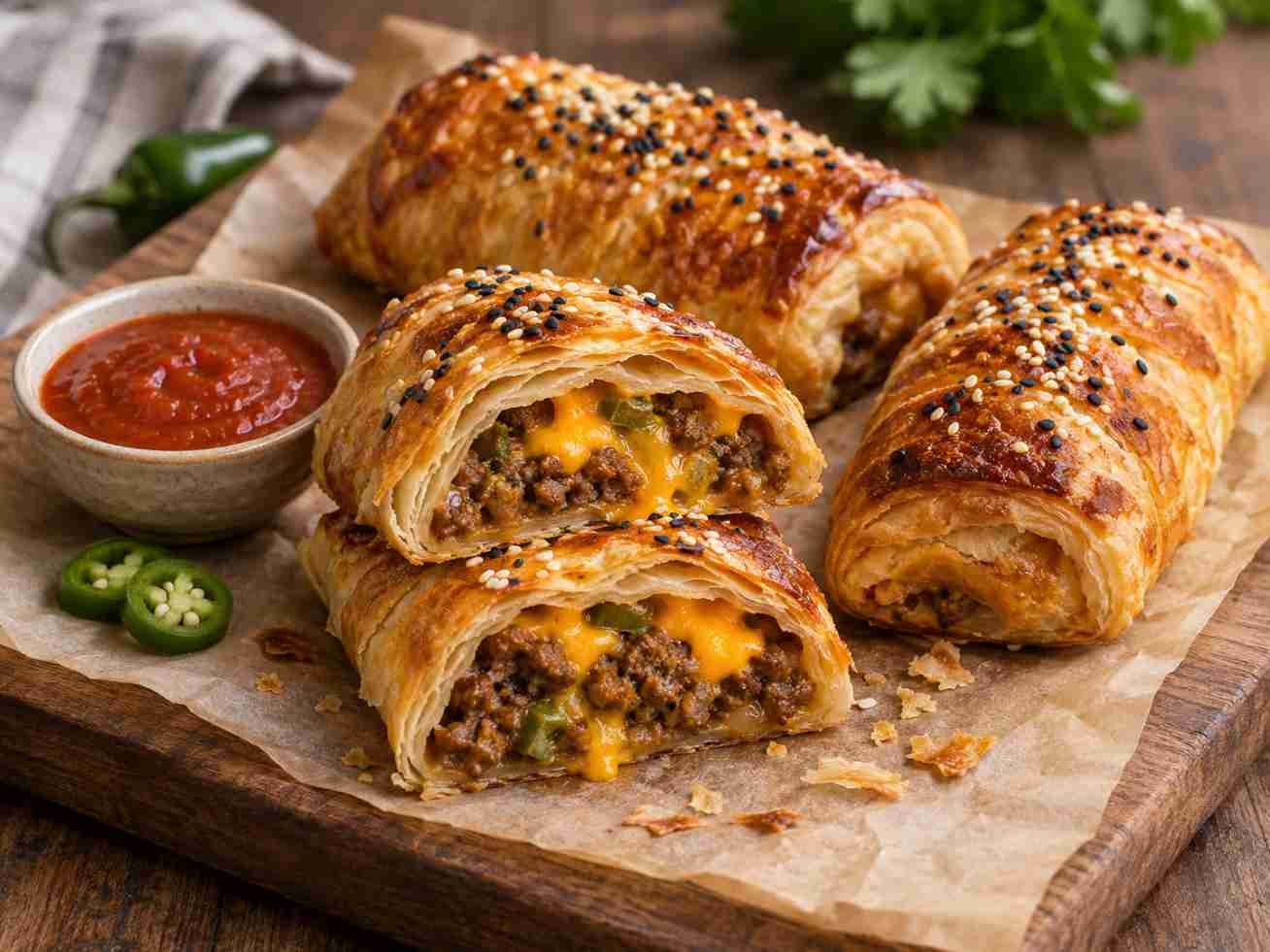
B85 Beef Sausage Rolls take that familiar bakery favorite a little further, bringing together seasoned ground beef, melted cheddar, and the gentle heat of jalapeños inside golden puff pastry.
Inspired by the generous sausage rolls made famous by B85 Artisan Bakery in Camden, Sydney, this homemade version is designed for anyone who wants that bakery-style experience without making pastry from scratch. The combination of beef and cheese makes these substantial enough for lunch, while the jalapeños bring just enough tanginess to stop the filling from feeling overly rich.
The biggest challenge with beef sausage rolls is keeping the meat moist without leaving the bottom of the pastry soggy. A little grated onion, breadcrumbs, and careful baking help solve that problem. The result is a filling that holds together beautifully and a pastry shell that turns a lovely deep golden brown.
B85 Beef Sausage Rolls Recipe Overview
| Recipe Details | Information |
|---|---|
| Preparation Time | 25 minutes |
| Cooking Time | 45–50 minutes |
| Total Time | 70–75 minutes |
| Servings | 4 large rolls or 16 party-sized pieces |
| Difficulty | Easy to Moderate |
| Cooking Method | Oven Baking |
| Cuisine | Australian-Inspired |
| Best Served | Warm with tomato sauce or mustard |
Also Read: Eggnog Cinnamon Rolls
Ingredients for B85 Beef Sausage Rolls
Most of the ingredients are easy to find in an ordinary supermarket. Good-quality puff pastry and ground beef with a little fat are worth choosing carefully because they make a noticeable difference to the finished rolls.
For the Beef Filling
- 500 g (1.1 lb) ground beef: Choose beef with approximately 15–20% fat for a softer, juicier filling.
- 1 medium onion: Finely grated, including its juices.
- 1/2 cup panko breadcrumbs: These absorb moisture and prevent the meat from becoming too dense.
- 1 large egg: Helps hold the filling together.
- 2 garlic cloves: Finely minced.
- 120 g (about 1 1/4 cups) shredded cheddar cheese: Adds richness and a pleasant melted-cheese texture.
- 30 g (about 1/3 cup) finely grated Parmesan cheese: Adds a savory finish.
- 1/4 cup chopped pickled jalapeños: Drained and finely chopped.
- 1 teaspoon Worcestershire sauce: Deepens the beef flavor.
- 1 teaspoon Dijon mustard: Adds mild sharpness without overpowering the filling.
- 1/2 teaspoon smoked paprika: For a subtle smoky note.
- 3/4 teaspoon salt: Adjust according to the saltiness of your cheese.
- 1/2 teaspoon freshly ground black pepper: For seasoning.
For the Pastry
- 2 sheets butter puff pastry: Approximately 24 x 24 cm (9.5 x 9.5 inches) each, weighing about 320 g in total.
- 1 large egg: Beaten with 1 tablespoon water for egg wash.
- 1 teaspoon white sesame seeds: Optional, for topping.
- 1/2 teaspoon black sesame seeds: Optional, for topping.
- Tomato ketchup or mustard: For serving.
Also Read: Cosmic Brownie Rolls
How to Make B85 Beef Sausage Rolls
These rolls are straightforward to assemble, but a few small details matter. Keep the pastry cool, avoid overworking the beef, and give the rolls enough time in the oven for the pastry underneath to cook properly.
Step 1: Prepare the Oven and Baking Tray
Preheat your oven to 200°C (392°F), or 180°C (356°F) for a fan-assisted oven. Line a large baking tray with parchment paper and set it aside. If your puff pastry is frozen, allow it to thaw in the refrigerator until flexible enough to roll without cracking. It should still feel cold and slightly firm.
Step 2: Prepare the Onion and Breadcrumbs
Grate the onion into a large mixing bowl using the fine or medium side of a box grater. Keep the liquid released by the onion rather than draining it away. Add the panko breadcrumbs and stir until evenly moistened. Leave the mixture for about five minutes so the breadcrumbs can absorb some of the onion juice.
This simple step makes the beef filling noticeably more tender. Instead of adding unnecessary liquid later, the moisture is already distributed throughout the mixture.
Step 3: Mix the Beef Filling
Add the ground beef, egg, garlic, Worcestershire sauce, Dijon mustard, smoked paprika, salt, and black pepper to the onion mixture. Mix gently with clean hands or a sturdy spoon until the ingredients are evenly combined. The mixture should hold together when pressed but should not feel overly compact.
Fold in the cheddar, Parmesan, and chopped jalapeños. Try to distribute the cheese evenly so that every slice has a little melted cheese rather than one large pocket in the middle.
Step 4: Check the Seasoning
Before assembling the rolls, cook a teaspoon of the filling in a small frying pan until completely done. Taste it and adjust the seasoning in the remaining raw mixture if necessary. This is particularly useful because cheddar, Parmesan, and pickled jalapeños can vary quite a bit in saltiness.
Step 5: Shape the Beef Filling
Divide the filling into two equal portions. Shape each portion into a thick, even log, approximately the length of a pastry sheet. Avoid squeezing the meat too tightly. A gently formed log cooks more evenly and has a softer finished texture.
Step 6: Wrap the Filling in Puff Pastry
Place one sheet of cold puff pastry on a lightly floured work surface. Arrange a beef log along one side, leaving enough pastry to wrap around it completely. Brush the joining edge with a little egg wash, then roll the pastry around the meat, allowing the edges to overlap slightly underneath. Press the seam gently to seal.
Repeat with the second sheet and remaining filling. Trim away any excessive pastry rather than creating a thick, folded base that may remain undercooked.
Step 7: Cut and Finish the Rolls
Cut each long roll into two equal pieces to make four generous sausage rolls. Arrange them seam-side down on the lined baking tray, leaving space between them for the pastry to expand. Make two or three shallow slits across the top of each roll with a sharp knife, taking care not to cut deeply into the meat.
Brush the pastry evenly with beaten egg wash. Sprinkle with white and black sesame seeds if using. For a neater finish, refrigerate the assembled rolls for 10 minutes before baking.
Step 8: Bake Until Golden and Cooked Through
Place the tray on the middle oven rack and bake for approximately 30–35 minutes. By this stage, the pastry should have expanded and begun turning golden, while the filling will have released some juices onto the tray.
Carefully transfer the rolls to an oven-safe wire rack positioned over a clean baking tray. Return them to the oven for another 10–15 minutes, or until the pastry is deeply golden and the underside is no longer soft. Check the center of the beef filling with a food thermometer; it must reach at least 71°C (160°F).
Step 9: Rest and Serve
Remove the rolls from the oven and let them rest for five minutes. This short resting period allows the filling to settle and makes them easier to handle. Serve warm with tomato ketchup, mustard, or your favorite dipping sauce.
If you prefer smaller portions, cut the two assembled logs into 16 pieces before baking. Start checking the smaller rolls after about 25 minutes, and continue baking until the pastry is golden and the filling reaches a safe internal temperature.
Also Read: Cheesy Chicken Crescent Rolls
What You Can Do Better
A good homemade sausage roll should have more than nicely browned pastry. The best ones have a balanced filling, a crisp base, and enough seasoning to taste delicious even without sauce. These are the details that make the difference.
Choose Beef with Enough Fat
Very lean ground beef can become dry inside puff pastry, particularly when cooked for long enough to brown the exterior. Beef with approximately 15–20% fat gives a more forgiving result. If you only have lean beef, add a tablespoon of olive oil to the filling, although the finished texture may still be firmer.
Keep the Puff Pastry Cold
Warm puff pastry becomes sticky and difficult to handle. More importantly, softened butter can leak out before the pastry has a chance to rise properly. Work with one sheet at a time and return the assembled rolls to the refrigerator if the pastry begins feeling greasy or limp.
Don’t Overmix the Meat
Mixing the filling too aggressively can produce a tight, sausage-like texture. Combine the ingredients just until everything is evenly distributed. The breadcrumbs and egg will help bind the meat without the need for prolonged mixing.
Use Pickled Jalapeños for Balance
Fresh jalapeños work, but pickled jalapeños contribute acidity as well as heat. That little bit of tanginess is especially welcome when paired with rich beef, cheddar, and butter pastry. Drain them before chopping so they do not introduce too much additional moisture.
Pay Attention to the Pastry Base
A sausage roll may look perfectly baked on top while the bottom remains pale and soft. This often happens because the meat releases fat and juices during cooking. Finishing the rolls on a rack after the pastry has set allows hot air to circulate underneath and helps the base become firmer.
Give the Filling Enough Flavor
Beef needs a little help to stand up to buttery pastry. Worcestershire sauce, mustard, garlic, and Parmesan add depth without making the filling taste heavily spiced. Cooking a small sample before assembling the rolls is the easiest way to avoid underseasoning.
Also Read: Texas Roadhouse Yeast Rolls
What to Serve with Beef Sausage Rolls
For a quick lunch, these rolls are filling enough to enjoy with a simple green salad or crunchy coleslaw. A tomato and cucumber salad is particularly good because its freshness balances the richness of the pastry.
If you are serving them for dinner, try roasted potatoes, steamed vegetables, or a bowl of vegetable soup. For parties, arrange the smaller sausage rolls on a platter with individual bowls of ketchup, wholegrain mustard, and sweet chili sauce.
A little extra sharpness can be welcome too. Pickled onions, cornichons, or a tangy cabbage slaw work surprisingly well alongside the cheddar and beef filling.
Variations You Can Try
Extra Cheesy Beef Sausage Rolls
Increase the cheddar by 30–40 g for a richer filling. Avoid adding too much cheese, however, because large amounts can melt out of the ends and leave greasy patches on the baking tray.
Spicy Jalapeño Sausage Rolls
For a stronger kick, add another tablespoon or two of chopped jalapeños along with a pinch of cayenne pepper. Taste the jalapeños first because some brands are considerably hotter than others.
Beef and Caramelized Onion Rolls
Replace half the grated onion with two tablespoons of cooled caramelized onion. The sweetness works particularly well with sharp cheddar and black pepper. Keep the remaining grated onion to maintain moisture.
Mini Party Sausage Rolls
Make 16 smaller pieces instead of four large rolls. They are easier to serve at gatherings and can be prepared ahead of time. Watch the baking time closely because smaller rolls generally cook faster.
Also Read: Spring Rolls Recipe
Storage and Reheating
Refrigerating
Allow leftover sausage rolls to cool promptly, then place them in an airtight container and refrigerate within two hours of cooking. They will keep for up to 3–4 days at 4°C (40°F) or below. The pastry may soften during storage, but reheating can restore some of its crispness.
Freezing
For convenient make-ahead meals, freeze fully cooked and cooled sausage rolls in a single layer before transferring them to freezer-safe containers or bags. They are best enjoyed within two to three months for quality. Label the container with the freezing date.
Reheating in the Oven
Preheat the oven to 180°C (356°F). Place refrigerated sausage rolls on a baking tray and heat for approximately 12–18 minutes, depending on their size, until piping hot throughout. Previously frozen cooked rolls may need longer. Reheat leftovers to 74°C (165°F) internally.
Reheating in an Air Fryer
An air fryer is convenient for reheating smaller portions. Heat at approximately 160–170°C (320–338°F) for 5–8 minutes, checking the center before serving. Larger rolls may require additional time. Avoid overheating the pastry before the filling is hot.
Nutritional Information
The following nutritional values are approximate estimates for one large sausage roll when the recipe is divided into four portions. Calculations assume 500 g of 80–85% lean ground beef, 320 g of butter puff pastry, the listed cheeses, and the remaining ingredients. Actual values will vary depending on the brands and fat content used. Sauces and optional additions are not included.
| Nutrient | Per Large Roll (Approx.) |
|---|---|
| Calories | 865 kcal |
| Protein | 42 g |
| Total Fat | 58 g |
| Saturated Fat | 26 g |
| Carbohydrates | 43 g |
| Dietary Fiber | 2 g |
| Total Sugars | 4 g |
| Sodium | 1,150 mg |
| Cholesterol | 205 mg |
Note: If you divide the recipe into 16 party-sized rolls, each piece will contain approximately one-quarter of the nutritional values shown above. These figures are estimates rather than laboratory-tested values.
Frequently Asked Questions
Can I Make B85 Beef Sausage Rolls Ahead of Time?
Yes. You can assemble the rolls several hours before baking and keep them covered in the refrigerator. Brush with egg wash just before putting them into the oven. Keeping the unbaked pastry cold also helps it rise more evenly.
Can I Use Frozen Puff Pastry?
Absolutely. Frozen puff pastry is ideal for this recipe and saves considerable preparation time. Thaw according to the package directions, preferably in the refrigerator, and handle while it remains cold. Avoid refreezing pastry unless the manufacturer says it is suitable.
Why Is the Bottom of My Sausage Roll Soggy?
The most common reason is moisture and fat released by the beef during baking. Overloading the filling with wet ingredients or folding too much pastry underneath can make the problem worse. Baking the rolls on a rack for the final part of cooking helps air circulate beneath them.
Can I Make These Without Jalapeños?
Yes. Simply leave them out for a milder version. You can replace them with finely chopped roasted red peppers, although it is important to drain the peppers thoroughly before adding them to the filling.
Can I Use Regular Breadcrumbs Instead of Panko?
Regular dried breadcrumbs work, although they tend to absorb moisture differently and can create a slightly denser texture. Start with a little less than the suggested amount of panko and add more only if the mixture feels excessively wet.
How Do I Know When the Beef Filling Is Fully Cooked?
The most reliable method is to insert a food thermometer into the thickest part of a sausage roll. Ground beef should reach at least 71°C (160°F). The pastry should also be golden, puffed, and cooked underneath. Color alone is not a reliable indication that the filling is safe to eat.
Can I Make This Recipe Gluten-Free?
You can adapt the recipe by choosing gluten-free puff pastry and gluten-free breadcrumbs. Check the Worcestershire sauce, mustard, and other packaged ingredients for gluten as well. Gluten-free pastry may require a different baking time, so follow the manufacturer’s instructions where appropriate.