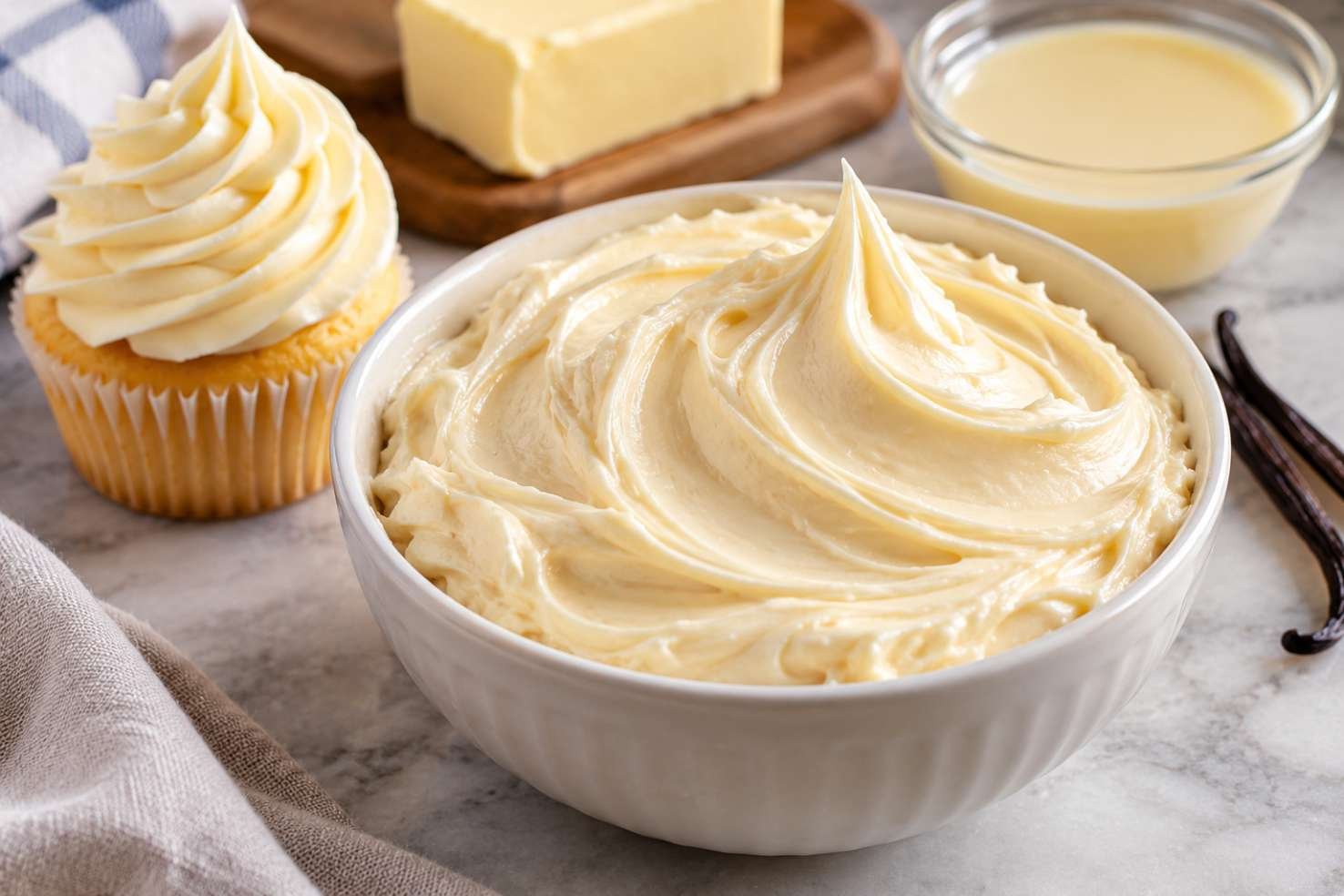
Russian buttercream frosting is a simple, creamy frosting made with butter, sweetened condensed milk, and vanilla extract. Unlike traditional American buttercream, which relies on powdered sugar, this version gets its sweetness from condensed milk. The result is a smooth, rich frosting that spreads easily over cakes and creates beautiful swirls on cupcakes. You do not need eggs, a sugar thermometer, or complicated cooking techniques to make it. The most important part is beating the butter until it becomes pale and fluffy, then adding the condensed milk slowly. With a little patience, you can make a bakery-style frosting at home using just three basic ingredients.
What Is Russian Buttercream?
Russian buttercream is a type of buttercream made by whipping butter with sweetened condensed milk until the mixture becomes light, smooth, and creamy. It is also known as condensed milk buttercream or sweetened condensed milk frosting.
Despite its name, the frosting does not require a traditional Russian cooking technique. It is popular among home bakers because the ingredients are easy to find and the preparation is straightforward. Its texture falls somewhere between a rich buttercream and a silky cream filling. It works well for filling layer cakes, covering cupcakes, and adding simple piped decorations.
Russian buttercream is generally less sugary in texture than American buttercream because it contains no powdered sugar. However, sweetened condensed milk is still quite sweet, so the finished frosting remains a rich dessert topping.
What You Can Do Better
The difference between smooth Russian buttercream and a grainy or separated batch often comes down to temperature and mixing technique. A few small adjustments can make a noticeable difference.
- Use properly softened butter: The butter should feel soft when pressed but should not look greasy or melted. Butter that is too cold will be difficult to whip, while overly warm butter can make the frosting loose.
- Whip the butter long enough: Beat it for at least five minutes, or until it becomes noticeably paler and fluffy. This step helps create a lighter texture.
- Add condensed milk gradually: Pour it in three or four additions rather than adding the entire can at once. Let each addition blend into the butter before adding more.
- Use good-quality vanilla: Pure vanilla extract gives the frosting a pleasant flavor without overpowering the buttery taste.
- Adjust the consistency before decorating: If the frosting is too soft, chill it briefly. If it has become too firm in the refrigerator, allow it to soften and whip it again before using.
Russian Buttercream Frosting Recipe
This recipe makes approximately 3 cups of frosting, enough to cover a medium layer cake or decorate around 12 to 18 cupcakes, depending on how generously you apply it. Preparation takes about 15 minutes, and no cooking is required.
Recipe Details
| Detail | Information |
|---|---|
| Preparation Time | 15 minutes |
| Cooking Time | 0 minutes |
| Total Time | 15 minutes |
| Yield | Approximately 3 cups |
| Course | Dessert, frosting |
| Difficulty | Easy |
| Main Ingredients | Butter, sweetened condensed milk, vanilla extract |
Ingredients for Russian Buttercream Frosting
You only need three main ingredients for this recipe. Measure everything before starting so you can add the condensed milk gradually without interrupting the mixing process.
- 1 cup (226 g) salted butter: Softened to room temperature. Choose a good-quality butter for the best flavor and texture.
- 1 can (14 oz or 397 g) sweetened condensed milk: Use sweetened condensed milk, not evaporated milk. The two products are different and cannot be substituted directly.
- 1 teaspoon vanilla extract: Adds a warm vanilla flavor that complements the butter and condensed milk.
Optional adjustment: If you use unsalted butter instead, add about 1/4 teaspoon of salt to balance the sweetness.
Also Read: Vanilla Buttercream Recipe
How to Make Russian Buttercream Frosting
Step 1: Soften the Butter
Take the butter out of the refrigerator ahead of time and allow it to soften at room temperature. It should be pliable but still hold its shape. Do not melt it in the microwave, as melted butter will not whip into the same light texture.
Step 2: Whip the Butter Until Pale
Place the softened butter in a stand mixer fitted with a whisk attachment. Beat on high speed for about five minutes, scraping down the sides of the bowl when necessary. If you are using a handheld electric mixer, you may need a few extra minutes.
The butter should become fluffy and noticeably lighter in color. Do not rush this step, because properly whipped butter helps the frosting develop its smooth consistency.
Step 3: Add the Sweetened Condensed Milk
Reduce the mixer speed to medium. Add approximately one-third of the sweetened condensed milk and beat until it is fully incorporated. Add the next portion and mix again, then repeat with the remaining condensed milk.
Keep the additions gradual. If the mixture looks slightly uneven while you are adding the milk, continue mixing for a little longer before adding the next portion. Scrape the bowl to make sure no butter is stuck to the bottom or sides.
Step 4: Mix in the Vanilla Extract
Add the vanilla extract and beat until the frosting is evenly combined. Continue mixing briefly until it looks glossy, creamy, and smooth. Avoid unnecessary overmixing once the frosting has reached the right consistency.
Step 5: Check the Texture and Use
The finished Russian buttercream should spread easily and hold soft piping shapes. If it looks too loose, place the bowl in the refrigerator for five to ten minutes, then beat it again. If it appears stiff or grainy because the butter was too cold, let it sit at room temperature briefly and mix again.
Use the frosting immediately to fill cakes, cover cupcakes, or pipe decorations. If you are not ready to use it, transfer it to an airtight container and refrigerate it.
Tips for Smooth and Creamy Russian Buttercream
- Keep the ingredients at a suitable temperature: Softened butter and condensed milk that is not ice-cold are easier to combine. Avoid using butter that is oily or partially melted.
- Do not pour in the milk too quickly: Gradual additions help the butter and condensed milk blend into a uniform mixture.
- Scrape the mixing bowl: Butter can collect at the bottom of the bowl, leaving the frosting uneven if it is not mixed in properly.
- Give separated frosting a chance to recover: A slightly curdled appearance does not always mean the batch is ruined. Check the temperature, chill briefly if it is too warm, or let it warm slightly if it is too cold. Then beat it again.
- Use gel food coloring: If you want colored frosting, add a small amount of gel coloring. It generally adds less liquid than liquid food coloring.
Also Read: Salted Caramel Cake with Homemade Caramel
How to Fix Russian Buttercream if It Separates
Russian buttercream can look curdled or split when the butter and condensed milk are at different temperatures or when the mixture has not emulsified properly. Before throwing it away, check the texture and temperature.
| Problem | Possible Cause | How to Fix It |
|---|---|---|
| Grainy or curdled frosting | Butter may be too cold, or the mixture has not fully combined. | Let the bowl sit at room temperature briefly, then beat again. |
| Loose or soupy frosting | Butter may be too warm. | Refrigerate the bowl for 5–10 minutes, then whip again. |
| Greasy frosting | Butter may have softened too much or started melting. | Chill briefly until the mixture firms up, then beat again. |
| Frosting will not become smooth | Condensed milk may have been added too quickly. | Continue mixing and scrape the bowl thoroughly. Adjust the temperature if needed. |
Make small temperature adjustments rather than chilling the frosting for too long. The goal is to bring the butter back to a workable consistency, not to make the mixture completely hard.
Ways to Use Russian Buttercream Frosting
This frosting is versatile enough for everyday baking as well as simple celebration cakes. Its smooth texture makes it easy to spread, and it can also be used in a piping bag for basic decorations.
- Cakes: Spread it over vanilla, chocolate, or sponge cakes for a creamy finish.
- Cupcakes: Pipe swirls onto cupcakes using a round or star-shaped nozzle.
- Layer cakes: Use it between cake layers and as an outer coating. Chill the assembled cake when needed to help the frosting firm up.
- Cookies: Spread a thin layer over sugar cookies or sandwich two cookies together with a little frosting.
- Macarons: Use a small amount as a filling, keeping in mind that its richness can be quite noticeable in a small dessert.
- Simple decorations: Pipe borders, rosettes, and other basic designs. For highly detailed flowers or decorations that must hold up in warm conditions, a firmer frosting may be more suitable.
Also Read: Butter Pecan Cookies
Easy Russian Buttercream Flavor Variations
Once you have mastered the vanilla version, you can change the flavor without making the recipe much more complicated.
- Chocolate Russian buttercream: Beat in a small amount of sifted cocoa powder and adjust gradually until you reach the chocolate flavor you like. If the frosting becomes too thick, adjust the consistency carefully.
- Coffee buttercream: Add a little cooled, concentrated coffee or espresso. Use a small quantity so the extra liquid does not loosen the frosting.
- Lemon buttercream: Add a little finely grated lemon zest for a fresh citrus flavor. Avoid adding too much juice because it can affect the consistency.
- Almond buttercream: Replace part of the vanilla flavor with a small amount of almond extract. Almond extract is strong, so start with just a few drops.
- Caramel-style buttercream: Add a small amount of thick caramel flavoring if desired, keeping in mind that additional liquid or sugar can change the texture.
How to Store Russian Buttercream Frosting
Store unused frosting in a clean, airtight container in the refrigerator. For the best quality, use it within about five to seven days. Because this recipe contains dairy ingredients, refrigeration is the safest option rather than leaving it at room temperature for extended periods.
When you are ready to use refrigerated frosting, let it soften until it is workable, then beat it again until smooth. It may look firm or slightly separated straight from the refrigerator, but gentle warming and rewhipping can often restore its creamy texture.
You can also freeze the frosting in an airtight, freezer-safe container for around two months for best quality. Thaw it in the refrigerator, allow it to soften, and whip it again before using. If the frosting has been used on a cake or cupcakes, refrigerate the finished dessert as well. Avoid leaving dairy-based frosting in warm conditions for long periods.
Also Read: Black Velvet Cupcakes
Nutritional Information for Russian Buttercream Frosting
Russian buttercream is rich in fat and sugar because its main ingredients are butter and sweetened condensed milk. The following figures are estimates for the complete recipe, using standard ingredient nutrition values. Actual numbers will vary by brand and the exact quantities used.
| Nutrient | Approximate Amount per Recipe |
|---|---|
| Calories | 2,500–2,700 kcal |
| Total Fat | 180–195 g |
| Saturated Fat | 110–125 g |
| Carbohydrates | 190–210 g |
| Total Sugars | 190–210 g |
| Protein | 25–30 g |
| Sodium | Varies by butter brand |
Estimated nutrition per 2-tablespoon serving: Approximately 160–180 calories, depending on the ingredients and serving size. This is an estimate, not a laboratory-tested nutrition analysis. For more precise figures, calculate the nutrition from the labels of the products you use and divide by the number of servings.
Also Read: Decorated Halloween Cupcakes
Frequently Asked Questions
Is Russian buttercream less sweet than American buttercream?
It often tastes less sugary because it does not contain powdered sugar, but sweetened condensed milk still provides plenty of sweetness. The final taste depends on the recipe and the type of butter used.
Can I make Russian buttercream without a stand mixer?
Yes. An electric hand mixer works well. Use a large bowl and beat the butter until it becomes pale and fluffy before adding the condensed milk gradually. Mixing by hand is possible, but it requires considerably more effort.
Can I use evaporated milk instead of condensed milk?
No. Evaporated milk is unsweetened and has a much thinner consistency. Sweetened condensed milk provides both the sweetness and the texture needed for this frosting.
Will Russian buttercream hold its shape for piping?
Yes, it works for cupcake swirls, borders, and simple decorations. However, it can soften in warm conditions and may not hold very intricate designs as well as some meringue-based buttercreams.
Why is my Russian buttercream too soft?
The butter may be too warm, or the frosting may have been sitting in a warm room. Refrigerate it for five to ten minutes, then whip it again and check the consistency.
Can I make Russian buttercream ahead of time?
Yes. Prepare it in advance and keep it in an airtight container in the refrigerator. Let it soften and rewhip it before spreading or piping.
Does Russian buttercream need refrigeration?
Refrigeration is recommended for safe storage because the frosting contains dairy ingredients. Refrigerate unused frosting promptly and keep frosted desserts chilled when they will not be served soon, especially in warm weather.