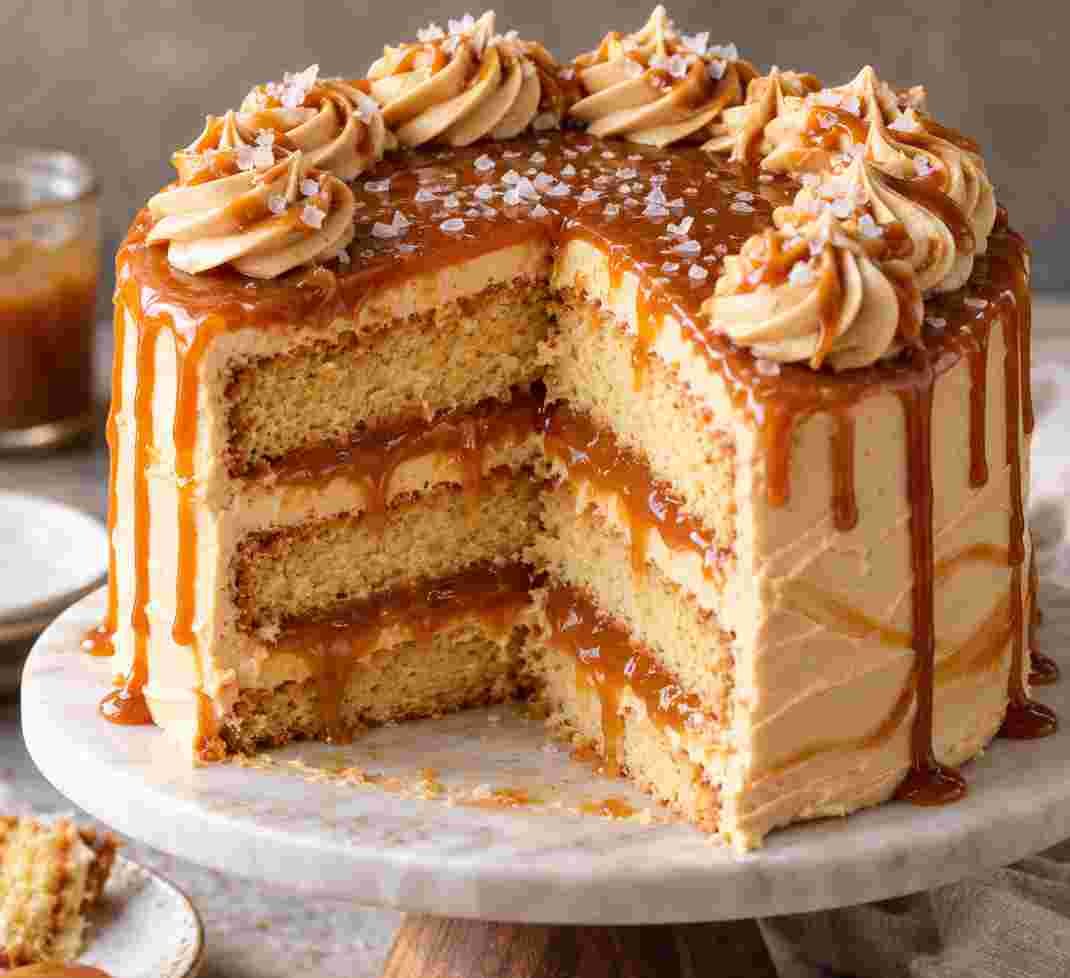
This Salted Caramel Cake is the kind of dessert that makes a special occasion feel even more special. It has soft vanilla cake layers, homemade salted caramel tucked between them, and a smooth caramel buttercream that brings everything together. The caramel is rich and buttery with a little sea salt to keep the sweetness from becoming too much. It does take some time because the caramel needs to cool properly, but most of the work can be done ahead of time.
What You Can Do Better
The biggest difference between a good caramel cake and a great one is the caramel itself. Cook the sugar until it reaches a deep amber color, but keep a close eye on it because caramel can go from perfectly browned to burnt very quickly. Let the caramel cool completely before using it in the cake. For softer cake layers, use room-temperature ingredients and avoid overmixing once the flour has been added. If you want cleaner slices, chill the assembled cake before serving and use a sharp knife.
Recipe Overview
| Category | Dessert |
|---|---|
| Cuisine | American |
| Prep Time | 45 minutes |
| Caramel Cooling Time | 4–5 hours |
| Baking Time | 25–30 minutes |
| Assembly Time | 30–40 minutes |
| Total Time | About 6 hours |
| Servings | 14–16 |
Ingredients
For the Homemade Salted Caramel
- 1 1/4 cups granulated sugar
- 1/4 cup water
- 1/2 cup heavy cream
- 2/3 cup sweetened condensed milk
- 2 tablespoons unsalted butter
- 1 teaspoon vanilla extract
- 1/2 teaspoon fine sea salt
For the Vanilla Cake
- 2 1/3 cups cake flour
- 1 1/2 cups granulated sugar
- 1 tablespoon baking powder
- 1 teaspoon fine sea salt
- 12 tablespoons unsalted butter, softened and cut into pieces
- 3 large eggs, at room temperature
- 1/2 cup whole milk
- 1/2 cup heavy cream
- 1/2 cup sour cream
- 1/4 cup neutral vegetable oil
- 2 teaspoons vanilla extract
For the Caramel Buttercream
- 2 cups unsalted butter, softened
- 3 1/2 cups powdered sugar
- 3 tablespoons cooled salted caramel
- 2 tablespoons heavy cream
- 1 teaspoon vanilla extract
- Pinch of salt, if needed
For Decorating
- Extra homemade caramel
- Flaky sea salt
Also Read: Salted Caramel Cheesecake
How to Make Salted Caramel Cake
1. Make the Homemade Caramel
Place the sugar and water in a medium heavy-bottomed saucepan. Heat over medium heat until the sugar dissolves and the mixture begins to boil. Once it starts boiling, avoid stirring it. Let it cook until the syrup develops a deep golden-amber color.
Remove the saucepan from the heat and slowly pour in the heavy cream while whisking continuously. The mixture will bubble aggressively, so pour carefully. Add the condensed milk, butter, vanilla, and sea salt. Whisk until the caramel is smooth and glossy.
Pour the caramel into a heatproof bowl and leave it to cool completely. It will become noticeably thicker as it cools. For the easiest cake assembly, prepare the caramel several hours ahead or the day before.
2. Prepare the Cake Pans
Preheat your oven to 325°F (160°C). Grease three 8-inch round cake pans and line the bottoms with parchment paper. This makes removing the delicate cake layers much easier.
3. Make the Vanilla Cake Batter
Whisk the cake flour, sugar, baking powder, and salt together in a large mixing bowl. Add the softened butter and mix on low speed until the mixture looks similar to coarse crumbs. This method helps coat the flour with butter and gives the finished cake a soft texture.
In another bowl, whisk together the eggs, milk, heavy cream, sour cream, vegetable oil, and vanilla until smooth. Add about half of this mixture to the dry ingredients and mix until the batter becomes smooth and thick. Add the remaining liquid and mix just until everything is evenly combined.
4. Bake the Cake Layers
Divide the batter evenly between the prepared cake pans. Smooth the tops and bake for 25–30 minutes, or until a toothpick inserted into the center comes out with a few moist crumbs.
Allow the cakes to cool in their pans for about 20 minutes. Turn them out onto wire racks and let them cool completely before adding the frosting. Do not try to assemble the cake while the layers are still warm.
5. Make the Caramel Buttercream
Beat the softened butter for 2–3 minutes until creamy and lighter in texture. Add the powdered sugar gradually and mix on low speed until incorporated. Increase the speed and beat for several minutes until the frosting is fluffy.
Add the cooled salted caramel, heavy cream, and vanilla. Beat again until smooth. If the frosting seems too soft, refrigerate it briefly before assembling the cake.
6. Assemble the Cake
Place one cake layer on a cake stand or serving plate. Spread a thin layer of caramel buttercream over the top. Pipe a thicker ring of frosting around the outside edge. This border acts like a dam and helps keep the caramel filling from escaping.
Spoon some of the cooled caramel into the center and spread it gently without pushing it over the frosting border. Place the second cake layer on top and repeat the frosting and caramel filling. Add the final cake layer with the flatter side facing upward.
7. Frost and Decorate
Cover the entire cake with a thin layer of buttercream to trap loose crumbs. Refrigerate for 20–30 minutes, then spread the remaining buttercream over the top and sides.
Drizzle or spread a little extra caramel over the cake. For a simple marbled finish, place small streaks of caramel around the sides and gently smooth them with an offset spatula. Finish with a light sprinkle of flaky sea salt.
Also Read: Homemade Caramel Apples
Tips for the Best Caramel Cake
- Watch the sugar carefully: Caramel becomes very dark quickly once it reaches the right stage.
- Use room-temperature ingredients: Eggs, milk, cream, sour cream, and butter blend more evenly when they are not cold.
- Cool the caramel completely: Warm caramel can make the buttercream loose and difficult to spread.
- Do not overmix the batter: Mix only until the ingredients are combined after adding the wet mixture.
- Measure flour correctly: Spoon flour into your measuring cup and level it rather than scooping directly from the bag.
- Chill before slicing: A short rest in the refrigerator helps the caramel firm up and makes the layers easier to cut.
Can You Make the Caramel Ahead?
Yes. In fact, making the caramel ahead of time makes this recipe much easier. Store the cooled caramel in an airtight container in the refrigerator. Before using it in the cake, let it sit at room temperature until it becomes spreadable. If it is still too firm, warm it very gently and stir until smooth.
Also Read: Caramel Slice
How to Store Salted Caramel Cake
Store the finished cake covered in the refrigerator for up to 4 days. Because the caramel and buttercream firm up when chilled, let the cake sit at room temperature for about 20–30 minutes before serving. Keep any leftover caramel refrigerated in a sealed container.
Nutrition Information
The following values are approximate and will vary depending on the exact ingredients, portion size, and amount of caramel used.
| Nutrient | Per Serving |
|---|---|
| Calories | Approximately 720 kcal |
| Total Fat | 42 g |
| Saturated Fat | 23 g |
| Cholesterol | 125 mg |
| Sodium | 390 mg |
| Total Carbohydrates | 82 g |
| Dietary Fiber | 1 g |
| Total Sugars | 61 g |
| Protein | 7 g |
Also Read: Caramel Brownies
Frequently Asked Questions
Can I use store-bought caramel sauce?
Yes, if you are short on time. However, homemade caramel gives the cake a deeper buttery flavor and lets you control the amount of salt.
Why did my caramel become hard?
Caramel naturally becomes thicker as it cools. If it becomes too firm to spread, let it sit at room temperature or warm it gently until it loosens.
Can I make this cake the day before?
Absolutely. The assembled cake can be refrigerated overnight. Take it out about 20–30 minutes before serving so the buttercream and caramel soften slightly.
How do I keep the caramel from leaking out of the cake?
Pipe a solid ring of buttercream around the edge of each cake layer before adding the caramel. Keep the caramel inside that border and avoid overfilling the layers.
Can I use regular all-purpose flour?
Yes, although cake flour gives the layers a lighter and more delicate crumb. If using all-purpose flour, measure it carefully and avoid overmixing the batter.