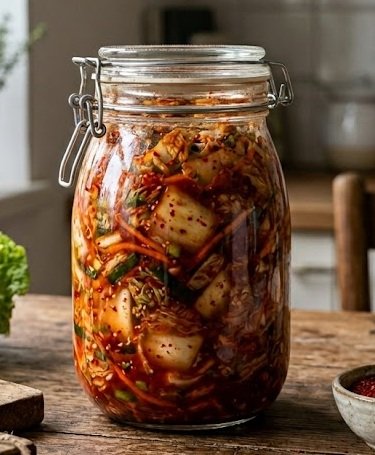
Kimchi is one of Korea’s most iconic dishes, known for its bold flavor, vibrant color, and probiotic-rich goodness. Made primarily from napa cabbage, garlic, ginger, and Korean chili flakes, kimchi develops its signature tangy taste through fermentation. While traditional kimchi can take several days to mature, the preparation itself is surprisingly simple and rewarding. This homemade kimchi recipe delivers authentic flavor with ingredients that are easy to find, making it perfect for beginners and experienced home cooks alike.
Main Essence of This Dish
The beauty of kimchi lies in its balance of flavors and textures. Crisp cabbage absorbs a savory, spicy seasoning paste while natural fermentation creates a pleasant tanginess that deepens over time. It can be enjoyed as a side dish, added to fried rice, stirred into soups, or used as a flavorful topping for countless meals. Homemade kimchi allows you to control the spice level and fermentation time according to your personal preference.
Preparation Details
| Detail | Value |
|---|---|
| Prep Time | 45 Minutes |
| Salting Time | 2 Hours |
| Fermentation Time | 1–5 Days |
| Total Time | Approximately 3 Hours + Fermentation |
| Yield | About 2 Quarts |
| Difficulty | Moderate |
Also Read: Refrigerator Pickles Recipe
Ingredients
For the Cabbage
- 1 large napa cabbage (about 2 pounds)
- 1/2 cup kosher salt
- Water as needed
For the Kimchi Paste
- 5 cloves garlic, minced
- 1 tablespoon fresh ginger, grated
- 1 tablespoon sugar
- 3 tablespoons fish sauce
- 1 cup Korean red pepper flakes (gochugaru)
- 2 tablespoons water
Vegetables
- 4 green onions, sliced
- 1 medium carrot, julienned
- 1 small daikon radish, julienned
Also Read: Fish Tacos Recipe
How to Make Kimchi
Step 1: Prepare the Cabbage
Cut the napa cabbage lengthwise into quarters and remove the tough core. Slice each quarter into bite-sized pieces. Place the cabbage in a large bowl and sprinkle the salt evenly over the leaves. Massage gently to distribute the salt. Add enough water to lightly cover the cabbage and let it sit for about 2 hours, turning occasionally.
Step 2: Rinse and Drain
After salting, rinse the cabbage thoroughly under cold water two to three times to remove excess salt. Drain well in a colander for about 20 minutes.
Step 3: Make the Seasoning Paste
In a large mixing bowl, combine garlic, ginger, sugar, fish sauce, Korean chili flakes, and water. Stir until a thick, vibrant red paste forms.
Step 4: Add the Vegetables
Mix the sliced green onions, carrot, and daikon radish into the seasoning paste. Stir until everything is evenly coated.
Step 5: Combine with the Cabbage
Add the drained cabbage to the bowl. Using clean gloves, gently massage the seasoning mixture into every leaf until the cabbage is thoroughly coated.
Step 6: Pack into Jars
Transfer the kimchi into clean glass jars. Press it down firmly to remove air pockets while leaving about one inch of space at the top for fermentation expansion.
Step 7: Ferment
Leave the jars at room temperature for 1 to 3 days depending on your preferred sourness. You may notice bubbles forming, which is a normal sign of fermentation. Once the desired flavor develops, move the jars to the refrigerator.
Step 8: Serve and Enjoy
Kimchi can be eaten immediately, but its flavor becomes more complex after a few days in the refrigerator. Serve alongside rice, grilled meats, noodles, soups, or use it in stir-fries.
Also Read: Korean Beef Bowl Recipe
Tips for Success
- Use napa cabbage for the most authentic texture and flavor.
- Wear gloves when mixing the chili paste to prevent irritation.
- Do not overfill fermentation jars.
- Taste the kimchi daily during fermentation to achieve your preferred level of tanginess.
- Always use clean utensils when serving to extend shelf life.
Storage Information
Store kimchi in an airtight container in the refrigerator. Properly stored kimchi can last for several months and will continue to develop a stronger flavor over time. The longer it ferments, the tangier and more complex it becomes.
Also Read: Crockpot Butter Chicken Recipe
Nutritional Information
Approximate values per serving (1/2 cup):
| Nutrient | Amount |
|---|---|
| Calories | 25 |
| Carbohydrates | 5g |
| Protein | 1g |
| Fat | 0g |
| Fiber | 2g |
| Sugar | 2g |
| Sodium | 480mg |
| Vitamin C | 18% DV |
Also Read: Chicken Taco Soup Recipe
Serving Suggestions
Kimchi pairs beautifully with steamed rice, Korean barbecue, noodle dishes, omelets, grain bowls, and soups. It can also be incorporated into sandwiches, tacos, and fried rice for a spicy, fermented kick that transforms everyday meals.
Frequently Asked Questions
How long does homemade kimchi take to ferment?
Most kimchi develops noticeable tanginess within 1 to 3 days at room temperature, though some people prefer longer fermentation periods for a stronger flavor.
Can I make kimchi less spicy?
Yes. Reduce the amount of Korean chili flakes while keeping the other ingredients the same.
Do I need special fermentation equipment?
No. Clean glass jars with lids are sufficient for making kimchi at home.
Can I make vegetarian kimchi?
Absolutely. Replace the fish sauce with soy sauce, tamari, or a vegetarian seasoning alternative.
Why are bubbles forming in my jar?
Bubbles indicate active fermentation and are a normal sign that beneficial bacteria are developing.