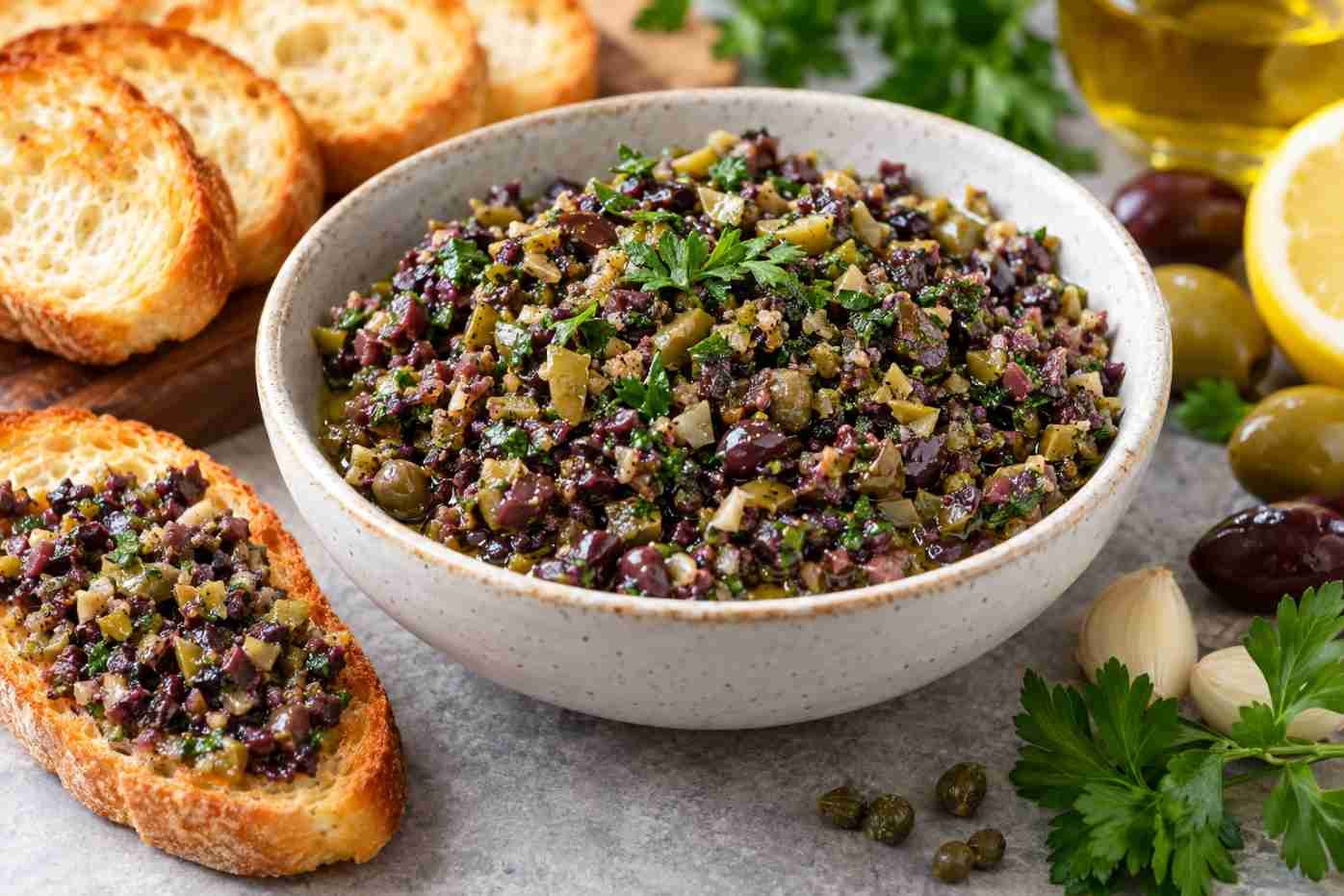
Easy tapenade is a flavorful olive spread that brings a little taste of southern France to your table. Made with olives, capers, fresh parsley, garlic, olive oil, and lemon juice, this simple recipe has a rich, salty, and tangy flavor. It takes just 10 minutes to prepare and works well as a dip, sandwich spread, or topping for toasted bread. You do not need any cooking skills to make it, and most of the ingredients can be kept in your pantry.
This homemade tapenade combines green and black olives for a balance of buttery flavor and deep, briny taste. Fresh parsley and lemon juice brighten the mixture, while garlic adds a savory touch. Serve it at a party, add it to a cheese board, or keep a small jar in the fridge to make everyday meals more interesting.
What Is Tapenade?
Tapenade is a traditional olive spread associated with Provence, a region in southern France. Its name comes from the Provençal word tapenas, which means capers. Although olives are now the main ingredient in many versions, capers remain an important part of the recipe.
Traditional tapenade can include anchovies, but this easy version skips them. The combination of olives, capers, garlic, and olive oil still creates plenty of flavor. The result is a vegetarian and vegan spread that is easy to serve with bread, crackers, vegetables, and other Mediterranean-inspired dishes.
Easy Tapenade Recipe Details
| Preparation Time | 10 minutes |
|---|---|
| Cooking Time | 0 minutes |
| Total Time | 10 minutes |
| Yield | About 1 1/2 cups |
| Serving Size | 2 tablespoons (approximate) |
| Cuisine | French, Mediterranean-inspired |
| Course | Appetizer, dip, or spread |
| Diet | Vegan and vegetarian |
| Equipment | Food processor or sharp knife and cutting board |
Ingredients for Easy Tapenade
You only need seven simple ingredients to prepare this olive spread. For the best flavor, use good-quality olives and extra-virgin olive oil. Since olives and capers are naturally salty, taste the mixture before adding any extra salt.
| Ingredient | Quantity | Purpose |
|---|---|---|
| Green Castelvetrano olives | 1 cup, pitted | Add a mild, buttery flavor. |
| Kalamata or Niçoise olives | 1/2 cup, pitted | Give the spread a rich, briny taste. |
| Fresh flat-leaf parsley | 1/4 cup, lightly packed | Add freshness and a herbal flavor. |
| Capers | 1 tablespoon, drained | Provide a sharp, tangy note. |
| Extra-virgin olive oil | 1/4 cup | Bring the ingredients together and create a smooth texture. |
| Garlic | 2 medium cloves, minced or pressed | Add a savory, aromatic flavor. |
| Fresh lemon juice | 1 tablespoon | Balance the richness of the olives and oil. |
Also Read: Socca Recipe
Ingredient Tips
- Choose the right olives: Castelvetrano olives are mild and buttery, while Kalamata olives have a stronger, fruitier taste. Using both gives the tapenade a good balance.
- Check for pits: Even olives sold as pitted can occasionally contain a stone. Check every olive before processing.
- Drain the capers: Too much brine can make the finished spread overly salty or watery.
- Use fresh lemon juice: Fresh juice gives the tapenade a brighter taste than bottled juice.
- Adjust the garlic: If you prefer a milder flavor, start with one clove and add more if needed.
How to Make Easy Tapenade
Follow these simple steps to make a fresh olive tapenade at home. There is no cooking involved, and the food processor does most of the work.
Step 1: Prepare the Ingredients
Drain the capers and rinse the parsley if needed. Pat the parsley dry, peel the garlic, and measure the olive oil and lemon juice. Make sure all the olives are pitted before adding them to the food processor.
Step 2: Add Everything to the Food Processor
Place the green olives, black olives, parsley, capers, garlic, olive oil, and lemon juice in the food processor bowl. Make sure the lid is secured before switching on the machine.
Step 3: Pulse Until Chopped
Pulse the mixture about 10 times, then stop and scrape down the sides of the bowl with a spatula. Pulse another 5 to 10 times, checking the texture as you go.
The goal is a chunky spread with small pieces of olive, not a completely smooth puree. If you prefer a finer texture, pulse a little longer, but avoid overprocessing the mixture.
Step 4: Taste and Adjust
Taste the tapenade before serving. Add a little more lemon juice if it tastes too rich, or a small drizzle of olive oil if it seems too thick. Extra salt is usually unnecessary because olives and capers already contain plenty.
Step 5: Serve or Refrigerate
Transfer the tapenade to a clean serving bowl and serve it with toasted bread, crackers, or fresh vegetables. You can also refrigerate it in an airtight container for later use. Chilling it briefly allows the flavors to settle together.
Also Read: Halloween Mozzarella Skulls
How to Make Tapenade Without a Food Processor
You can still make excellent tapenade without a food processor. Finely chop the pitted olives, parsley, capers, and garlic with a sharp knife. Transfer them to a bowl, then stir in the olive oil and lemon juice until everything is evenly combined.
This method takes a little more effort, but it gives you good control over the texture. Keep the mixture slightly chunky for a rustic spread that works especially well on toasted bread.
What You Can Do Better
A few small changes can make your homemade tapenade taste fresher and more balanced. The key is to control the saltiness, avoid overprocessing, and adjust the ingredients to suit your taste.
- Balance the olives: If the spread tastes too strong, use more mild green olives and fewer Kalamata olives next time.
- Keep the texture chunky: Short pulses help preserve the small pieces that make tapenade pleasant to eat. A smooth paste can feel heavy on bread.
- Do not add salt too early: Olives and capers are already salty. Taste the finished mixture before deciding whether it needs more.
- Use fresh herbs: Fresh parsley adds color and freshness that dried parsley cannot easily match.
- Let the flavors develop: If you have time, refrigerate the tapenade for 20 to 30 minutes before serving. This is optional but can help the flavors blend.
- Adjust the acidity: A little extra lemon juice can brighten a rich or salty batch. Add it gradually so the lemon does not overpower the olives.
- Choose a good olive oil: A flavorful extra-virgin olive oil improves the taste, so use one you enjoy in salads or other uncooked dishes.
Also Read: Vodka Martini Cocktail Recipe
How to Serve Tapenade
Tapenade is more than a dip for crackers. Its strong olive flavor can add character to simple meals, snacks, and party platters. Because it is quite rich and salty, a small amount is often enough.
- With toasted bread: Spread it over crostini or slices of toasted sourdough for an easy appetizer.
- With crackers: Serve it with plain crackers or breadsticks for a quick snack.
- On sandwiches: Spread a thin layer inside sandwiches with tomatoes, cucumbers, avocado, or cheese.
- On a cheese board: Pair it with creamy cheeses, fresh vegetables, crackers, and other Mediterranean-style snacks.
- With roasted vegetables: Add a small spoonful to roasted potatoes, zucchini, or eggplant after cooking.
- In salads: Mix a little tapenade into a simple vinaigrette or use it sparingly as a topping for tomato salad.
- With eggs: Serve a small spoonful alongside scrambled or fried eggs for a savory breakfast.
Easy Tapenade Variations
Once you have tried the basic recipe, you can make a few changes without much extra work.
Black Olive Tapenade
Use Kalamata or Niçoise olives as the main ingredient for a deeper, more intense flavor. You may need to adjust the lemon juice and olive oil to keep the mixture balanced.
Spicy Tapenade
Add a small pinch of red pepper flakes for gentle heat. Start with a little, taste, and add more if you want a spicier spread.
Herb Tapenade
Replace some of the parsley with fresh basil for a sweeter, more aromatic flavor. You can also add a small amount of fresh thyme if you enjoy its earthy taste.
Chunky Tapenade
Skip the food processor and chop all the ingredients by hand. This creates a coarse, rustic mixture that works well as a topping for grilled bread or roasted vegetables.
Storage and Food Safety
Store leftover tapenade in a clean, airtight container in the refrigerator. For the best quality, use it within 5 to 7 days. Although some recipes suggest longer storage, homemade mixtures can vary depending on ingredient handling and refrigeration, so a shorter storage period is a sensible choice.
Use a clean spoon each time you serve it, and return leftovers to the refrigerator promptly. Do not leave tapenade sitting at room temperature for extended periods. If it develops an unusual smell, visible mold, or an unexpected change in appearance, discard it.
Freezing is possible, but it may change the texture of the herbs and olive oil after thawing. Refrigeration is generally the easier option for a recipe that takes only 10 minutes to prepare.
Also Read: Mini Lava Cakes
Nutritional Information
Tapenade contains olives and olive oil, which contribute most of its calories and fat. The exact nutrition depends on the types of olives, the amount of oil used, and the serving size. The following values are estimates for a serving of about 2 tablespoons and should be treated as a general guide rather than laboratory-tested results.
| Nutrient | Approximate Amount Per Serving |
|---|---|
| Calories | 130–140 kcal |
| Total Fat | 14–15 g |
| Saturated Fat | 2 g |
| Total Carbohydrates | 2–3 g |
| Dietary Fiber | About 1 g |
| Protein | Less than 1 g |
| Sodium | Varies considerably by olive and caper brand |
Nutrition note: These figures are estimates based on typical ingredient values and an approximate serving size. They can vary with the brands and quantities used. Olives and capers can be high in sodium, so check the product labels if you need to limit your salt intake. Serving tapenade with bread or crackers will also change the nutrition of the complete snack.
Frequently Asked Questions
Is tapenade vegan?
Yes. This recipe is vegan because it contains no animal products. Some traditional tapenade recipes include anchovies, so check the ingredients if you are buying a prepared version.
What olives are best for tapenade?
A mix of Castelvetrano green olives and Kalamata or Niçoise black olives gives this recipe a balanced flavor. You can use only one variety if that is what you have available, although the taste will be different.
Can I make tapenade ahead of time?
Yes. You can prepare it a day ahead and store it in an airtight container in the refrigerator. Give it a quick stir before serving, and taste it again in case it needs a little lemon juice.
Why does my tapenade taste too salty?
The olives or capers may be particularly salty. Next time, drain the capers well and use more mild green olives. A little extra lemon juice or parsley can help balance the flavor, but avoid adding more salt.
Can I use canned black olives?
Yes, but the flavor will be milder and less complex than tapenade made with Kalamata or Niçoise olives. If canned black olives are your only option, you can still make a tasty spread by following the same method.
How long does homemade tapenade last?
For the best quality, keep it refrigerated in an airtight container and use it within 5 to 7 days. Always use clean utensils and discard it if you notice mold or signs of spoilage.
What can I use instead of capers?
Capers provide the distinctive tangy flavor associated with tapenade. If you do not have them, try a small amount of finely chopped pickled green peppercorns or a little extra lemon juice. The final flavor will not be exactly the same.