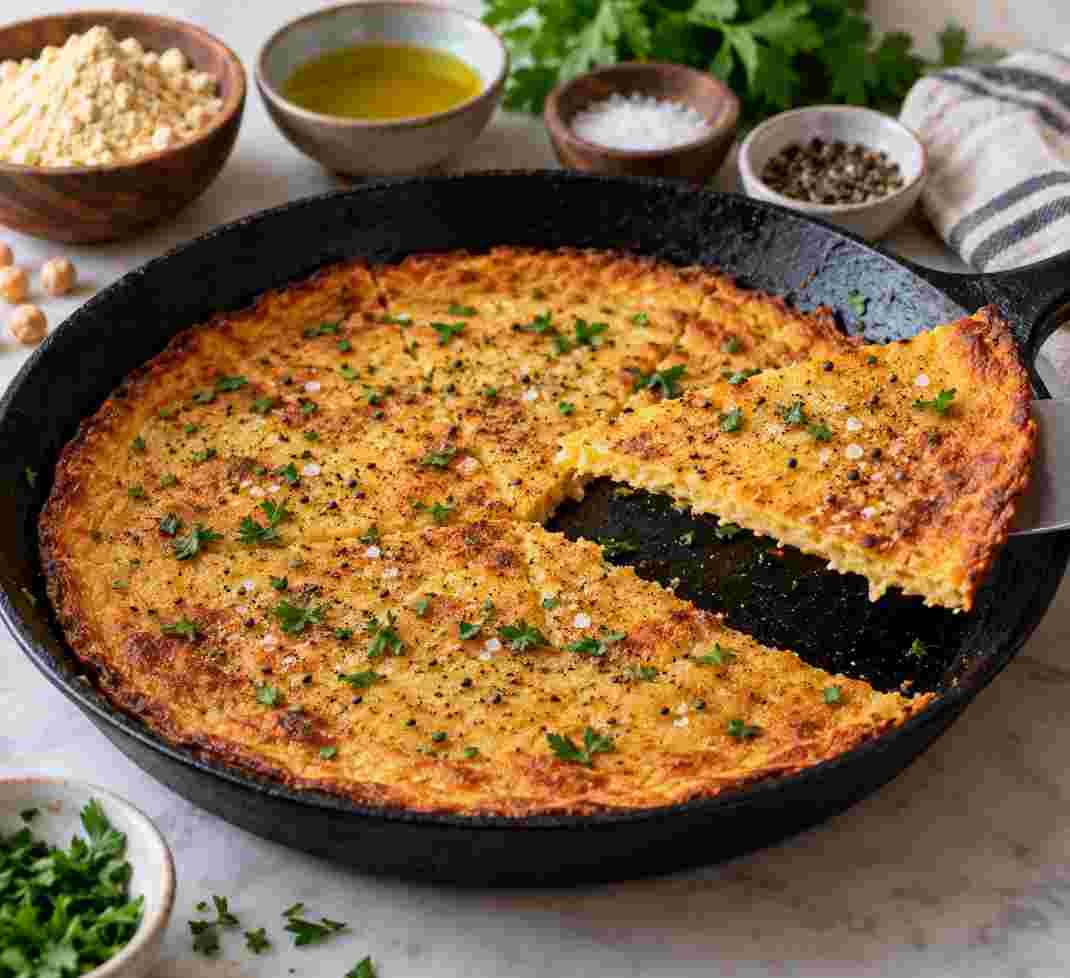
Socca is one of those recipes that looks almost too simple to be interesting, but the first bite usually changes that opinion. This rustic chickpea flatbread from Nice, France, is made with chickpea flour, water, olive oil, salt, black pepper and a touch of cumin. The batter is poured into a very hot skillet, where it cooks into a thin flatbread with crisp, browned edges and a soft, tender center. It is naturally gluten-free and vegan, and you do not need yeast, eggs or a long list of ingredients to make it. Socca is closely related to Italy’s farinata and has long been associated with the food traditions of southern France.
What Is Socca?
Socca is a savory chickpea-flour pancake or flatbread traditionally associated with Nice in southern France. Unlike a regular wheat-flour flatbread, it gets its structure entirely from chickpea flour. The result is slightly nutty, crisp around the edges and pleasantly soft in the middle.
The trick is not complicated, but the skillet needs to be properly hot. When the thin batter hits the hot, oiled pan, it begins cooking immediately and develops those browned, almost lacy edges that make socca so good. It can be eaten on its own, served with dips, used as a wrap, or treated like a simple gluten-free pizza base.
Why This Recipe Works
There is very little to prepare here. The batter comes together in one bowl, and there is no yeast or kneading involved. A hot cast-iron or stainless-steel skillet helps the socca brown properly and gives the edges their crisp texture. The combination of chickpea flour and olive oil also gives it a richer flavor than you might expect from such a short ingredient list.
Also Read: Vegetable Stir Fry
Ingredients for Socca
| Ingredient | Amount | Purpose |
|---|---|---|
| Chickpea flour | 1 cup (120 g) | Forms the base of the flatbread and gives it a nutty flavor |
| Water | 1 1/4 cups | Creates the thin batter |
| Extra-virgin olive oil | 3 tablespoons, divided | Adds flavor and helps the socca crisp |
| Fine salt | 1 teaspoon | Seasoning |
| Freshly ground black pepper | About 10 twists | Adds a sharp, peppery flavor |
| Ground cumin | 1/8 teaspoon | Adds a subtle warm, earthy note |
The ingredient quantities above are based on the basic socca recipe from Cookie and Kate, with the wording and presentation adapted for this recipe.
How to Make Socca
1. Heat the skillet and oven
Place a 12-inch cast-iron or stainless-steel skillet on the middle rack of your oven. Heat the oven to 475°F (245°C). The hot skillet is important because it helps the batter start cooking as soon as it touches the pan.
2. Make the chickpea batter
While the oven heats, add the chickpea flour, water, 2 tablespoons of olive oil, salt, black pepper and cumin to a mixing bowl. Whisk until the mixture is smooth and there are no obvious dry pockets of flour. There is no need to use a mixer.
3. Oil the hot skillet
Carefully remove the skillet from the oven using oven mitts. Pour the remaining 1 tablespoon of olive oil into the hot pan and carefully swirl it around so the bottom is coated.
4. Add the batter
Pour the socca batter into the hot skillet. It should spread into a fairly thin layer. Carefully place the skillet back in the oven.
5. Bake until golden
Bake for about 17 to 19 minutes, or until the edges are browned and pulling away slightly from the pan. The underside should have a golden, lacy appearance. If the center looks set but the bottom needs more color, give it another minute or two.
6. Serve warm
Let the socca cool for a minute or two before cutting or tearing it into pieces. It is particularly good while still warm, when the edges are crisp and the center remains tender.
Also Read: Peach and Burrata Salad
What You Can Do Better
The biggest difference between average socca and really good socca comes down to heat. Do not rush the oven preheating stage. A properly heated skillet gives the batter a better start and encourages browning.
Use chickpea flour that is fresh and finely milled. Older flour can sometimes have a stronger or slightly stale flavor, which is noticeable in a recipe this simple.
Keep the batter relatively thin. A thick layer can become soft and heavy instead of developing the contrast between crisp edges and a tender middle.
Do not try to move the socca around too early. Once it has cooked, a spatula should be able to lift it fairly easily. Checking the underside is a useful way to judge whether it has developed the golden-brown color you want.
How to Serve Socca
Freshly cooked socca does not need much. A little extra black pepper is enough for a simple snack. You can also cut it into wedges and serve it with hummus, tahini sauce, olive tapenade or another savory dip.
For a more substantial meal, use socca as a wrap and fill it with roasted vegetables, tomatoes, cucumbers, feta, goat cheese or a creamy tahini sauce. It also works surprisingly well as a pizza-style base. Add pesto, vegetables and cheese, then return it to the oven until the toppings are hot.
Can You Make Socca in a Smaller Skillet?
Yes. If you only have a 10-inch skillet, divide the batter into two portions and cook them separately. The smaller soccas will be thinner and crispier. Each batch can be baked for roughly 12 to 15 minutes, depending on how quickly your oven and skillet brown the batter.
Also Read: Avocado Crema Recipe
Storage and Reheating
Socca is best when freshly made, but leftovers can be stored in an airtight container in the refrigerator for up to 5 days. To bring back some of the crisp texture, reheat it in a hot oven or skillet rather than relying only on the microwave. It can also be frozen for longer storage.
Socca Nutrition Information
The recipe makes about four servings. Based on the source recipe, one serving is approximately 180 calories. Exact nutrition will vary depending on the chickpea flour and the amount of oil absorbed during cooking, so the figures below should be treated as estimates rather than laboratory-tested values. :contentReference[oaicite:5]{index=5}
| Nutrient | Approximate Amount Per Serving |
|---|---|
| Calories | 180 kcal |
| Protein | Approximately 5–6 g |
| Carbohydrates | Approximately 18–20 g |
| Fat | Approximately 9–10 g |
| Fiber | Approximately 3–4 g |
| Sodium | Varies with the amount of salt used |
Also Read: Avocado Chicken Salad
Recipe at a Glance
| Detail | Information |
|---|---|
| Recipe | Socca |
| Cuisine | French |
| Origin | Nice, France |
| Prep Time | About 6 minutes |
| Cook Time | About 17–19 minutes |
| Total Time | About 25 minutes |
| Servings | 4 |
| Main Ingredient | Chickpea flour |
| Diet | Gluten-free and vegan |
Frequently Asked Questions
Does socca need to rest before baking?
Not necessarily. This version can be mixed while the oven and skillet are heating, so you can make it without a long resting period. The original source specifically found that skipping the rest worked well for its desired texture.
What flour is used for socca?
Socca is made with chickpea flour, also called gram flour or besan in some parts of the world. Make sure you are using finely ground chickpea flour for a smooth batter.
Is socca gluten-free?
Yes. Traditional socca is made from chickpea flour rather than wheat flour, making it naturally gluten-free. If you need to avoid gluten strictly, check the packaging of your chickpea flour for possible cross-contamination.
Can I make socca without a cast-iron skillet?
Yes. A stainless-steel skillet can also work. The important part is using an oven-safe pan that can handle very high heat. Avoid non-stick cookware at temperatures that exceed the manufacturer’s recommendations.
What does socca taste like?
Socca has a mild, nutty chickpea flavor with a savory finish. The outside can become crisp and deeply browned while the inside stays softer and tender.
Can I add toppings to socca?
Absolutely. Fresh herbs, roasted vegetables, olives, pesto, cheese or tahini can all work well. Keep in mind that heavy toppings can soften the crisp surface, so add them after the socca has developed good browning.