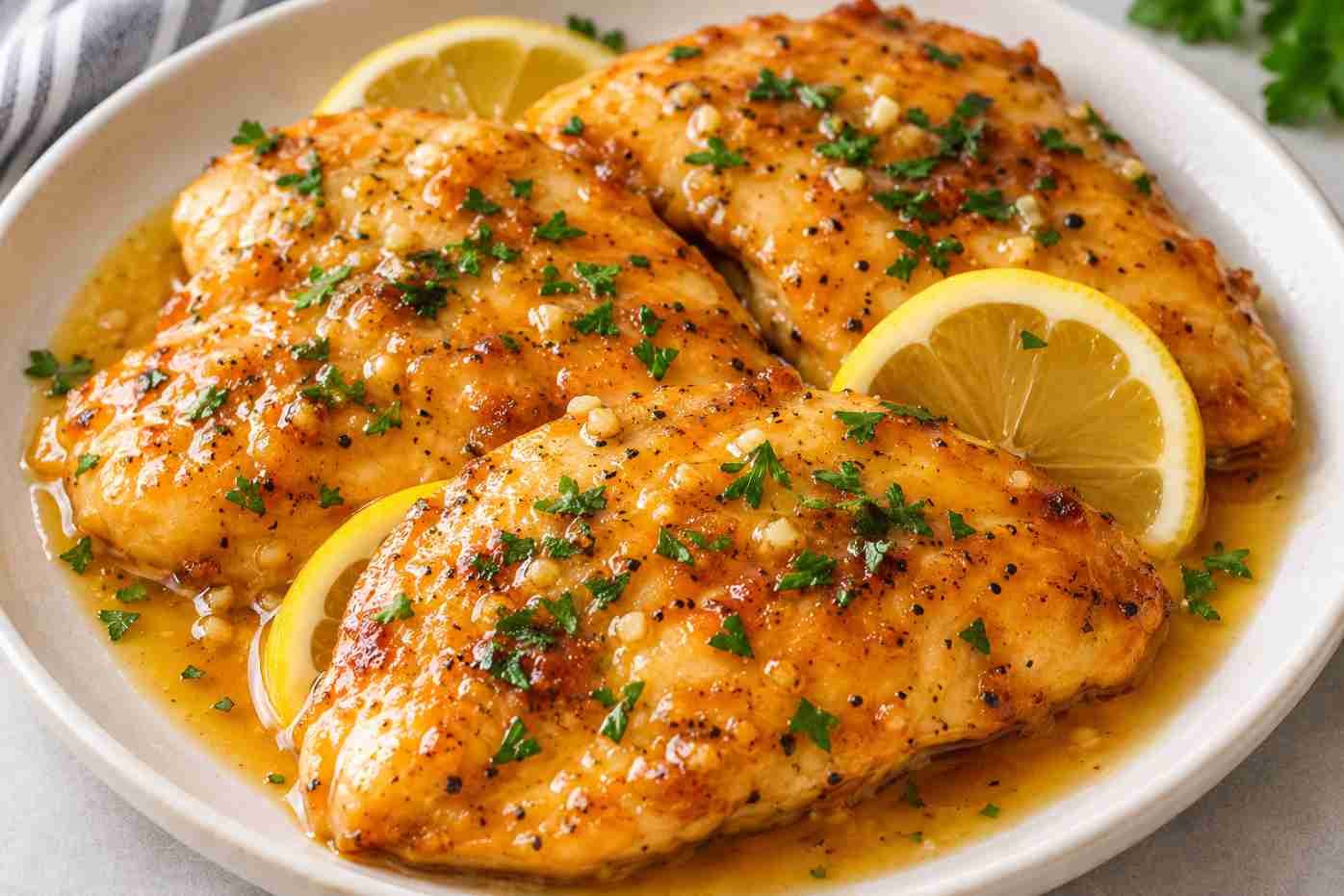
Honey Lemon Chicken is one of those simple dinners that proves you do not need a long list of ingredients to make something delicious. Tender, golden-brown chicken breasts are coated in a glossy sauce made with honey, freshly squeezed lemon juice, garlic and butter. The sweetness of the honey balances the sharpness of the lemon, while the garlic and chicken broth give the sauce a savory depth that keeps it from tasting overly sweet.
What makes this dish particularly convenient is that everything comes together in a single skillet. There is no overnight marinating, complicated preparation or lengthy cooking process involved. Serve it over fluffy rice, alongside roasted vegetables or with creamy mashed potatoes for a satisfying family dinner. The sauce is generous enough to spoon over your favorite side dishes, which is arguably the best part of the meal.
Honey Lemon Chicken Recipe Overview
| Preparation Time | 10 minutes |
| Cooking Time | 15 minutes |
| Total Time | 25 minutes |
| Servings | 4 |
| Course | Main Course |
| Cuisine | American-inspired |
| Cooking Method | Stovetop |
| Difficulty | Easy |
| Calories | Approximately 320 kcal per serving |
Ingredients for Honey Lemon Chicken
The ingredients are fairly straightforward, and most of them are probably already in your kitchen. Fresh lemons are worth using here because lemon juice is one of the main flavors rather than just a background seasoning.
For the Chicken
- 500 grams (about 1.1 pounds) boneless, skinless chicken breasts
- 1/4 cup all-purpose flour
- 1/2 teaspoon salt
- 1/2 teaspoon freshly ground black pepper
- 1 tablespoon olive oil
- 1 1/2 tablespoons unsalted butter
For the Honey Lemon Sauce
- 1/4 cup honey
- 1/4 cup freshly squeezed lemon juice
- 3/4 cup low-sodium chicken broth
- 2 garlic cloves, finely minced
- 1 teaspoon soy sauce
- 1 teaspoon cornstarch
- 2 tablespoons cold water
- 1/2 teaspoon lemon zest (optional)
- Salt and black pepper, to taste
For Garnishing
- Freshly chopped parsley
- Thin lemon slices
- Cracked black pepper, if desired
Also Read: Greek Chicken Meatballs Recipe
Ingredient Notes and Substitutions
Chicken Breasts
Boneless, skinless chicken breasts are ideal because they cook quickly when sliced into thin cutlets. Boneless chicken thighs are another option if you prefer darker, richer meat. They generally stay moist more easily but may require a few additional minutes of cooking.
Honey
Regular mild-flavored honey works particularly well. Strongly flavored varieties, such as buckwheat honey, can overpower the lemon and garlic. Maple syrup can be used in a pinch, although it will give the finished sauce a slightly different flavor.
Lemon Juice
Freshly squeezed lemon juice gives the sauce a clean, bright flavor. Bottled lemon juice can be used when fresh lemons are unavailable, but taste the sauce carefully before adding the entire quantity.
Chicken Broth
Chicken broth provides a savory base and helps balance the concentrated sweetness and acidity of the sauce. A low-sodium variety gives you greater control over the seasoning. Vegetable broth can also be used as a substitute.
Cornstarch
A small amount of cornstarch helps the sauce develop a smooth consistency without requiring prolonged cooking. Always dissolve it in cold water before adding it to the hot skillet to prevent lumps.
Also Read: Tuscan Chicken Recipe
How to Make Honey Lemon Chicken
Step 1: Prepare the Chicken
Place the chicken breasts on a clean cutting board and carefully slice each breast horizontally into two thinner pieces. If some portions are noticeably thicker than others, gently pound them between two sheets of parchment paper until they are approximately 1 centimeter thick. Pat the chicken dry with paper towels and season both sides with salt and black pepper.
Step 2: Coat the Chicken
Spread the all-purpose flour across a shallow plate. Lightly coat each chicken cutlet in flour, then shake away any excess. You only need a thin covering rather than a thick breaded crust. This will help the chicken develop an attractive golden surface and give the sauce something to cling to later.
Step 3: Pan-Fry the Chicken
Heat the olive oil and butter in a large skillet over medium-high heat. Once the butter has melted and the pan is hot, arrange the chicken in a single layer. Cook for approximately 3 to 4 minutes on each side, depending on the thickness of the cutlets. Avoid moving the chicken unnecessarily while the first side is browning. Once cooked through, transfer it to a clean plate. The internal temperature should reach 165°F (74°C).
Step 4: Prepare the Sauce Base
Reduce the heat to medium and add the minced garlic to the same skillet. Stir for about 20 to 30 seconds until fragrant, taking care not to let it burn. Pour in the chicken broth and scrape the bottom of the skillet with a wooden spoon to loosen the browned residue. These little browned pieces contribute a surprising amount of flavor to the finished sauce.
Step 5: Add Honey and Lemon
Stir the honey, lemon juice, soy sauce and optional lemon zest into the broth. Bring the mixture to a gentle simmer and allow it to cook for approximately 2 minutes. Taste the sauce at this stage. If the lemons are particularly sour, add a little extra honey. If the sauce tastes too sweet, another squeeze of lemon juice should balance it.
Step 6: Thicken the Sauce
Combine the cornstarch and cold water in a small bowl until completely smooth. Slowly pour the mixture into the simmering sauce while stirring continuously. Let it bubble gently for another minute or two until it becomes glossy and thick enough to lightly coat the back of a spoon. Avoid reducing it excessively because the sauce will thicken further as it cools.
Step 7: Return the Chicken to the Skillet
Return the cooked chicken and any accumulated juices to the skillet. Turn each piece once or twice so that both sides are covered in the honey lemon sauce. Allow the chicken to warm through for about a minute before removing the skillet from the heat.
Step 8: Garnish and Serve
Scatter freshly chopped parsley over the chicken and add a few thin lemon slices for extra freshness. Transfer the chicken to serving plates and spoon the remaining sauce over each portion. Serve immediately while the chicken is warm and the sauce is still glossy.
Also Read: One Pot Broccoli Chicken Mac and Cheese
What You Can Do Better
A few small adjustments can make a noticeable difference to the texture of the chicken and the balance of the sauce. These are particularly useful if you have previously struggled with dry chicken breasts or sauces that turn out excessively sweet.
- Keep the chicken an even thickness: Thin, evenly sized cutlets cook at roughly the same rate, preventing the edges from drying out before the center is ready.
- Dry the chicken before coating: Excess surface moisture makes it harder to achieve good browning and can cause the flour coating to become pasty.
- Do not overcrowd the skillet: Chicken releases moisture as it cooks. If the pieces are packed too closely together, they will steam rather than brown. Cook in batches if necessary.
- Balance the honey and lemon gradually: Lemons vary considerably in acidity. Taste the sauce before serving instead of assuming that every lemon will produce the same result.
- Keep the garlic from burning: Garlic cooks much faster than chicken. Lower the heat before adding it to the skillet to avoid introducing a bitter flavor.
- Save the browned bits: Unless they are burned, the residue left behind after frying the chicken should remain in the skillet. It gives the sauce a richer, more savory character.
- Avoid boiling the sauce aggressively: Honey-based sauces can become overly sticky or scorch when exposed to high heat for too long. A gentle simmer is sufficient.
- Use a meat thermometer: Checking the internal temperature is more reliable than judging doneness by color alone, especially when the chicken pieces vary in size.
Honey Lemon Chicken Variations
Spicy Honey Lemon Chicken
Add 1/2 teaspoon of crushed red pepper flakes or a small amount of sriracha to the sauce. The combination of sweetness, citrus and gentle heat works especially well when the chicken is served over plain rice.
Honey Lemon Garlic Chicken
Increase the garlic to four cloves for a more pronounced savory flavor. Finely mince the garlic so it distributes evenly throughout the sauce rather than remaining in large pieces.
Herbed Honey Lemon Chicken
Add a little fresh thyme or finely chopped rosemary while the sauce is simmering. Both herbs pair nicely with lemon, although rosemary should be used sparingly because of its stronger flavor.
Honey Lemon Chicken Thighs
Replace the chicken breasts with boneless, skinless thighs. Cook them until they reach a safe internal temperature of at least 165°F (74°C), adjusting the cooking time as necessary. Chicken thighs have a richer flavor and are particularly forgiving when reheated.
Gluten-Free Honey Lemon Chicken
Replace the all-purpose flour with rice flour or a suitable gluten-free flour blend. Use certified gluten-free tamari instead of regular soy sauce, and check that the chicken broth and cornstarch are also gluten-free.
Also Read: Lemon Chicken Pasta
What to Serve with Honey Lemon Chicken
Since this chicken has a fairly distinctive sweet and tangy sauce, simpler side dishes tend to work best. You want something that complements the sauce without competing with it.
| Side Dish | Why It Works |
|---|---|
| Steamed White Rice | Absorbs the honey lemon sauce without overpowering its flavor. |
| Garlic Mashed Potatoes | Adds a creamy texture that balances the citrus sauce. |
| Roasted Broccoli | Provides a slightly earthy flavor and pleasant crunch. |
| Steamed Green Beans | Keeps the meal light and adds freshness. |
| Butter Noodles | Creates a comforting base for the chicken and sauce. |
| Quinoa | Adds a nutty flavor, fiber and additional plant-based protein. |
| Garden Salad | Offers a refreshing contrast to the warm, sweet sauce. |
| Crusty Bread | Ideal for soaking up the remaining sauce on the plate. |
How to Store and Reheat Honey Lemon Chicken
Refrigerating
Transfer leftover chicken and sauce to an airtight container and refrigerate within two hours of cooking. Stored at 40°F (4°C) or below, the leftovers should be used within three to four days. If you want to preserve more of the chicken’s browned exterior, store the sauce separately.
Freezing
Place the cooked chicken in a freezer-safe container and store the sauce in a separate container when possible. Freeze for up to three months for the best quality. Thaw overnight in the refrigerator before reheating. The sauce may require a little stirring after thawing to restore its original consistency.
Reheating
Warm the chicken in a covered skillet over low to medium heat with a small splash of water or chicken broth. Add the sauce and gently heat until the chicken reaches 165°F (74°C). You can also use a microwave, heating in short intervals to avoid unnecessarily drying out the meat.
Also Read: Marry Me Chicken Recipe
Honey Lemon Chicken Nutritional Information
Honey Lemon Chicken provides a substantial amount of protein from the chicken breasts. The honey contributes most of the sugar, while the butter and olive oil account for much of the added fat. The following nutritional values are approximate and are based on dividing the recipe into four equal servings, including the sauce but excluding side dishes.
| Nutrient | Amount per Serving (Approx.) |
|---|---|
| Calories | 320 kcal |
| Protein | 30 g |
| Total Carbohydrates | 24 g |
| Total Fat | 11 g |
| Saturated Fat | 4 g |
| Dietary Fiber | 0.5 g |
| Total Sugars | 18 g |
| Cholesterol | 100 mg |
| Sodium | 500 mg |
| Potassium | 500 mg |
| Vitamin C | 7 mg |
Note: Nutritional information is an estimate and may vary depending on ingredient brands, chicken portion sizes, the amount of flour retained during coating and the quantity of sauce consumed.
Frequently Asked Questions
Can I make honey lemon chicken without flour?
Yes. The chicken can be seasoned and pan-fried directly without a flour coating. It will have a slightly different exterior, but the cornstarch will still help the sauce reach the desired consistency.
Can I make honey lemon chicken ahead of time?
Yes. You can prepare the sauce in advance and refrigerate it separately from the raw chicken. For the best texture, cook the chicken just before serving and warm the prepared sauce in the same skillet.
Why is my honey lemon sauce too runny?
The sauce may need a little more time to simmer. If it remains thin, dissolve another small amount of cornstarch in cold water and gradually stir it into the simmering sauce. Adding too much at once can make the sauce excessively thick.
How do I fix a sauce that is too sour?
Add honey in small increments, tasting after each addition. A splash of chicken broth can also help soften the acidity without making the sauce overly sweet.
Can I use lime instead of lemon?
Yes. Fresh lime juice works well with honey and garlic, although the finished dish will have a slightly different citrus flavor. Start with a smaller quantity and adjust according to taste.
Can I bake honey lemon chicken instead?
Yes. Arrange the seasoned chicken in a lightly greased baking dish and bake at 400°F (200°C) until the thickest portion reaches 165°F (74°C). Prepare the sauce separately on the stovetop and spoon it over the baked chicken before serving.
Is honey lemon chicken suitable for meal preparation?
It works well for meal preparation, particularly when paired with rice and steamed vegetables. Divide the cooked chicken into individual containers, refrigerate promptly and use within three to four days.
Can I double the amount of sauce?
Absolutely. Double the sauce ingredients if you are serving the chicken with rice, noodles or mashed potatoes. Use a sufficiently large skillet and allow additional time for the sauce to reach the right consistency.