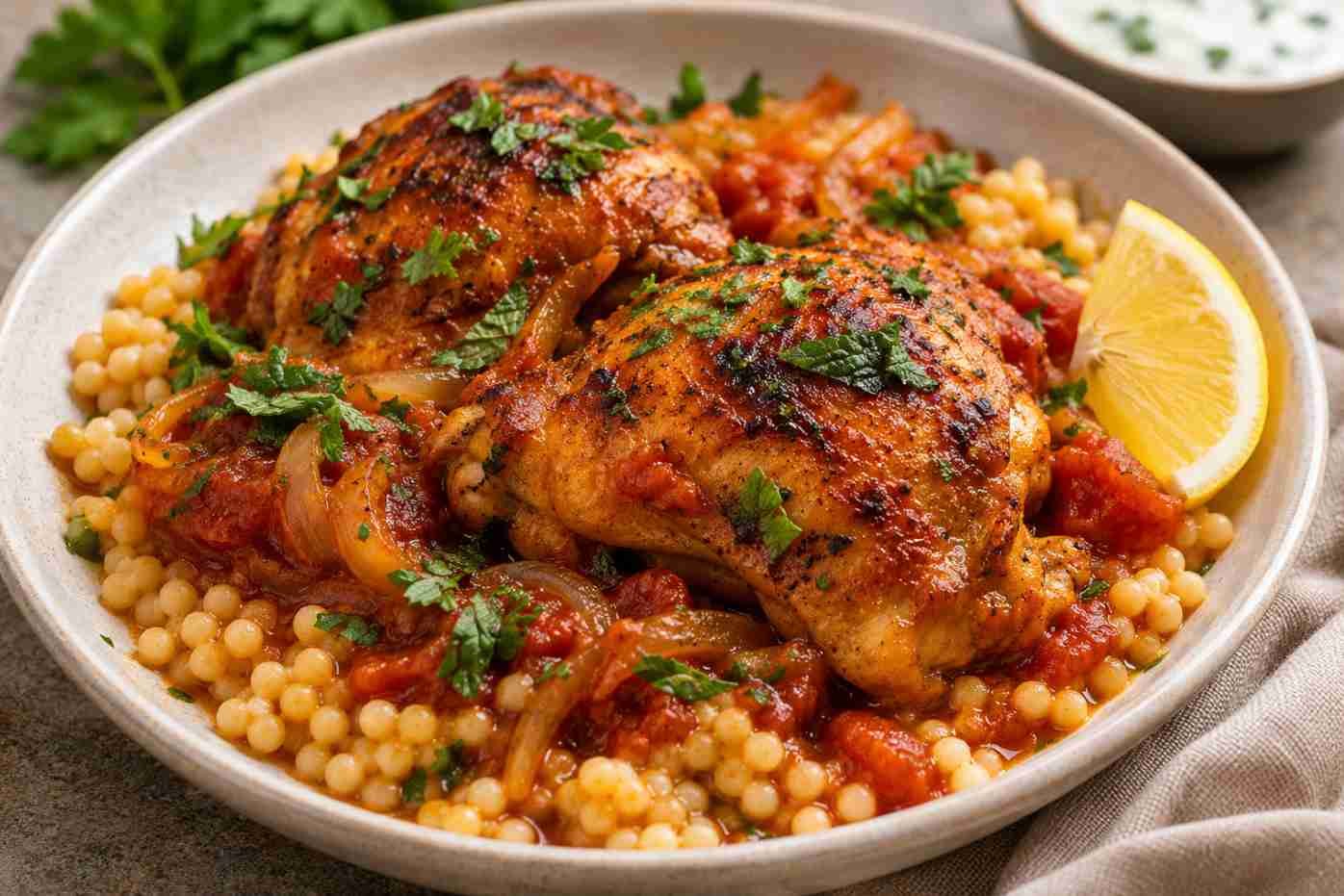
Inspired by the warm, aromatic flavors found in Syrian home cooking, this version is designed for an ordinary kitchen. It doesn’t require a complicated spice blend or any unusual cooking equipment. Most of the ingredients are probably already in your pantry, and the entire dish comes together in about an hour.
The sauce is particularly good with rice, bulgur wheat, or pearl couscous. You’ll want something on the plate to catch every spoonful.
What Is Syrian Chicken?
Syrian cuisine makes generous use of fragrant spices, fresh herbs, citrus, and slow-cooked meats. Cinnamon, cumin, coriander, and allspice appear in many savory dishes, creating warmth without necessarily making the food spicy.
There isn’t one single recipe known throughout Syria as Syrian Chicken. Different households prepare chicken with their own combinations of spices, vegetables, and cooking methods. This recipe is a Syrian-inspired tomato-braised chicken, combining browned chicken thighs with a gently spiced sauce.
The cinnamon is especially important here. You won’t taste it as a sweet ingredient. Instead, it gives the tomato sauce a subtle warmth that works beautifully with the garlic, cumin, and lemon.
Syrian Chicken Recipe at a Glance
| Recipe | Syrian Chicken |
| Cuisine | Syrian-inspired, Middle Eastern |
| Course | Main Course |
| Preparation Time | 15 minutes |
| Cooking Time | 45 minutes |
| Total Time | 1 hour |
| Servings | 4 |
| Cooking Method | Stovetop braising |
| Difficulty | Easy to Moderate |
Ingredients for Syrian Chicken
This recipe uses bone-in chicken thighs because they remain juicy during braising and give the sauce more flavor. Boneless thighs can also be used, although they will cook more quickly.
For the Chicken
- 4 large bone-in, skin-on chicken thighs (approximately 900 g to 1 kg)
- 2 tablespoons olive oil
- 1 teaspoon ground cumin
- 1 teaspoon ground coriander
- 1/2 teaspoon ground cinnamon
- 1/2 teaspoon paprika
- 3/4 teaspoon salt, or to taste
- 1/4 teaspoon freshly ground black pepper
For the Tomato and Spice Sauce
- 1 large onion, thinly sliced
- 4 garlic cloves, finely chopped
- 1 tablespoon fresh ginger, grated
- 400 g crushed tomatoes
- 3/4 cup low-sodium chicken stock
- 1 tablespoon tomato paste
- 1/4 teaspoon ground allspice
- 1/4 teaspoon turmeric
- 1 small bay leaf
- 1 tablespoon fresh lemon juice
- 1 teaspoon honey, optional
- 2 tablespoons chopped fresh parsley
- 1 tablespoon chopped fresh mint
- Salt and black pepper, as needed
For Serving
- Cooked basmati rice, bulgur wheat, or pearl couscous
- Fresh lemon wedges
- Plain yogurt, optional
- Extra chopped parsley
Also Read: Oven Baked Chicken Schnitzel
How to Make Syrian Chicken
The cooking process is straightforward, but two details make a noticeable difference: browning the chicken properly and allowing the tomato sauce enough time to develop its flavor.
Step 1: Season the Chicken
Pat the chicken thighs dry with paper towels. Removing surface moisture helps the skin brown rather than steam in the pan.
In a small bowl, combine cumin, coriander, cinnamon, paprika, salt, and black pepper. Rub the seasoning evenly over the chicken, including the underside of each thigh. Set aside for about 10 minutes while preparing the onion and garlic.
Step 2: Brown the Chicken
Heat the olive oil in a large, deep skillet or heavy-bottomed pan over medium-high heat. Place the chicken thighs skin-side down and cook for 5–7 minutes, until the skin develops a deep golden color.
Turn the thighs and cook the other side for another 3 minutes. Transfer the chicken to a plate. It will not be fully cooked at this stage, which is exactly what you want.
Leave approximately 1 tablespoon of fat in the pan and carefully discard any excess. The browned bits left behind will add flavor to the sauce.
Step 3: Cook the Onion and Aromatics
Reduce the heat to medium. Add the sliced onion to the same pan and cook for 5–6 minutes, stirring occasionally, until softened and lightly golden.
Add the garlic and ginger, then stir for about 30 seconds. Keep the heat moderate so the garlic doesn’t burn. Add the allspice and turmeric and stir briefly until fragrant.
Step 4: Build the Tomato Sauce
Stir in the tomato paste and cook for 1 minute. Add the crushed tomatoes, chicken stock, and bay leaf. Scrape the bottom of the pan with a wooden spoon to release the browned pieces from cooking the chicken.
Bring the mixture to a gentle simmer and let it cook uncovered for 5 minutes. The tomatoes should lose some of their raw acidity, and the sauce should begin to thicken slightly.
If the tomatoes taste particularly sharp, add the optional teaspoon of honey. It should balance the acidity rather than make the sauce noticeably sweet.
Step 5: Simmer the Chicken
Return the chicken thighs to the skillet, placing them skin-side up. Spoon a little sauce around the pieces, leaving most of the skin exposed.
Reduce the heat to low, cover the pan, and simmer gently for approximately 25–35 minutes. The exact time depends on the size of the thighs. The chicken must reach at least 74°C (165°F) at its thickest point, without the thermometer touching the bone. Thighs often become more tender when cooked to around 80–85°C (176–185°F).
Check the pan occasionally. If the sauce becomes too thick before the chicken is ready, add a small splash of hot water or stock.
Step 6: Finish with Lemon and Herbs
Once the chicken is tender, remove the lid and simmer uncovered for another 3–5 minutes if the sauce needs thickening. Remove the bay leaf.
Stir the lemon juice into the sauce and taste for seasoning. Add a little more salt or lemon if needed. Sprinkle with chopped parsley and mint just before serving.
For slightly crisper skin, briefly place the cooked chicken under a hot oven grill or broiler in an oven-safe dish, watching closely to prevent burning.
Step 7: Serve
Spoon cooked rice, bulgur, or pearl couscous onto serving plates. Place a chicken thigh on top and add a generous amount of tomato sauce. Finish with fresh parsley and a lemon wedge. A spoonful of plain yogurt on the side works particularly well if you prefer a milder finish.
Also Read: Easy Chicken Noodle Recipes
What You Can Do Better
A good Syrian Chicken recipe depends less on complicated ingredients and more on how the familiar ingredients are handled. These small adjustments can make the finished dish noticeably better.
Use Chicken Thighs Instead of Breast
Chicken thighs contain more fat and connective tissue than breast meat, making them better suited to gentle braising. They stay moist as the sauce develops. If using chicken breast, shorten the cooking time and check the internal temperature carefully to prevent dryness.
Give the Onions Enough Time
Don’t rush the onions. Cooking them until lightly golden gives the sauce a sweeter, rounder flavor. Adding the tomatoes while the onions are still raw can leave the finished sauce tasting a little flat.
Keep the Cinnamon Subtle
Cinnamon should support the other spices rather than dominate them. Start with the measured amount and avoid adding extra until you’ve tasted the finished sauce. Too much can make a savory chicken dish taste unexpectedly sweet.
Finish with Fresh Lemon
Adding lemon juice near the end preserves its fresh, bright character. It balances the richness of the chicken and the cooked tomatoes. If the sauce tastes heavy, a small additional squeeze of lemon may be all it needs.
Let the Chicken Rest Before Serving
Turn off the heat and allow the finished dish to stand for about 5 minutes. The sauce settles slightly, and the chicken is easier to handle. This is also a convenient time to finish cooking your rice or couscous.
Also Read: Lebanese Lemon Garlic Chicken (Al Aseel)
What to Serve with Syrian Chicken
Because this dish produces plenty of sauce, the best accompaniments are those that absorb it without competing with the spices.
- Pearl couscous: Its chewy, rounded texture makes it especially good for catching the tomato sauce.
- Basmati rice: A simple and dependable choice that keeps the chicken as the main attraction.
- Bulgur wheat: Adds a slightly nutty flavor and makes a satisfying alternative to rice.
- Flatbread: Warm pita or another soft flatbread is ideal for scooping up the sauce.
- Cucumber yogurt salad: Provides a cool contrast to the warm spices.
- Roasted vegetables: Carrots, cauliflower, or eggplant can turn the meal into a larger family dinner.
Easy Variations
Syrian Chicken with Chickpeas
Add 1 cup of drained, cooked chickpeas to the tomato sauce during the final 15 minutes of cooking. They absorb the spices and make the dish more substantial. Add a little extra stock if necessary.
Syrian Chicken with Potatoes
Cut two medium potatoes into small chunks and add them to the pan before returning the chicken. Make sure there is enough liquid to cook them properly. The potatoes should be fork-tender before serving, which may require a slightly longer simmer.
Spicy Syrian-Inspired Chicken
Add 1/4 teaspoon of cayenne pepper or a small chopped fresh chili when cooking the garlic. This gives the dish a little heat without overpowering the cinnamon and coriander.
Syrian Chicken with Dried Fruit
For a subtle sweet-savory contrast, add 2 tablespoons of golden raisins or chopped dried apricots during the final 10 minutes. The fruit softens in the tomato sauce and pairs nicely with the warm spices.
Also Read: Chicken Gyros
Storage and Reheating
Refrigerator: Allow the chicken to cool slightly, then refrigerate it in a covered container within 2 hours of cooking. Store at 4°C (40°F) or below and use within 3–4 days.
Freezer: Place the cooled chicken and sauce in a freezer-safe container. For best quality, use within 2–3 months. Freeze rice or couscous separately if preparing complete meals.
Reheating: Warm the chicken and sauce in a covered skillet over medium-low heat, adding a splash of water if needed. Reheat leftovers thoroughly to 74°C (165°F).
Make-ahead tip: The tomato sauce can be prepared a day ahead and refrigerated. When ready to cook, brown the seasoned chicken, warm the sauce, and finish the dish as directed.
Nutritional Information
The following values are approximate estimates for one serving of Syrian Chicken, based on four servings and including the chicken, sauce, and cooking oil. Rice, couscous, yogurt, and other side dishes are not included. Actual values will vary depending on chicken size, skin and fat content, stock, and ingredient brands.
| Nutrient | Approximate Amount Per Serving |
|---|---|
| Calories | 480 kcal |
| Protein | 40 g |
| Total Fat | 30 g |
| Saturated Fat | 8 g |
| Carbohydrates | 13 g |
| Dietary Fiber | 3 g |
| Total Sugars | 7 g |
| Sodium | 750 mg |
| Cholesterol | 175 mg |
Nutrition estimates are provided for general guidance and are not laboratory-tested values.
Frequently Asked Questions
Is Syrian Chicken Spicy?
Not necessarily. This version is aromatic rather than hot. Cumin, cinnamon, coriander, and allspice provide most of the flavor. You can add chili if you prefer some heat, but it isn’t required.
Can I Make Syrian Chicken Without an Oven?
Yes. This recipe is prepared entirely on the stovetop. A deep skillet with a well-fitting lid is all you need. Keep the sauce at a gentle simmer so the chicken cooks evenly without drying out.
Can I Use Boneless Chicken Thighs?
Absolutely. Boneless thighs generally need less time to cook. Begin checking after about 15–20 minutes of gentle simmering and continue until the chicken reaches a safe internal temperature.
What Can I Substitute for Allspice?
If you don’t have allspice, use a very small pinch of ground cloves with a pinch of nutmeg. Both are strong, so add them cautiously. You can also leave out the allspice and rely on the other seasonings.
Can I Make This Recipe Ahead of Time?
Yes. The cooked chicken can be refrigerated and reheated the following day. The spices will have had more time to mingle with the sauce. Add a little fresh parsley and lemon after reheating to brighten the flavor.
Is Syrian Chicken Gluten-Free?
The chicken dish can be gluten-free if the stock, spices, and other packaged ingredients are certified or verified gluten-free. Serve it with rice rather than wheat-based couscous or bulgur.