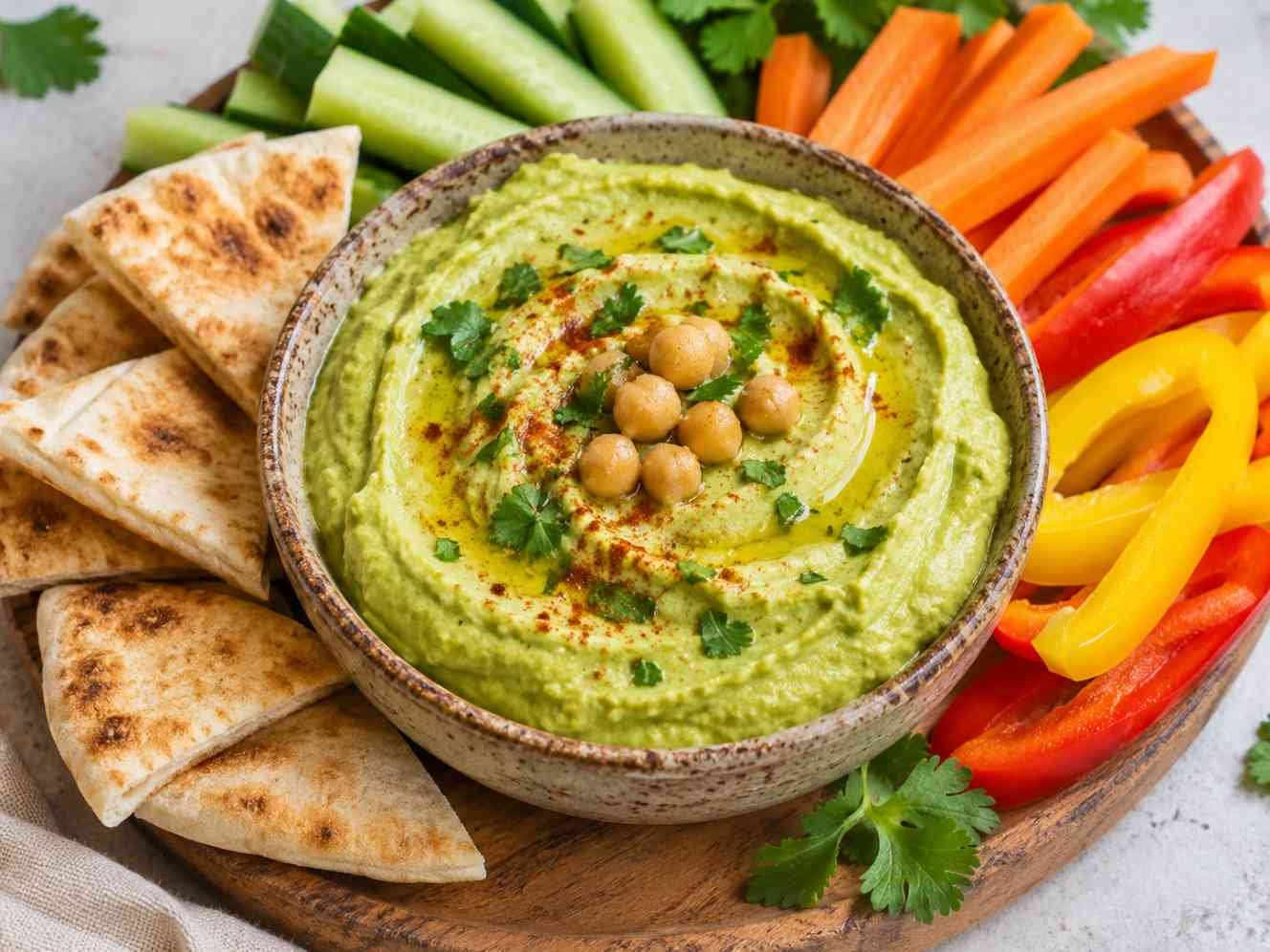
Avocado hummus is what happens when two of the best creamy dips come together in one bowl. The chickpeas give it that familiar, slightly nutty hummus flavor, while ripe avocado makes everything smoother, richer, and a little fresher. Add lemon juice, garlic, tahini, and a handful of fresh herbs, and you have a dip that tastes good with almost anything you put beside it.
It’s also surprisingly easy to make. There’s no cooking involved if you’re using canned chickpeas, and the whole thing comes together in a food processor in about 10 minutes. Serve it with warm pita bread, crunchy vegetables, or tortilla chips, or spread it generously over sandwiches and wraps. It’s substantial enough for a quick snack but fresh enough to serve alongside a larger meal.
Avocado Hummus Recipe
This version has the richness of traditional hummus with a noticeable avocado flavor and a gentle citrus finish. A little ground cumin brings warmth, while fresh cilantro keeps the dip from tasting too heavy. You can adjust the lemon and garlic depending on how sharp you like your hummus.
| Preparation Time | 10 minutes |
| Cooking Time | 0 minutes |
| Total Time | 10 minutes |
| Servings | 8 |
| Yield | Approximately 2 cups |
| Course | Appetizer, Snack, Dip |
| Cuisine | Mediterranean-Inspired |
| Diet | Vegetarian, Vegan |
Ingredients for Avocado Hummus
Most of the ingredients are pantry staples. The only things that really need to be fresh are the avocado, lemon, and herbs. Choose an avocado that gives slightly when pressed but doesn’t feel mushy.
| Ingredient | Quantity | Purpose |
|---|---|---|
| Cooked chickpeas, drained and rinsed | 1 can (15 oz / 425 g), about 1 1/2 cups drained | Provides body, protein, and traditional hummus flavor |
| Ripe avocado | 1 large | Adds richness and a creamy texture |
| Tahini | 2 tablespoons | Gives the dip a mild sesame flavor |
| Fresh lemon juice | 3 tablespoons | Balances richness with acidity |
| Extra virgin olive oil | 1 tablespoon | Adds flavor and smoothness |
| Garlic | 1 medium clove | Adds a savory, slightly sharp flavor |
| Fresh cilantro | 2 tablespoons, chopped | Adds freshness and color |
| Ground cumin | 1/4 teaspoon | Provides a warm, earthy note |
| Salt | 1/2 teaspoon, or to taste | Enhances the overall flavor |
| Black pepper | 1/4 teaspoon | Adds mild seasoning |
| Cold water | 2–4 tablespoons, as needed | Adjusts the consistency |
Optional Toppings
- A drizzle of extra virgin olive oil
- A pinch of smoked paprika or chili flakes
- Freshly chopped cilantro or parsley
- Toasted sesame seeds
- Finely diced tomatoes
Also Read: Caramel Sauce Recipe
How to Make Avocado Hummus
A food processor makes the smoothest hummus, but a high-powered blender will also work. The important part is blending the chickpeas thoroughly before adjusting the final consistency. This prevents the dip from becoming watery while you’re trying to get rid of small chickpea pieces.
Step 1: Prepare the Chickpeas
Drain the canned chickpeas and rinse them under cool running water. Shake off the excess moisture and transfer them to a food processor. If you prefer exceptionally smooth hummus, rub the chickpeas gently between your hands to loosen some of their skins. Removing every skin isn’t necessary, but taking off the loose ones can improve the texture.
Step 2: Blend the Hummus Base
Add the tahini, lemon juice, garlic, olive oil, cumin, salt, and black pepper to the chickpeas. Process for about 60–90 seconds, stopping once to scrape down the sides. The mixture will be thick at first. Add 2 tablespoons of cold water and blend again until the chickpeas are finely broken down and the mixture looks mostly smooth.
Step 3: Add the Avocado
Slice the avocado lengthwise, remove the pit, and scoop the flesh into the food processor. Add the chopped cilantro. Blend for another 30–45 seconds until the avocado is fully incorporated and the hummus turns a light green color. Avoid adding too much water at this stage because the avocado will naturally soften the mixture.
Step 4: Adjust the Flavor and Texture
Taste the hummus before serving. If it seems a little flat, add a pinch more salt or another squeeze of lemon. For a thinner, more scoopable consistency, blend in cold water one tablespoon at a time. The finished hummus should be creamy enough to spread with a spoon but thick enough to hold a gentle swirl on top.
Step 5: Garnish and Serve
Spoon the avocado hummus into a shallow serving bowl. Use the back of a spoon to make a small well in the center, then drizzle with olive oil. Finish with smoked paprika, sesame seeds, or a few cilantro leaves. Serve immediately with warm pita bread, sliced cucumbers, carrot sticks, or crackers.
What You Can Do Better
Avocado hummus is a forgiving recipe, but a few small changes can make a noticeable difference. The biggest improvements usually come from choosing the right avocado, getting the chickpeas smooth, and balancing the acidity.
1. Use an Avocado That Is Actually Ripe
An underripe avocado won’t blend as smoothly and can leave the hummus tasting slightly grassy. Look for one that yields gently under your thumb without feeling soft or hollow. If the flesh has large brown patches or smells fermented, use another avocado. Good avocado flavor is the foundation of this dip.
2. Blend the Chickpeas Before Adding the Avocado
Chickpeas take longer to break down than avocado. Processing everything together from the beginning can leave you with a smooth avocado base containing gritty little chickpea pieces. Blending the hummus base first gives you a more even texture without unnecessarily processing the avocado.
3. Start With Less Water Than You Think You Need
Avocado hummus becomes softer as it blends. Adding too much water early on can produce a dip that’s closer to salad dressing than hummus. Start with a couple of tablespoons, then increase gradually. You can always thin hummus, but thickening it again is more difficult.
4. Don’t Be Shy With the Lemon
Avocado and tahini are both rich ingredients, so the finished dip needs enough acidity to taste balanced. Fresh lemon juice makes a real difference here. Three tablespoons work well for this quantity, but an especially large avocado may need a little extra. Taste after blending rather than relying only on the measurements.
5. Give the Garlic a Minute to Settle
Raw garlic can taste particularly strong immediately after blending. If your hummus seems too garlicky, refrigerate it for 10–15 minutes and taste again before adding anything else. The flavors will settle slightly. For a gentler taste next time, try roasted garlic instead.
Also Read: Garlic Aioli Recipe
Variations You Can Try
Once you’ve made the basic version, it’s easy to adjust the recipe without changing the method. These variations work especially well when you’re serving the hummus with different foods.
Spicy Avocado Hummus
Add half a deseeded jalapeño or a pinch of cayenne pepper before blending. For a smokier flavor, use chipotle powder instead. A little heat works particularly well when the hummus is served with tortilla chips.
Extra-Lemony Avocado Hummus
Increase the lemon juice by 1 tablespoon and add 1/2 teaspoon of finely grated lemon zest. This produces a brighter, sharper dip that pairs nicely with grilled vegetables or roasted chicken.
Roasted Garlic Avocado Hummus
Replace the raw garlic with 2–3 soft roasted garlic cloves. Roasted garlic has a sweeter, milder flavor and gives the hummus a deeper savory taste without the sharpness of fresh garlic.
Avocado Hummus Without Tahini
If you don’t have tahini, simply leave it out and add another teaspoon of olive oil. The hummus will have less sesame flavor, but the avocado still provides plenty of creaminess. A small spoonful of plain Greek yogurt is another option if you don’t need the dip to be vegan.
What to Serve With Avocado Hummus
This dip isn’t limited to pita bread. Its mild, creamy flavor makes it useful in lunches, snack plates, and even simple dinners.
- Pita bread: Warm pita wedges are ideal for scooping up thick hummus.
- Fresh vegetables: Cucumber, celery, carrots, bell peppers, and radishes add a refreshing crunch.
- Tortilla chips: A good choice if you want something between hummus and guacamole for a party.
- Sandwiches and wraps: Spread a generous layer over bread or tortillas instead of mayonnaise.
- Grain bowls: Add a spoonful to bowls containing quinoa, rice, roasted vegetables, or chickpeas.
- Toast: Spread over toasted sourdough and finish with sliced tomatoes, chili flakes, and a little lemon juice.
Also Read: French Onion Dip
How to Store Avocado Hummus
Unlike traditional hummus, avocado hummus is best eaten fairly soon after preparation. Once avocado flesh is exposed to air, it begins to oxidize, which causes its bright green color to darken. Lemon juice slows this process but doesn’t prevent it completely.
Refrigerator Storage
Transfer leftover hummus to a clean, airtight container. Smooth the surface with a spoon and press food-safe plastic wrap directly against the hummus to reduce air exposure. Seal the container and refrigerate promptly. For the best color and flavor, eat it within 1–2 days.
Can You Freeze Avocado Hummus?
Freezing is possible, but it isn’t the best choice if you care about texture. The dip may become slightly watery or grainy after thawing. If you decide to freeze it, divide it into small airtight portions, leaving room for expansion, and use within about 1 month for the best quality. Thaw overnight in the refrigerator and stir thoroughly before serving.
How to Keep Avocado Hummus Green
The most useful trick is limiting contact with air. A little extra lemon juice can help, but covering the surface directly is more effective than simply putting a lid on a container with a large air gap. Some light browning is normal and doesn’t automatically mean the hummus has spoiled. Discard it if you notice mold, an unpleasant smell, or other signs of spoilage.
Nutritional Information
Avocado hummus provides plant-based protein, dietary fiber, and unsaturated fats from avocado, tahini, and olive oil. Chickpeas also contribute iron and folate. It makes a satisfying snack, although serving size matters because the ingredients are relatively energy-dense.
The following values are approximate estimates for one serving, based on dividing the recipe into eight equal portions without optional toppings. Actual nutrition will vary with the avocado size, chickpea brand, tahini, and amount of added seasoning.
| Nutrient | Approximate Amount Per Serving |
|---|---|
| Calories | 155 kcal |
| Total Fat | 10 g |
| Saturated Fat | 1.4 g |
| Carbohydrates | 14 g |
| Dietary Fiber | 4.5 g |
| Total Sugars | 2 g |
| Protein | 4.5 g |
| Sodium | 240 mg |
| Cholesterol | 0 mg |
Nutrition estimates exclude pita bread, crackers, vegetables, and garnishes. Sodium content depends heavily on the canned chickpeas and salt used.
Also Read: Jalapeño Artichoke Dip
Frequently Asked Questions
Is avocado hummus healthier than regular hummus?
Both can fit into a balanced diet. Traditional hummus provides protein and fiber from chickpeas, while avocado adds additional fiber and monounsaturated fats. Avocado hummus isn’t necessarily lower in calories, especially when it contains tahini and olive oil, but it offers a useful combination of nutrients.
Can I make avocado hummus without a food processor?
Yes. Mash the chickpeas thoroughly with a fork or potato masher, then mix in the tahini, lemon juice, finely minced garlic, and seasonings. Mash the avocado separately before combining everything. The texture will be coarser than food-processor hummus, but it will still taste good.
Can I use dried chickpeas instead of canned?
Absolutely. Soak and cook dried chickpeas until they’re very tender, then allow them to cool before using. You’ll need approximately 1 1/2 cups of cooked chickpeas for this recipe. Soft chickpeas generally blend more easily and produce a creamier dip.
Can I make avocado hummus ahead of time?
You can prepare it several hours before serving and keep it refrigerated in an airtight container with the surface covered. If you’re preparing food for a party the next day, another option is to blend the chickpea hummus base ahead of time and add the avocado shortly before serving. This helps preserve the freshest flavor and color.
Is avocado hummus vegan and gluten-free?
This recipe is vegan and made with naturally gluten-free ingredients. If you’re preparing it for someone with celiac disease or a food allergy, check packaged ingredients for cross-contact warnings and choose certified gluten-free accompaniments where necessary. Tahini contains sesame, which is a common allergen.
Why is my avocado hummus bitter?
Bitterness can come from tahini, overly strong olive oil, or an avocado that isn’t fully ripe. Taste your tahini before adding it, and use a mild olive oil if you’re sensitive to bitter flavors. A little extra lemon juice and salt can improve the balance, but they won’t completely fix a genuinely bitter ingredient.