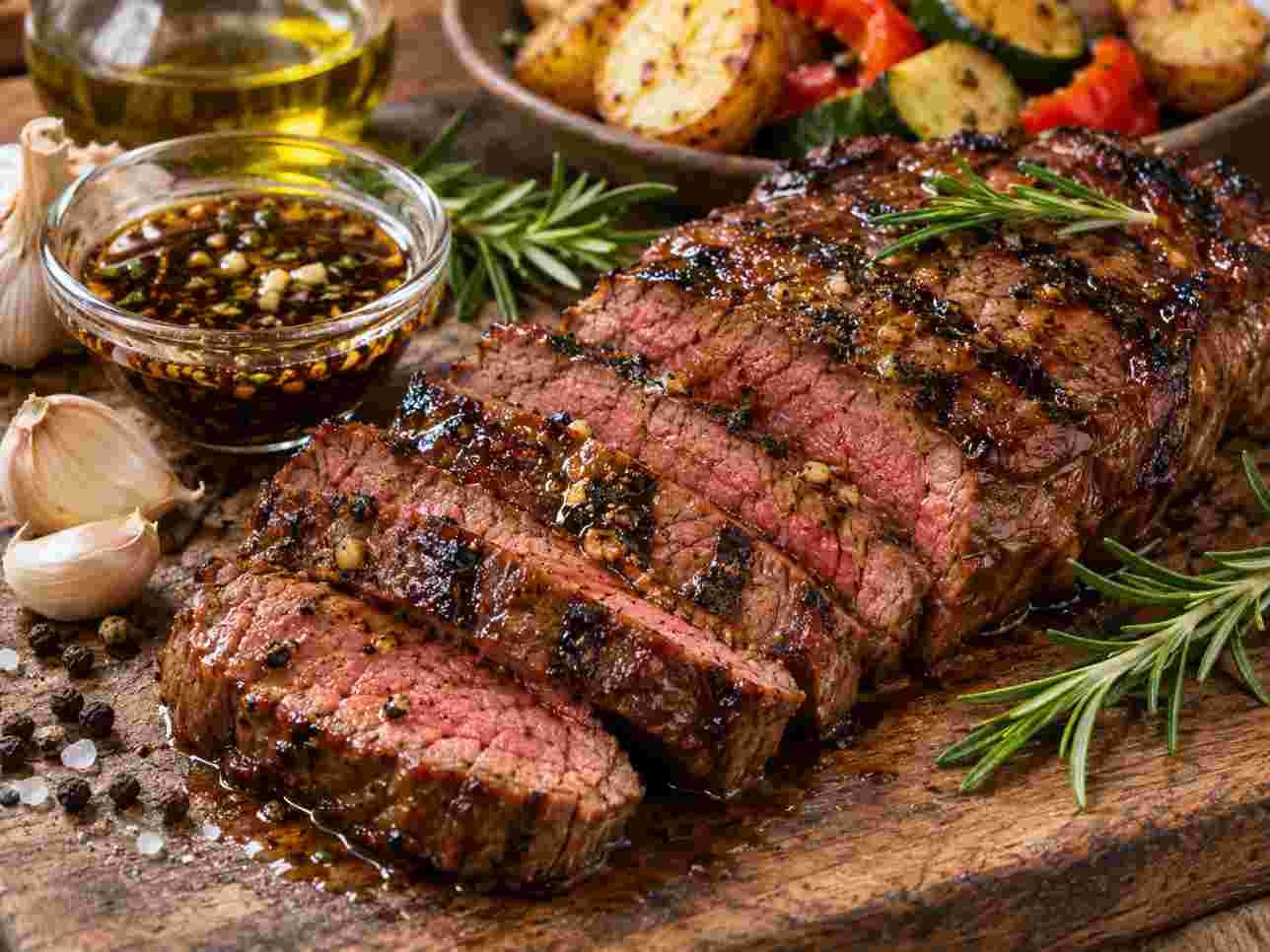
A good beef steak marinade should do more than simply coat the meat with seasoning. It should bring out the natural flavor of the beef, add a little richness, and help an ordinary steak turn into a satisfying dinner. This homemade beef steak marinade combines soy sauce, Worcestershire sauce, olive oil, garlic, balsamic vinegar, and a few simple seasonings to create a savory mixture with just enough tanginess.
You don’t need expensive ingredients or complicated techniques to make it. Most of what’s required is probably already in your kitchen. The marinade takes about five minutes to prepare, and once the beef has absorbed the flavors, you can cook it in a hot skillet or on the grill. It’s particularly useful for everyday cuts of steak that could benefit from a little extra seasoning.
The important thing is getting the balance right. Too much vinegar can make the outside of the meat unpleasantly soft, while too much soy sauce can overwhelm the beef. This recipe keeps those stronger ingredients in check, allowing the steak itself to remain the star of the meal.
Beef Steak Marinade Recipe Overview
| Recipe Details | Information |
|---|---|
| Recipe Name | Beef Steak Marinade |
| Course | Main Course |
| Cuisine | American-Inspired |
| Preparation Time | 5 Minutes |
| Marinating Time | 4–12 Hours |
| Cooking Time | 8–12 Minutes (Varies by Thickness) |
| Resting Time | 5 Minutes |
| Servings | 4 |
| Cooking Method | Grilling or Pan-Searing |
| Difficulty | Easy |
Ingredients for Beef Steak Marinade
This recipe makes enough marinade for approximately 1½ pounds (680 g) of beef steak. The ingredients work together to provide savory depth, a gentle tang, and a fragrant finish without masking the natural flavor of the meat.
Main Ingredients
| Ingredient | Quantity | Purpose |
|---|---|---|
| Beef steaks | 1½ pounds (680 g) | Main ingredient |
| Olive oil | 2 tablespoons | Adds richness and helps distribute the seasonings |
| Soy sauce | 3 tablespoons | Provides saltiness and savory depth |
| Worcestershire sauce | 2 tablespoons | Adds a rich, complex savory flavor |
| Balsamic vinegar | 1 tablespoon | Provides acidity and subtle sweetness |
| Dijon mustard | 1 teaspoon | Adds mild sharpness and helps bind the mixture |
| Fresh garlic, minced | 3 cloves | Adds fresh garlic flavor |
| Brown sugar | 1 teaspoon | Balances acidity and encourages browning |
| Onion powder | ½ teaspoon | Adds a rounded, savory taste |
| Freshly ground black pepper | ½ teaspoon | Adds gentle warmth |
| Dried rosemary | ½ teaspoon | Provides a subtle herbal aroma |
Choosing the Right Beef
Sirloin, flank steak, skirt steak, and flat iron steak are all good options for this marinade. Each has a slightly different texture, but all work well with the savory ingredients. Sirloin is a practical choice for a regular steak dinner, while flank and skirt steak are particularly good when sliced thinly against the grain.
Premium steaks with plenty of marbling, such as high-quality ribeye, generally need little more than salt, pepper, and careful cooking. A marinade is most useful when you want to add flavor to a relatively lean or economical cut.
Also Read: Spicy Firecracker Beef
How to Make Beef Steak Marinade
Preparing the marinade is straightforward. The real difference comes from giving the beef enough time to absorb the seasoning and cooking it over properly heated equipment.
Step 1: Prepare the Marinade
In a medium mixing bowl, combine the olive oil, soy sauce, Worcestershire sauce, balsamic vinegar, and Dijon mustard. Add the minced garlic, brown sugar, onion powder, black pepper, and dried rosemary. Whisk everything together until the sugar has dissolved and the ingredients are evenly combined. The mixture should smell savory, slightly tangy, and distinctly garlicky.
Step 2: Prepare the Beef
Pat the steaks dry with paper towels. If you’re using a thick steak, check that the thickness is reasonably even so it cooks consistently. There’s no need to pound the meat unless you’re working with a cut that requires it. Place the steaks in a shallow glass dish or a large resealable food-safe bag.
Step 3: Add the Marinade
Pour the prepared marinade over the beef, making sure every piece is coated. Turn the steaks a few times to distribute the liquid. If you’re using a resealable bag, press out the excess air before sealing it. This keeps the marinade in close contact with the meat without requiring a large amount of liquid.
Step 4: Refrigerate the Steaks
Cover the dish or seal the bag and refrigerate for at least 4 hours. For a deeper flavor, leave the beef in the refrigerator for 8–12 hours. Turn the steaks once during marinating if they’re sitting in a dish. Avoid leaving them in this acidic mixture for much longer than 24 hours, as the surface texture can become overly soft.
Step 5: Prepare for Cooking
Take the steaks out of the refrigerator while you prepare the grill or skillet. Remove the meat from the marinade and allow the excess liquid to drip away. Gently blot the surface with paper towels. Removing the extra moisture helps the outside brown rather than steam. Discard any marinade that has been in contact with raw beef. You don’t need to add much extra salt because the soy sauce and Worcestershire sauce already provide plenty of seasoning.
Step 6: Cook the Steaks
Heat a cast-iron skillet or grill over medium-high to high heat until properly hot. Lightly oil the cooking surface if necessary. Place the steaks on the hot surface and cook without moving them constantly. For steaks approximately 1 inch thick, start with around 3–5 minutes per side, adjusting according to the cut, thickness, heat, and preferred doneness. Use an instant-read meat thermometer rather than relying only on the clock. For food safety, the USDA recommends cooking whole beef steaks to an internal temperature of 145°F (63°C), followed by a 3-minute rest.
Step 7: Rest and Serve
Transfer the cooked steaks to a clean plate or cutting board and let them rest for about 5 minutes. Resting gives the juices time to settle and makes the steak easier to slice. If you’re serving flank or skirt steak, cut thin slices against the grain. Finish with a little freshly ground pepper or chopped parsley, if desired, and serve while warm.
Also Read: Beef in Black Bean Sauce
What You Can Do Better
There are several small adjustments that can improve the finished steak. None requires special equipment, but together they can make a noticeable difference to the flavor and texture.
1. Give the Marinade Enough Time
Thirty minutes will season the surface, but several hours in the refrigerator give the meat more opportunity to pick up the flavor. For an ordinary sirloin or flank steak, 8 hours is a useful target. Remember that marinades flavor the exterior most strongly; they don’t penetrate a thick steak all the way to the center.
2. Don’t Add Too Much Acid
It’s tempting to increase the vinegar in the hope of making the beef more tender. However, excessive acidity can change the texture of the outer layer without doing much to tenderize the center. One tablespoon of balsamic vinegar is enough to provide balance in this recipe.
3. Dry the Steak Before Searing
A wet steak struggles to develop a proper crust. Once the beef comes out of the marinade, remove the excess liquid and lightly pat the surface dry. This is particularly important when cooking in a skillet, where moisture can quickly turn a hot sear into steaming.
4. Use a Meat Thermometer
Cooking time is never completely reliable because steak thickness, starting temperature, and cooking surfaces vary. A thermometer makes it easier to achieve consistent results while following safe cooking guidelines.
5. Slice Against the Grain
For flank, skirt, or similar fibrous cuts, look for the direction of the muscle fibers before cutting. Slice across those fibers rather than along them. Shorter muscle fibers make each bite noticeably easier to chew, even if the steak itself hasn’t changed.
6. Add Butter at the End
If you’re pan-searing the beef, add a small piece of butter during the final minute of cooking. A sprig of rosemary or a lightly crushed garlic clove can be added at the same time. Spoon the melted butter over the steak for extra richness, keeping an eye on the pan so the butter doesn’t burn.
Also Read: Peking Shredded Beef
How Long Should You Marinate Beef Steak?
The ideal marinating time depends on the steak’s thickness and the result you’re after. A thinner steak needs less time than a thick cut, and a marinade containing vinegar should not be left on indefinitely.
| Marinating Time | Expected Result |
|---|---|
| 30 Minutes | Light seasoning, mostly on the surface |
| 2–4 Hours | Noticeable flavor, suitable for thinner steaks |
| 4–8 Hours | Good balance of flavor and texture |
| 8–12 Hours | More developed marinade flavor |
| 12–24 Hours | Stronger surface flavor; monitor the texture |
| More Than 24 Hours | Not recommended for this particular marinade |
Always marinate beef in the refrigerator rather than on the kitchen counter. Keeping the meat chilled helps prevent harmful bacteria from multiplying while the flavors develop.
Grilling vs. Pan-Searing Beef Steak
Grilling
Grilling gives the beef a smoky aroma and attractive charred marks. The heat also helps cook off some of the marinade remaining on the surface. Preheat the grill well and oil the grates lightly before adding the steak. Avoid placing dripping-wet marinated meat directly over high flames, as the oil and sugar can encourage flare-ups.
Pan-Searing
Pan-searing is convenient when you don’t have access to an outdoor grill. A heavy cast-iron or stainless-steel skillet works especially well because it retains heat. Cook the steak in batches if necessary. Crowding too much meat into one pan lowers the temperature and makes browning more difficult.
Steak Internal Temperature Guide
The following temperatures describe common culinary levels of doneness. They are not all equivalent to official food-safety recommendations.
| Doneness | Approximate Internal Temperature |
|---|---|
| Rare | 120–125°F (49–52°C) |
| Medium Rare | 130–135°F (54–57°C) |
| Medium | 140–145°F (60–63°C) |
| Medium Well | 150–155°F (66–68°C) |
| Well Done | 160°F (71°C) or Above |
Food safety note: The USDA recommends a minimum internal temperature of 145°F (63°C), followed by at least 3 minutes of resting, for whole beef steaks. Lower temperatures listed above are common culinary preferences but carry greater food-safety risk. Color alone is not a reliable indicator of safe cooking.
Also Read: Korean Beef Bulgogi Rice Bowls
What to Serve with Marinated Beef Steak
This marinade creates a savory steak that works with both simple and more substantial side dishes. Since the beef already has plenty of seasoning, sides with fresh or mild flavors are often the best match.
- Garlic mashed potatoes: Creamy potatoes provide a soft contrast to the browned steak.
- Roasted vegetables: Carrots, broccoli, zucchini, and bell peppers can be roasted while the meat cooks.
- Grilled asparagus: A quick side that pairs particularly well with garlic and rosemary.
- Steamed rice: A practical option when you want something that won’t compete with the marinade.
- Fresh green salad: Lettuce, cucumber, and a light lemon dressing keep the meal refreshing.
- Baked potatoes: Serve with sour cream, chives, or a little butter for a classic steakhouse-style dinner.
For a particularly easy meal, cook the steak in a skillet and serve it with roasted baby potatoes and a simple green salad. The potatoes can go into the oven while the beef is cooking, making the timing manageable even on a busy evening.
Ingredient Substitutions and Variations
Without Balsamic Vinegar
Red wine vinegar is a reasonable replacement, although its flavor is sharper. Use slightly less to begin with, then adjust the mixture to taste before adding the raw meat.
Without Worcestershire Sauce
Replace it with a little additional soy sauce and a small splash of vinegar. The flavor won’t be identical, but the marinade will still have a pleasant savory base. Check the seasoning before adding extra salt.
Gluten-Free Variation
Use certified gluten-free tamari in place of regular soy sauce, and check the Worcestershire sauce label because formulations vary. Make sure the mustard and other packaged ingredients are also suitable for your dietary needs.
For a Spicier Steak
Add ¼ teaspoon of red pepper flakes or a small pinch of cayenne pepper. Start with a modest amount so the heat doesn’t dominate the garlic and beef flavors.
For a More Herbaceous Flavor
Replace the dried rosemary with chopped fresh rosemary or thyme. Fresh herbs give the marinade a brighter aroma, particularly when the steak is grilled.
Storage and Make-Ahead Instructions
Storing Prepared Marinade
If you want to prepare the marinade in advance, mix the ingredients and keep them in a clean, airtight container in the refrigerator for up to 3 days. Stir or shake before using because the oil may separate from the other liquids.
Storing Marinated Raw Beef
Keep raw beef covered and refrigerated at 40°F (4°C) or below. For this recipe, cook the steak within 24 hours of adding the marinade to avoid undesirable texture changes. Never leave raw marinated beef at room temperature for extended periods.
Freezing Marinated Beef
Place the beef and freshly prepared marinade in a freezer-safe bag, remove as much air as possible, and freeze promptly. For best quality, use within 2–3 months. Thaw in the refrigerator, not on the counter. The beef will continue to absorb surface flavors as it thaws.
Storing Cooked Steak
Refrigerate cooked steak in an airtight container within 2 hours of cooking, or within 1 hour if the surrounding temperature is above 90°F (32°C). Properly refrigerated leftovers can generally be kept for 3–4 days. Reheat gently to avoid drying out the meat, bringing leftovers to 165°F (74°C) for food safety.
Can You Reuse Steak Marinade?
Marinade that has been in contact with raw beef should not be reused as a dressing or finishing sauce unless it is brought to a full rolling boil first. A simpler approach is to reserve a small portion of the freshly mixed marinade before adding the raw meat. Keep that reserved portion separate and use it later as needed.
Nutritional Information
The following values are approximate estimates for one serving, based on four servings prepared from 1½ pounds (680 g) of trimmed, relatively lean beef steak and the marinade ingredients listed above. The calculation assumes that only part of the marinade is absorbed or remains on the cooked meat. Actual nutrition will vary with the cut of beef, fat content, amount of marinade retained, and cooking method. Side dishes and optional butter are not included.
| Nutrient | Approximate Amount Per Serving |
|---|---|
| Calories | 340 kcal |
| Protein | 36 g |
| Total Fat | 20 g |
| Saturated Fat | 6 g |
| Carbohydrates | 3 g |
| Sugars | 2 g |
| Dietary Fiber | 0 g |
| Sodium | 550 mg |
| Cholesterol | 105 mg |
| Iron | 3 mg |
| Potassium | 520 mg |
Note: These are planning estimates, not laboratory-tested values. For precise nutritional tracking, calculate the recipe using the specific steak cut and ingredient brands you purchase.
Also Read: Beef Satay
Frequently Asked Questions
Does Marinating Steak Make It Tender?
A marinade can soften the outside of the meat slightly, particularly when it contains acidic ingredients such as vinegar. However, it won’t completely tenderize a naturally tough cut or break down connective tissue deep inside the steak. Choosing an appropriate cut, cooking it correctly, and slicing against the grain are equally important.
Can I Marinate Steak Overnight?
Yes. Overnight marinating works well for this recipe. Refrigerate the beef in a covered dish or sealed food-safe bag for approximately 8–12 hours. This gives the seasoning time to develop without leaving the meat in the acidic mixture for too long.
Should I Wash the Steak Before Marinating?
No. Washing raw beef isn’t necessary and can spread bacteria around the sink and nearby surfaces. Simply remove the meat from its packaging, pat it dry with paper towels, and place it in the marinade.
Can I Use This Marinade for Frozen Steak?
It’s better to thaw frozen steak safely before marinating so the seasoning can coat the meat evenly. You can also freeze fresh beef together with the marinade and allow it to thaw in the refrigerator before cooking.
Should I Add Salt to the Marinade?
Additional salt usually isn’t necessary because soy sauce and Worcestershire sauce already contain sodium. If you prefer a saltier steak, adjust the seasoning after cooking rather than adding a large amount before marinating.
Can I Use the Same Marinade for Other Meats?
The savory garlic and herb mixture also pairs well with lamb and some chicken dishes. However, marinating times and safe cooking temperatures differ between meats. Chicken must reach an internal temperature of 165°F (74°C), and poultry should be handled separately to avoid cross-contamination.
Can I Make Steak Marinade Without Soy Sauce?
Yes, but you’ll need another source of salt and savory flavor. A mixture of olive oil, Worcestershire sauce, garlic, vinegar, herbs, and a little salt can work. The taste will be different, so adjust the seasoning before the marinade touches the raw beef.