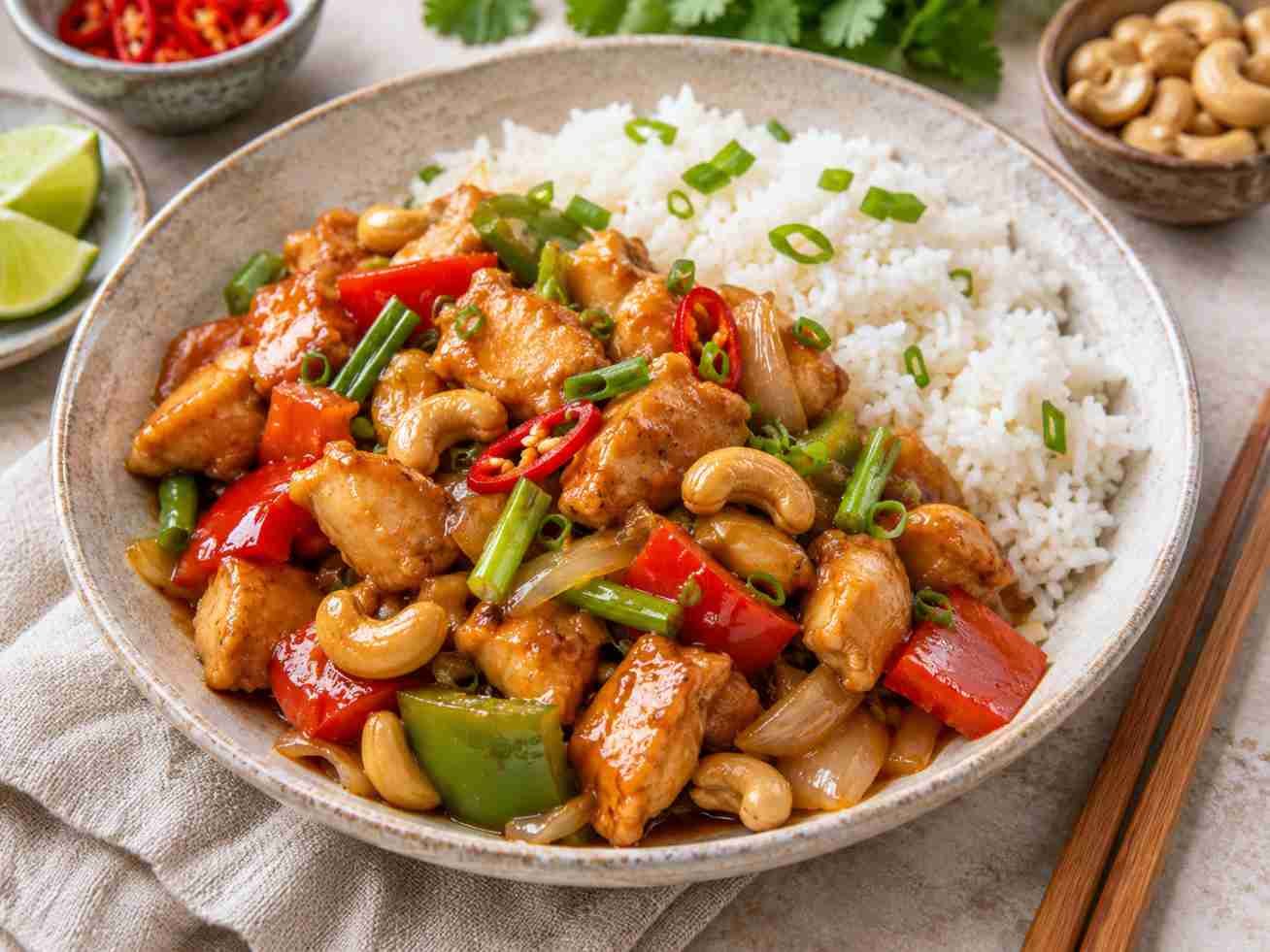
There is something particularly satisfying about a good Thai Cashew Chicken Stir Fry. The chicken is tender, the cashews are golden and crunchy, and every piece is coated in a savory, slightly sweet sauce with just enough heat to keep things interesting. It is the sort of dinner that feels like something you would order from your favorite Thai restaurant, yet it is surprisingly easy to put together at home.
What makes this dish different from many other chicken stir-fries is the balance of textures. You get juicy chicken, crisp vegetables, and roasted cashews in nearly every bite. The sauce is not meant to pool at the bottom of the plate. Instead, it clings to the ingredients, giving everything a rich flavor without making the dish heavy or overly saucy.
This version includes bell peppers, onions, garlic, and a little fresh ginger for extra fragrance. It is inspired by the bold flavors of Thai-style cashew chicken, with ingredients that are easy to find in most supermarkets. Serve it over steamed jasmine rice, and dinner is taken care of.
Thai Cashew Chicken Stir Fry Recipe Overview
| Detail | Information |
|---|---|
| Recipe | Thai Cashew Chicken Stir Fry |
| Cuisine | Thai-inspired |
| Course | Main Course |
| Preparation Time | 15 minutes |
| Cooking Time | 15 minutes |
| Total Time | 30 minutes |
| Servings | 4 |
| Difficulty | Easy |
| Cooking Method | Stovetop Stir Fry |
Ingredients for Thai Cashew Chicken Stir Fry
You do not need a long list of unusual ingredients to make this dish taste good. Most of the flavor comes from the combination of soy sauce, oyster sauce, fish sauce, garlic, and roasted cashews. Preparing everything before switching on the stove makes the cooking process much easier.
For the Chicken and Vegetables
| Ingredient | Quantity |
|---|---|
| Boneless, skinless chicken thighs or breasts | 500 g (about 1.1 lb) |
| Unsalted cashew nuts | 3/4 cup (about 100 g) |
| Neutral cooking oil | 2 tablespoons |
| Garlic, finely chopped | 4 cloves |
| Fresh ginger, minced | 1 teaspoon |
| Medium onion, cut into wedges | 1 |
| Red bell pepper, sliced | 1 |
| Green bell pepper, sliced | 1 small |
| Spring onions, cut into short pieces | 3 |
| Fresh red chili, sliced | 1–2, depending on preference |
| Freshly ground white or black pepper | 1/4 teaspoon |
For the Stir Fry Sauce
| Ingredient | Quantity |
|---|---|
| Oyster sauce | 2 tablespoons |
| Light soy sauce | 1 tablespoon |
| Dark soy sauce | 1 teaspoon |
| Fish sauce | 1 teaspoon |
| Brown sugar | 2 teaspoons |
| Water | 3 tablespoons |
| Fresh lime juice | 1 teaspoon, optional |
Ingredient note: Choose unsalted cashews because the sauces already contain plenty of sodium. Chicken thighs tend to remain juicier during high-heat cooking, although chicken breast works well when it is sliced evenly and not overcooked. For a gluten-free version, use certified gluten-free soy sauce and check the labels on the oyster sauce and fish sauce.
Also Read: Shredded Sweet Soy Sauce Chicken Breast
How to Make Thai Cashew Chicken Stir Fry
The actual stir-frying takes only a few minutes. Have the sauce mixed, the vegetables sliced, and the chicken ready before heating the pan. Once the ingredients begin cooking, there is not much time to stop and prepare something else.
Step 1: Prepare the Chicken
Cut the chicken into thin, bite-sized strips, roughly the same thickness. This helps the pieces cook evenly and prevents smaller pieces from drying out while larger ones are still cooking. Pat the chicken dry with a paper towel to remove excess surface moisture. A drier surface encourages better browning when the meat hits the hot pan.
Step 2: Mix the Sauce
In a small bowl, combine the oyster sauce, light soy sauce, dark soy sauce, fish sauce, brown sugar, and water. Stir until the sugar dissolves. Set the bowl beside the stove. If you prefer a slightly sharper finish, keep the lime juice separate and add it at the end rather than mixing it into the sauce now.
Step 3: Toast the Cashews
Place a large wok or heavy skillet over medium heat. Add the cashews to the dry pan and toast them for about 3–5 minutes, stirring frequently, until they become lightly golden and smell nutty. Transfer them immediately to a plate. If you are using cashews that are already roasted, warm them for about a minute instead. Watch them closely because nuts can burn quickly once they begin changing color.
Step 4: Cook the Chicken
Increase the heat to medium-high and add 1 tablespoon of cooking oil. Once the oil is hot, spread the chicken in a fairly even layer. Leave it undisturbed briefly so the surface can develop some color, then stir-fry for about 4–6 minutes, depending on the thickness of the pieces. Cook until the chicken reaches an internal temperature of 165°F (74°C). Transfer it to a clean plate. If your pan is small, cook the chicken in two batches so it browns instead of steaming.
Step 5: Stir-Fry the Vegetables
Add the remaining tablespoon of oil to the same pan. Stir in the onion, garlic, ginger, and sliced chili. Cook for about 30 seconds, stirring continuously, until the garlic becomes fragrant. Add the red and green bell peppers and continue stir-frying for another 2 minutes. The vegetables should soften slightly but still have some crunch. Avoid cooking them until completely limp, as their fresh texture is an important part of the finished dish.
Step 6: Add the Chicken and Sauce
Return the cooked chicken to the pan along with any juices collected on the plate. Give the prepared sauce another stir and pour it over the chicken and vegetables. Toss everything together over medium-high heat for about 1–2 minutes. The sauce should bubble gently, reduce slightly, and form a glossy coating. If the pan becomes too dry before everything is evenly coated, add 1 tablespoon of water at a time. You want enough moisture to coat the ingredients, not a thick layer of sauce at the bottom.
Step 7: Finish with Cashews and Spring Onions
Add the toasted cashews and spring onions. Toss for another 20–30 seconds, just long enough to distribute them throughout the chicken and vegetables. Turn off the heat. Add the optional lime juice and a little freshly ground pepper. Taste before adding any additional seasoning, as the soy sauce and fish sauce already bring substantial saltiness.
Step 8: Serve Immediately
Spoon the Thai Cashew Chicken Stir Fry into a serving bowl and serve it while the cashews are still crunchy. Steamed jasmine rice is particularly good with this dish because its delicate aroma complements the savory sauce. A few extra spring onions or thinly sliced chilies make a simple finishing touch.
Also Read: Chicken Tagine
What You Can Do Better
A decent stir-fry is easy enough to make, but a really good one comes down to a handful of small decisions. None of these steps is complicated, although they can make a noticeable difference to the final texture and flavor.
Use a Hot Pan, but Do Not Overcrowd It
Chicken releases moisture as it cooks. When too many pieces are packed into a pan, that moisture collects and the meat starts steaming. Cooking in batches gives the chicken space to brown. You do not need a professional wok burner to get a good result; a large, properly heated skillet works perfectly well.
Keep the Cashews Crunchy
The cashews should be added near the end rather than left cooking in the sauce. This protects their texture and prevents them from becoming soft. Toasting them separately is worth the extra few minutes, especially when starting with raw nuts. The difference in flavor is noticeable.
Do Not Turn the Sauce into Gravy
Thai-style cashew chicken works particularly well with a concentrated coating rather than a large amount of liquid. Resist the temptation to pour in lots of water. Let the sauce reduce just enough to cling to the chicken, peppers, and onions. A few spoonfuls of rice will pick up plenty of flavor from the finished stir-fry.
Control the Heat with Fresh Chili
For a mild version, remove the seeds and pale membranes from the chili or leave it out altogether. If you enjoy spicy food, add another small chili or use a hotter Thai bird’s eye chili. Remember that chili varieties differ considerably in strength, so it is better to begin with less and adjust to taste.
Cut Everything Before You Start
One of the easiest ways to overcook a stir-fry is to start chopping the next ingredient while something is already in the pan. Slice the vegetables, prepare the sauce, and portion the chicken first. Keeping everything within reach makes the cooking process smoother and helps preserve the crispness of the vegetables.
Ingredient Substitutions and Variations
Chicken Breast Instead of Thighs
Chicken breast is a perfectly reasonable alternative, especially if you prefer leaner meat. Slice it across the grain into even pieces and keep a close eye on the cooking time. Breast meat can become dry if it spends too long over high heat.
Make It Vegetarian
Replace the chicken with 400–500 g of firm tofu. Press the tofu to remove excess moisture, cut it into cubes, and pan-fry until lightly crisp. Use mushroom-based vegetarian oyster sauce in place of regular oyster sauce, and substitute the fish sauce with a little additional soy sauce. The flavor will be different from the chicken version, but the cashews, vegetables, and savory sauce still work well together.
Add More Vegetables
Broccoli, snow peas, baby corn, mushrooms, and zucchini are all good additions. Keep the total amount of vegetables reasonable so the sauce does not become too diluted. Firmer vegetables may need a little extra cooking time, while tender greens should go in toward the end.
Make It Less Sweet
Reduce the brown sugar to 1 teaspoon if you prefer a more savory finish. The oyster sauce already contributes a little sweetness, so there is no need to add extra sugar unless you want a sweeter restaurant-style result.
Also Read: Crispy Bizarrely Good Wings
What to Serve with Thai Cashew Chicken Stir Fry
Steamed jasmine rice is the most natural pairing. Its fluffy texture and gentle fragrance balance the salty, savory flavors of the chicken. Plain white rice and brown rice are good alternatives, depending on what you have available.
For a lighter meal, serve the stir-fry with cauliflower rice or a simple cucumber salad dressed with lime juice. If you want a more substantial dinner, pair it with stir-fried greens or a small bowl of clear vegetable soup. Avoid strongly seasoned side dishes that might compete with the sauce.
Storage and Reheating Instructions
Refrigeration
Allow the cooked chicken to cool promptly, then transfer it to a shallow airtight container and refrigerate within 2 hours of cooking. Store it at 40°F (4°C) or below and use it within 3–4 days. The flavors hold up well, although the cashews gradually lose their crunch.
Freezing
You can freeze the cooked chicken and vegetables for up to 2–3 months for best quality. However, the bell peppers may become softer after thawing, and the cashews will not retain their original texture. For better results, freeze the chicken and sauce mixture without the cashews and add freshly toasted nuts when reheating.
Reheating
Warm the leftovers in a skillet over medium heat with a splash of water until heated thoroughly to 165°F (74°C). Alternatively, reheat in the microwave, stirring halfway through to distribute the heat evenly. If possible, add fresh toasted cashews just before serving. Reheat only the portion you intend to eat.
Nutritional Information
The nutritional values below are approximate estimates for one serving when the recipe is divided into four equal portions. They are based on chicken thighs, unsalted cashews, the listed vegetables, sauces, and cooking oil. Rice and additional side dishes are not included. Actual values will vary depending on the brands and quantities used.
| Nutrient | Estimated Amount Per Serving |
|---|---|
| Calories | 410 kcal |
| Protein | 30 g |
| Total Fat | 25 g |
| Saturated Fat | 5 g |
| Carbohydrates | 17 g |
| Dietary Fiber | 2 g |
| Total Sugars | 7 g |
| Sodium | 850 mg |
| Cholesterol | 105 mg |
Nutrition note: Adding a cup of cooked jasmine rice will increase the meal by approximately 200–210 calories and 45 g of carbohydrates. Sodium can vary substantially between brands of soy sauce, oyster sauce, and fish sauce. Reduced-sodium products may help if you need to limit your salt intake.
Also Read: Crispy Baked Chicken Drumsticks
Frequently Asked Questions
Is Thai Cashew Chicken Stir Fry Very Spicy?
Not necessarily. The heat depends almost entirely on the chili you use. The basic sauce is savory and mildly sweet rather than spicy. Leave out the fresh chili for a mild family-friendly version, or increase it if you prefer a noticeable kick.
Can I Use Roasted Cashews Instead of Raw Cashews?
Yes. Unsalted roasted cashews are a convenient option and require very little additional preparation. Warm them briefly in a dry pan to refresh their aroma, then add them during the final stage of cooking. Avoid heavily salted or flavored cashews because they can overwhelm the sauce.
Can I Make Thai Cashew Chicken Without a Wok?
Absolutely. A large frying pan or heavy skillet works well. The important things are having enough cooking surface and allowing the pan to heat properly before adding the chicken. A skillet is often easier to manage on a standard home stove than a traditional round-bottomed wok.
What Is the Difference Between Thai Cashew Chicken and Chinese Cashew Chicken?
There are many regional and restaurant variations, but Thai-style cashew chicken commonly has a relatively concentrated savory sauce and may include fresh chilies, fish sauce, and spring onions. Many Chinese restaurant-style versions use a thicker, more generous sauce. Neither approach is better; they simply create different eating experiences.
Can I Prepare the Ingredients Ahead of Time?
Yes. You can slice the vegetables and mix the sauce a day in advance. Keep them refrigerated in separate airtight containers. Store raw chicken separately from ready-to-eat ingredients and follow safe refrigeration practices. Toast the cashews and cook the stir-fry shortly before serving for the best texture.
Why Did My Chicken Turn Out Tough?
Overcooking is the most common reason, especially when using chicken breast. Thick or uneven pieces can also make cooking difficult because smaller pieces finish long before larger ones. Cut the chicken consistently, use a properly heated pan, and cook just until the meat reaches a safe internal temperature of 165°F (74°C).
Can I Make the Sauce Ahead of Time?
Yes. Mix the sauce ingredients and store them in a covered container in the refrigerator for up to 3 days. Stir well before using because some ingredients may settle. Making the sauce ahead is particularly helpful when cooking dinner on a busy evening.