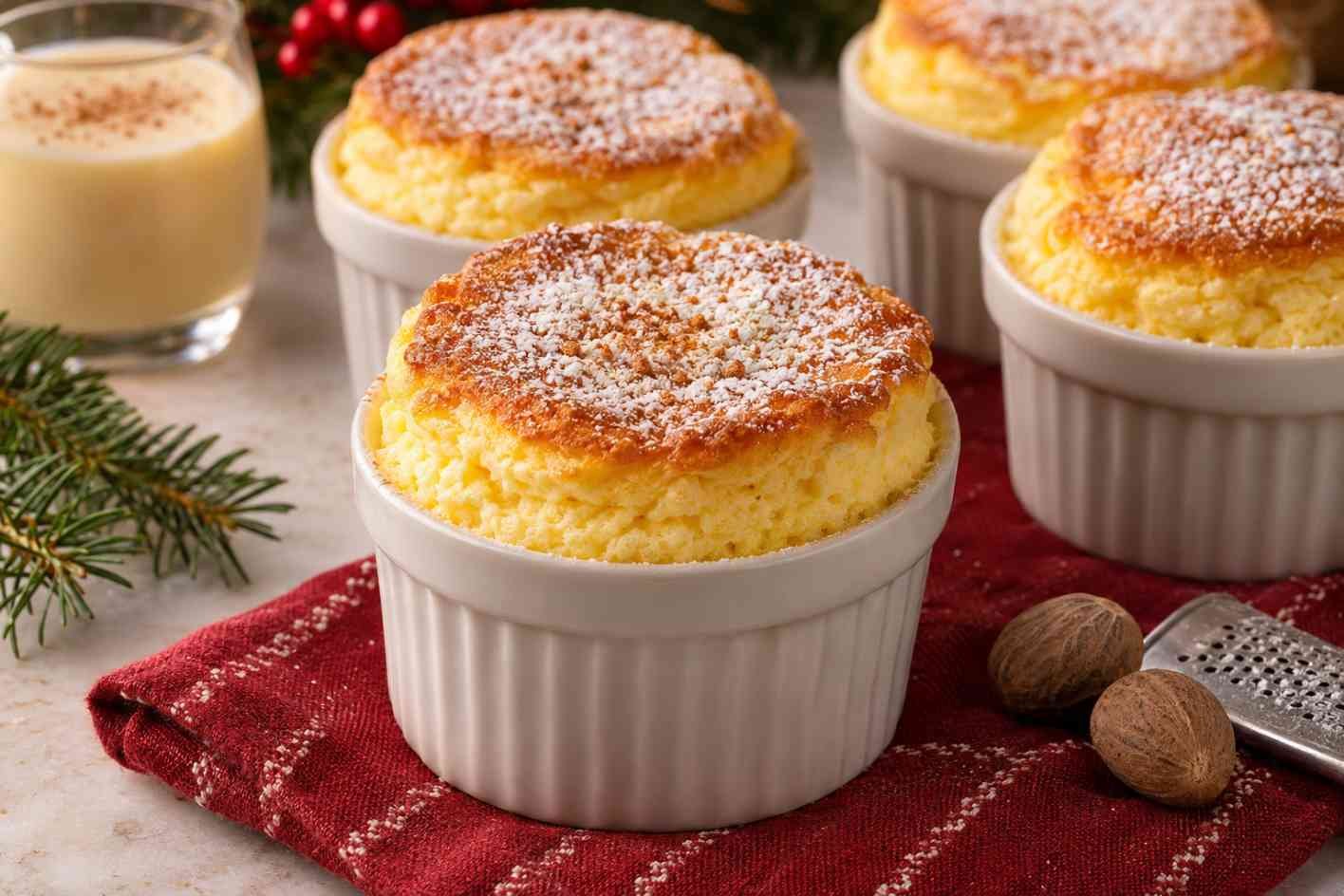
Eggnog Soufflé is the sort of dessert that makes a holiday dinner feel a little more special. It comes out of the oven with a beautifully puffed, golden top and a soft, creamy center that tastes of vanilla, nutmeg, and rich eggnog. Despite its impressive appearance, you don’t need professional baking skills to make it. A little patience with the egg whites and a gentle hand when folding the batter are what really matter.
Unlike a heavy pudding or a traditional holiday cake, this soufflé has a delicate, airy texture. The familiar flavor of eggnog comes through in every spoonful without making the dessert overly rich. It’s particularly nice after a big Christmas meal, when everyone wants something sweet but not too filling.
Eggnog Soufflé Recipe Overview
| Recipe | Eggnog Soufflé |
| Preparation Time | 20 minutes |
| Cooking Time | 20–24 minutes |
| Total Time | 40–44 minutes |
| Servings | 4 individual soufflés |
| Difficulty | Moderate |
| Cooking Method | Baking |
| Oven Temperature | 375°F (190°C) |
Ingredients for Eggnog Soufflé
You won’t need a long shopping list for this recipe. Most of the ingredients are probably already in your kitchen during the holiday season. The one ingredient worth choosing carefully is the eggnog itself. A good-quality, full-fat eggnog gives the soufflé a richer flavor and a smoother custard base.
Main Ingredients
- 1 cup full-fat eggnog: Provides the signature holiday flavor and creamy consistency.
- 3 large eggs, separated: The yolks enrich the custard while the whipped whites give the soufflé its height.
- 3 tablespoons unsalted butter: Use 2 tablespoons for the custard and 1 tablespoon for preparing the ramekins.
- 2 tablespoons all-purpose flour: Helps thicken the base and support the airy structure.
- 1/4 cup granulated sugar: Sweetens and stabilizes the whipped egg whites.
- 1 tablespoon additional granulated sugar: For coating the ramekins.
- 1/2 teaspoon vanilla extract: Adds a warm, rounded flavor.
- 1/4 teaspoon freshly grated nutmeg: Brings out the traditional eggnog spices.
- 1/8 teaspoon salt: Balances the sweetness.
- 1 tablespoon powdered sugar: Optional, for dusting before serving.
Kitchen Equipment
- Four 8-ounce oven-safe ramekins
- Electric hand mixer or stand mixer
- Medium mixing bowl
- Small saucepan
- Whisk and rubber spatula
- Pastry brush
- Measuring cups and spoons
- Baking sheet, if needed for handling the ramekins
Also Read: Gingerbread Muffins with Lemon Glaze
How to Make Eggnog Soufflé
The process is easier when you divide it into three parts: preparing the ramekins, cooking the eggnog custard, and incorporating the whipped egg whites. Have everything measured before you start because the finished batter should go into the oven without a long wait.
Step 1: Prepare the Baking Dishes
Preheat your oven to 375°F (190°C) and position the rack in the lower-middle section. Brush the inside of four 8-ounce ramekins with 1 tablespoon of softened butter, using upward strokes along the sides. Sprinkle the additional tablespoon of granulated sugar into the dishes, turning them until the bottoms and sides are lightly coated. Tap out any excess sugar.
This simple preparation helps the batter climb the sides as it expands. Straight-sided ramekins are especially useful because they encourage a more even rise.
Step 2: Make the Eggnog Custard Base
Place a small saucepan over medium-low heat and melt the remaining 2 tablespoons of butter. Add the flour and whisk continuously for about one minute. You want the flour to cook gently without turning brown.
Slowly pour in the eggnog while whisking to prevent lumps. Continue cooking for approximately 2–3 minutes, stirring regularly, until the mixture thickens into a smooth, spoon-coating custard. Remove the saucepan from the heat and transfer the mixture to a bowl.
Step 3: Add the Egg Yolks and Spices
Allow the custard to cool for several minutes until it feels warm rather than hot. Whisk in the egg yolks one at a time, mixing thoroughly after each addition. Add the vanilla extract, freshly grated nutmeg, and salt.
The mixture should be thick but still easy to stir. If it seems unusually stiff, whisk it briefly to loosen the texture before adding the egg whites. Avoid adding the yolks while the custard is very hot, as they may scramble.
Step 4: Whip the Egg Whites
Pour the egg whites into a completely clean, dry mixing bowl. Beat on medium speed until the whites become foamy and begin forming soft peaks. Gradually add the 1/4 cup of granulated sugar, a little at a time, while continuing to beat.
Increase the speed slightly and continue until the whites become glossy and hold firm peaks. When you lift the beaters, the peaks should stand with just a slight curl at the tips. Stop before the mixture becomes dry or grainy.
Step 5: Fold Everything Together
Add about one-quarter of the whipped egg whites to the eggnog custard and stir gently. This first addition makes the heavier custard easier to combine with the remaining whites.
Add the rest of the whites in two batches. Using a rubber spatula, cut down through the middle of the mixture, sweep along the bottom, and fold the batter over itself. Rotate the bowl as you work. Continue just until the mixture looks evenly combined with no large white streaks remaining.
Resist the temptation to keep stirring. The air trapped in the egg whites is what gives a soufflé its light texture and impressive rise.
Step 6: Fill the Ramekins
Divide the batter evenly among the prepared ramekins, filling each approximately three-quarters full. Gently smooth the tops with the back of a spoon or spatula. Wipe away any batter from the rims so the soufflés can rise without sticking to the edges.
Step 7: Bake Until Golden
Place the ramekins in the preheated oven, leaving a little space between them for air circulation. Bake for approximately 18–22 minutes, depending on your oven and the shape of your dishes.
A properly baked soufflé should rise above the rim, develop a light golden surface, and feel set around the edges. The center may still have a slight wobble, but it should not look wet or liquid. If necessary, bake for another 1–2 minutes.
Avoid opening the oven during the first 16 minutes. Sudden temperature changes can interfere with the soufflé’s rise before its structure has set.
Step 8: Serve Immediately
Carefully remove the ramekins from the oven using oven mitts. Dust the tops with a little powdered sugar, if desired, and bring them straight to the table.
Soufflés naturally begin to settle after leaving the oven, so don’t wait too long to serve them. The best part is breaking through the delicate golden top to reach the warm, creamy center underneath.
Also Read: Eggnog Crumble Muffins
What You Can Do Better
A successful soufflé isn’t just about following the measurements. Small details in preparation can make a noticeable difference in its flavor, height, and texture.
Choose Eggnog That Isn’t Too Thick
Some commercial eggnog varieties are almost as thick as pudding, while others pour more like cream. A pourable, full-fat eggnog generally works better for this recipe. Extremely thick eggnog can make the custard heavy and harder to fold into the egg whites.
Use Freshly Grated Nutmeg
Pre-ground nutmeg works, but freshly grated nutmeg has a brighter aroma. You only need a small amount, so grate it directly into the warm custard for the best flavor. A pinch of cinnamon can also be added, although too much spice may overpower the eggnog.
Keep the Mixing Bowl Completely Clean
Even a little grease or egg yolk can prevent egg whites from whipping properly. Before starting, wash and thoroughly dry your mixing bowl and beaters. A stainless steel or glass bowl is a dependable choice.
Don’t Overbeat the Egg Whites
More whipping doesn’t always mean a taller soufflé. Egg whites that become dry and clumpy are difficult to fold evenly into the custard. Aim for smooth, glossy peaks that hold their shape without looking brittle.
Prepare Everything Before Baking
Soufflé batter doesn’t benefit from sitting on the counter. Have the ramekins ready, the oven fully heated, and the custard prepared before whipping the egg whites. Once the batter is combined, transfer it to the dishes and bake promptly.
Serve with a Simple Accompaniment
Eggnog Soufflé already has plenty of flavor, so it doesn’t need an elaborate topping. A light dusting of powdered sugar is usually enough. For a slightly more indulgent dessert, serve a spoonful of lightly sweetened whipped cream or a few fresh berries on the side.
Common Eggnog Soufflé Problems and How to Fix Them
| Problem | Possible Cause | What to Do |
|---|---|---|
| Soufflé doesn’t rise properly | Egg whites were underwhipped or batter was overmixed. | Whip to glossy, firm peaks and fold gently. |
| Soufflé collapses quickly | Center may be underbaked, although some settling is normal. | Check for set edges and a softly set center before removing. |
| Texture feels heavy | Too much air was lost during folding or the eggnog was unusually thick. | Use pourable eggnog and minimize mixing. |
| Custard has lumps | Eggnog was added too quickly or the mixture wasn’t whisked enough. | Add liquid gradually while whisking continuously. |
| Top browns too quickly | Oven temperature is too high or dishes are too close to the upper heating element. | Check oven temperature and use a lower-middle rack. |
| Egg whites won’t form peaks | Grease, moisture, or traces of yolk are present. | Use clean, dry equipment and carefully separated whites. |
Also Read: Triple Chocolate Cake
Flavor Variations Worth Trying
Orange and Nutmeg Eggnog Soufflé
Add 1/2 teaspoon of finely grated orange zest to the custard base. The citrus aroma brings a fresh contrast to the creamy eggnog and warm nutmeg. Avoid adding orange juice, which would introduce unnecessary liquid.
Maple Eggnog Soufflé
For a subtle maple flavor, replace 1 teaspoon of the vanilla extract’s flavor contribution with 1/4 teaspoon maple extract, using 1/4 teaspoon vanilla extract alongside it. Maple extract is concentrated, so a small amount is plenty. Keep the sugar measurements unchanged to preserve the foam’s stability.
Chocolate Chip Eggnog Soufflé
For a chocolate variation, scatter about 1 teaspoon of finely chopped dark chocolate into the center of each filled ramekin before baking. The chocolate adds a pleasant surprise, although the extra weight may slightly reduce the rise.
Can You Make Eggnog Soufflé Ahead of Time?
You can prepare part of the recipe ahead, but the final baking should happen shortly before serving. The eggnog custard base can be made up to one day in advance. Transfer it to a covered container and refrigerate promptly.
When you’re ready to bake, let the custard lose its chill and whisk it until smooth and pliable. Then whip the egg whites, fold them into the custard, and bake as directed. You can also butter and sugar the ramekins ahead of time.
Avoid preparing the fully folded batter hours in advance. The trapped air gradually escapes, leaving you with a flatter, denser dessert.
How to Store Leftover Eggnog Soufflé
Eggnog Soufflé tastes best immediately after baking, but leftovers don’t have to go to waste. Allow them to cool briefly and refrigerate within two hours. Cover the ramekins and store them in the refrigerator for up to two days.
To reheat, place the ramekins in an oven preheated to 300°F (150°C) for approximately 8–10 minutes, or until warmed through. The soufflé won’t regain its original height, and the texture will be closer to a soft baked custard.
Freezing is not recommended because thawing can significantly change the delicate texture.
Nutritional Information for Eggnog Soufflé
The following values are approximate estimates for one individual soufflé when the recipe is divided into four servings. The actual nutritional content depends on the eggnog brand, egg size, and amount of sugar used for coating and finishing.
| Nutrient | Estimated Amount Per Serving |
|---|---|
| Calories | 275 kcal |
| Protein | 7 g |
| Total Carbohydrates | 29 g |
| Total Fat | 15 g |
| Saturated Fat | 8 g |
| Dietary Fiber | 0 g |
| Total Sugars | 25 g |
| Sodium | 145 mg |
| Cholesterol | Approximately 180 mg |
Nutrition note: These figures are estimates, not laboratory-tested values. For precise nutritional tracking, calculate the recipe using the nutrition label of your chosen eggnog and the exact ingredients used.
Also Read: Squash Casserole with Stuffing Top
Frequently Asked Questions
Can I use store-bought eggnog for this recipe?
Yes. Store-bought eggnog works well and makes the preparation easier. Choose a full-fat, pourable variety for a creamy base. Different brands vary in sweetness, so the final flavor may change slightly.
Can I make Eggnog Soufflé without alcohol?
Absolutely. This recipe uses nonalcoholic eggnog and doesn’t require rum, brandy, or any other liquor. If you need to avoid alcohol entirely, choose an alcohol-free vanilla flavoring as well.
Why does my soufflé sink after baking?
Soufflés rise because heated air and steam expand inside the batter. Once they leave the oven, the air begins cooling and the structure naturally settles. A little sinking is expected and doesn’t mean you’ve failed. However, a soufflé that collapses into a wet center may need more baking time.
Can I use low-fat eggnog?
You can try it, but the results may be less creamy and the custard may thicken differently. Full-fat eggnog is the more dependable option for this particular recipe.
How do I know when my soufflé is fully cooked?
Look for a risen, lightly golden top, set edges, and a center that moves slightly when the ramekin is gently nudged. It should not look runny. If you’re uncertain, give it another minute or two in the oven.
Can I bake one large Eggnog Soufflé instead of individual portions?
Yes, but a larger soufflé dish will require a longer baking time, and the exact timing depends on the dish’s size and depth. Individual ramekins are easier to portion and offer more predictable baking results.
Can I make this recipe gluten-free?
A suitable gluten-free all-purpose flour blend may work in place of regular flour, but the texture and rise can differ. Check that your eggnog and other ingredients are also gluten-free, and be aware that this substitution hasn’t been tested in this specific formula.
Do I need a water bath to bake the soufflé?
No. This recipe uses direct oven heat to help the batter expand and develop its characteristic puffed top. A water bath would change the way the soufflé cooks.