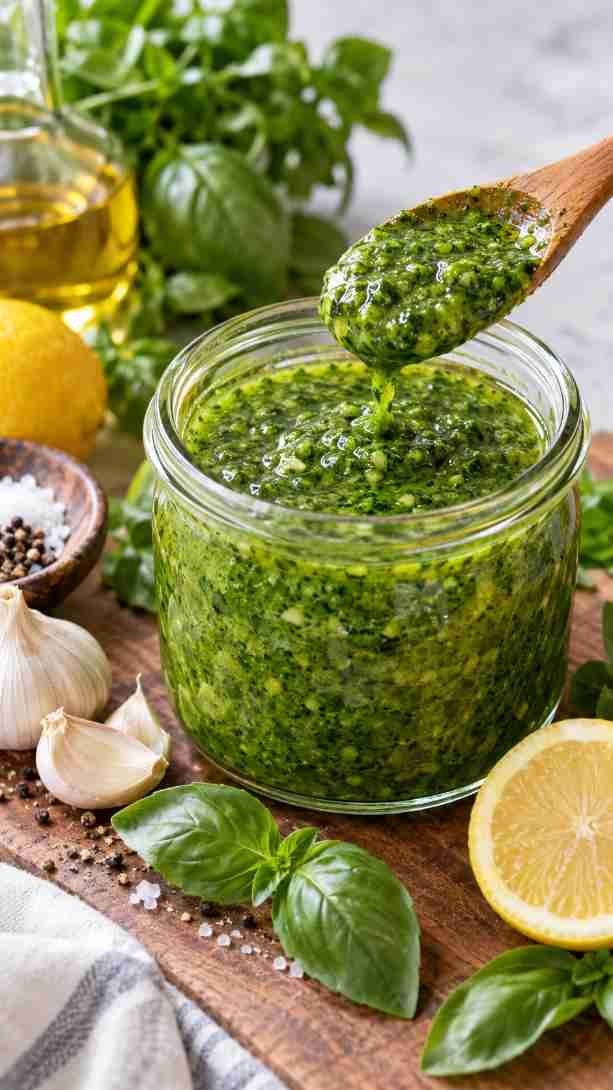
This easy Basil Sauce is bright, fresh, garlicky, and packed with the flavor of fresh basil. It comes together in just a few minutes and is a useful sauce to keep in the refrigerator when you want to add something extra to a simple meal. Unlike traditional pesto, this version skips the cheese and nuts, so the basil stays at the center of the sauce.
The combination of fresh basil, olive oil, garlic, and lemon gives it a clean, fresh flavor with just enough tang. Spoon it over pasta, roasted vegetables, grilled chicken, fish, sandwiches, pizza, or even use it as a quick salad dressing.
Why This Basil Sauce Works
There is something especially useful about a sauce that requires almost no cooking. Fresh basil does most of the work here, while olive oil gives the sauce a smooth texture, garlic adds a savory bite, and lemon juice keeps everything tasting fresh rather than heavy.
It is also a handy alternative to pesto when you want a dairy-free and nut-free sauce. You can make a small batch for dinner or prepare more when you have a lot of fresh basil to use.
Ingredients
- 2 cups loosely packed fresh basil leaves
- 1/2 cup extra-virgin olive oil
- 2 tablespoons fresh lemon juice
- 2 garlic cloves, roughly chopped
- 1/2 teaspoon fine sea salt, plus more to taste
- 1/4 teaspoon freshly ground black pepper
Also Read: Easy Vodka Sauce Recipe
How to Make Basil Sauce
1. Prepare the Basil
Pick the basil leaves from the stems and rinse them gently under cool water. Pat them dry with a clean kitchen towel or use a salad spinner. Excess water can make the sauce thinner, so try to dry the leaves well.
2. Add Everything to a Food Processor
Place the basil leaves, olive oil, lemon juice, garlic, salt, and black pepper in a food processor. You can also use a high-powered blender if that is what you have available.
3. Blend Until Smooth
Pulse the mixture several times, then blend until the basil is finely chopped and the sauce reaches the texture you like. Stop once or twice to scrape down the sides. For a little texture, avoid blending it completely smooth.
4. Taste and Adjust
Give the sauce a taste before serving. Add a little more lemon juice if you want extra brightness, another pinch of salt if it tastes flat, or a small drizzle of olive oil if you prefer a looser consistency.
5. Serve or Store
Use the sauce immediately or transfer it to a clean airtight container. Keep it refrigerated and use it within about 5 to 7 days for the best flavor. For longer storage, freeze the sauce in small portions and thaw only what you need.
What You Can Do Better
The easiest way to improve basil sauce is to pay attention to the basil. Fresh, fragrant leaves will give you a much better result than basil that has started to wilt or darken. Dry the leaves thoroughly after washing so you do not add unnecessary water to the sauce.
It is also worth adding the salt gradually. Basil, garlic, lemon, and olive oil can taste quite different depending on their freshness, so seasoning at the end gives you more control. If you find the lemon flavor too strong, start with less and add more only after tasting.
For a smoother sauce, blend for a little longer and add the olive oil gradually. If you prefer a rustic sauce with small pieces of basil throughout, use short pulses instead.
Also Read: Beefaroni Recipe
Ways to Use Basil Sauce
This sauce is much more versatile than it may first appear. Try it with:
- Hot pasta or gnocchi
- Grilled chicken or fish
- Roasted potatoes and vegetables
- Sandwiches and wraps
- Pizza or flatbread
- Grain bowls
- Fresh tomatoes and mozzarella
- Salads
- Grilled vegetables
- Crusty bread as a dipping sauce
Basil Sauce vs. Pesto
| Feature | Basil Sauce | Traditional Pesto |
|---|---|---|
| Main herb | Fresh basil | Fresh basil |
| Cheese | None | Usually Parmesan or another hard cheese |
| Nuts | None | Usually pine nuts |
| Flavor | Fresh, bright, lemony and garlicky | Rich, savory and nutty |
| Best for | Sauces, dressings, vegetables, sandwiches and pasta | Pasta, sandwiches, pizza and other savory dishes |
Also Read: Vegetable Chicken Soup
Storage
Store leftover Basil Sauce in an airtight container in the refrigerator. Because it contains fresh basil and garlic, it is best used within several days for the freshest flavor. If you make a large batch, freeze it in small containers or ice cube trays. Once frozen, transfer the portions to a freezer-safe bag or container so you can thaw only what you need.
Recipe Notes
- Use fresh basil for the brightest flavor.
- Extra-virgin olive oil works especially well because its flavor is noticeable in the finished sauce.
- Fresh lemon juice gives better flavor than bottled lemon juice.
- Start with a small amount of salt and adjust after blending.
- Add a little extra olive oil if the sauce is thicker than you prefer.
- For a milder garlic flavor, use one clove instead of two.
Nutrition Information
The following nutrition information is an estimate for one tablespoon of sauce. Actual values will vary depending on the exact amount of olive oil and other ingredients used.
| Nutrient | Estimated Amount per 1 Tbsp |
|---|---|
| Calories | Approximately 60 |
| Total Fat | 6 g |
| Saturated Fat | 1 g |
| Carbohydrates | 1 g |
| Fiber | Less than 1 g |
| Sugars | Less than 1 g |
| Protein | Less than 1 g |
| Sodium | Approximately 80 mg |
Nutrition information is an estimate and can vary depending on the ingredients and portion size.
Also Read: Chicken and Parmesan Cheese Recipe
Frequently Asked Questions
Can I make Basil Sauce without a food processor?
Yes. A blender works well, especially for a smoother sauce. You can also finely chop the basil and garlic by hand and whisk everything together for a more rustic texture.
Is Basil Sauce the same as pesto?
Not exactly. Both sauces use fresh basil and olive oil, but traditional pesto commonly includes Parmesan cheese and pine nuts. This Basil Sauce leaves those ingredients out, giving it a lighter and simpler profile.
Can I make this sauce ahead of time?
Yes. Making it a few hours ahead can actually make mealtime easier. Keep it covered in the refrigerator until you are ready to use it.
Can Basil Sauce be frozen?
Yes. Freeze it in small portions so you can easily thaw the amount needed for a meal. The texture may change slightly after freezing, but it remains useful for pasta, vegetables, meat, and other cooked dishes.
How can I make the sauce less acidic?
Use less lemon juice to begin with and add it gradually. A little extra olive oil can also soften the sharpness of the lemon.