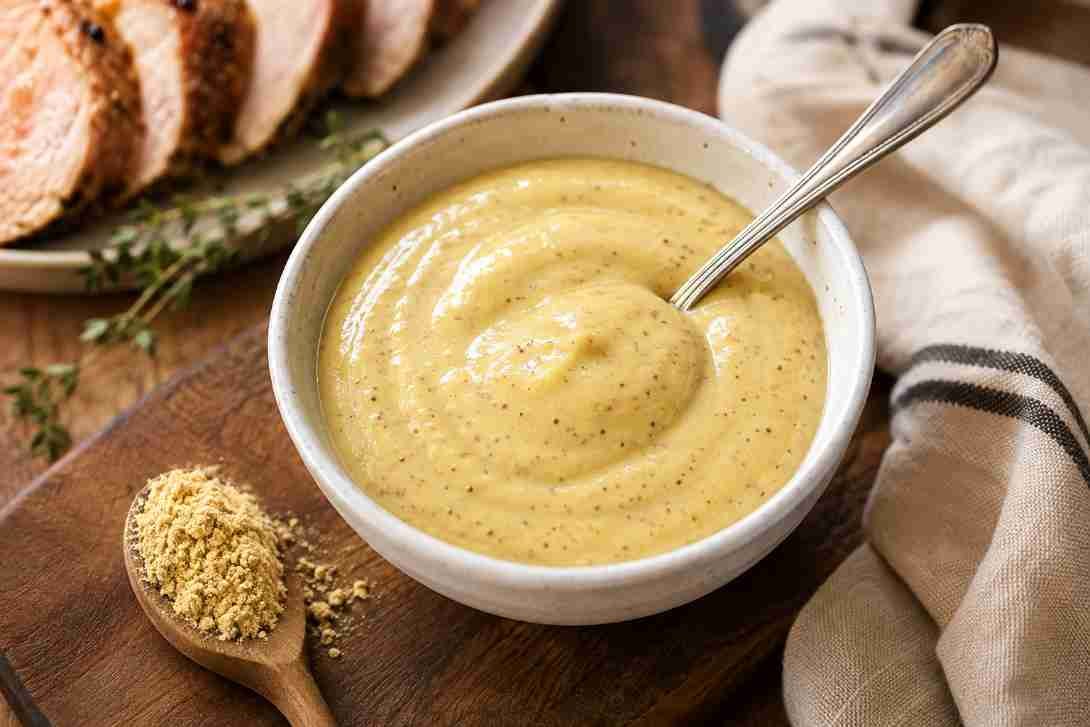
This mustard sauce is the kind of little extra that can make a simple meal feel much more special. It is creamy, tangy, slightly sweet, and has enough mustard bite to keep things interesting without overpowering the food underneath. The sauce comes together quickly on the stovetop and is especially good with roasted meats, sandwiches, burgers, vegetables, potatoes, and even a simple breakfast plate.
What makes this recipe particularly useful is that you do not need a long list of ingredients. A few pantry staples and some cream are all it takes to make a smooth sauce with a rich texture and a bright mustard flavor.
Mustard Sauce Ingredients
| Ingredient | Amount |
|---|---|
| Heavy cream | 1 cup |
| Ground mustard powder | 3 tablespoons |
| Granulated sugar | 1/3 cup |
| White wine vinegar | 1/4 cup |
| Egg yolks | 3 large |
| Kosher salt | 3/4 teaspoon |
Yield: About 1 1/2 cups
Prep time: 5 minutes
Cook time: 5–7 minutes
Total time: About 12 minutes
Also Read: Chicken with Mustard Cream Sauce Recipe
How to Make Mustard Sauce
1. Prepare the saucepan
Before you start cooking, place a fine-mesh strainer over a heatproof bowl. Having it ready makes the final step much easier, especially because the sauce should be strained while it is still warm.
2. Combine the ingredients
Add the heavy cream, mustard powder, sugar, vinegar, egg yolks, and salt to a small saucepan. Whisk everything together until the mixture looks smooth and the mustard powder is evenly incorporated.
3. Heat the sauce gently
Set the saucepan over medium-low to medium heat. Whisk frequently as the mixture warms. Keep a close eye on it rather than leaving the pan unattended. The goal is to heat the sauce until it becomes hot and lightly thickened without allowing it to boil aggressively.
4. Remove from the heat
As soon as the sauce reaches a gentle simmer and has thickened slightly, take it off the heat. The egg yolks help give the sauce body, so gentle cooking is important.
5. Strain until smooth
Pour the warm sauce through the prepared strainer into the bowl. This removes any tiny bits of cooked egg or mustard and leaves you with a noticeably smoother sauce.
6. Cool and refrigerate
Let the sauce cool for a few minutes, then transfer it to a clean, covered container and refrigerate. It will become a little thicker as it chills.
Also Read: Tangy Burger Sauce
What You Can Do Better
- Use fresh mustard powder: Ground mustard loses some of its punch as it sits, so a fresh container usually gives the sauce a cleaner, more pronounced flavor.
- Keep the heat controlled: High heat can cause the egg yolks to scramble. A gentle cooking temperature gives you a much smoother result.
- Whisk regularly: Frequent whisking helps keep the ingredients blended and prevents the sauce from sticking to the bottom of the pan.
- Adjust the tang: If you prefer a sharper sauce, add a small splash of vinegar after cooking. If the flavor is too intense, an extra spoonful of cream can soften it.
- Let it rest: The mustard flavor becomes more rounded after the sauce has chilled for a little while.
- Strain it: This small extra step makes a big difference in texture and gives the finished sauce a silky consistency.
How to Serve Mustard Sauce
This sauce is versatile enough to move well beyond the usual ham-and-mustard combination. Spoon it over roasted chicken, pork, sausages, grilled vegetables, baked potatoes, or roasted cauliflower. It also works beautifully as a spread for sandwiches and burgers.
For a quick meal, try it with leftover roasted meat and warm bread. The creamy sauce adds enough acidity and richness to make leftovers taste like a completely different dish.
Also Read: Hollandaise Sauce Recipe
How to Store Mustard Sauce
Transfer the cooled sauce to an airtight container and keep it refrigerated. Because this recipe contains cream and egg yolks, it should remain refrigerated rather than being left at room temperature. For the best quality, use it within about 5 days.
If the sauce becomes very thick after chilling, let it sit at room temperature for a few minutes and whisk it before serving. Do not freeze this sauce, as the dairy and egg-based mixture may separate when thawed.
Mustard Sauce Nutrition Information
The following is an approximate nutritional estimate based on the ingredients above and a serving size of about 2 tablespoons. Actual values can vary depending on the brands and exact ingredients used.
| Nutrient | Approx. per 2 tbsp |
|---|---|
| Calories | 105 kcal |
| Total Fat | 8 g |
| Saturated Fat | 4.5 g |
| Cholesterol | 55 mg |
| Sodium | 125 mg |
| Total Carbohydrates | 7 g |
| Sugars | 6 g |
| Protein | 1.5 g |
Also Read: Steak Sauce Recipe
Frequently Asked Questions
Can I make mustard sauce ahead of time?
Yes. In fact, making it a few hours ahead can be helpful because the sauce has time to cool and the flavors have a chance to settle. Store it covered in the refrigerator until you are ready to serve.
Can I use yellow mustard instead of mustard powder?
You can, but the result will be different. Prepared yellow mustard contains additional liquid and seasonings, so it will not produce exactly the same flavor or consistency. For this recipe, mustard powder gives the strongest and cleanest mustard character.
Why did my mustard sauce become lumpy?
The most common reason is excessive heat, which can cause the egg yolks to cook too quickly. Whisk continuously or frequently and remove the pan from the heat as soon as the sauce reaches a gentle simmer. Passing it through a fine-mesh strainer will also help smooth out small lumps.
What can I serve with mustard sauce?
Try it with roasted pork, chicken, sausages, baked ham, potatoes, roasted vegetables, sandwiches, burgers, or grilled meats. Its creamy texture and tangy flavor are particularly good with rich or savory foods.