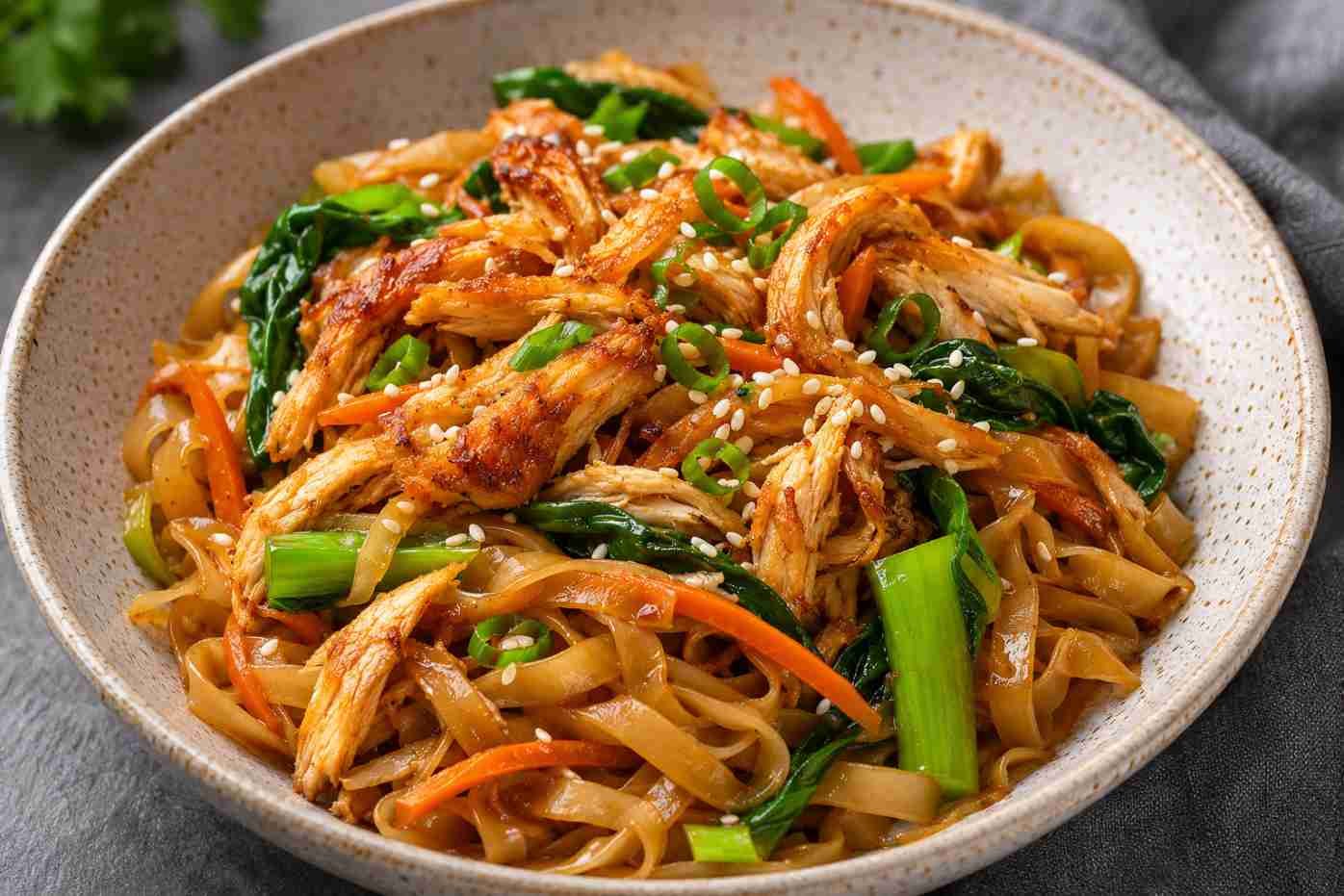
Crispy Shredded Chicken Noodle Stir Fry is the kind of dinner that makes leftover chicken worth saving. Golden strands of shredded chicken, tender rice noodles and crunchy green vegetables come together in a savory garlic and ginger sauce with just enough sweetness to balance the salty flavors. The chicken develops beautifully crisp edges without requiring deep frying, while the noodles soak up the flavorful sauce.
This Asian-inspired noodle dish is particularly useful on busy weeknights when you want something homemade without spending an hour in the kitchen. You can use leftover roast chicken, rotisserie chicken or previously cooked chicken thighs. A handful of vegetables and a few everyday pantry ingredients are all you need to turn them into a satisfying meal. The recipe is also easy to customize depending on the vegetables and noodles you have available.
Recipe Overview
| Preparation Time | 10 minutes |
|---|---|
| Cooking Time | 10 minutes |
| Total Time | 20 minutes |
| Servings | 2 |
| Cuisine | Asian-inspired |
| Course | Main Course |
| Difficulty | Easy |
| Cooking Method | Stir Fry |
Ingredients for Crispy Shredded Chicken Noodle Stir Fry
Most of the ingredients are readily available at supermarkets. Flat rice noodles work particularly well because they have a pleasant chewy texture and carry the sauce without overpowering the chicken.
For the Chicken and Noodles
- 150 grams dried flat rice noodles
- 200 grams cooked shredded chicken
- 2 tablespoons vegetable or peanut oil
- 2 garlic cloves, finely chopped
- 1 teaspoon freshly grated ginger
- 2 cups chopped Chinese broccoli (gai lan)
- 1 small carrot, cut into thin strips
- 2 green onions, sliced
- 1 teaspoon cornstarch
- 1/4 teaspoon ground black pepper
- 1 teaspoon toasted sesame seeds, optional
For the Stir Fry Sauce
- 1/3 cup low-sodium chicken stock
- 1 tablespoon light soy sauce
- 1 teaspoon dark soy sauce
- 1 tablespoon oyster sauce
- 1 teaspoon brown sugar
- 1 teaspoon rice vinegar
- 1 teaspoon sesame oil
- 1 teaspoon Sriracha or chili sauce, optional
Also Read: Creamy Garlic Chicken Recipe
Ingredient Notes and Substitutions
| Ingredient | Purpose and Substitutions |
|---|---|
| Shredded Chicken | Cooked chicken thighs remain particularly juicy, although chicken breast and leftover rotisserie chicken also work well. |
| Rice Noodles | Flat rice noodles can be replaced with egg noodles, udon noodles or wheat noodles. |
| Chinese Broccoli | Provides a mildly bitter flavor that balances the sauce. Bok choy, broccolini or regular broccoli are suitable alternatives. |
| Oyster Sauce | Adds savory depth and a slightly sweet flavor. Mushroom-based stir-fry sauce is a suitable substitute. |
| Cornstarch | Helps the chicken develop a thin, crisp exterior without a heavy coating. |
| Dark Soy Sauce | Gives the noodles a deeper color and richer appearance. It can be omitted if unavailable. |
| Rice Vinegar | Balances the richness of the chicken. A small amount of apple cider vinegar can be used instead. |
| Sriracha | Adds heat and can be replaced with chili flakes, sambal oelek or fresh chilies. |
How to Make Crispy Shredded Chicken Noodle Stir Fry
Step 1: Prepare the Rice Noodles
Cook or soak the rice noodles according to the instructions on the package. Stop cooking when they are flexible but still slightly firm, as they will continue cooking in the skillet. Drain thoroughly and set aside. Avoid leaving the noodles sitting in hot water because they can become soft and difficult to toss without breaking.
Step 2: Make the Stir Fry Sauce
In a small bowl, combine the chicken stock, light soy sauce, dark soy sauce, oyster sauce, brown sugar, rice vinegar, sesame oil and Sriracha. Stir until the sugar dissolves. Preparing the sauce before turning on the stove makes the cooking process much easier, especially when working with a hot wok.
Step 3: Crisp the Shredded Chicken
Pat the cooked shredded chicken dry with a paper towel to remove excess moisture. Toss it lightly with cornstarch and black pepper. Heat one tablespoon of oil in a large skillet or wok over medium-high heat. Spread the chicken across the pan and leave it undisturbed for approximately two minutes. Turn the chicken and continue cooking until the edges become golden and crisp and the chicken is heated through to 165°F (74°C). Transfer it to a plate.
Step 4: Cook the Vegetables
Add the remaining oil to the pan. Stir in the chopped garlic and grated ginger, cooking briefly until fragrant. Add the carrot strips and chopped Chinese broccoli stems. Stir-fry for about two minutes, allowing the vegetables to soften slightly while retaining their crunch. Keep the leafy portions of the broccoli aside until the final stage of cooking.
Step 5: Toss the Noodles with the Sauce
Add the drained rice noodles and prepared sauce to the skillet. Using kitchen tongs, gently lift and turn the noodles until they are evenly coated. Cook over medium-high heat for one to two minutes, allowing some of the liquid to reduce. If the noodles appear too dry, add a tablespoon of chicken stock rather than additional soy sauce.
Step 6: Combine and Serve
Add the Chinese broccoli leaves, sliced green onions and most of the crispy shredded chicken. Toss briefly until the leaves begin to wilt. Remove the skillet from the heat and divide the noodles between two serving bowls. Scatter the remaining crispy chicken over the top, followed by sesame seeds if desired. Serve immediately while the noodles are hot and the chicken still has its crisp texture.
Also Read: Baked Chicken Thighs
What You Can Do Better
Remove Excess Moisture from the Chicken
Moisture is one of the biggest obstacles to achieving crispy shredded chicken. If the meat is wet when it enters the skillet, it will steam rather than brown. Drying it thoroughly before adding the cornstarch makes a noticeable difference. The chicken does not need a thick batter or a large quantity of oil to develop crisp edges.
Avoid Overcrowding the Skillet
Use the widest skillet or wok available. Crowding the pan lowers its temperature and causes moisture to accumulate around the ingredients. If you are doubling the recipe, crisp the chicken in separate batches before combining everything. This small adjustment produces a much better texture.
Do Not Overcook the Noodles
Rice noodles are more delicate than most wheat-based noodles. Cooking them until completely soft before stir-frying can leave you with broken or sticky strands. Slightly undercook them during preparation and let the sauce finish the cooking. Handle them gently with tongs rather than repeatedly stirring with a spoon.
Keep Some Chicken Separate Until Serving
Adding all the chicken directly to the sauce can soften its crisp exterior. Reserve a portion to scatter over each serving just before eating. This gives the dish a more interesting contrast between the tender noodles and crunchy chicken.
Adjust the Sauce Before Adding Extra Salt
Soy sauce and oyster sauce already contain considerable amounts of sodium. Taste the finished dish before adding salt, particularly if you are using seasoned rotisserie chicken. A splash of rice vinegar or a squeeze of fresh lime can brighten the flavor without making the noodles overly salty.
Also Read: Chicken Pasta Bake
Recipe Variations
Spicy Crispy Chicken Noodles
Add sliced red chilies, extra Sriracha or a spoonful of chili crisp to the sauce. A little chili oil drizzled over the finished noodles adds another layer of flavor without requiring any changes to the cooking method.
Honey Garlic Chicken Noodles
Replace the brown sugar with two teaspoons of honey and add an extra garlic clove. The resulting sauce is slightly sweeter and develops a light glaze around the chicken and noodles.
Vegetable Loaded Chicken Noodle Stir Fry
Add shredded cabbage, mushrooms, bell peppers, snow peas or bean sprouts. Cook mushrooms and other firm vegetables first, leaving delicate vegetables until the last minute. Avoid adding too many vegetables at once, as they can release enough water to dilute the sauce.
High Protein Chicken Noodles
Increase the quantity of shredded chicken or add a scrambled egg to the stir fry. Shelled edamame is another useful addition that provides extra protein, fiber and a pleasant contrast in texture.
Gluten-Free Chicken Noodle Stir Fry
Use certified gluten-free rice noodles, gluten-free tamari instead of soy sauce and a gluten-free oyster sauce. Check the labels of the chicken stock, chili sauce and other prepared ingredients to ensure they do not contain gluten.
Also Read: Garlic Chicken Thigh Recipes
What to Serve with Crispy Shredded Chicken Noodles
This noodle stir fry is substantial enough to serve on its own, but a few lighter side dishes can round out the meal. A chilled cucumber salad is especially refreshing alongside spicy noodles, while steamed edamame adds a little extra protein.
- Asian-style cucumber salad
- Steamed vegetable dumplings
- Garlic roasted broccoli
- Hot and sour soup
- Vegetable spring rolls
- Steamed edamame
- Sesame cabbage salad
Storage and Reheating Instructions
Refrigerating
Transfer leftovers to an airtight container and refrigerate within two hours of cooking, or within one hour if the surrounding temperature is above 90°F (32°C). Store at 40°F (4°C) or below and consume within three to four days. If you started with leftover chicken, count its earlier refrigerated storage time toward this limit. When possible, store the crispy chicken separately from the noodles to preserve its texture.
Freezing
The cooked chicken and stir-fry sauce can be frozen separately for up to three months for best quality, provided the chicken has been handled safely. Freezing the assembled dish is less desirable because rice noodles can become brittle or mushy after thawing. Preparing a fresh batch of noodles when needed generally produces better results.
Reheating
Reheat the noodles in a skillet over medium heat with a small splash of water or chicken stock. Warm the chicken separately in a lightly oiled skillet to restore some of its crispness. Ensure all leftovers reach an internal temperature of 165°F (74°C) before serving.
Also Read: Chicken a la King Recipe
Nutritional Information
The following nutritional values are approximate estimates per serving, based on the recipe making two portions and using cooked skinless chicken breast. Actual values will vary depending on the type of chicken, noodle brand, sauces and amount of oil used.
| Nutrient | Approximate Amount Per Serving |
|---|---|
| Calories | 620 kcal |
| Carbohydrates | 75 g |
| Protein | 38 g |
| Total Fat | 19 g |
| Saturated Fat | 3 g |
| Dietary Fiber | 4 g |
| Total Sugars | 6 g |
| Cholesterol | 85 mg |
| Sodium | 950 mg |
| Potassium | 650 mg |
| Calcium | 100 mg |
| Iron | 2 mg |
Note: Nutritional information is provided as a general estimate and is not based on laboratory analysis. Sodium levels can be reduced by using less soy sauce, reduced-sodium stock and unseasoned cooked chicken.
Also Read: Chicken Noodles Soup Recipe
Frequently Asked Questions
Can I use rotisserie chicken for this recipe?
Yes. Rotisserie chicken is a convenient choice because it is already cooked and easy to shred. Remove the bones and skin, then lightly coat the meat with cornstarch before pan-frying. Reduce the amount of soy sauce if the chicken is heavily seasoned.
How do I make shredded chicken crispy without deep frying?
Dry the chicken thoroughly, dust it with a small amount of cornstarch and spread it across a hot, lightly oiled skillet. Leaving it undisturbed for the first couple of minutes allows a golden crust to develop. Frequent stirring prevents the chicken from browning properly.
Can I use freshly cooked chicken?
Yes. Poach, roast or pan-cook boneless chicken until its internal temperature reaches 165°F (74°C). Allow it to rest briefly before shredding. Remove any excess surface moisture before crisping it in the skillet.
Why are my stir-fried noodles sticky?
Sticky noodles are often the result of overcooking or inadequate draining. Prepare them until just tender and avoid leaving them in hot water. Use a sufficiently large skillet and add the sauce promptly once the noodles enter the pan.
Can I make this recipe without oyster sauce?
Yes. Mushroom stir-fry sauce is a good alternative. You can also use a little extra soy sauce and a small pinch of sugar, although the finished dish will have a slightly different flavor.
Can I prepare this meal in advance?
The sauce can be mixed and the vegetables chopped a day ahead. Store them separately in the refrigerator. For the best results, prepare the noodles and crisp the chicken shortly before serving.
Can I use leftover chicken braising liquid?
Absolutely. If you have a flavorful cooking liquid from braised chicken, use it in place of the prepared stir-fry sauce. Taste it first and dilute it with unsalted stock if necessary, particularly when the liquid is concentrated or salty.