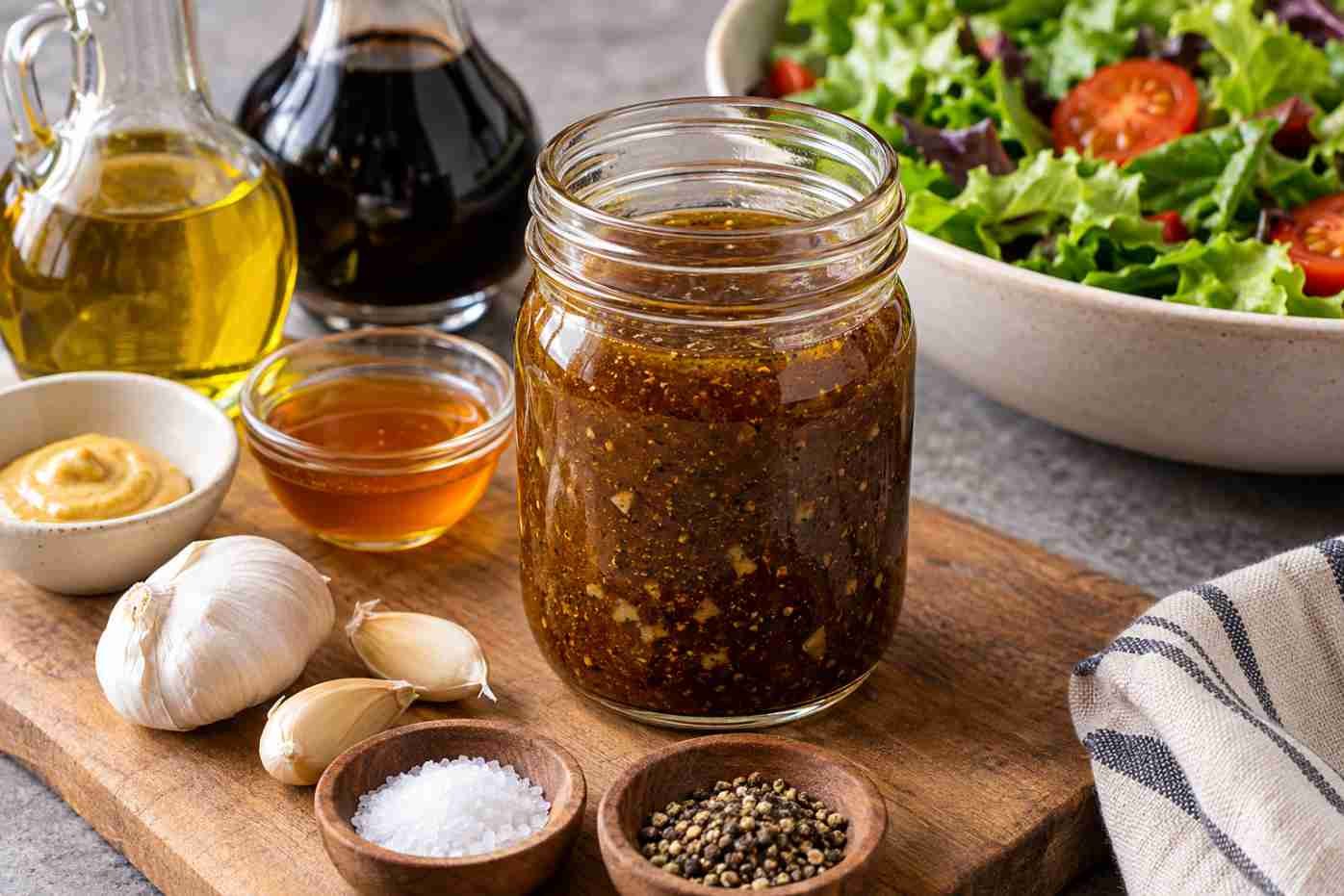
Balsamic vinaigrette is one of those salad dressings that is easy to overlook because the ingredient list is so simple. But when good balsamic vinegar meets extra-virgin olive oil, Dijon mustard, a little sweetness, and fresh garlic, the result is far more interesting than a bottled dressing. It is tangy, slightly sweet, savory, and rich enough to make a plain bowl of greens feel like a proper meal.
This homemade balsamic vinaigrette takes about five minutes to put together and makes a little over 3/4 cup. The recipe is inspired by the classic balance of ingredients used in homemade vinaigrettes, with balsamic vinegar providing the main flavor and Dijon helping the dressing come together smoothly.
What You Can Do Better
The biggest difference between an average balsamic vinaigrette and a really good one usually comes down to the ingredients. You do not need an expensive bottle of balsamic vinegar, but choose one that tastes good on its own. A decent extra-virgin olive oil also makes a noticeable difference because it forms most of the dressing.
Do not add all the oil at once if you want a smoother dressing. Whisk the vinegar, Dijon, sweetener, garlic, salt, and pepper first, then slowly add the olive oil while whisking. This helps the oil and vinegar stay blended for longer. The dressing will still separate eventually, so give it another quick whisk or shake before serving.
The sweetness is there to soften the sharpness of the vinegar, not to turn the dressing into a sweet sauce. Start with the suggested amount and adjust after tasting. If your balsamic is particularly sharp, a little more maple syrup or honey can round it out. If it tastes flat, a touch more salt or vinegar can bring it back to life.
Ingredients
| Ingredient | Amount |
|---|---|
| Balsamic vinegar | 3 tablespoons |
| Extra-virgin olive oil | 1/2 cup |
| Dijon mustard | 1 tablespoon |
| Maple syrup or honey | 1 tablespoon |
| Fresh garlic | 2 medium cloves, pressed or minced |
| Fine sea salt | 1/4 teaspoon, or to taste |
| Freshly ground black pepper | To taste |
The ingredient proportions are based on the recipe’s simple balsamic vinaigrette formula, which yields just over 3/4 cup of dressing.
Also Read: Vinaigrette Balsamic Vinegar Sauce
How to Make Balsamic Vinaigrette
1. Mix the flavorful ingredients
Add the balsamic vinegar, Dijon mustard, maple syrup or honey, garlic, salt, and several twists of freshly ground black pepper to a small bowl or liquid measuring cup. Whisk or stir until everything is well combined.
2. Add the olive oil
While whisking continuously, slowly drizzle in the extra-virgin olive oil. Keep whisking until the dressing looks evenly blended and slightly thickened.
3. Taste and adjust
This is the step that makes homemade dressing worth the few extra minutes. Taste a little and decide what it needs. If it is too sharp, add a small splash of olive oil or a little more maple syrup or honey. If it needs more acidity, add balsamic vinegar a teaspoon at a time. A small pinch of salt can also make the other flavors stand out.
4. Serve or store
Use the vinaigrette immediately, or transfer it to a covered jar and refrigerate. Homemade balsamic vinaigrette is best used within about 7 to 10 days. Olive oil can become cloudy or partially solid in the refrigerator, which is normal. Let the dressing sit at room temperature for several minutes, then shake or whisk it before serving.
How to Use Balsamic Vinaigrette
This dressing is not limited to a basic green salad. Its sweet-tart flavor works particularly well with peppery greens such as arugula, hearty kale, spinach, and spring mix. It also pairs nicely with ingredients that have their own sweetness or richness.
- Salads: Try it with mixed greens, tomatoes, cucumber, red onion, or roasted vegetables.
- Fruit: Strawberries, apples, peaches, cherries, and berries work especially well with balsamic flavors.
- Cheese: Feta, goat cheese, mozzarella, Parmesan, blue cheese, and cheddar can all work with this dressing.
- Nuts and seeds: Add walnuts, pecans, almonds, pumpkin seeds, or sunflower seeds for crunch.
- Roasted vegetables: Drizzle it over roasted squash, carrots, or other vegetables just before serving.
These combinations work because the acidity of balsamic vinegar cuts through rich cheese and olive oil while its natural sweetness complements fruit and roasted vegetables.
Also Read: Lemon Vinaigrette
Tips for the Best Balsamic Vinaigrette
- Use a balsamic you actually enjoy. You do not need the most expensive vinegar, but flavor matters because there are only a few ingredients in this recipe.
- Use fresh garlic. Freshly pressed or minced garlic gives the dressing much more character than dried garlic.
- Add the oil slowly. A slow drizzle while whisking helps create a more cohesive dressing.
- Taste before serving. Balsamic vinegars vary in sweetness and acidity, so the final seasoning may need a small adjustment.
- Shake before using. Separation is normal in a homemade vinaigrette. A quick shake brings everything back together.
Easy Variations
Once you have the basic dressing down, it is easy to change it depending on what you are serving. Use honey instead of maple syrup for a slightly different sweetness. Add a little finely chopped fresh basil, oregano, or thyme for a more herb-forward dressing. For a fruitier version, a small splash of pomegranate juice can add another layer of acidity and sweetness.
You can also make a very quick single-serving version when you do not want to mix a whole batch: drizzle olive oil and balsamic vinegar directly over your salad, then finish with a little flaky salt. It will not have quite the same consistency as a whisked vinaigrette, but it is handy when dinner needs to happen quickly.
Also Read: Steak Salad Recipe
Nutritional Information
The nutrition below is an estimate for approximately 2 tablespoons of dressing. Since the exact values can change with the brands of olive oil, balsamic vinegar, mustard, and sweetener used, treat these numbers as a general guide rather than a laboratory measurement. A comparable calculation for this style of vinaigrette places a 2-tablespoon serving at roughly 183 calories, with most of the calories coming from olive oil.
| Nutrient | Approx. amount per 2 tbsp |
|---|---|
| Calories | 183 kcal |
| Total fat | About 19 g |
| Carbohydrates | About 4 g |
| Protein | Less than 1 g |
| Sugar | About 3 g |
| Sodium | About 95 mg |
If you are watching calories, remember that the olive oil is responsible for most of the energy in the dressing. Using a little less dressing on your salad is the simplest way to reduce the calories without changing the recipe itself.
How to Store It
Pour the finished vinaigrette into a clean jar or airtight container, cover, and refrigerate. It is best within about a week and can generally be kept for up to 10 days when handled properly. Because olive oil can firm up when chilled, the dressing may look thicker or cloudy straight from the refrigerator. Let it sit out for a few minutes and shake it well before using.
Frequently Asked Questions
Can I use honey instead of maple syrup?
Yes. Honey works well in place of maple syrup and gives the dressing a slightly different sweetness. Use the same amount to start, then taste and adjust.
Why does my balsamic vinaigrette separate?
Separation is normal because oil and vinegar naturally do not stay mixed forever. Whisking the ingredients together, especially while slowly adding the oil, helps create a temporary emulsion. Simply shake or whisk the dressing again before serving.
Can I make balsamic vinaigrette ahead of time?
Yes. In fact, making it ahead can be convenient because you can keep it ready for salads throughout the week. Store it covered in the refrigerator and shake it before using.
What should I do if the dressing tastes too sour?
Add a little more olive oil or a small amount of maple syrup or honey. Taste after each adjustment rather than adding a large amount at once.
What salads go well with balsamic vinaigrette?
It works particularly well with greens such as arugula, spinach, kale, and spring mix. Try adding strawberries, apples, tomatoes, roasted vegetables, nuts, seeds, or cheese for a more complete salad.
How long does homemade balsamic vinaigrette last?
For the best flavor, use it within about 7 to 10 days and keep it refrigerated. Always check the smell and appearance before using any homemade dressing that has been stored for several days.