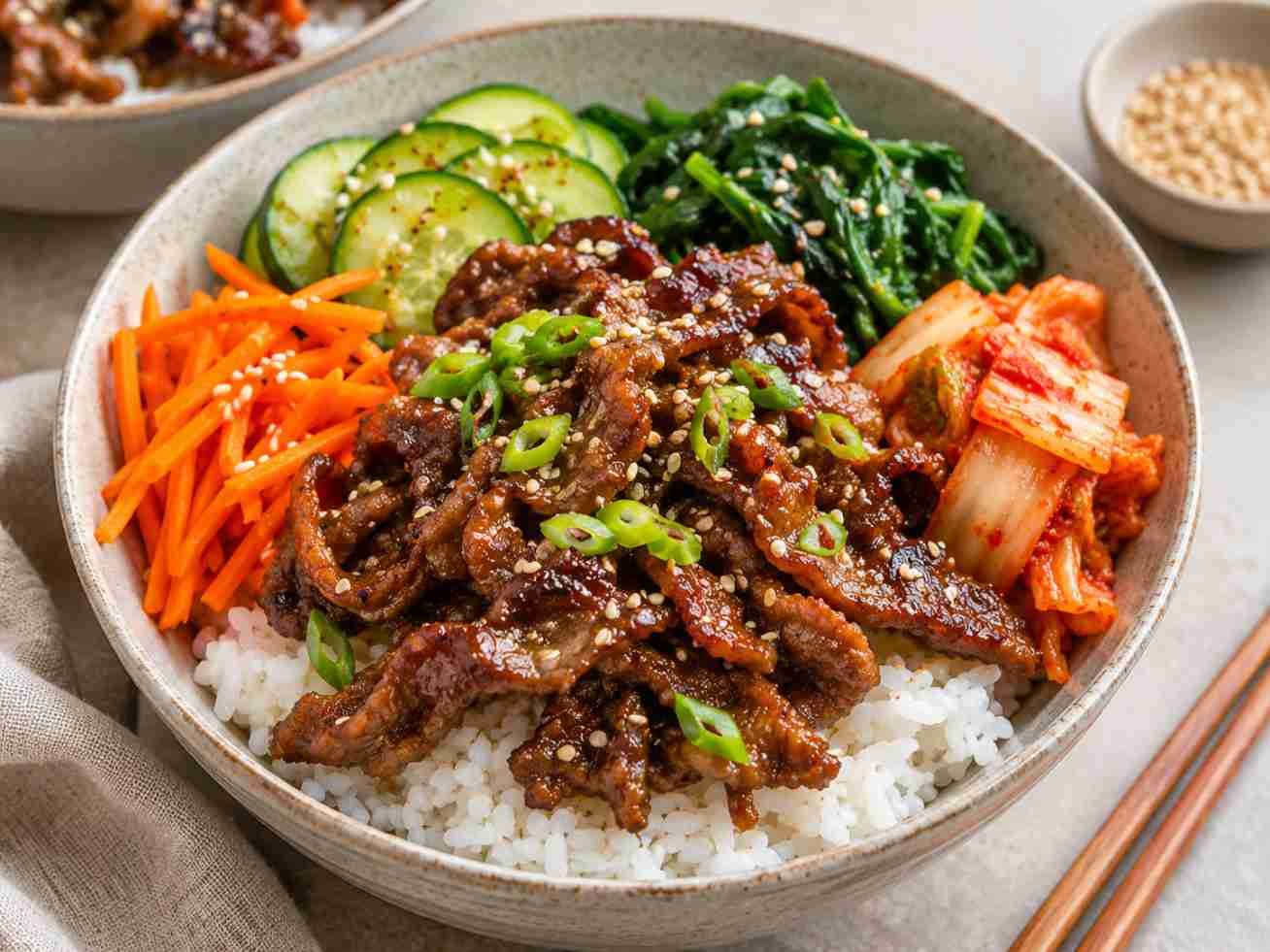
Traditional Korean bulgogi is usually prepared with thinly sliced beef that is marinated and grilled. This rice bowl version takes a more convenient approach by using ground beef. It cooks quickly, absorbs the sauce beautifully, and costs less than many cuts of steak. A little grated pear, soy sauce, garlic, and sesame oil give the beef that familiar bulgogi-inspired flavor.
What makes this meal particularly useful is how easily you can adjust it. Keep the vegetables simple, add some kimchi if you have it, or finish everything with a fried egg. You can even prepare the beef ahead of time and assemble the bowls when you’re ready to eat.
Korean Beef Bulgogi Rice Bowls Recipe
| Recipe Details | Information |
|---|---|
| Preparation Time | 15 minutes |
| Cooking Time | 15 minutes |
| Total Time | 30 minutes |
| Servings | 4 rice bowls |
| Course | Main Course, Dinner |
| Cuisine | Korean-Inspired |
| Cooking Method | Stovetop |
| Difficulty | Easy |
Ingredients
You don’t need an unusually long shopping list for this recipe. Most of the flavor comes from a few ingredients that work together in the sauce. The grated pear adds mild sweetness, while the garlic and ginger keep the beef from tasting overly sweet.
For the Bulgogi Beef
- 1 lb (450 g) lean ground beef
- 1 tablespoon neutral cooking oil, such as canola or sunflower oil
- 3 tablespoons regular soy sauce
- 2 tablespoons finely grated Asian pear or ripe apple
- 2 tablespoons finely grated yellow onion
- 1 tablespoon brown sugar
- 1 tablespoon toasted sesame oil
- 3 garlic cloves, finely minced
- 1 teaspoon freshly grated ginger
- 1 teaspoon rice vinegar
- 1/4 teaspoon freshly ground black pepper
- 1 teaspoon gochujang, optional for a little heat
For the Rice Bowls
- 3 cups cooked short-grain white rice
- 1 medium carrot, julienned or grated
- 1 small cucumber, thinly sliced
- 2 cups fresh baby spinach
- 1 teaspoon neutral cooking oil for the spinach
- 2 green onions, finely sliced
- 2 teaspoons toasted sesame seeds
- 1/2 cup kimchi, optional
For the Quick Sesame Drizzle
- 1 tablespoon regular soy sauce
- 1 tablespoon rice vinegar
- 2 teaspoons honey
- 1 teaspoon toasted sesame oil
- 1 tablespoon warm water
Also Read: Quick Taco Soup with Pulled Pork
How to Make Korean Beef Bulgogi Rice Bowls
It’s easiest to prepare the vegetables and sauce before cooking the beef. Once the pan is hot, everything moves fairly quickly, and you don’t want to be searching for ingredients while the meat is browning.
Step 1: Prepare the Rice
Start by cooking the rice according to the package instructions. Short-grain white rice works especially well because its slightly sticky texture helps hold the beef and sauce together. If you’re using leftover rice, reheat it until steaming hot and keep it covered while preparing the other ingredients.
You can also use jasmine rice or brown rice. The flavor will be slightly different, but both work well with the seasoned beef.
Step 2: Mix the Bulgogi Sauce
In a medium bowl, combine the soy sauce, grated pear or apple, grated onion, brown sugar, toasted sesame oil, minced garlic, grated ginger, rice vinegar, and black pepper. Stir until the sugar begins to dissolve.
If you prefer a little spice, stir in a teaspoon of gochujang. It adds a gentle chili flavor without completely changing the sweet-savory character of the dish.
Set the sauce aside while preparing the vegetables. There’s no need to marinate the ground beef beforehand because the small pieces absorb the sauce during cooking.
Step 3: Prepare the Vegetables
Peel and julienne the carrot into thin strips. Slice the cucumber into small rounds or half-moons, depending on your preference. Rinse the spinach and remove any tough stems.
Heat one teaspoon of oil in a large skillet over medium heat. Add the spinach and stir for approximately one minute, just until the leaves wilt. Transfer it to a plate.
Keep the carrots and cucumber raw for a fresh, crisp contrast to the warm beef. If you prefer softer vegetables, you can quickly sauté the carrots in the same pan.
Step 4: Brown the Ground Beef
Place a large skillet over medium-high heat and add one tablespoon of cooking oil. Once hot, add the ground beef and spread it across the pan.
Leave the meat undisturbed for about two minutes before breaking it into smaller pieces with a wooden spoon. This helps create browned spots that give the beef a richer flavor.
Continue cooking for another three to four minutes, stirring occasionally, until the meat is mostly browned. If the beef releases a lot of fat, carefully spoon off the excess before adding the sauce.
Step 5: Add the Bulgogi Sauce
Pour the prepared sauce over the browned beef and stir until the meat is evenly coated. Reduce the heat to medium and cook for another three to five minutes, stirring occasionally.
The sauce should gradually thicken and cling to the beef. Some of the sugar will caramelize against the hot pan, giving the meat a slightly glossy appearance and deeper flavor.
Keep an eye on the skillet during the final minute. You want the sauce concentrated, not completely dried out. The beef should remain juicy enough to flavor the rice underneath. Cook until the ground beef reaches an internal temperature of 160°F (71°C).
Step 6: Make the Sesame Drizzle
While the beef finishes cooking, whisk together the soy sauce, rice vinegar, honey, sesame oil, and warm water in a small bowl. Taste and adjust with a little more vinegar if you prefer a sharper dressing.
This quick drizzle is particularly helpful when serving the bowls with plenty of fresh vegetables. It gives the rice and toppings a little extra seasoning without making the beef overly salty.
Step 7: Assemble the Rice Bowls
Divide the warm rice evenly among four serving bowls. Spoon the cooked bulgogi beef over one side of each bowl, allowing some of the sauce to soak into the rice.
Arrange the carrots, sliced cucumber, and wilted spinach around the beef. Add a small portion of kimchi if using. Sprinkle the bowls with sliced green onions and toasted sesame seeds.
Finish with a spoonful of the sesame drizzle. Serve immediately while the beef and rice are warm. You can keep the toppings arranged separately or mix everything together before eating.
What You Can Do Better
This is a straightforward recipe, but a few small decisions can make a noticeable difference to the finished bowl.
Give the Beef Time to Brown
One common mistake is stirring the ground beef constantly as soon as it enters the skillet. That makes it release moisture and steam rather than brown. Let the meat sit against the hot surface briefly before breaking it apart. Those darker edges provide much more flavor than uniformly gray beef.
Use Freshly Grated Pear or Apple
The fruit may look like a minor ingredient, but it contributes more than sweetness. Fresh pear or apple adds a gentle fruitiness that balances the salty soy sauce and aromatic garlic. Grate it finely so it disappears into the sauce instead of leaving noticeable chunks.
Asian pear is a traditional choice for bulgogi marinades, but a ripe, sweet apple is a practical substitute for this quick ground beef version.
Don’t Make the Sauce Too Salty
Regular soy sauce is usually enough to season the beef. Avoid using dark soy sauce as a direct replacement because its flavor and intensity can change the balance. If you’re sensitive to salt, choose reduced-sodium soy sauce and taste the finished beef before adding extra seasoning.
Keep Something Crunchy in the Bowl
The combination of soft rice and tender beef benefits from fresh vegetables. Cucumber and carrot are convenient options, but thinly sliced radish, shredded cabbage, or bean sprouts work just as well.
Adjust the Sweetness at the End
Different apples and pears contain different amounts of natural sugar. If your fruit is particularly sweet, you may prefer to reduce the brown sugar slightly. Taste the beef after the sauce has reduced, then adjust future batches to your preference.
Also Read: Taco Pasta Recipe
Variations and Ingredient Substitutions
Make It Spicy
Add one or two teaspoons of gochujang to the bulgogi sauce for extra heat. You can also finish the cooked beef with a pinch of Korean red pepper flakes, known as gochugaru. Start with a small amount so the chili doesn’t overpower the garlic and sesame flavors.
Use Sliced Beef Instead of Ground Beef
For a version closer to traditional bulgogi, use very thinly sliced ribeye or sirloin. Marinate the slices in the sauce for at least 30 minutes in the refrigerator before cooking them quickly in a hot skillet. Cooking in batches helps prevent overcrowding.
Try Ground Turkey or Chicken
Ground turkey and chicken also work with this sauce. Because they’re generally leaner, add a little extra cooking oil if necessary and avoid letting the meat dry out. Cook ground poultry to an internal temperature of 165°F (74°C).
Make a Vegetarian Rice Bowl
Replace the beef with crumbled firm tofu or finely chopped mushrooms. Cook them until some of their moisture evaporates before adding the sauce. Mushrooms provide an especially savory result, while tofu makes the bowl more substantial.
Serve It with Brown Rice
Brown rice offers a nuttier flavor and a chewier texture. It’s a useful option if you want more whole grains in the meal. Prepare it separately, since it generally takes longer to cook than white rice.
What to Serve with Bulgogi Rice Bowls
These bowls are already a complete meal, so you don’t need many side dishes. Still, a few simple Korean-inspired accompaniments can make dinner feel a little more special.
- Kimchi: Its tangy, fermented flavor cuts through the richness of the beef.
- Pickled cucumber: Lightly dressed cucumber adds freshness and acidity.
- Fried egg: A warm egg makes the bowl more filling and adds richness when the yolk mixes with the rice.
- Steamed broccoli: A simple way to add more vegetables without competing with the sauce.
- Roasted seaweed: Crumbled nori or Korean roasted seaweed brings a salty, crisp finishing touch.
Also Read: Ice Cream in a Bag Recipe
Storage and Reheating Instructions
Refrigerating Leftovers
Allow the cooked beef to cool promptly, then transfer it to an airtight container and refrigerate within two hours. It will keep for up to three to four days when stored at 40°F (4°C) or below.
Store the cooked rice separately and refrigerate it promptly as well. For best quality, use refrigerated rice within 24 hours. Keep cucumber, carrots, and other fresh toppings in separate containers so they remain crisp.
Freezing the Bulgogi Beef
The cooked beef freezes well without the rice or vegetable toppings. Let it cool, divide it into meal-sized portions, and place it in freezer-safe airtight containers. For the best flavor and texture, use it within two to three months.
Reheating
Warm the beef in a skillet over medium heat with one or two tablespoons of water. Stir occasionally until it is steaming hot throughout and reaches 165°F (74°C). Reheat refrigerated rice only once, making sure it is steaming hot all the way through. Add fresh vegetables after reheating rather than warming the assembled bowl.
Can You Make Korean Beef Bulgogi Rice Bowls Ahead of Time?
Yes. In fact, this is a convenient recipe for preparing lunches ahead of a busy week. Cook the beef and portion it into containers with the rice. Store the vegetables and sesame drizzle separately.
If you’re preparing several meals at once, freeze the portions you won’t eat within the recommended refrigerator storage period. Add the cucumber, kimchi, or other fresh toppings just before serving.
You can also prepare the sauce a day in advance and keep it covered in the refrigerator. That leaves only the beef and vegetables to cook when it’s time for dinner.
Nutritional Information
The following values are approximate estimates for one serving when the recipe is divided into four bowls. Each serving includes the ground beef, 3/4 cup cooked white rice, vegetables, and one-quarter of the sesame drizzle. Optional kimchi, gochujang, and additional toppings are not included. Actual values will vary according to the beef’s fat percentage, brands, and serving sizes.
| Nutrient | Approximate Amount Per Serving |
|---|---|
| Calories | 550 kcal |
| Protein | 32 g |
| Total Carbohydrates | 51 g |
| Total Fat | 23 g |
| Saturated Fat | 6 g |
| Dietary Fiber | 3 g |
| Total Sugars | 12 g |
| Sodium | 1,100 mg |
| Cholesterol | 80 mg |
Nutrition note: These are planning estimates rather than laboratory-tested or software-verified nutritional values. Using reduced-sodium soy sauce, leaner beef, or a different rice portion will change the numbers.
Frequently Asked Questions
What is bulgogi sauce made of?
Bulgogi marinades typically combine soy sauce, sugar or another sweetener, garlic, sesame oil, and aromatics. Grated Korean pear or other fruit is also commonly used. The ingredients create a savory-sweet flavor that becomes especially appealing when the meat caramelizes during cooking.
Is Korean beef bulgogi spicy?
Traditional beef bulgogi is usually more sweet and savory than spicy. This ground beef version is mild unless you add gochujang or Korean chili flakes. You can easily adjust the heat to suit your taste.
Can I make bulgogi rice bowls without sesame oil?
Yes, although sesame oil adds a distinctive toasted flavor. If you need to avoid it, replace it with a neutral cooking oil. The final dish will taste a little different but will still have plenty of flavor from the soy sauce, garlic, ginger, and grated fruit.
What type of rice works best for bulgogi bowls?
Short-grain white rice is a great choice because it is tender and slightly sticky. Jasmine rice also works well and is often easier to find. Brown rice is another option if you prefer a firmer texture.
Can I use frozen ground beef?
Yes. Thaw frozen ground beef safely in the refrigerator before cooking. If you’re short on time, you can thaw it using the microwave’s defrost setting, but the meat should be cooked immediately afterward.
Is this recipe suitable for meal prep?
Absolutely. The seasoned beef reheats well, and the vegetables can be prepared in advance. Store the components separately and assemble the bowls when ready to eat. Following proper cooling and refrigeration practices is particularly important when storing cooked rice.
Can I make this recipe gluten-free?
Use certified gluten-free tamari instead of regular soy sauce, and check the labels on gochujang, kimchi, and any other packaged ingredients. Rice, plain beef, and fresh vegetables are naturally gluten-free, but sauces can contain wheat.