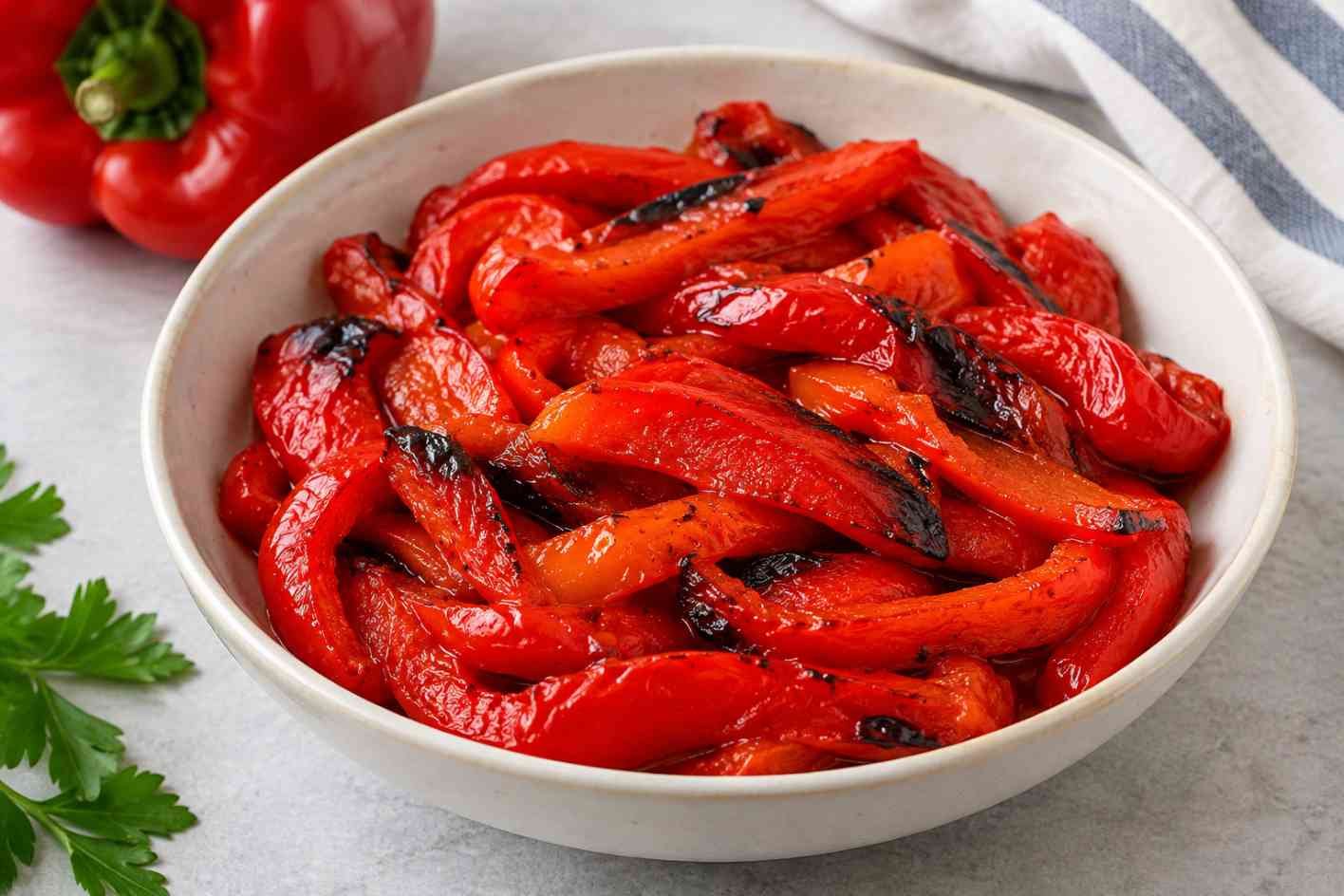
Roasted red peppers are one of those simple kitchen staples that can make an ordinary meal taste much better. Fresh red bell peppers become soft, sweet, and full of flavor when roasted in a hot oven. Their skins blister during cooking, while the flesh develops a rich taste that works beautifully in salads, sandwiches, pasta, dips, and homemade sauces.
Making roasted red peppers at home is easier than it might seem. You only need fresh peppers, an oven, and a little patience while they cool. This recipe uses no added oil, so the natural sweetness of the peppers remains the star of the dish. Once prepared, you can use them straight away or keep them in the refrigerator for quick meals throughout the week.
Recipe Overview
| Recipe Detail | Information |
|---|---|
| Recipe Name | Roasted Red Peppers |
| Preparation Time | 10 minutes |
| Cooking Time | 25–30 minutes |
| Cooling Time | 10–20 minutes |
| Total Time | About 40–50 minutes |
| Servings | Approximately 1½ cups |
| Cooking Method | Oven roasting |
| Cuisine | Mediterranean-inspired |
| Diet | Vegan, vegetarian, and gluten-free |
| Difficulty | Easy |
Ingredients for Roasted Red Peppers
This recipe keeps things simple with just one main ingredient. Choose firm, fresh peppers with smooth skin for the best results.
- 4 medium red bell peppers
Optional additions for serving:
- 1 tablespoon extra-virgin olive oil
- 1 small garlic clove, finely minced
- A pinch of salt and freshly ground black pepper
- A few drops of lemon juice
The optional ingredients are not required for roasting. Add them after cooking if you want to serve the peppers as a side dish or use them in a salad.
Also Read: Fresh Creamed Spinach
How to Make Roasted Red Peppers
Step 1: Preheat the Oven
Preheat your oven to 450°F (230°C). Line a large baking sheet with parchment paper to make cleanup easier. Make sure the parchment paper is suitable for the temperature you are using and follow the manufacturer’s instructions.
Step 2: Prepare the Peppers
Wash the red bell peppers and dry them thoroughly. Place each pepper upright on a cutting board and carefully slice down one side at a time to remove four large, flat sections of flesh. Remove the seeds, white membranes, and stems.
Cutting the peppers into flat pieces helps them sit evenly on the baking sheet, allowing the skin to blister and the flesh to soften at a similar rate.
Step 3: Arrange the Peppers on the Baking Sheet
Place the pepper pieces on the prepared baking sheet with their skin sides facing up. Arrange them in a single layer and leave a little space between the pieces. You do not need to add oil before roasting.
Step 4: Roast Until Tender
Put the baking sheet in the preheated oven and roast the peppers for 25–30 minutes. Turn the baking sheet halfway through cooking so the peppers roast more evenly.
The skin should become wrinkled, blistered, and dark in several places. The flesh should also be soft enough to pierce easily with a fork. Some dark patches are normal and help give the peppers their roasted flavor.
Cooking times can vary depending on the size of the peppers and your oven, so check them near the end of the cooking time.
Step 5: Cover and Let the Peppers Cool
Transfer the hot peppers to a heatproof bowl using tongs or a spatula. Cover the bowl with a plate or lid and let the peppers rest for about 10–20 minutes.
As the peppers cool, trapped steam loosens the skins and makes them easier to remove. Do not rush this step, as it can save you quite a bit of effort later.
Step 6: Remove the Skins
Once the peppers are cool enough to handle, gently peel away the blistered outer skins with your fingers. Discard the skins and any remaining tough pieces.
If a few small bits of skin remain, there is no need to worry. The goal is to remove the tougher portions while keeping as much of the tender pepper flesh as possible.
Step 7: Serve or Store
Your roasted red peppers are now ready to use. Slice them into strips, chop them for salads, or blend them into a sauce or dip.
For extra flavor, toss the peppers with olive oil, minced garlic, salt, and a little lemon juice before serving. If you are saving them for later, allow them to cool completely before transferring them to a clean, airtight container.
Also Read: Green Enchilada Sauce
What You Can Do Better
A few small adjustments can make a noticeable difference in the flavor and texture of homemade roasted red peppers.
Choose ripe, firm peppers: Look for peppers that feel heavy for their size and have smooth, shiny skin. Fully ripe red peppers are naturally sweet and develop a lovely flavor during roasting.
Keep the pieces flat: Large, flat sections make it easier for the skin to blister evenly. Uneven pieces may cook at different speeds, leaving some parts firm while others become very soft.
Do not worry about dark spots: The skin is supposed to blister and darken. A few nearly black patches are fine because the skin will be removed afterward. However, avoid letting the pepper flesh burn or become excessively dry.
Give the peppers time to steam: Covering the bowl after roasting is an important step. The steam helps loosen the skin, making peeling much easier than trying to remove it immediately.
Season after roasting: The peppers already have plenty of natural sweetness. Add olive oil, garlic, herbs, or lemon juice afterward so you can adjust the flavor according to how you plan to use them.
Avoid overcrowding the baking sheet: Arrange the pepper pieces in one layer rather than piling them on top of one another. This allows them to roast properly instead of steaming against each other.
How to Use Roasted Red Peppers
Roasted red peppers are versatile enough to use in everyday meals. Their soft texture and concentrated flavor make them useful in both simple dishes and more elaborate recipes.
- Sandwiches and wraps: Add pepper strips to grilled vegetable sandwiches, cheese sandwiches, or hummus wraps.
- Pasta and sauces: Blend the peppers with garlic, olive oil, and a little cream or vegetable stock for a smooth sauce.
- Salads: Combine sliced peppers with cucumber, tomatoes, chickpeas, olives, and a simple lemon dressing.
- Dips and spreads: Blend roasted peppers with chickpeas, tahini, or feta cheese to make a flavorful dip.
- Homemade pizza: Spread the peppers over pizza with mozzarella, onions, mushrooms, or other favorite toppings.
- Soups: Add them to tomato soup or vegetable soup for extra sweetness and depth.
- Side dishes: Serve the peppers with grilled vegetables, roasted potatoes, or a main course of your choice.
Also Read: Buffalo Cauliflower
Storage Tips
Proper storage helps keep roasted red peppers fresh and ready to use.
Refrigerator: Allow the peppers to cool completely, then place them in a clean, airtight container and refrigerate. Use them within 3–4 days for a conservative food-safety guideline. Always use clean utensils and discard the peppers if you notice mold, an unusual smell, or other signs of spoilage.
Freezer: For longer storage, freeze the cooled peppers in a freezer-safe container or bag. Separate them into portions so you can thaw only what you need. Their texture may become softer after thawing, which makes them especially suitable for sauces, soups, and dips.
Adding oil: Olive oil and garlic can improve the flavor, but do not store homemade peppers submerged in oil at room temperature. Keep them refrigerated and follow appropriate food-safety guidance.
Nutritional Information
Roasted red peppers are naturally low in calories and provide vitamin C, vitamin A-related carotenoids, and dietary fiber. Because this recipe uses only bell peppers, it contains no added oil, salt, or sugar.
The following figures are approximate estimates for one serving, assuming the finished recipe is divided into four equal portions. Actual values depend on the size of the peppers and the amount of edible flesh remaining after removing the skins and seeds.
| Nutrient | Approximate Amount per Serving |
|---|---|
| Calories | 30–40 kcal |
| Carbohydrates | 7–9 g |
| Protein | 1 g |
| Total Fat | 0–0.5 g |
| Dietary Fiber | 2–3 g |
| Natural Sugars | 4–6 g |
| Vitamin C | Varies with pepper size and cooking |
| Vitamin A | Varies with pepper size and cooking |
| Sodium | Naturally low |
These values are estimates, not laboratory-tested measurements. Roasting can reduce some heat-sensitive nutrients, including vitamin C, and adding olive oil or other ingredients will change the nutritional totals.
Also Read: Balsamic Vinaigrette
Frequently Asked Questions
Do I need to peel roasted red peppers?
Peeling is recommended because the outer skin can become tough after roasting. Allowing the peppers to steam while cooling helps loosen the skin and makes it easier to remove.
Can I roast red peppers without oil?
Yes. Red peppers can be roasted without oil, and their natural sugars help develop a sweet, rich flavor. You can add olive oil after roasting if you prefer.
Why are my roasted red peppers difficult to peel?
The peppers may not have roasted long enough, or they may not have rested under a cover after cooking. Make sure the skin is well blistered and allow the peppers to steam for 10–20 minutes before peeling.
Can I use yellow or orange bell peppers?
Yes. Yellow and orange bell peppers work well with the same method. Their flavor may be slightly different, but they will still become tender and sweet when roasted.
How long do homemade roasted red peppers last?
For a conservative approach, store them in a clean, airtight container in the refrigerator and use them within 3–4 days. Freeze any portions you will not use within that period.
Can I freeze roasted red peppers?
Yes. Let the peppers cool completely and freeze them in suitable portions. The texture may soften after thawing, but they remain useful for soups, sauces, pasta, and dips.
What can I make with leftover roasted red peppers?
You can add leftover peppers to sandwiches, salads, pasta, pizza, soups, hummus, or vegetable wraps. They also work well when blended into a creamy sauce or a simple dip.