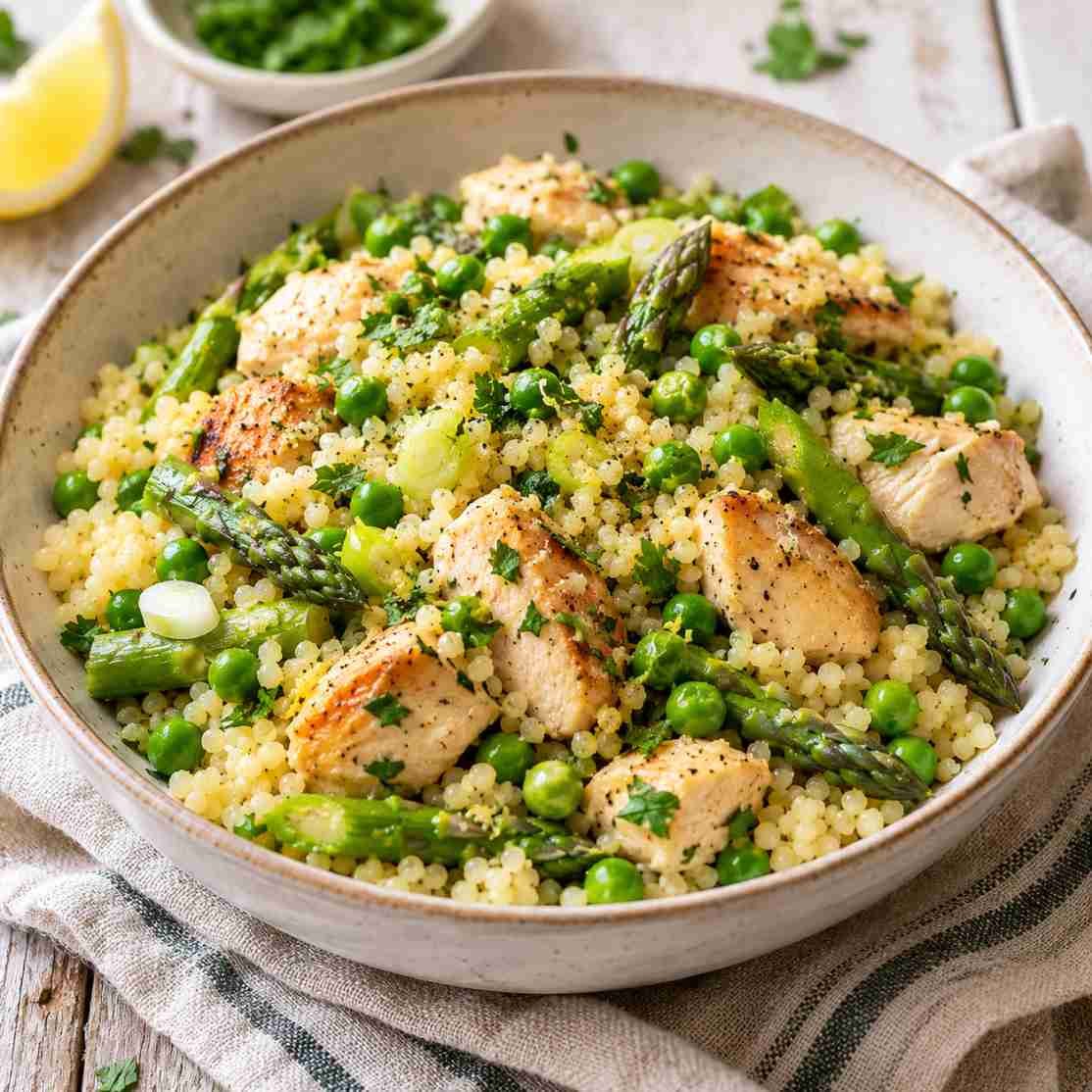
Spring Vegetable Couscous with Chicken is a simple, colorful meal that brings tender chicken, fluffy couscous, and fresh green vegetables together in one pan. Asparagus and sweet peas add a fresh taste, while lemon juice and parsley give the dish a bright finish. It is a practical choice for lunch or dinner when you want something filling without spending too much time in the kitchen.
This recipe takes around 30 minutes from preparation to serving, making it useful for busy weekdays as well as relaxed weekend meals. The couscous absorbs the flavor of the broth, and the chicken adds protein to make the dish more satisfying. You can prepare it with leftover cooked chicken or rotisserie chicken to save even more time.
Recipe Overview
| Recipe Detail | Information |
|---|---|
| Recipe Name | Spring Vegetable Couscous with Chicken |
| Preparation Time | 15 minutes |
| Cooking Time | 15 minutes |
| Total Time | 30 minutes |
| Servings | 4 |
| Cooking Method | Stovetop, one pan |
| Meal Type | Lunch or dinner |
| Main Ingredients | Couscous, chicken, asparagus, peas, and scallions |
What Is Spring Vegetable Couscous with Chicken?
Spring Vegetable Couscous with Chicken is a one-pan meal inspired by the fresh vegetables commonly enjoyed during spring. Small-grain Moroccan couscous cooks quickly and takes on the flavor of the broth, butter, and seasonings. Asparagus and peas provide a mild sweetness and a little texture, while cooked chicken makes the meal hearty enough to serve on its own.
Couscous is made from semolina wheat, so it is technically a type of pasta rather than a whole grain. For this recipe, regular Moroccan couscous is a convenient choice because it needs only a few minutes to absorb hot liquid. Lemon juice and fresh parsley are added near the end to keep the flavor fresh and balanced.
Ingredients for Spring Vegetable Couscous with Chicken
The ingredients below make four servings. Fresh asparagus works especially well, but you can use other green vegetables if asparagus is unavailable. For the quickest preparation, use chicken that has already been cooked.
Main Ingredients
- 1 cup plain Moroccan couscous: The base of the dish. Use small-grain couscous rather than pearl couscous, which requires a different cooking method.
- 1/2 pound cooked chicken: Use roasted chicken thighs, shredded rotisserie chicken, or leftover cooked chicken cut into bite-sized pieces.
- 1 pound fresh asparagus: Trim off the woody ends and cut the stalks into small pieces.
- 1/2 cup green peas: Frozen peas are convenient and can be thawed before cooking.
- 3 scallions: Separate the white and green parts, then chop them. The white parts add flavor to the broth, while the green parts provide a fresh finish.
- 1 1/2 cups vegetable broth: This gives the couscous more flavor than plain water.
- 3 tablespoons unsalted butter: Adds richness and helps soften the scallions.
- 1 1/2 tablespoons fresh lemon juice: Adds a bright, slightly tangy flavor.
- 2 tablespoons fresh parsley: Chop finely before adding.
- Salt and black pepper: Add according to taste.
Optional Ingredients
- 1 garlic clove, minced: Adds extra savory flavor.
- 1 teaspoon lemon zest: Gives the dish a stronger citrus aroma.
- 1/2 cup sugar snap peas: Adds crunch and a slightly sweet flavor.
- 1 teaspoon olive oil: Can replace some of the butter if you prefer.
Also Read: Honey Soy Baked Chicken Drumsticks
How to Make Spring Vegetable Couscous with Chicken
Step 1: Prepare the Ingredients
Trim the asparagus and cut it into pieces about half an inch long. Chop the scallions, keeping the white and green parts separate. Measure the couscous, broth, peas, lemon juice, and parsley before starting. If your chicken is not already cooked, cook it separately until it reaches an internal temperature of 165°F (74°C), then cut or shred it into bite-sized pieces.
Step 2: Cook the Scallions
Place a large skillet or saucepan over medium heat and melt the butter. Add the white parts of the scallions and cook for about 2 to 3 minutes, stirring regularly. They should soften without turning dark brown. If you are using minced garlic, add it during the final 30 seconds so it does not burn.
Step 3: Heat the Broth
Pour the vegetable broth into the pan and bring it to a boil. Add the asparagus and peas, then season with salt and black pepper. Let the vegetables simmer for about 3 minutes. They should begin to soften but still hold their shape.
Step 4: Add the Couscous
Once the broth returns to a boil, stir in the Moroccan couscous. Mix gently to distribute it through the liquid. Follow the package instructions if your couscous recommends a different amount of liquid or cooking time, as brands can vary.
Step 5: Add the Cooked Chicken
Stir the cooked chicken into the couscous and vegetables. Remove the pan from the heat and cover it with a tight-fitting lid. Let everything stand for about 5 to 7 minutes, or until the couscous has absorbed the broth and become tender. Avoid leaving the pan uncovered, as the steam helps the couscous finish cooking.
Step 6: Add Lemon Juice and Parsley
Remove the lid and gently fluff the couscous with a fork. Stir in the lemon juice, chopped parsley, and reserved green parts of the scallions. Taste the dish and add more salt, pepper, or lemon juice if needed.
Step 7: Serve Warm
Spoon the couscous into serving bowls while it is warm. Make sure each portion includes chicken, asparagus, and peas. You can finish with a little extra parsley or a small squeeze of lemon juice just before serving.
What You Can Do Better
A few small adjustments can make this recipe even more enjoyable without making the cooking process complicated.
- Keep the vegetables slightly crisp: Asparagus tastes better when it retains a little bite. Cut it into small, even pieces and avoid simmering it for too long before adding the couscous.
- Use flavorful chicken: Roasted chicken thighs offer a richer taste, while chicken breast is a leaner alternative. Leftover roast chicken also works well.
- Watch the liquid: Couscous can turn soggy if too much broth is added. Start with the amount specified in the recipe and check the package instructions for your particular brand.
- Add lemon at the end: Stirring in fresh lemon juice after cooking helps preserve its bright flavor and balances the butter.
- Season in stages: Broth can contain different amounts of sodium, so taste the dish before adding extra salt at the end.
- Make it more colorful: Sugar snap peas, chopped spinach, or a small amount of diced zucchini can add variety. Add delicate vegetables toward the end so they do not become mushy.
- Use fresh herbs when possible: Parsley adds freshness, but chopped dill or mint can also work if you enjoy their flavor.
Also Read: Chicken Bacon Ranch Pizza
Tips for the Best Results
Choose the Right Couscous
Regular Moroccan couscous is the easiest option for this recipe because it cooks quickly in hot liquid. Pearl couscous, also called Israeli couscous, is larger and generally needs to simmer for longer. If you use pearl couscous, adjust the liquid and cooking method according to the package instructions rather than following the quick-steaming method exactly.
Use Cooked Chicken to Save Time
Pre-cooked chicken makes this a convenient 30-minute meal. Shredded rotisserie chicken is particularly useful because it is already seasoned and tender. If using freshly cooked chicken, prepare it before starting the couscous so that it is ready to add to the pan.
Do Not Skip the Resting Time
After adding the couscous and chicken, cover the pan and let it rest off the heat. This gives the couscous time to absorb the remaining liquid. Fluff it gently with a fork before serving to separate the grains.
Also Read: Classic Chicken Caesar Salad
Variations You Can Try
Make It Dairy-Free
Replace the butter with olive oil or another suitable plant-based alternative. The dish will still have plenty of flavor from the vegetables, broth, chicken, and lemon.
Make It Vegetarian
Leave out the chicken and use vegetable broth. Add chickpeas or white beans if you want a more filling meal. Make sure the broth and any other packaged ingredients are suitable for your dietary needs.
Add More Vegetables
Green beans, sugar snap peas, baby spinach, and zucchini can all work in this dish. Choose vegetables that cook quickly, or cook firmer vegetables for a little longer before adding the couscous.
Give It a Little Heat
If you like spicy food, add a pinch of red pepper flakes or a little freshly ground black pepper. Start with a small amount so the heat does not overpower the fresh lemon and herb flavors.
Also Read: Creamy Smothered Baked Chicken
What to Serve with Spring Vegetable Couscous with Chicken
This recipe can be served as a complete meal, but a simple side dish can round it out when you are cooking for guests or preparing a larger dinner.
- Green salad: A salad with cucumber, tomatoes, and a light lemon dressing adds a cool, fresh contrast.
- Roasted vegetables: Roasted carrots or zucchini are useful if you want to add more vegetables to the table.
- Garlic bread: A small serving of bread works well for soaking up any flavorful liquid left in the bowl.
- Lemon yogurt sauce: Plain yogurt mixed with lemon juice, chopped herbs, and a little salt makes a refreshing accompaniment. Use a dairy-free yogurt if needed.
How to Store and Reheat Leftovers
Refrigeration
Allow the leftovers to cool slightly, then transfer them to an airtight container and refrigerate within two hours of cooking. Store at 40°F (4°C) or below and use within 3 to 4 days. Refrigerate the dish promptly rather than leaving it at room temperature for an extended period.
Reheating
Reheat individual portions in the microwave, stirring halfway through. Add a tablespoon of water or broth if the couscous seems dry. You can also warm it in a covered skillet over low heat with a splash of broth. Reheat until the chicken and the rest of the dish reach 165°F (74°C).
Can You Freeze It?
You can freeze leftovers in a freezer-safe container, although the asparagus may become softer after thawing. For the best texture, freeze in individual portions and use within about 2 months for good quality. Thaw in the refrigerator before reheating thoroughly.
Nutritional Information
The following table gives estimated nutrition for one serving, assuming the recipe makes four servings and is prepared with the listed ingredients. Actual values will vary with the type of chicken, broth, couscous brand, and amount of butter used.
| Nutrient | Estimated Amount per Serving |
|---|---|
| Calories | 409 kcal |
| Carbohydrates | 43 g |
| Protein | 19 g |
| Total Fat | 18 g |
| Saturated Fat | 8 g |
| Dietary Fiber | 6 g |
| Sugars | 4 g |
| Cholesterol | 78 mg |
| Sodium | 407 mg |
| Potassium | 497 mg |
| Calcium | 58 mg |
| Iron | 4 mg |
Nutrition note: These figures are approximate estimates based on a similar preparation of this dish, not laboratory-tested values for the exact ingredient quantities above. They should be treated as a general guide rather than medical or dietary advice.
Also Read: Chicken Broccoli Alfredo
Frequently Asked Questions
Can I make Spring Vegetable Couscous with Chicken ahead of time?
Yes. You can chop the vegetables and prepare the cooked chicken a day ahead. For the best texture, cook the couscous close to serving time. You can also prepare the complete dish in advance and reheat it with a little broth to loosen it.
Can I use chicken breast instead of chicken thighs?
Yes. Cooked chicken breast works well and has a milder flavor. Chicken thighs are usually more tender and rich, while breast meat is generally leaner. Either option is suitable as long as the chicken is fully cooked before serving.
Can I use chicken broth instead of vegetable broth?
Yes. Chicken broth adds a savory flavor that complements the meat. Choose a low-sodium version if you want more control over the salt level.
Is couscous gluten-free?
No. Traditional couscous is made from wheat semolina and contains gluten. If you need a gluten-free meal, substitute a suitable gluten-free grain such as quinoa and adjust the cooking method and liquid according to its package instructions.
How do I stop couscous from becoming mushy?
Measure the broth carefully, use the right type of couscous, and avoid adding extra liquid without checking the texture. Once the couscous has absorbed the broth, fluff it gently with a fork rather than stirring it vigorously.
Can I use frozen asparagus?
Yes. Frozen asparagus can be used if fresh asparagus is unavailable. It may soften more quickly, so add it toward the end of the vegetable cooking stage and avoid overcooking it.
Is this recipe suitable for meal prep?
Yes. Divide the cooled couscous and chicken into individual airtight containers and refrigerate promptly. It is convenient for lunches and quick dinners over the next few days. Add a little water or broth when reheating to restore moisture.