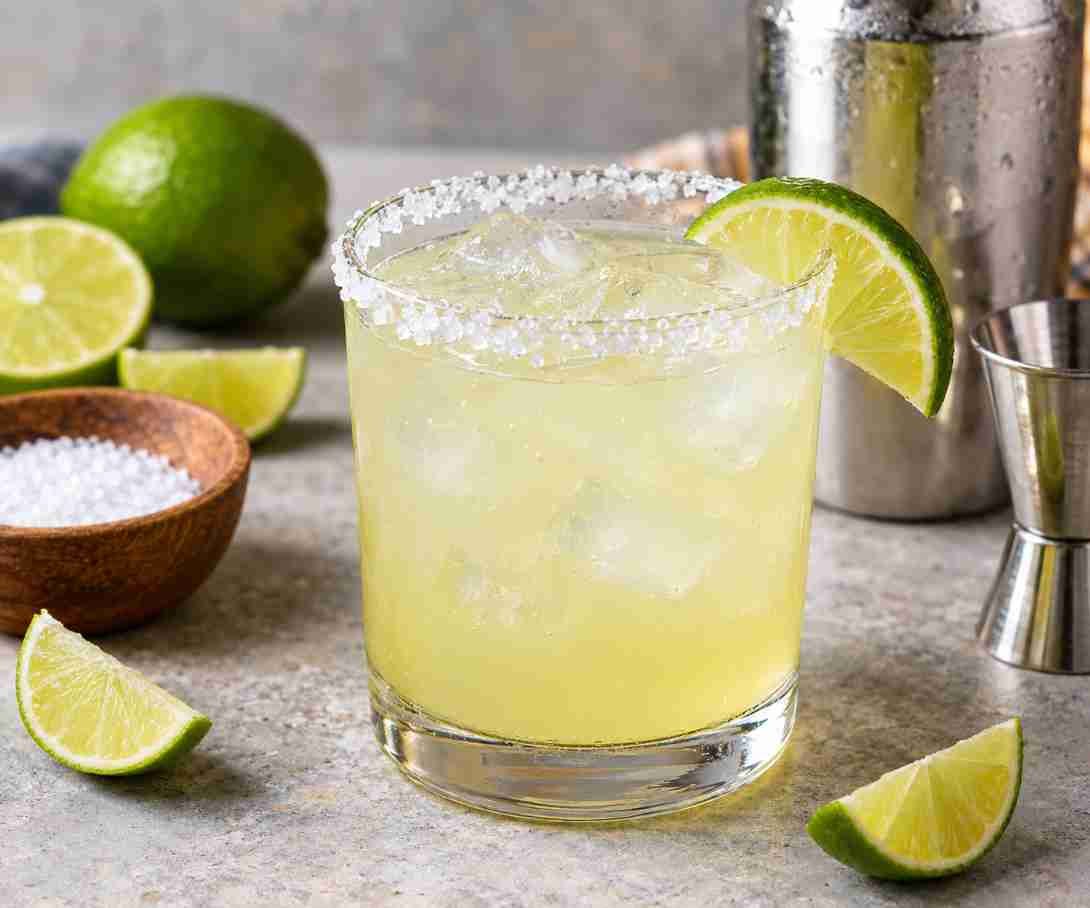
A good margarita does not need a long ingredient list or a complicated bar setup. Fresh lime juice, tequila, orange liqueur and a little sweetness are enough to make a bright, refreshing cocktail at home. The key is getting the balance right: the tequila should still have a presence, the lime should bring a clean citrus bite, and the sweetener should soften the sharp edges without making the drink sugary.
This margarita is shaken with plenty of ice and served over fresh ice in a salt-rimmed glass. It takes only a few minutes to prepare, making it an easy choice for a relaxed evening, a small gathering or a weekend meal.
What You Need for a Margarita
The ingredients are simple, but using fresh lime juice makes a noticeable difference. A blanco tequila works especially well because its clean agave character lets the citrus and orange notes come through.
| Ingredient | Amount | Purpose |
|---|---|---|
| Blanco tequila | 2 ounces | Provides the main spirit and agave flavor |
| Orange liqueur | 1 ounce | Adds orange flavor and sweetness |
| Fresh lime juice | 1 ounce | Brings acidity and fresh citrus flavor |
| Agave syrup | 1/2 ounce | Balances the tartness |
| Ice | As needed | Chills and dilutes the cocktail |
| Coarse salt | For the rim | Adds a savory contrast |
| Lime wedge or slice | For garnish | Adds a fresh finishing touch |
Also Read: Quiche Pie Recipe
How to Make a Margarita
1. Prepare the Glass
Run a lime wedge around the outside edge of half of a rocks glass. Dip that portion into coarse salt. Keeping the salt on only part of the rim gives you the option of taking a sip with or without salt.
2. Add the Ingredients
Pour the blanco tequila, orange liqueur, freshly squeezed lime juice and agave syrup into a cocktail shaker. Add a generous handful of ice.
3. Shake Until Cold
Close the shaker and shake firmly for about 15 seconds. You want the mixture to become thoroughly chilled while picking up a little dilution from the ice. If you do not have a cocktail shaker, a clean jar with a tight-fitting lid can work in a pinch.
4. Taste and Adjust
Before pouring, give the margarita a quick taste if you can. If the lime tastes particularly sharp, add a small amount of extra agave. If it seems too sweet, another splash of fresh lime juice can bring it back into balance.
5. Strain and Serve
Fill the prepared glass with fresh ice and strain the margarita over it. Finish with a lime wedge or slice and serve immediately.
Also Read: Mummy Brie Recipe
What You Can Do Better
Use fresh lime juice. Bottled lime juice can be convenient, but freshly squeezed lime gives the cocktail a cleaner and more lively flavor.
Do not skip the shaking. A margarita is more than a mixture of ingredients. Shaking with ice chills the drink and adds the small amount of dilution needed to soften the alcohol.
Salt only part of the rim. A completely salted glass can make every sip taste salty. A half rim gives you more control and lets the citrus and tequila stand on their own.
Use fresh ice for serving. The ice used in the shaker has already melted and diluted the drink. Fresh cubes keep the finished margarita colder and cleaner.
Adjust the sweetness. Lime varies in acidity, and orange liqueurs vary in sweetness. Treat the agave as an adjustable ingredient rather than a fixed rule.
Easy Margarita Variations
Spicy Margarita: Add a few thin slices of jalapeño to the shaker before shaking. Start with a small amount and increase the heat gradually.
Smoky Margarita: Replace some or all of the tequila with mezcal for a deeper, smoky character.
Fruit Margarita: Add a small amount of muddled mango, strawberry or watermelon for a fruit-forward version.
Citrus Salt Margarita: Mix a little finely grated lime or orange zest into the salt before rimming the glass.
Also Read: Veggie Sushi Bowl
Can You Make a Margarita Without a Cocktail Shaker?
Yes. A clean mason jar or another sturdy jar with a tight-fitting lid can be used instead. Add the ingredients and ice, close the lid securely and shake until the outside of the jar feels very cold. Strain carefully into the prepared glass.
How to Serve a Margarita
A classic margarita works particularly well over fresh ice in a rocks glass. You can also serve it straight up in a chilled cocktail glass if you prefer a drink without ice. For a more casual presentation, keep the garnish simple with a lime wedge or thin lime wheel.
Margarita Nutrition Information
The following figures are approximate and will vary depending on the tequila, orange liqueur and amount of agave syrup used. For the recipe above, one serving is roughly:
| Nutrient | Amount per serving |
|---|---|
| Calories | Approximately 140 kcal |
| Carbohydrates | Approximately 20–22 g |
| Sugars | Approximately 18–20 g |
| Fat | Less than 1 g |
| Protein | Less than 1 g |
| Sodium | Varies with the amount of salt used |
| Vitamin C | Small amount from fresh lime juice |
Nutrition values are estimates and can change considerably with different brands and measurements. Alcoholic drinks should be enjoyed responsibly.
Also Read: Broccoli Cheese Soup
Frequently Asked Questions
What is a classic margarita made of?
A classic margarita is generally made with tequila, orange liqueur and fresh lime juice. A small amount of sweetener can be added to balance the acidity. This version uses agave syrup for that purpose.
What tequila is best for a margarita?
Blanco tequila is an excellent choice because it has a fresh, straightforward agave flavor. Reposado tequila can also be used when you want a slightly richer and more rounded drink.
Should a margarita be served with salt?
Salt is optional, but it is a classic part of the margarita experience. It provides a savory contrast to the tart lime and sweet orange notes. A half-salted rim is an easy option if you do not want salt with every sip.
Can I use bottled lime juice?
You can, but fresh lime juice is strongly recommended. Freshly squeezed juice gives the margarita a brighter aroma and sharper citrus flavor.
Can I make this margarita sweeter?
Yes. Add a little more agave syrup after tasting the drink. It is better to increase the sweetness gradually than to add too much at the beginning.