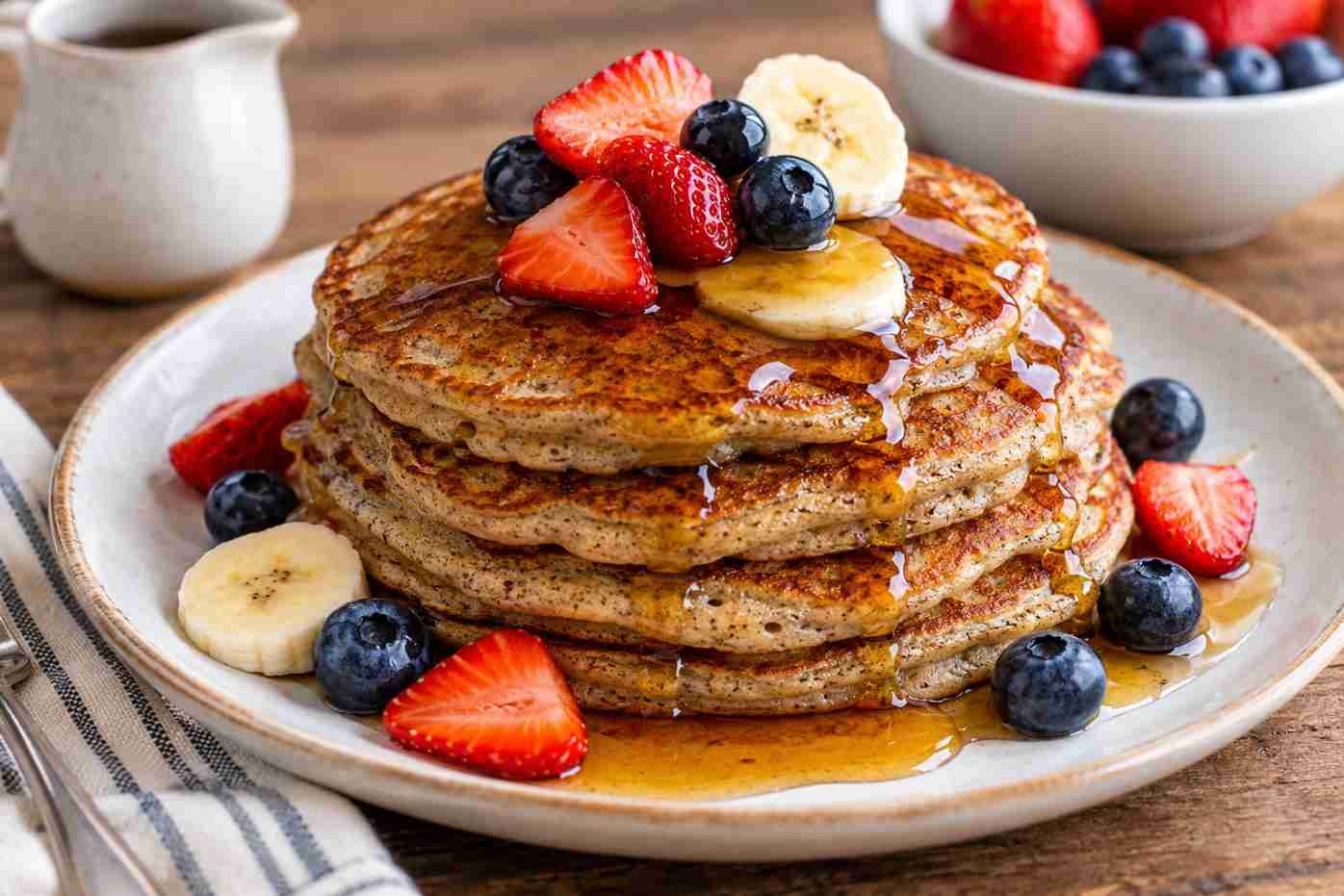
Buckwheat pancakes are a delicious way to change up your usual breakfast. They have a slightly nutty, earthy flavor, a tender texture, and crisp golden edges when cooked properly. Made with buckwheat flour, eggs, buttermilk, and a few simple pantry ingredients, these pancakes are easy to prepare on a busy morning or for a relaxed weekend breakfast.
Unlike regular wheat flour, buckwheat flour comes from the seeds of a flowering plant and is naturally gluten-free. It gives pancakes a deeper flavor and makes a good alternative for anyone looking to try something different. Serve them warm with maple syrup, fresh fruit, yogurt, or nut butter for a satisfying breakfast.
Buckwheat Pancakes Recipe Details
| Recipe Detail | Information |
|---|---|
| Preparation Time | 10 minutes |
| Cooking Time | 15 minutes |
| Total Time | 25 minutes |
| Servings | 4 servings |
| Yield | About 12 medium pancakes |
| Course | Breakfast |
| Cooking Method | Stovetop |
| Dietary Notes | Vegetarian; gluten-free when made with certified gluten-free ingredients |
Ingredients for Buckwheat Pancakes
This recipe uses buckwheat flour as the main ingredient, along with buttermilk and eggs to create a soft, tender pancake. Baking powder and baking soda help the batter rise, while a little sugar and vanilla add flavor.
- 1 cup plus 1 tablespoon buckwheat flour: The main ingredient that gives the pancakes their distinctive nutty flavor.
- 1 tablespoon sugar: Adds a touch of sweetness and helps the pancakes brown.
- 1 teaspoon baking powder: Helps create a lighter texture.
- 1 teaspoon baking soda: Reacts with the acidity in the buttermilk to help the pancakes rise.
- 1/4 teaspoon salt: Balances the flavors.
- 1 1/4 cups buttermilk: Adds moisture and a gentle tang.
- 2 large eggs: Help bind the ingredients and give the pancakes structure.
- 1/2 teaspoon vanilla extract: Adds a warm, pleasant aroma.
- Butter or neutral cooking oil, as needed: For greasing the skillet.
Also Read: Almond Flour Pancakes
How to Make Buckwheat Pancakes
Step 1: Mix the Dry Ingredients
In a medium mixing bowl, whisk together the buckwheat flour, sugar, baking powder, baking soda, and salt. Break up any lumps so the raising agents are evenly distributed throughout the flour.
Step 2: Prepare the Wet Ingredients
In a separate bowl, whisk the buttermilk, eggs, and vanilla extract until the mixture is smooth. Make sure the eggs are well combined with the buttermilk before adding the liquid to the flour.
Step 3: Make the Pancake Batter
Pour the wet ingredients into the bowl of dry ingredients. Stir gently until everything is just combined. A few small lumps are fine, so avoid overmixing the batter. Let it rest for about 5 minutes while you heat the skillet.
Step 4: Heat the Skillet
Place a nonstick skillet or griddle over medium-low heat. Lightly grease the surface with butter or oil. The pan should be warm enough for the pancakes to cook evenly without burning on the outside before the centers are done.
Step 5: Cook the Pancakes
Pour about 1/4 cup of batter onto the skillet for each pancake. Leave enough space between them to make flipping easier. Cook for about 2 to 3 minutes, or until small bubbles appear on the surface and the edges begin to look set rather than wet.
Step 6: Flip and Finish Cooking
Carefully flip each pancake and cook for another 1 to 2 minutes, until the second side is golden brown and the center is cooked through. If the pancakes brown too quickly, lower the heat slightly. Repeat with the remaining batter, lightly greasing the pan as needed.
Step 7: Serve Warm
Transfer the finished pancakes to a plate and serve while warm. Add maple syrup, fresh berries, sliced bananas, or a spoonful of nut butter. If you are cooking several batches, keep the finished pancakes warm in a low-temperature oven until ready to serve.
What You Can Do Better
A few small adjustments can make a noticeable difference in the taste and texture of buckwheat pancakes. These tips will help you get a better result without making the recipe complicated.
- Choose the right flour: Buckwheat flour has a stronger, earthier taste than all-purpose flour. If you prefer a milder flavor and a fluffier texture, replace half of the buckwheat flour with all-purpose flour or whole wheat flour. This change means the pancakes will no longer be gluten-free unless you use a suitable gluten-free alternative.
- Avoid overmixing: Stir the batter only until the ingredients come together. Overmixing can make the pancakes less tender.
- Give the batter a short rest: Five minutes allows the flour to absorb some of the liquid and makes the batter easier to work with.
- Keep the heat moderate: Buckwheat pancakes can become dark before the centers are fully cooked if the skillet is too hot. Medium-low heat gives them time to cook through.
- Watch the edges before flipping: Wait until bubbles appear and the edges look set. Flipping too early can cause the pancakes to break.
- Stir between batches: Buckwheat flour can settle as the batter stands. Give it a gentle stir before scooping more onto the skillet.
- Adjust the toppings: Fresh fruit adds natural sweetness, while Greek yogurt or nut butter can make breakfast more filling. Use syrup according to your taste.
Also Read: Pumpkin Pie Spice Pancakes
Easy Substitutions
| Ingredient | Possible Substitute | What to Expect |
|---|---|---|
| Buttermilk | 1 1/4 cups milk mixed with 1 tablespoon plus 3/4 teaspoon vinegar | Let the mixture stand for 5 minutes before using. It provides acidity similar to buttermilk. |
| Dairy milk | Unsweetened soy or almond milk mixed with vinegar | A useful dairy-free alternative; texture and flavor may vary. |
| Butter for cooking | Coconut oil or another neutral cooking oil | Suitable for greasing the skillet without using butter. |
| White sugar | Maple syrup or honey | Add sweetness, although liquid sweeteners may slightly change the batter’s consistency. |
| Some buckwheat flour | All-purpose or whole wheat flour | Creates a milder flavor and a different texture. The pancakes will not be gluten-free if regular wheat flour is used. |
What to Serve with Buckwheat Pancakes
Buckwheat has a rich flavor that works well with both sweet and lightly savory toppings. You do not need an elaborate topping to make these pancakes enjoyable.
- Maple syrup: A classic choice that complements the nutty flavor.
- Fresh berries: Strawberries, blueberries, and raspberries add freshness and a little tartness.
- Sliced bananas: Bring natural sweetness and pair well with cinnamon.
- Greek yogurt: Adds creaminess and protein.
- Peanut or almond butter: Provides a rich flavor and additional protein and fat.
- Warm fruit compote: Cooked apples or berries make a comforting topping, especially on cooler mornings.
Also Read: Apple Pancakes
Nutritional Information
Buckwheat flour provides carbohydrates, fiber, protein, and minerals. The eggs and buttermilk contribute additional protein, while the amount of fat and sugar in the finished meal depends on the cooking fat and toppings you choose.
The following figures are approximate estimates for one serving of three medium pancakes, based on the recipe ingredients. Actual nutrition can vary with the brands used, pancake size, and amount of butter or oil absorbed during cooking. Toppings are not included.
| Nutrient | Approximate Amount per Serving |
|---|---|
| Calories | 219 kcal |
| Protein | 9.6 g |
| Total Fat | 7.3 g |
| Carbohydrates | 30.8 g |
| Fiber | Varies by flour and serving size |
| Sugar | Varies by ingredients and toppings |
Nutrition note: These values are estimates, not a laboratory analysis. They should be treated as a general guide rather than exact nutritional advice. Maple syrup, fruit, yogurt, and extra butter will change the final totals.
How to Store and Reheat Buckwheat Pancakes
Refrigeration
Allow leftover pancakes to cool, then place them in an airtight container and refrigerate for up to 3 to 4 days. Keep toppings and syrup separate so the pancakes do not become soggy.
Freezing
For longer storage, let the pancakes cool completely. Place a piece of parchment paper between them and store them in a freezer-safe bag or container for up to 2 months for best quality.
Reheating
Warm refrigerated or frozen pancakes in a toaster, skillet, or microwave until heated through. A toaster or skillet helps bring back some of the crispness around the edges. If reheating from frozen in the microwave, heat in short intervals until the center is warm.
Also Read: Easy Mango Pancakes
Frequently Asked Questions
Are buckwheat pancakes gluten-free?
Buckwheat is naturally gluten-free despite its name. However, check the flour packaging for possible cross-contact with wheat or other gluten-containing grains. The recipe must also use gluten-free versions of all other ingredients to be suitable for a gluten-free diet.
Do buckwheat pancakes taste different from regular pancakes?
Yes. They have a deeper, nuttier, and slightly earthy flavor compared with pancakes made from all-purpose flour. The taste is more pronounced when you use 100% buckwheat flour.
Why are my buckwheat pancakes dense?
Dense pancakes can result from overmixing, old baking powder or baking soda, or cooking at the wrong temperature. Measure the ingredients carefully, mix gently, and cook over medium-low heat.
Can I make the batter ahead of time?
For the best rise and texture, cook the pancakes soon after mixing the batter. Baking soda begins reacting with the acidic buttermilk once the ingredients are combined, so leaving the batter for too long can reduce its lift.
Can I make buckwheat pancakes without dairy?
Yes. Use unsweetened plant-based milk mixed with vinegar in place of buttermilk, and cook with coconut oil or another dairy-free fat. The result may have a slightly different flavor and texture.
Can I make these pancakes without eggs?
You can experiment with a commercial egg replacer or a flaxseed-based substitute, but the texture may be denser and more fragile. The recipe has not been tested with these changes, so results may vary.