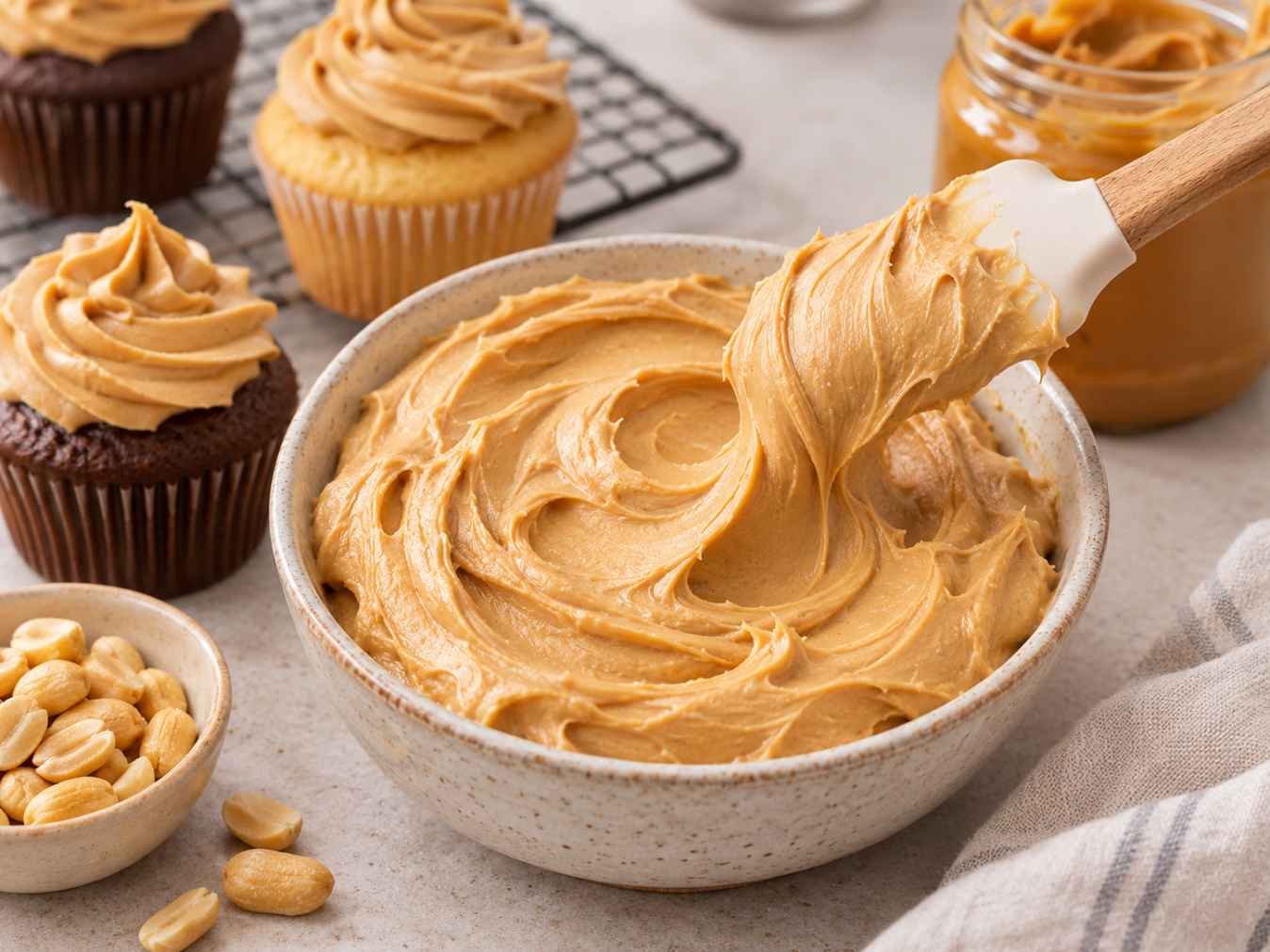
A good peanut butter frosting should taste like actual peanut butter, not just powdered sugar with a hint of nuts. It should be creamy enough to spread across a cake, thick enough to hold a swirl on a cupcake, and just sweet enough to balance the slightly salty flavor of the peanuts. This homemade peanut butter frosting gets that balance right with a handful of everyday ingredients and about 10 minutes of preparation.
There is no cooking involved, and you don’t need any special baking skills. A hand mixer, a mixing bowl, and a little attention to the texture are all it takes. The finished frosting is soft, fluffy, and rich without feeling overly heavy. It works particularly well with chocolate desserts, although vanilla cake, banana cupcakes, and even a simple batch of brownies are excellent matches.
Peanut Butter Frosting Recipe Overview
| Recipe Details | Information |
|---|---|
| Preparation Time | 10 minutes |
| Cooking Time | 0 minutes |
| Total Time | 10 minutes |
| Yield | Approximately 2 cups |
| Servings | 12 |
| Difficulty | Easy |
| Recipe Type | Frosting and Icing |
| Cuisine | American |
Ingredients for Peanut Butter Frosting
This recipe uses six ingredients. The quality and temperature of those ingredients matter more than you might expect, particularly when you’re trying to achieve a frosting that spreads smoothly without becoming greasy.
| Ingredient | Quantity | Purpose |
|---|---|---|
| Creamy peanut butter | 3/4 cup (190 g) | Provides the main flavor and a rich, creamy texture. |
| Unsalted butter, softened | 1/2 cup (113 g) | Creates a smooth base and helps the frosting hold its shape. |
| Powdered sugar, sifted | 1 1/2 cups (180 g) | Adds sweetness and gives the frosting structure. |
| Heavy whipping cream | 3 tablespoons (45 ml), plus more if needed | Lightens the mixture and makes it easier to spread. |
| Vanilla extract | 1 teaspoon | Rounds out the roasted peanut flavor. |
| Fine salt | 1/8 teaspoon, or to taste | Balances sweetness and enhances flavor. |
Ingredient note: Choose a smooth, conventional creamy peanut butter for the most predictable results. Peanut butter that separates into oil and solids can produce a loose or uneven frosting. If your peanut butter already contains plenty of salt, taste the mixture before adding the extra salt.
Also Read: Eggnog Soufflé
How to Make Peanut Butter Frosting
The secret to a light frosting is to build the texture gradually rather than mixing every ingredient together at once. Start with the butter, incorporate the peanut butter, and add the sugar and cream in stages.
Step 1: Soften the Butter
Remove the butter from the refrigerator and allow it to soften at room temperature. It should give slightly when pressed with a finger but should not look shiny or melted. Butter that is too cold will leave small lumps, while melted butter can make the finished frosting greasy and difficult to pipe.
Step 2: Beat the Butter Until Creamy
Place the softened butter in a large mixing bowl. Using a handheld electric mixer or a stand mixer fitted with a paddle attachment, beat on medium speed for about 2 minutes. Scrape down the sides of the bowl with a spatula so the mixture stays even.
Step 3: Add the Peanut Butter
Add the creamy peanut butter and beat for another 1 to 2 minutes until the mixture is smooth and evenly combined. The color should become slightly lighter, and there should be no visible streaks of butter. This step creates the base for a frosting that doesn’t feel dense or sticky.
Step 4: Mix in the Powdered Sugar
Reduce the mixer speed to low. Add the sifted powdered sugar in three portions, mixing briefly after each addition. Starting slowly keeps the sugar from flying out of the bowl. Once it has been incorporated, scrape the sides and bottom of the bowl to catch any dry patches.
Step 5: Add Cream, Vanilla, and Salt
Pour in the heavy cream, followed by the vanilla extract and salt. Mix on low speed until combined. Increase to medium-high speed and beat for 2 minutes, until the frosting looks lighter and forms soft peaks when you lift the beaters.
Step 6: Adjust the Consistency
Check the frosting before using it. For a softer, more spreadable consistency, add extra cream 1 teaspoon at a time. If the frosting is too loose for piping, mix in 1 tablespoon of sifted powdered sugar at a time until it holds its shape. Remember that the frosting will firm up slightly when chilled.
Step 7: Frost Your Dessert
Use the frosting immediately on completely cooled cakes or cupcakes. Spread it with an offset spatula for a smooth finish, or transfer it to a piping bag fitted with a large star tip for decorative swirls. If the frosting feels too soft to pipe neatly, refrigerate it for about 10 to 15 minutes, then stir gently before using.
Also Read: Apple Crisps Recipe
What You Can Do Better
Peanut butter frosting is straightforward, but small changes in ingredients and mixing technique can make a noticeable difference. These are the details worth paying attention to when you want the frosting to look as good as it tastes.
Use the Right Peanut Butter
Regular creamy peanut butter usually gives the smoothest and most reliable consistency. Natural peanut butter can work in some recipes, but its higher tendency to separate makes the finished texture harder to control. If you’re using a natural variety, it must be thoroughly mixed, and even then, the frosting may not hold piped decorations as well.
Don’t Melt the Butter
Softened butter and melted butter behave very differently in frosting. Soft butter can hold air when beaten, giving the frosting a lighter consistency. Melted butter cannot provide the same structure and may leave the mixture looking oily. If your kitchen is warm, soften the butter carefully rather than leaving it next to a hot oven.
Sift the Powdered Sugar
Powdered sugar often forms small lumps during storage. Sifting removes those lumps before they reach the frosting, which is particularly helpful when you want a smooth surface on a cake. It also means you won’t need to beat the mixture excessively just to remove dry pockets of sugar.
Control the Sweetness
Peanut butter already has a strong, naturally savory flavor, so the frosting doesn’t need to be overwhelmingly sweet. You can reduce the powdered sugar slightly if you’re using it as a soft cake filling rather than a piped topping. Keep in mind that less sugar also means a softer frosting that may need refrigeration before decorating.
Beat Until Light, Not Indefinitely
A couple of minutes of mixing after adding the cream makes the frosting fluffy and easier to spread. Continuing to beat it for too long can warm the butter, particularly in a hot kitchen. Stop once the mixture is smooth, lighter in color, and able to hold a soft peak.
Also Read: Caramel Brownies
Best Desserts to Pair with Peanut Butter Frosting
Peanut butter pairs especially well with chocolate because the cocoa’s slight bitterness balances the frosting’s sweetness. However, there are plenty of other ways to use it beyond a standard chocolate cake.
- Chocolate cupcakes: Pipe a generous swirl on each cupcake and finish with chopped roasted peanuts or a little grated chocolate.
- Brownies: Spread a thin layer over completely cooled fudgy brownies for an easy peanut butter and chocolate dessert.
- Banana cake: The mild sweetness of ripe bananas works beautifully with the roasted flavor of peanut butter.
- Vanilla layer cake: Use the frosting between layers for a pronounced peanut butter flavor without changing the cake itself.
- Chocolate sandwich cookies: Pipe a small amount between two cookies for a soft, creamy filling.
- Sheet cake: Spread the frosting across a cooled cake and create gentle swirls using the back of a spoon.
For a simple finishing touch, sprinkle a little flaky sea salt over the frosting. It adds a pleasant contrast, especially when the dessert underneath is quite sweet.
How to Fix Common Peanut Butter Frosting Problems
| Problem | Possible Cause | How to Fix It |
|---|---|---|
| Frosting is too thick | Not enough liquid or too much powdered sugar | Add cream 1 teaspoon at a time and mix until smooth. |
| Frosting is too runny | Warm butter or excess cream | Chill briefly, then add a little powdered sugar if needed. |
| Frosting looks grainy | Unsifted powdered sugar or poorly combined ingredients | Beat briefly and scrape the bowl. Sift the sugar next time. |
| Frosting appears oily | Overly warm butter or separated peanut butter | Refrigerate for 10 minutes and gently remix. Severe separation may not be reversible. |
| Frosting tastes too sweet | Too much powdered sugar | Add a small pinch of salt. Reduce sugar slightly in the next batch. |
| Piped swirls lose their shape | Frosting is too warm or soft | Chill briefly and use a large piping tip rather than a delicate design. |
Peanut Butter Frosting Variations
Chocolate Peanut Butter Frosting
Add 2 tablespoons of unsweetened cocoa powder with the powdered sugar. You may need another teaspoon or two of cream because cocoa absorbs moisture. This variation is especially good for brownies and chocolate layer cakes.
Honey Peanut Butter Frosting
Add 1 tablespoon of honey with the vanilla for a gentle floral sweetness. Honey makes the mixture a little softer, so reduce the cream slightly at first and adjust only after mixing.
Crunchy Peanut Butter Frosting
Fold 2 tablespoons of finely chopped roasted peanuts into the finished frosting. This adds texture and works well for spreading over brownies or sheet cakes. Avoid using this variation with narrow piping tips, as the peanut pieces can clog the opening.
Peanut Butter Cream Cheese Frosting
Replace 1/4 cup of the butter with 2 ounces (about 57 g) of softened full-fat block cream cheese. Beat the cream cheese with the remaining butter before adding the peanut butter. The result has a tangier flavor and a softer texture, making it more suitable for spreading than elaborate piping.
Also Read: Caramel Creme Brulee Pie
How to Store Peanut Butter Frosting
Refrigerator Storage
Transfer any leftover frosting to an airtight container and refrigerate for up to 5 days. Because the recipe contains butter and heavy cream, it should not be left at room temperature for extended periods. Before using refrigerated frosting, allow it to soften briefly and beat it again until it returns to a spreadable consistency.
Freezer Storage
Peanut butter frosting can be frozen for up to 2 months in a well-sealed, freezer-safe container. Leave a little space at the top for expansion. Thaw overnight in the refrigerator, then allow it to soften slightly and whip it again before decorating. The texture may be a little less airy after freezing.
Make-Ahead Preparation
If you’re preparing a cake for a party, you can make the frosting a day or two in advance. Keep it covered in the refrigerator and bring it to a workable consistency before applying. For the neatest results, frost your cakes only after they have cooled completely; even a slightly warm cake can soften the butter and cause the frosting to slide.
Nutritional Information
The following nutritional values are approximate and based on dividing the full frosting recipe into 12 equal servings. Actual values will vary depending on the peanut butter, cream, and other ingredients used. These estimates apply to the frosting alone, without cake or additional toppings.
| Nutrient | Approximate Amount Per Serving |
|---|---|
| Calories | 260 kcal |
| Total Fat | 20 g |
| Saturated Fat | 8 g |
| Cholesterol | 31 mg |
| Sodium | 115 mg |
| Total Carbohydrates | 19 g |
| Dietary Fiber | 1 g |
| Total Sugars | 17 g |
| Protein | 4 g |
Allergen information: This recipe contains peanuts and dairy. Check the labels of packaged ingredients for additional allergen or cross-contact warnings.
Also Read: Raspberry Jam Oat Bars
Frequently Asked Questions
Can I make peanut butter frosting without heavy cream?
Yes. Whole milk can be used in place of heavy cream, although the frosting will be slightly less rich. Start with 1 tablespoon of milk and add more gradually until you reach the desired consistency. Milk is thinner than cream, so you may not need the full amount.
Can I use natural peanut butter?
Natural peanut butter is less predictable in butter-based frosting because the oil can separate. For the most reliable texture, choose a conventional creamy variety. If natural peanut butter is your only option, stir it thoroughly before measuring and be prepared for a softer frosting.
Is peanut butter frosting suitable for piping?
Yes. This recipe works well for basic cupcake swirls, rosettes, and simple borders. It is less suitable for very detailed flowers or decorations that need to remain sharply defined for a long time, particularly in warm conditions.
How much frosting does this recipe make?
The recipe makes approximately 2 cups, depending on how much air is incorporated during mixing. That is generally enough to frost about 12 cupcakes with moderate swirls, cover a 9-inch single-layer cake, or spread a relatively thin layer over a small sheet cake. A tall layer cake will require a larger batch.
Can I make this frosting less sweet?
Yes, but reducing powdered sugar changes the structure as well as the sweetness. Try reducing it by 2 tablespoons initially and see how the frosting behaves. A small amount of extra salt can also help balance sweetness without changing the consistency as much.
Does peanut butter frosting need to be refrigerated?
For advance preparation or longer storage, refrigeration is recommended because the frosting contains dairy ingredients. Keep frosted desserts chilled when not being served, especially in warm weather, and follow the storage requirements of the cake or filling underneath as well.
Can I double the recipe?
Absolutely. Double every ingredient and use a large mixing bowl to prevent the sugar from spilling over the edges. A stand mixer is helpful for larger batches, but a handheld mixer works as long as you stop occasionally to scrape the bowl.