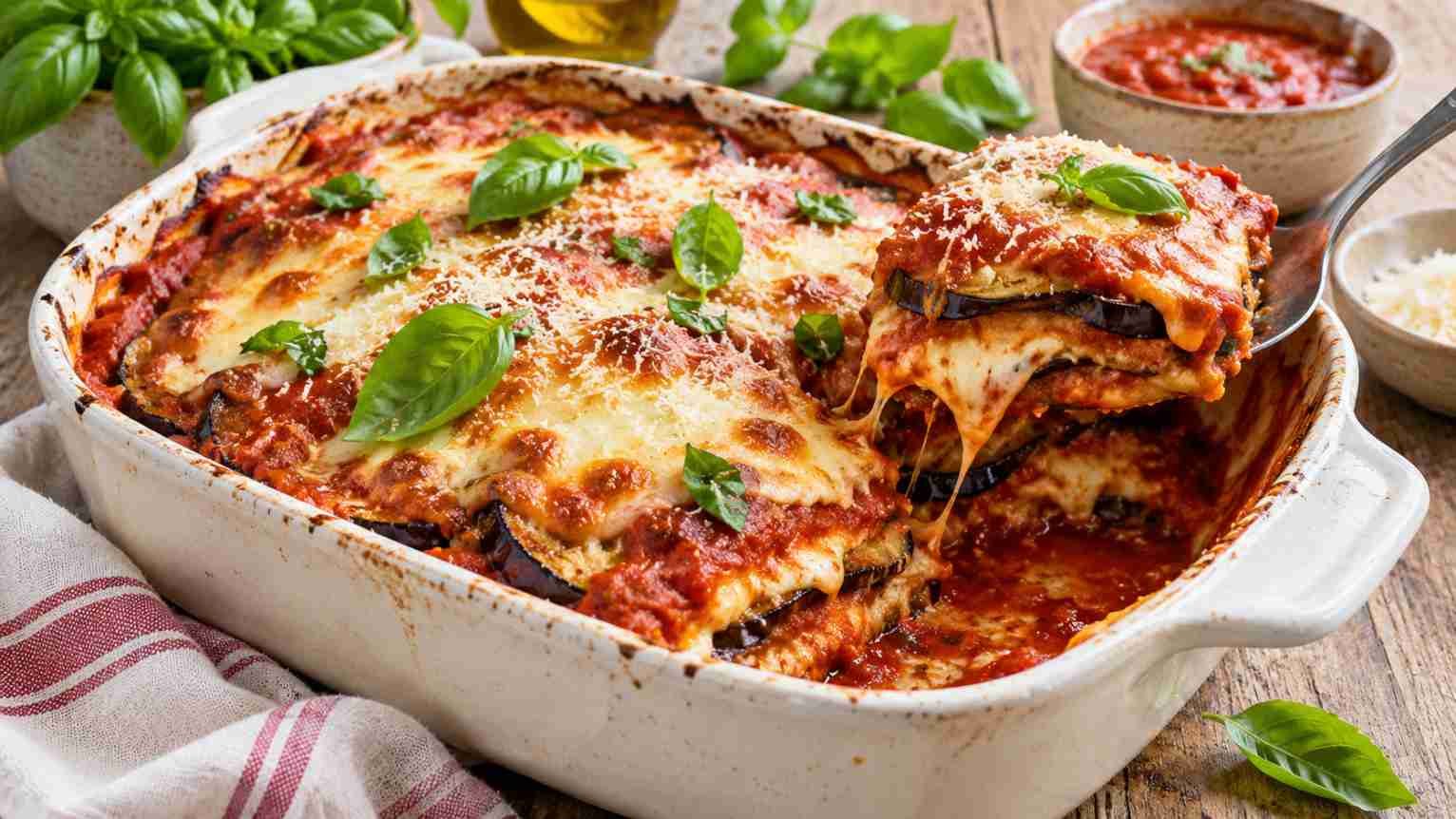
Eggplant Parmigiana is one of those Italian dishes that proves a good vegetarian dinner doesn’t need much fuss. Layers of tender roasted eggplant, homemade tomato sauce, fresh basil, and melted cheese come together in a bubbling casserole that’s rich, comforting, and surprisingly satisfying. The top turns beautifully golden in the oven, while underneath, the eggplant soaks up just enough tomato sauce to become soft without falling apart.
Also known as Parmigiana di Melanzane or Eggplant Parmesan, this Southern Italian favorite is sometimes compared to lasagna. The difference is that eggplant takes the place of pasta, giving the dish its distinctive texture and flavor. It works equally well as a family dinner, a weekend meal, or something you prepare ahead when guests are coming over.
The secret to a really good Eggplant Parmigiana is simple: cook the eggplant before assembling, make sure the tomato sauce isn’t watery, and give the finished casserole a few minutes to settle before serving. These little details make a noticeable difference.
Eggplant Parmigiana Recipe Overview
| Details | Information |
|---|---|
| Recipe Name | Eggplant Parmigiana |
| Cuisine | Italian |
| Course | Main Course |
| Preparation Time | 25 minutes |
| Cooking Time | 1 hour 15 minutes |
| Resting Time | 10 minutes |
| Total Time | 1 hour 50 minutes |
| Servings | 6 |
| Cooking Method | Oven-baked |
| Difficulty | Moderate |
Ingredients for Eggplant Parmigiana
This recipe uses everyday ingredients, but their quality matters. Choose firm eggplants, a good tomato passata, and cheese that melts well. Fresh basil is especially useful here because it adds a little brightness to an otherwise rich dish.
For the Roasted Eggplant
- 3 large eggplants (approximately 1.4 kg or 3 lb total)
- 3 tablespoons olive oil
- 1/4 teaspoon freshly ground black pepper
- A small pinch of salt, if needed
For the Homemade Tomato Sauce
- 2 tablespoons extra virgin olive oil
- 1 medium onion, finely chopped
- 4 garlic cloves, minced
- 500 ml tomato passata (strained tomato puree)
- 400 g canned crushed tomatoes
- 1 tablespoon tomato paste
- 1 teaspoon dried oregano
- 1/2 teaspoon dried thyme
- 1/2 teaspoon sugar, optional
- 1/2 teaspoon salt, or to taste
- 1/4 teaspoon freshly ground black pepper
- 1/3 cup water, as needed
For Layering and Topping
- 200 g mozzarella cheese, shredded
- 90 g Parmesan cheese, finely grated
- 1/2 cup fresh basil leaves, loosely packed
- 1 teaspoon olive oil, for greasing the baking dish
- Extra fresh basil leaves, for garnish
Ingredient note: Traditional Parmesan is made with animal rennet. If you’re preparing this dish for strict vegetarians, choose a vegetarian hard cheese instead. Low-moisture mozzarella is particularly useful because it melts nicely without releasing too much liquid.
Also Read: Hamburger Steak with Gravy
How to Make Eggplant Parmigiana
There are three main parts to this recipe: roasting the eggplant, preparing the tomato sauce, and assembling the casserole. You can cook the eggplant and tomato sauce at the same time to save a little preparation time.
Step 1: Prepare the Eggplant
Wash the eggplants thoroughly and trim off the stems. Cut them lengthwise into slices approximately 8 mm (1/3 inch) thick. Try to keep the thickness consistent so the slices cook evenly. You don’t need to peel the eggplants; the skin helps them hold their shape during roasting and layering.
Preheat the oven to 220°C (425°F), or 200°C (400°F) for a fan-assisted oven. Line two or three large baking trays with parchment paper. Arrange the eggplant slices in a single layer, leaving a little space between them. Brush both sides lightly with olive oil and add a little black pepper.
Roast for approximately 30–40 minutes, turning the slices halfway through cooking. If using several trays, rotate their positions so the eggplant cooks evenly. The slices should become tender with lightly browned edges. Remove from the oven and set aside.
Avoid stacking the raw slices on the trays. Crowded eggplant tends to steam rather than roast, which can leave the finished casserole too moist.
Step 2: Prepare the Tomato Sauce
While the eggplant is roasting, heat 2 tablespoons of olive oil in a saucepan over medium heat. Add the chopped onion and cook for about 5 minutes, stirring occasionally, until softened and translucent.
Add the minced garlic and cook for another 30–60 seconds. Keep the heat moderate because burnt garlic can leave a bitter taste in the sauce.
Stir in the tomato paste and cook for about a minute. Pour in the tomato passata and crushed tomatoes, then add oregano, thyme, black pepper, and salt. If the tomatoes taste particularly acidic, add the optional sugar. Stir everything together and bring the mixture to a gentle simmer.
Reduce the heat to medium-low and simmer uncovered for 25–30 minutes, stirring occasionally. The sauce should gradually become thick and concentrated. If it starts catching on the bottom of the pan, stir in a little water.
The finished sauce should be thick enough to spread with a spoon. A watery sauce may taste fine on pasta, but it isn’t ideal for Eggplant Parmigiana because the eggplant also releases moisture as it bakes.
Step 3: Prepare the Baking Dish
Reduce the oven temperature to 180°C (350°F), or 160°C (320°F) for a fan-assisted oven. Lightly grease a baking dish measuring approximately 23 x 30 cm (9 x 12 inches) with olive oil.
Spread a few tablespoons of tomato sauce across the bottom of the dish. This prevents the eggplant from sticking and creates a flavorful base for the first layer.
Step 4: Assemble the First Layer
Arrange one-third of the roasted eggplant slices over the tomato sauce. Slightly overlapping the slices is fine, but avoid piling too many in the same place.
Spoon approximately one-third of the remaining tomato sauce over the eggplant and spread gently. Sprinkle with one-third of the grated Parmesan and about half of the basil leaves reserved for the inner layers. Add a small portion of the mozzarella.
Step 5: Add the Remaining Layers
Repeat with another layer of roasted eggplant, tomato sauce, Parmesan, fresh basil, and a little mozzarella. For the final layer, arrange the remaining eggplant slices, spread over the last of the tomato sauce, and finish with the remaining Parmesan and mozzarella.
Keep most of the mozzarella for the top. This gives the casserole a golden, bubbling cheese crust while allowing the tomato and eggplant flavors to stand out underneath. Save a few fresh basil leaves to scatter over the dish after baking.
Step 6: Bake Until Golden and Bubbling
Place the assembled casserole on the middle shelf of the preheated oven. Bake uncovered for approximately 25–30 minutes, until the sauce bubbles around the edges and the mozzarella has melted into a lightly golden topping.
If you prefer a little extra color, switch on the grill or broiler for the final 1–2 minutes. Watch carefully during this stage because melted cheese can brown very quickly.
Step 7: Let It Rest Before Serving
Remove the Eggplant Parmigiana from the oven and leave it undisturbed for at least 10 minutes. Resting allows the layers to settle, making it easier to cut and serve without the sauce running across the plate.
Finish with fresh basil leaves and, if desired, a little extra grated cheese. Serve warm, when the mozzarella is still soft and the tomato sauce has settled into the roasted eggplant.
Also Read: Salmon Sushi Bake
What You Can Do Better
Eggplant Parmigiana isn’t particularly complicated, but a few small choices can take it from a decent casserole to one that holds together beautifully and tastes even better the next day.
Choose Eggplants That Feel Heavy and Firm
Look for eggplants with smooth, glossy skin and no soft patches. They should feel relatively heavy for their size. Very large, overripe eggplants can contain more noticeable seeds and sometimes have a spongier texture. Medium to large, firm eggplants are generally a reliable choice for this recipe.
Roast Instead of Deep-Frying
Traditional preparations sometimes involve frying eggplant in oil. While delicious, eggplant absorbs oil readily, and frying can make the dish quite heavy. Roasting gives the slices tender centers and lightly caramelized edges while using less oil. Brush them evenly rather than pouring oil directly over the trays.
Don’t Make the Tomato Sauce Too Thin
A thick tomato sauce is one of the most important details. When you drag a spoon through the saucepan, the sauce should separate briefly before coming back together. If it looks watery, simmer it a little longer. This helps the finished dish hold its layers rather than becoming a tomato-and-cheese stew.
Use the Right Mozzarella
Fresh mozzarella packed in water can taste wonderful, but it releases moisture during baking. If you use it, drain it thoroughly and pat it dry. For the most dependable result, choose low-moisture mozzarella and grate it yourself.
Season With the Cheese in Mind
Parmesan contributes a considerable amount of saltiness. Taste the tomato sauce before assembling, but don’t over-season it. The flavors become more concentrated as the casserole bakes, and the cheese adds seasoning throughout the layers.
Give the Casserole Enough Resting Time
Cutting into Eggplant Parmigiana immediately after baking is tempting, but the layers will be quite loose. Ten minutes is usually enough to make serving easier. If you’re preparing it for guests and want particularly neat portions, let it rest a little longer.
Also Read: Chilli Con Carne Recipe
Variations Worth Trying
Classic Fried Eggplant Parmigiana
For a richer, more traditional-style version, shallow-fry the eggplant slices in batches until golden and tender. Drain them on paper towels before assembling. Because fried eggplant already contains oil, you won’t need any additional oil between the layers.
Eggplant Parmigiana With Ricotta
For a creamier casserole, spread a thin layer of ricotta between the first two eggplant layers. About 150 g is enough to change the texture without overwhelming the tomato sauce. This is a variation rather than a standard feature of the classic dish.
Spicy Eggplant Parmigiana
Add 1/2 teaspoon of red chili flakes to the tomato sauce while it simmers. The gentle heat works especially well with the sweetness of cooked tomatoes and the richness of the cheese.
Gluten-Free Eggplant Parmigiana
This recipe contains no breadcrumbs or wheat flour and can be naturally gluten-free. Check packaged tomato products, shredded cheese, and other ingredients if you’re cooking for someone who needs to avoid gluten strictly.
What to Serve With Eggplant Parmigiana
Eggplant Parmigiana is filling enough to serve as a main course, especially when paired with a simple side. A fresh green salad with lemon vinaigrette is an excellent choice because the acidity cuts through the richness of the cheese.
Garlic bread or crusty Italian bread is useful for soaking up any extra tomato sauce. Roasted zucchini, steamed green beans, or sautéed spinach also pair nicely with the dish. For a larger dinner, serve smaller portions alongside plain pasta dressed with olive oil and fresh herbs.
Make-Ahead and Storage Instructions
Can You Prepare Eggplant Parmigiana Ahead of Time?
Yes. Roast the eggplant and prepare the tomato sauce up to two days in advance. Keep both refrigerated in separate airtight containers. When you’re ready to cook, assemble the layers and bake as directed.
You can also assemble the entire casserole one day ahead, cover it tightly, and refrigerate. Because the dish will be cold, it may need an additional 10–15 minutes in the oven. Make sure the center is thoroughly hot before serving.
How to Store Leftovers
Allow leftovers to cool slightly, then refrigerate in an airtight container within two hours of cooking. Properly refrigerated Eggplant Parmigiana will generally keep for 3–4 days at 4°C (40°F) or below.
Can You Freeze Eggplant Parmigiana?
Yes. Let the baked casserole cool, divide it into individual portions, and transfer to freezer-safe containers. Freeze for up to 2–3 months for best quality. Thaw overnight in the refrigerator before reheating. The eggplant may become a little softer after freezing, but the flavor should remain good.
How to Reheat
For the best texture, place the refrigerated Eggplant Parmigiana in an oven-safe dish, cover loosely with foil, and heat at 175°C (350°F) until the center reaches 74°C (165°F). Remove the foil near the end if you’d like the cheese topping to firm up again. Individual portions can also be reheated in the microwave until steaming hot throughout.
Also Read: Brown Gravy Recipe
Eggplant Parmigiana Nutritional Information
The following nutritional values are approximate estimates for one serving when the casserole is divided into six equal portions. Actual values will depend on the brands of cheese and tomato products, the amount of olive oil absorbed by the eggplant, and the final serving size.
| Nutrient | Approximate Amount Per Serving |
|---|---|
| Calories | 375 kcal |
| Total Fat | 24 g |
| Saturated Fat | 10 g |
| Cholesterol | 42 mg |
| Sodium | 790 mg |
| Total Carbohydrates | 25 g |
| Dietary Fiber | 9 g |
| Total Sugars | 13 g |
| Protein | 19 g |
| Calcium | Approximately 390 mg |
| Potassium | Approximately 850 mg |
Nutrition disclaimer: These figures are estimates, not laboratory-tested values. They are intended as a general guide and should not be used as precise dietary or medical calculations.
Also Read: Pasta alla Vodka Recipe
Frequently Asked Questions
Do You Need to Salt Eggplant Before Making Parmigiana?
Not necessarily. Many modern eggplant varieties are relatively mild, and roasting helps remove excess moisture. Salting can still be useful if your eggplant is particularly mature or watery. If you choose to salt the slices, leave them for about 20–30 minutes, pat them thoroughly dry, and reduce the salt used elsewhere in the recipe.
Should Eggplant Be Peeled Before Cooking?
No. The skin softens during roasting and baking, and it helps the slices maintain their shape. If you’re working with very large eggplants that have unusually tough skin, you can peel alternating strips instead of removing the skin completely.
Why Is My Eggplant Parmigiana Watery?
The most common causes are undercooked eggplant, thin tomato sauce, or mozzarella containing too much moisture. Roast the eggplant until properly tender, reduce the sauce before assembling, and drain any fresh mozzarella well. Allowing the casserole to rest after baking also improves the texture.
Can I Make Eggplant Parmigiana Without Mozzarella?
Yes. You can use another cheese that melts well, such as provolone or a mild cheddar. However, the flavor and texture will change. Mozzarella is popular because it melts smoothly without overpowering the tomato sauce and Parmesan.
Is Eggplant Parmigiana the Same as Chicken Parmesan?
No. Eggplant Parmigiana uses layers of eggplant, tomato sauce, and cheese. Chicken Parmesan generally uses breaded chicken cutlets topped with tomato sauce and melted cheese. Although the names are similar, the dishes have different textures and preparation methods.
Can Eggplant Parmigiana Be Made Without an Oven?
You can prepare a stovetop variation using a deep, heavy skillet with a tight-fitting lid. Cook the eggplant slices separately, layer them with thick tomato sauce and cheese, then heat gently until everything is hot and the cheese melts. The topping won’t develop the same golden crust, but the flavor will still be enjoyable.