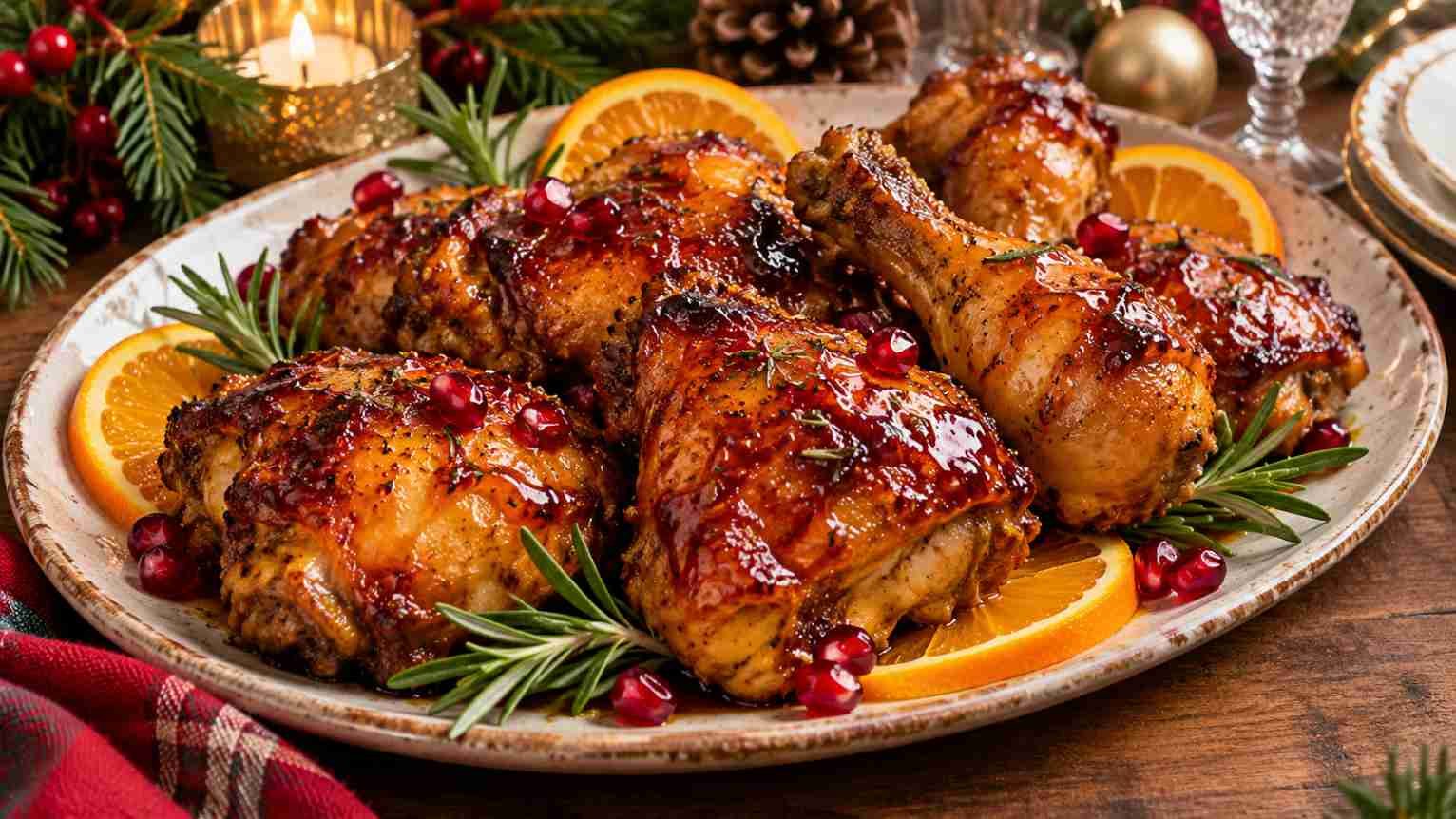
This Sticky Glazed Christmas Chicken has a glossy, caramelized coating, tender meat, and a lovely combination of orange, honey, brown sugar, and warming spices. The glaze is sweet but not overwhelmingly so, with enough mustard and vinegar to give it a pleasant tang.
The best part is that most of the preparation can be done the day before. Once the chicken has spent a few hours in its marinade, the oven does most of the work. A little basting towards the end gives the chicken its deep golden color and wonderfully sticky finish. It’s an excellent choice for a family Christmas dinner, but there’s no reason to save it only for December.
Sticky Glazed Christmas Chicken Recipe
This recipe uses bone-in chicken thighs and drumsticks because they stay juicy during roasting. The orange and honey glaze develops a rich, slightly caramelized flavor, while cinnamon, cloves, and ginger bring a subtle festive warmth without overpowering the chicken.
| Recipe | Sticky Glazed Christmas Chicken |
| Course | Main Course |
| Cuisine | Holiday, Western-Inspired |
| Preparation Time | 15 minutes |
| Marinating Time | 4–12 hours |
| Cooking Time | 50–60 minutes |
| Total Time | 5 hours 5 minutes to 13 hours 15 minutes, including marinating |
| Servings | 6 |
| Cooking Method | Oven Roasted |
Ingredients for Sticky Glazed Christmas Chicken
Most of the ingredients are everyday pantry staples. Fresh orange is especially important because its zest gives the glaze a brighter flavor that bottled juice alone cannot provide.
For the Chicken
- 1.5 kg (about 3.3 lb) bone-in, skin-on chicken thighs and drumsticks
- 1 tablespoon olive oil
- 1 teaspoon salt
- 1/2 teaspoon freshly ground black pepper
For the Sticky Christmas Glaze
- 1/3 cup honey
- 1/4 cup packed dark brown sugar
- 1/2 cup freshly squeezed orange juice
- 1 tablespoon finely grated orange zest
- 2 tablespoons Dijon mustard
- 2 tablespoons apple cider vinegar
- 2 tablespoons low-sodium soy sauce
- 3 garlic cloves, finely minced
- 1 teaspoon ground ginger
- 1/2 teaspoon ground cinnamon
- 1/8 teaspoon ground cloves
- 1 tablespoon unsalted butter
For Garnishing
- Fresh rosemary sprigs
- Orange slices or wedges
- Fresh parsley, finely chopped (optional)
- Pomegranate seeds (optional)
Also Read: Thai Cashew Chicken Stir Fry
How to Make Sticky Glazed Christmas Chicken
The secret to a really good glazed chicken is giving the marinade time to work and applying the glaze in layers. Adding all the sugary sauce at once can cause it to burn before the meat has finished cooking. This method gives you better control over the color and consistency.
Step 1: Prepare the Chicken
Pat the chicken pieces dry with paper towels. Trim away any large pieces of excess fat or loose skin, but leave the main skin intact. Place the chicken in a large mixing bowl and season with salt and black pepper. Add the olive oil and toss gently to coat.
Drying the chicken first helps the seasoning adhere to the surface. It also reduces excess moisture in the roasting pan, which is useful when you’re trying to create a thick, sticky glaze.
Step 2: Prepare the Christmas Marinade
In a separate bowl, combine the honey, brown sugar, orange juice, orange zest, Dijon mustard, apple cider vinegar, soy sauce, minced garlic, ginger, cinnamon, and cloves. Whisk until the brown sugar has mostly dissolved and the mixture looks smooth.
The mixture should taste sweet and tangy, with a gentle warmth from the spices. The flavor will become richer as it cooks, so don’t worry if it tastes a little sharp at this stage.
Step 3: Marinate the Chicken
Pour about two-thirds of the marinade over the chicken and turn each piece until well coated. Cover the bowl or transfer everything to a food-safe container. Refrigerate for at least 4 hours, preferably overnight. Keep the remaining unused marinade covered in a separate container in the refrigerator.
If possible, turn the chicken once during marinating so that the flavors distribute more evenly. Don’t leave the chicken at room temperature while it marinates.
Step 4: Preheat the Oven
Preheat your oven to 200°C (400°F), or 180°C (355°F) for a fan-assisted oven. Line a large baking tray with foil and place a sheet of baking parchment over it for easier cleanup.
Arrange the chicken pieces skin-side up, leaving some space between them. Discard the marinade that was in contact with the raw chicken. Avoid overcrowding the tray, as trapped steam can prevent the surface from browning properly.
Step 5: Begin Roasting
Place the tray on the middle rack and roast for 25 minutes. During this first stage, the chicken will begin releasing its natural juices and the skin will start taking on a golden color.
There is no need to turn the chicken. Keeping the skin facing upwards helps it develop a more attractive finish.
Step 6: Thicken the Reserved Glaze
While the chicken is roasting, pour the reserved, uncontaminated marinade into a small saucepan. Add the butter and bring the mixture to a gentle simmer over medium-low heat. Cook for approximately 5–8 minutes, stirring occasionally, until it becomes slightly thicker and coats the back of a spoon.
Remove the saucepan from the heat. Remember that the glaze will thicken further as it cools. You want it pourable, not as thick as caramel.
Step 7: Glaze and Finish Roasting
After the initial 25 minutes, remove the tray from the oven and brush the chicken generously with some of the warm glaze. Return it to the oven for another 10 minutes, then apply a second coating.
Continue roasting for approximately 15–25 minutes more, depending on the size of the chicken pieces, brushing with additional glaze as needed. The exterior should gradually become deep golden, glossy, and sticky.
Check the thickest part of the chicken with a meat thermometer, avoiding the bone. The chicken must reach at least 74°C (165°F). Bone-in thighs and drumsticks often become more tender when cooked to approximately 80–85°C (176–185°F).
If the glaze starts becoming too dark before the chicken is done, loosely cover the tray with foil and lower the oven temperature slightly.
Step 8: Rest and Serve
Remove the chicken from the oven and allow it to rest for 5–10 minutes. Transfer the pieces to a serving platter and spoon over any remaining glaze that has been kept separate from raw chicken, reheating it first if needed.
Arrange fresh rosemary, orange wedges, and a few pomegranate seeds around the chicken. The deep brown glaze against the bright oranges and green herbs makes a particularly attractive Christmas centerpiece.
Also Read: Shredded Sweet Soy Sauce Chicken Breast
What You Can Do Better
There are a few small adjustments that can make a noticeable difference to the finished dish. They are especially useful when you’re preparing the chicken for guests and want it to look as good as it tastes.
Choose Chicken Pieces of Similar Size
Large thighs and small drumsticks won’t always finish cooking at the same time. Try to select reasonably similar pieces, or begin checking the smaller ones earlier. Remove individual pieces once they’re cooked if necessary.
Use Fresh Orange Zest
Orange juice provides sweetness and acidity, but much of the citrus aroma comes from the zest. Grate only the bright orange outer layer and avoid the white pith, which can taste bitter.
Keep the Spices Balanced
Cinnamon and cloves should support the orange and honey rather than dominate them. Cloves are particularly strong, so use the measured amount instead of adding extra by eye.
Don’t Rush the Glazing
It’s tempting to pour all the sauce over the chicken before roasting, but the sugars can darken too quickly. Brushing on thin layers during the latter part of cooking gives you a shinier finish and helps prevent burnt spots.
Use a Wide Roasting Tray
The chicken needs room for hot air to circulate. If the pieces are crowded together, they’ll release moisture into the tray and the glaze may remain thin. Use two trays if necessary, rotating their positions during cooking.
Let the Chicken Rest
A short rest gives the juices inside the meat time to settle and allows the surface glaze to become slightly thicker. Five to ten minutes is usually enough.
What to Serve with Christmas Chicken
Because the glaze is rich, sweet, and strongly flavored, the best side dishes offer some contrast. You don’t need anything complicated to turn this chicken into a complete festive meal.
| Side Dish | Why It Works |
|---|---|
| Garlic Mashed Potatoes | The creamy potatoes balance the sweet, tangy glaze. |
| Roasted Brussels Sprouts | Their slightly bitter, nutty flavor contrasts with the sweetness of the chicken. |
| Butter-Roasted Carrots | A classic festive side that complements the warm spices. |
| Green Bean Salad | Adds freshness and a little crunch to the meal. |
| Herb Rice Pilaf | Absorbs the flavorful juices without competing with the glaze. |
| Simple Garden Salad | A light, crisp option for balancing a rich Christmas spread. |
For a traditional Christmas dinner, I would pair the chicken with roasted potatoes, green vegetables, and a fresh salad. If you’re serving a larger group, warm dinner rolls are also useful for soaking up any extra sauce.
Also Read: Sticky Chicken Drumsticks
Can You Make Christmas Chicken Ahead of Time?
Yes, and preparing the marinade ahead is probably the easiest way to make Christmas cooking less stressful. You can marinate the chicken the evening before and leave it covered in the refrigerator overnight.
The glaze can also be mixed a day ahead. Keep the portion intended for basting separate from anything that touches raw chicken, and store it in the refrigerator until needed.
For the best appearance and texture, roast the chicken shortly before serving. However, if the oven will be busy with other Christmas dishes, you can cook it in advance and reheat it gently. The glaze may lose a little of its original shine, but it will still taste good.
Storage and Reheating Instructions
Refrigerating Leftovers
Allow leftover chicken to cool slightly, then transfer it to an airtight container and refrigerate within 2 hours of cooking. Properly stored cooked chicken will keep for 3–4 days in the refrigerator at 4°C (40°F) or below.
Freezing
Place cooled portions in freezer-safe containers or bags, removing as much air as possible. Freeze for up to 3 months for best quality. Thaw overnight in the refrigerator before reheating.
Reheating
Place the chicken in a baking dish, add a tablespoon or two of water, and cover loosely with foil. Reheat at 170°C (340°F) until the center reaches 74°C (165°F). Remove the foil during the last few minutes if you want to restore some of the glaze’s stickiness. Avoid prolonged reheating, which can dry out the meat.
Variations You Can Try
Maple-Glazed Christmas Chicken
Replace the honey with an equal amount of pure maple syrup. The result has a slightly deeper, woodsy sweetness that works particularly well with roasted root vegetables.
Spicy Sticky Chicken
Add 1/2 teaspoon of chili flakes or a teaspoon of chili sauce to the glaze. A small amount of heat cuts through the sweetness without taking away the festive character of the dish.
Cranberry and Orange Chicken
Stir 2 tablespoons of smooth cranberry sauce into the glaze while it simmers. This adds a fruity tartness and makes the recipe feel even more seasonal.
Glazed Boneless Chicken Thighs
Boneless chicken thighs can also be used but their cooking time will be shorter. Begin checking them after 20 minutes and continue until their internal temperature reaches at least 74°C (165°F). Because they cook more quickly, reduce the glaze separately in a saucepan and brush it on towards the end.
Also Read: Crispy Bizarrely Good Wings
Nutritional Information
The following values are approximate estimates per serving, based on six servings and the listed ingredients. Actual nutrition will depend on the size of the chicken pieces, the proportion of skin and bone, how much glaze is eaten, and the amount of fat left behind in the roasting tray. These figures are not laboratory-tested.
| Nutrient | Estimated Amount Per Serving |
|---|---|
| Calories | Approximately 530 kcal |
| Protein | 40 g |
| Total Carbohydrates | 30 g |
| Total Fat | 28 g |
| Saturated Fat | 8 g |
| Dietary Fiber | Less than 1 g |
| Total Sugars | 27 g |
| Sodium | Approximately 850 mg |
| Cholesterol | Approximately 180 mg |
Nutrition note: Serving the chicken without its skin or using less glaze may reduce the calories, fat, and sugar consumed. The accompanying side dishes are not included in these estimates.
Also Read: One-Pot Greek Chicken Risoni
Frequently Asked Questions
Can I Use Chicken Breast Instead of Thighs?
Yes, although chicken breast is leaner and can dry out more easily. Use a shorter cooking time, reduce the glaze separately, and begin checking the breast early. Remove it when the thickest part reaches 74°C (165°F).
Can I Make Sticky Christmas Chicken Without Honey?
You can replace the honey with maple syrup or golden syrup. Brown sugar mixed with a little extra orange juice also works, although the finished glaze may be less glossy.
Why Isn’t My Chicken Glaze Sticky?
The most common cause is excess moisture. Chicken releases liquid as it cooks, especially when the roasting tray is crowded. If your reserved glaze is too thin, simmer it a few minutes longer before brushing it onto the chicken. It should lightly coat a spoon rather than run off like water.
Can I Prepare This Recipe Without Marinating Overnight?
Yes. Four hours of marinating gives good results, although overnight is preferable for deeper flavor. If you’re short on time, even a shorter marinade will add flavor to the surface, particularly when combined with the repeated glazing during roasting.
Can I Cook the Chicken in an Air Fryer?
Yes, but cook it in batches to avoid overcrowding. Air fry at approximately 180°C (355°F), begin checking after 20 minutes, and brush on the reduced glaze during the final few minutes. The total cooking time depends on the size of the pieces and your air fryer. Always verify doneness with a thermometer.
How Do I Prevent the Glaze From Burning?
Keep most of the sugary glaze for the second half of cooking. Avoid placing the tray too close to the top heating element, and cover the chicken loosely with foil if the surface darkens before the meat is cooked through.