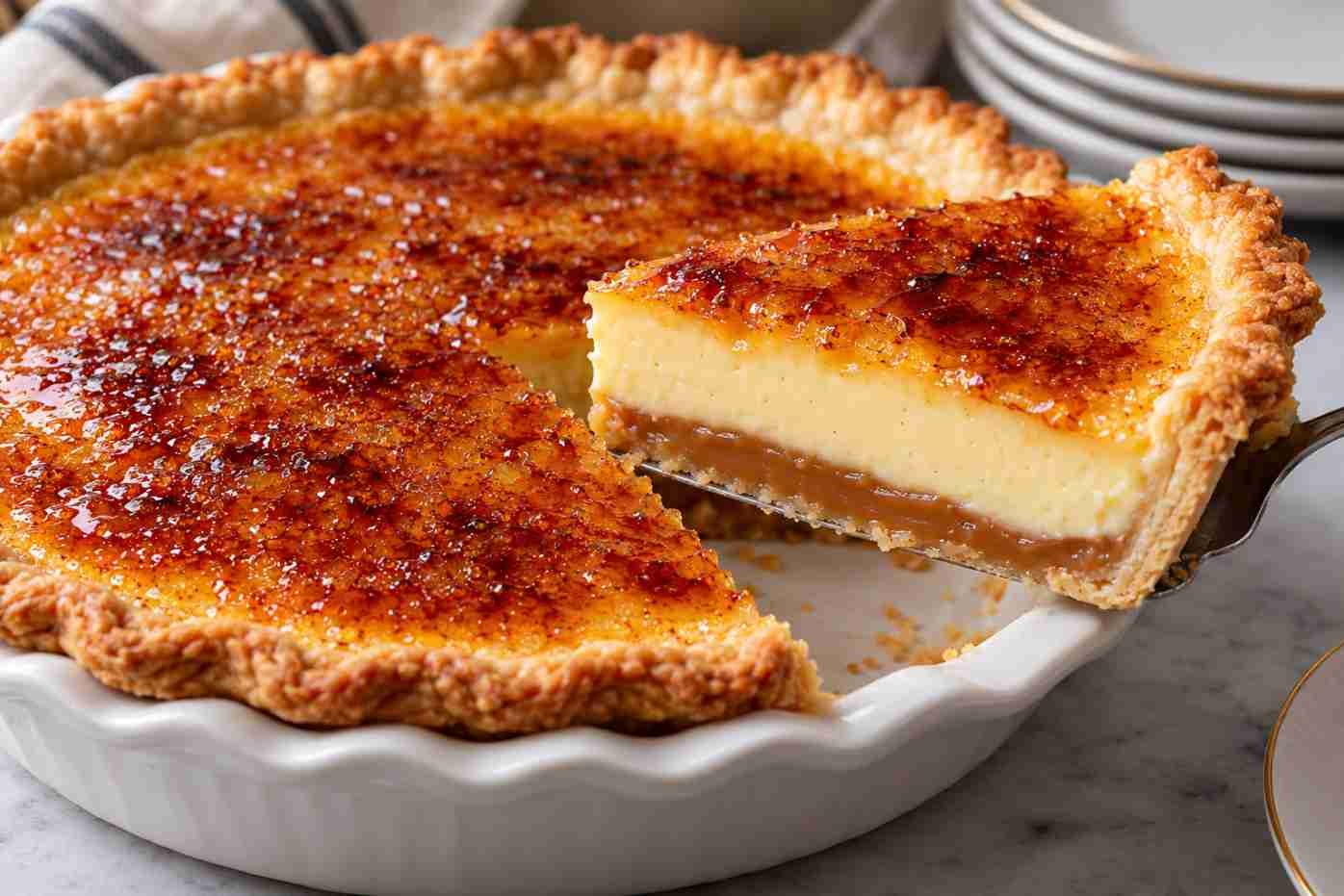
Caramel Creme Brulee Pie brings together two irresistible desserts in one creamy, decadent slice. A buttery pie crust holds a smooth vanilla custard filling layered over rich dulce de leche, while a thin coating of caramelized sugar adds the signature crackly finish of classic crème brûlée. Each bite balances sweet caramel, silky custard, and a crisp sugar topping.
This dessert is a lovely choice for holidays, dinner parties, birthdays, or any occasion when you want something a little more special than an everyday pie. The filling is prepared on the stovetop, so you do not need to bake the custard in the oven. The most important step is allowing the pie enough time to chill before adding the sugar topping. That way, the filling holds its shape when sliced, and the caramelized surface stays crisp when served.
Recipe Overview
| Preparation Time | 20 minutes |
|---|---|
| Cooking Time | 15 minutes |
| Chilling Time | 6 hours or overnight |
| Total Time | Approximately 6 hours 35 minutes, excluding longer chilling |
| Servings | 8 slices |
| Course | Dessert |
| Cooking Method | Stovetop and chilling |
Ingredients for Caramel Creme Brulee Pie
These ingredients create a rich caramel layer, a creamy vanilla filling, and a crisp brûléed sugar topping. Use a fully baked and cooled pie crust so the bottom stays firm after the filling is added.
For the Pie Base
- 1 (9-inch) pie crust, baked and cooled
- 1 cup dulce de leche
For the Custard Filling
- 1 2/3 cups heavy cream
- 3 tablespoons cornstarch
- 1 (14-ounce) can sweetened condensed milk
- 3 large egg yolks
- 3 tablespoons unsalted butter
- 1 tablespoon vanilla extract
For the Caramelized Topping
- 1/3 cup granulated sugar, or enough to cover the custard in a thin, even layer
Also Read: Bacon Cheeseburger Shepherd’s Pie
How to Make Caramel Creme Brulee Pie
Step 1: Prepare the Pie Crust
Make sure your 9-inch pie crust is completely baked and cooled before you begin. Spread the dulce de leche evenly over the bottom of the crust, keeping it in a distinct layer rather than mixing it into the filling. Set the prepared crust aside while you make the custard.
Step 2: Mix the Cream and Cornstarch
Add the heavy cream to a medium, heavy-bottomed saucepan. Sprinkle in the cornstarch and whisk until it dissolves completely. Take your time with this step because lumps in the cornstarch can affect the texture of the finished custard.
Step 3: Add the Condensed Milk and Egg Yolks
Whisk the sweetened condensed milk into the cream mixture until smooth. Add the egg yolks and continue whisking until everything is thoroughly combined. The condensed milk provides sweetness and richness, while the egg yolks help create a smooth, custard-like filling.
Step 4: Cook Until Thickened
Place the saucepan over medium heat and cook the mixture, stirring constantly with a whisk or heat-resistant spatula. As it heats, the custard will gradually become thicker. Continue cooking until it bubbles gently and reaches a pudding-like consistency. Keep stirring around the bottom and corners of the pan to prevent scorching. Remove the saucepan from the heat as soon as the filling has thickened.
Step 5: Add the Butter and Vanilla
Stir the unsalted butter into the hot custard until it melts completely. Add the vanilla extract and mix until the filling is smooth and glossy. If you notice any small lumps, pass the custard through a fine-mesh sieve before assembling the pie.
Step 6: Fill the Pie
Pour the warm custard carefully over the dulce de leche layer in the prepared pie crust. Spread the top gently with a spatula so the filling reaches the edges in an even layer. Avoid stirring the caramel into the custard because the separate layers give the pie its distinctive flavor and appearance.
Step 7: Chill Until Firm
Allow the pie to cool slightly at room temperature, then transfer it to the refrigerator. Chill for at least 6 hours, or preferably overnight, until the custard is thoroughly cold and firm enough to slice. Do not rush this step; a filling that has not set properly may slide apart when cut.
Step 8: Caramelize the Sugar Topping
Just before serving, sprinkle the granulated sugar evenly over the chilled custard. Use a kitchen torch to melt and caramelize the sugar, moving the flame continuously so the surface turns golden amber without burning. Let the topping stand for a minute or two until it hardens into a thin, crisp shell.
If you do not have a kitchen torch, you can try using your oven’s broiler. Protect the exposed pie crust with foil and watch the pie constantly, as the sugar can burn quickly. The broiler may also warm the custard, so a kitchen torch is the better option for a crisp topping and a cold filling.
Step 9: Slice and Serve
Use a sharp knife to cut the pie into eight slices, gently cracking through the caramelized sugar as you go. For cleaner slices, warm the knife under hot water and wipe it dry between cuts. Serve immediately after caramelizing the topping for the best contrast between the crunchy sugar and creamy filling.
Also Read: Pumpkin Pie Spice Pancakes
What You Can Do Better
- Start with a completely cooled crust: A warm crust can soften the caramel layer and make the base less crisp.
- Choose thick dulce de leche: A thick caramel spread holds its place better than a runny sauce, helping the pie maintain neat layers.
- Whisk the cornstarch thoroughly: Dissolving it in the cold cream before heating helps prevent lumps from forming in the custard.
- Keep stirring while cooking: Custard can stick to the bottom of the pan quickly, especially as it thickens. Constant stirring helps keep the texture smooth.
- Give the pie enough chilling time: Six hours is a useful minimum, but an overnight chill usually makes slicing easier.
- Add the sugar just before serving: Moisture from the custard gradually softens the caramelized topping, so torching it in advance can reduce the crunch.
- Use a light, even sugar layer: Too much sugar can create a thick, difficult-to-crack shell. Aim for a thin layer that covers the custard.
- Protect the crust when broiling: The pie crust can darken before the sugar caramelizes evenly. If using a broiler, keep a close eye on the pie throughout.
Also Read: Chicken Pot Pie with Biscuits
Tips for the Best Caramel Creme Brulee Pie
Can You Make It Ahead?
Yes. Prepare the pie through the chilling stage a day before serving and keep it covered in the refrigerator. For the best texture, wait until just before serving to add and caramelize the sugar topping.
How to Store Leftovers
Cover leftover pie and refrigerate it promptly. The custard is best enjoyed within two days. Keep in mind that the sugar topping will soften in the refrigerator, even when the pie is stored properly. If possible, caramelize only the portions you plan to serve.
How to Get Clean Slices
Make sure the pie is fully chilled before cutting. Use a sharp knife and wipe the blade between slices to keep the custard layers neat. The caramelized top will crack naturally as the knife passes through it.
What to Serve with Caramel Creme Brulee Pie
This pie is rich and sweet, so small slices are often enough. Serve it with fresh strawberries, raspberries, or a few slices of tart apple for a refreshing contrast. Unsweetened coffee or black tea also pairs nicely with the buttery crust and caramel flavor. If you prefer a more indulgent dessert plate, add a small spoonful of lightly sweetened whipped cream alongside each slice.
Nutritional Information
The following figures are estimates for one slice when the pie is divided into eight servings. Actual values vary depending on the pie crust, dulce de leche brand, and the exact ingredients used. The sugar topping is included in the estimate.
| Nutrient | Estimated Amount per Serving |
|---|---|
| Calories | Approximately 500–600 kcal |
| Total Fat | Approximately 30–38 g |
| Saturated Fat | Approximately 17–23 g |
| Carbohydrates | Approximately 50–65 g |
| Sugars | Approximately 38–50 g |
| Protein | Approximately 6–9 g |
| Sodium | Approximately 250–400 mg |
Nutrition note: These values are approximate and are not laboratory-tested. For precise nutritional information, calculate the recipe using the specific brands and quantities you use.
Also Read: Peanut Butter Caramel Pie
Frequently Asked Questions
Is Caramel Creme Brulee Pie the Same as Traditional Crème Brûlée?
Not exactly. Traditional crème brûlée is usually served in individual ramekins and made with a baked custard. This pie uses a pie crust, a layer of dulce de leche, and a stovetop custard filling, finished with caramelized sugar for a similar crunchy top.
Can I Make Caramel Creme Brulee Pie Without a Kitchen Torch?
Yes. A broiler can caramelize the sugar, although it is less precise than a kitchen torch. Protect the pie crust with foil and watch the topping closely to prevent burning.
Why Is My Pie Filling Too Soft?
The custard may not have cooked long enough to thicken, or the pie may not have chilled for sufficient time. Cook the filling until it becomes thick and gently bubbles, then refrigerate the assembled pie for at least six hours before slicing.
Can I Use Caramel Sauce Instead of Dulce de Leche?
A thick caramel spread is the best substitute because it stays in a defined layer. Thin caramel sauce may run into the crust or mix with the custard, making the pie harder to slice neatly.
When Should I Add the Sugar Topping?
Add the sugar immediately before serving. Caramelized sugar absorbs moisture over time, and the crisp shell is one of the best parts of this dessert.