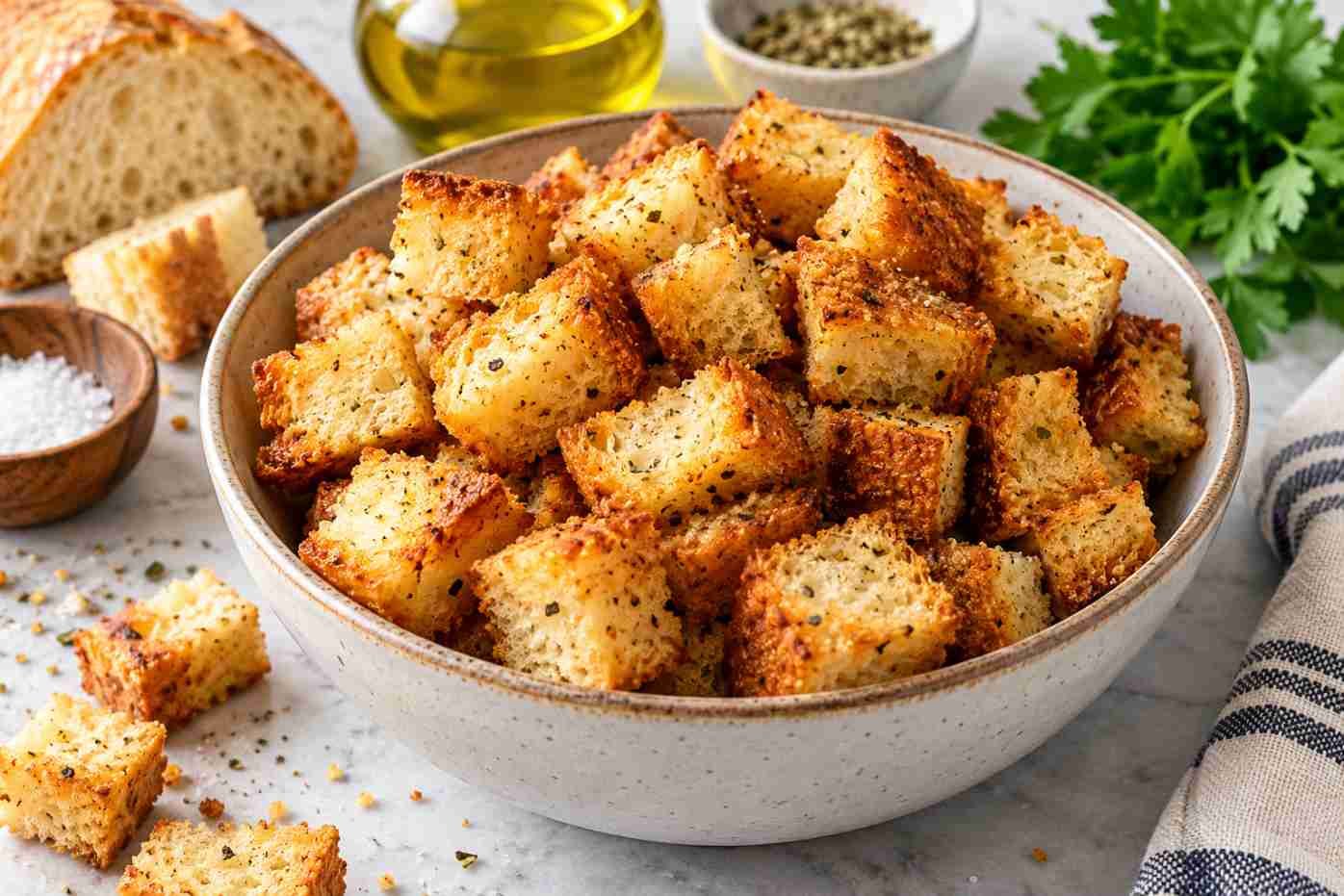
Homemade croutons are an easy way to turn ordinary bread into something crispy, golden, and full of flavor. Made with bread, olive oil, garlic powder, salt, and black pepper, they are ready in about 15 minutes. Sprinkle them over a fresh salad, add them to a bowl of creamy soup, or enjoy a few straight from the baking tray.
The best part is that you do not need special ingredients or fresh bread. Slightly stale bread works especially well because it has less moisture and becomes crisp more easily in the oven. With a little oil and a few basic seasonings, leftover bread can become a useful kitchen staple instead of going to waste.
Homemade Croutons Recipe at a Glance
| Preparation Time | 5 minutes |
|---|---|
| Cooking Time | 10–12 minutes |
| Total Time | 15–17 minutes |
| Servings | 4 |
| Cooking Method | Oven-baked |
| Oven Temperature | 400°F (200°C) |
| Diet | Vegan, if the bread contains no animal-derived ingredients |
Ingredients for Homemade Croutons
This recipe uses a short list of everyday ingredients. The quantities below make approximately four small servings, depending on how you use the croutons.
| Ingredient | Quantity | Purpose |
|---|---|---|
| Crusty bread | 4 ounces (about 115 g), or 2 large thick slices | Forms the crunchy base |
| Extra-virgin olive oil | 2 tablespoons | Helps the bread turn golden and adds flavor |
| Fine salt | 1/4 teaspoon | Brings out the flavor |
| Garlic powder | 1/8 teaspoon | Adds a mild garlic taste |
| Freshly ground black pepper | To taste | Adds a little warmth and spice |
Which bread should you use? Sourdough, French bread, a crusty baguette, and rustic white bread are all good choices. Whole-wheat bread also works if you prefer a nuttier flavor. Day-old bread is especially convenient, but fresh bread can be used too. Avoid bread that shows signs of mold or spoilage.
Also Read: Blue Cheese Dressing
How to Make Homemade Croutons
Step 1: Preheat the Oven
Preheat your oven to 400°F (200°C). Line a large baking sheet with parchment paper if you want to make cleanup easier. Arrange the oven rack near the center so the bread browns evenly without burning too quickly.
Step 2: Cut the Bread into Cubes
Cut the bread into pieces about 3/4 inch (2 cm) wide. You can use a serrated bread knife for neat cubes or tear the bread by hand for rough, uneven pieces. The torn pieces have more edges and corners, which become especially crisp during baking.
Step 3: Add the Oil and Seasonings
Place the bread pieces on the baking sheet or in a large mixing bowl. Drizzle the olive oil over them, then add the salt, garlic powder, and black pepper. Toss everything gently until the bread is lightly coated. Try to spread the oil and seasoning evenly rather than soaking some pieces while leaving others dry.
Step 4: Spread the Bread Evenly
Arrange the seasoned bread in a single layer on the baking sheet. Leave a little space between the pieces instead of piling them on top of one another. Crowded bread tends to steam rather than crisp, so use a second baking sheet if you are making a larger batch.
Step 5: Bake Until Golden and Crisp
Bake for about 10–12 minutes, tossing or turning the pieces after roughly 5 minutes. Keep an eye on them toward the end because thinner pieces and drier bread can brown quickly. Remove the croutons when the edges are golden and the pieces feel crisp on the outside.
Step 6: Cool Before Serving
Let the croutons cool for a few minutes on the baking sheet. They will become firmer as they cool. Taste one and add a small pinch of salt or pepper if needed. Serve them once they have cooled enough to handle.
Also Read: Broccoli Cheddar Soup
What You Can Do Better
A good crouton should have a crisp outside, a pleasant toasted flavor, and enough seasoning to stand out without overpowering the rest of the meal. A few small changes can make a noticeable difference.
- Use slightly stale bread: Bread that has dried out a little usually crisps more easily than very fresh, soft bread.
- Keep the cubes similar in size: Pieces of roughly equal size cook at a similar rate, so you are less likely to end up with burnt edges and soft centers in the same batch.
- Do not use too much oil: A light, even coating is enough. Too much oil can leave the croutons greasy instead of crisp.
- Turn them during baking: Tossing the bread halfway through helps expose more surfaces to the heat and encourages even browning.
- Watch the final minutes: The difference between golden and burnt bread can be small, particularly with thin pieces.
- Let them cool completely: Warm croutons can release steam inside a storage container, making them soft.
- Season to suit your meal: Use Italian herbs for pasta salads, smoked paprika for a deeper flavor, or a little dried rosemary for hearty soups.
Easy Ways to Change the Flavor
| Variation | What to Add | Best Use |
|---|---|---|
| Italian Herb Croutons | 1/2 teaspoon dried Italian seasoning | Green salads and pasta salads |
| Extra Garlic Croutons | Increase the garlic powder slightly | Caesar salad and tomato soup |
| Smoky Croutons | A small pinch of smoked paprika | Bean soup and roasted vegetable salads |
| Herb Croutons | Dried thyme or rosemary to taste | Potato soup and vegetable soup |
| Butter-Flavored Croutons | Replace some of the olive oil with melted butter | Creamy soups and comforting salads |
Add dried herbs and powdered seasonings before baking so they coat the bread well. If you want to use fresh garlic, be careful because small pieces can burn at a high oven temperature. Garlic powder is an easier option for this quick recipe.
Also Read: Halloumi Salad
How to Serve Homemade Croutons
Croutons are not just for Caesar salad. Their crunchy texture works well with a range of everyday meals.
- Green salads: Sprinkle them over lettuce, cucumber, tomatoes, and your favorite dressing.
- Caesar salad: Use garlic-seasoned croutons to add crunch to the creamy dressing and crisp lettuce.
- Creamy soups: Add them to tomato, pumpkin, broccoli, or cauliflower soup just before serving.
- Pasta salads: Toss a few into a salad shortly before eating so they do not become soggy.
- As a snack: Eat them on their own or serve them alongside a dip.
- As crunchy crumbs: Crush leftover croutons and use them as a topping for baked vegetables or pasta.
For the best texture, add croutons to wet dishes just before serving. Leaving them in soup or dressing for too long will soften them.
How to Store Homemade Croutons
Allow the croutons to cool completely before storing them. Place them in a clean, dry, airtight container and keep it at room temperature in a cool place. For the best texture, use them within 2–3 days and check that they remain dry and crisp. Homemade croutons do not contain the same preservatives as many packaged products, so avoid storing them if they become damp or show signs of spoilage.
If the croutons lose some of their crunch, spread them on a baking sheet and warm them in a 300°F (150°C) oven for a few minutes, checking frequently. Let them cool before serving. Do not put warm croutons straight into a sealed container, as trapped steam can make them soft.
Nutritional Information
The following values are estimates per serving, assuming the recipe makes four servings. Actual nutrition depends on the type of bread, the amount of oil absorbed, and any seasoning changes. These figures are provided as a general guide rather than laboratory-tested nutritional data.
| Nutrient | Estimated Amount per Serving |
|---|---|
| Calories | Approximately 150 kcal |
| Protein | Approximately 4 g |
| Total Carbohydrates | Approximately 18 g |
| Total Fat | Approximately 7–8 g |
| Saturated Fat | Approximately 1 g |
| Dietary Fiber | Approximately 1–2 g |
| Sodium | Varies with the bread and added salt |
| Sugars | Varies with the bread used |
Nutrition note: Olive oil contributes most of the added fat, while bread supplies most of the carbohydrates. For a more accurate count, calculate the nutrition using the exact bread and oil brands you use, then divide the total by the number of servings.
Also Read: Creamy Cauliflower Soup
Frequently Asked Questions
Can I make homemade croutons with fresh bread?
Yes. Fresh bread works well, although it may need a little more time to dry out and become crisp. Keep an eye on the oven and bake until the pieces are golden and firm.
Why are my homemade croutons not crispy?
They may need more baking time, or the bread may have been crowded on the tray. Spread the pieces in a single layer and let them cool completely before judging their final texture.
Can I make croutons without olive oil?
Yes, but the texture and flavor will be different. A small amount of another cooking oil or melted butter can work. Without added fat, the bread will toast more like dry bread cubes and may brown less evenly.
Can I make homemade croutons in an air fryer?
Yes. Toss the bread cubes with the oil and seasonings, then air-fry them in a single layer at around 350–375°F (175–190°C) for a few minutes, shaking the basket regularly. Air fryers vary, so check early to prevent burning.
Are homemade croutons vegan?
They can be vegan when made with plant-based bread, olive oil, and seasonings. Check the bread label because some varieties contain milk, butter, eggs, or other animal-derived ingredients.
Can I use whole-wheat bread for croutons?
Yes. Whole-wheat bread gives the croutons a nuttier flavor and may provide more fiber than white bread, depending on the product. Cut the pieces evenly and bake until crisp.