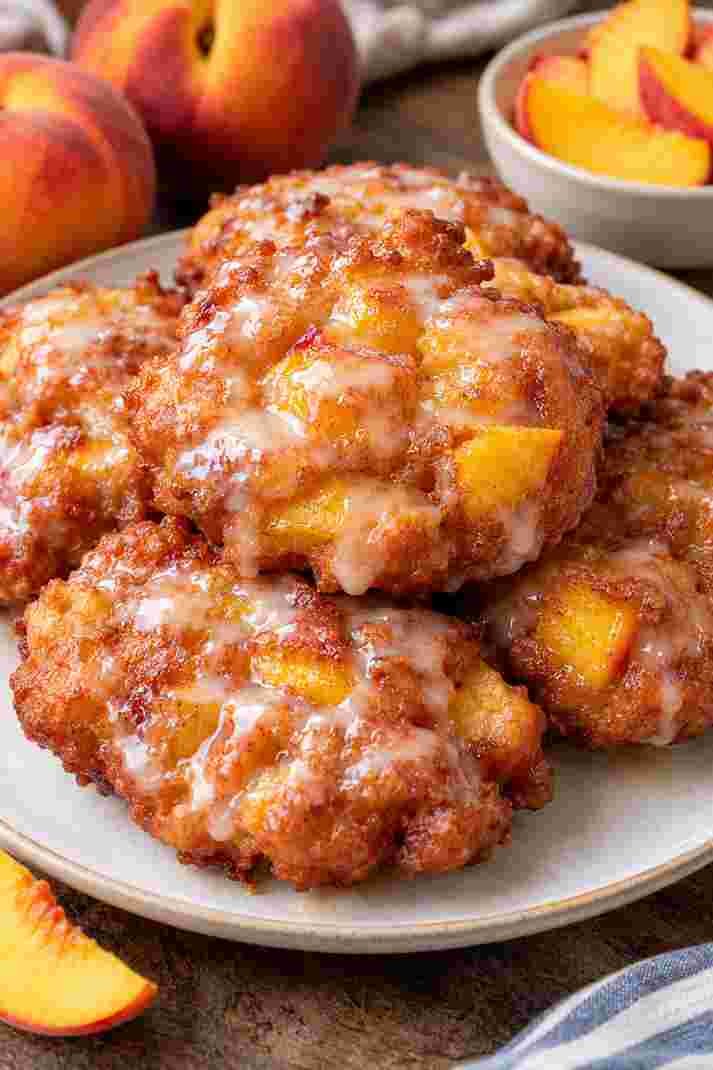
These peach fritters are the kind of homemade treat that makes a good peach season even better. Fresh peaches are cooked with brown sugar and cinnamon, folded into a soft yeast dough, and fried until the outside is crisp and golden while the middle stays tender and fruity. A simple brown butter glaze finishes them with a nutty, buttery sweetness. They take a little patience because the dough needs time to rise, but the result is worth it.
Peach Fritters Recipe
| Prep Time | 30 minutes |
|---|---|
| Rising Time | 1–2 hours |
| Cook Time | 25–30 minutes |
| Total Time | About 2 hours 30 minutes |
| Servings | 8 fritters |
| Course | Dessert |
| Method | Frying |
Ingredients
For the Peach Filling
- 3 cups diced fresh peaches
- 2 tablespoons light brown sugar
- 1 teaspoon ground cinnamon
- 1 teaspoon cornstarch
- 1 teaspoon water
For the Fritter Dough
- 3 cups all-purpose flour, plus a little extra for shaping
- 1/3 cup granulated sugar
- 2 teaspoons instant yeast
- 1 teaspoon salt
- 3/4 cup warm whole milk
- 1 large egg
- 1 large egg yolk
- 2 tablespoons unsalted butter, softened
- Neutral oil, such as vegetable or canola oil, for frying
For the Brown Butter Glaze
- 5 tablespoons unsalted butter
- 1 1/2 cups powdered sugar
- 2 tablespoons whole milk
- 1–2 tablespoons water, as needed
- 1/2 teaspoon vanilla extract
- A small pinch of salt
Also Read: Cauliflower Mashed Potatoes
How to Make Peach Fritters
1. Prepare the Peaches
Place the diced peaches, brown sugar, and cinnamon in a small saucepan. Cook over medium-low heat for about 8–10 minutes, stirring occasionally, until the peaches soften and become coated in the sugary cinnamon mixture. Mix the cornstarch with the water in a small cup until smooth, then stir it into the peaches. Cook for another 2 minutes, or until the mixture thickens slightly. Transfer the peach mixture to a shallow bowl and let it cool completely before using.
2. Make the Dough
Add the flour, granulated sugar, instant yeast, and salt to a large mixing bowl. Pour in the warm milk, egg, and egg yolk. Mix until a rough dough forms. Knead the dough for several minutes until it begins to look smooth, then gradually work in the softened butter. Continue kneading until the dough feels soft, elastic, and slightly tacky rather than wet.
3. Let the Dough Rise
Shape the dough into a ball and place it in a lightly greased bowl. Cover it and leave it somewhere warm for about 1–2 hours, or until it has roughly doubled in size. The exact time will depend on how warm your kitchen is.
4. Add the Peach Filling
Turn the risen dough onto a lightly floured surface and gently roll it into a rectangle about 1/2 inch thick. Spread the cooled peach mixture evenly over the surface, leaving a small border around the edges. Sprinkle a little flour over the filling to help control excess moisture.
5. Shape the Fritters
Roll the dough into a loose log from the longer side. Using a sharp knife or bench scraper, cut the log into small pieces in different directions so the peach pieces become distributed throughout the dough. Bring the pieces together gently and divide the mixture into 8 portions. Shape each portion into a rough round and press it down until it is about 1/2 inch thick. Don’t worry about making them perfectly round; their slightly uneven shape is part of the charm.
6. Fry Until Golden
Pour about 2–3 inches of neutral oil into a heavy-bottomed pot and heat it to approximately 355–365°F (180–185°C). Carefully lower the fritters into the oil, working in small batches so the temperature does not drop too much. Fry for roughly 2 minutes on the first side, then turn and cook the other side until deeply golden brown and cooked through.
Transfer the fritters to a wire rack lined with paper towels or a baking sheet to drain. Keep an eye on the oil temperature between batches because oil that is too cool can leave the fritters greasy, while oil that is too hot can brown the outside before the center is finished.
7. Make the Brown Butter Glaze
Melt the butter in a light-colored saucepan over medium heat. Continue cooking until the milk solids turn golden brown and the butter smells nutty. Take it off the heat and let it cool for a few minutes.
Whisk the powdered sugar, milk, vanilla, and salt in a bowl. Add the browned butter and mix until smooth. If the glaze is too thick for dipping, add a little water, one teaspoon at a time, until it reaches a thick but pourable consistency.
8. Glaze the Fritters
Allow the fritters to cool for a few minutes before glazing. Dip the tops into the brown butter glaze and let the excess drip back into the bowl. Place them on a wire rack and give the glaze a few minutes to set before serving.
Also Read: Dill Pickle Dip
What You Can Do Better
Use peaches that are ripe but still firm. Very soft peaches release a lot of liquid and can make the filling difficult to work with. Firm, ripe peaches give you a stronger fruit flavor without turning the dough into a sticky mess.
Don’t rush the dough. The first rise is what gives these fritters their soft interior. If your kitchen is cool, the dough may need more time than the recipe suggests.
Keep the oil temperature steady. A kitchen thermometer is extremely useful here. Try to keep the oil around 355–365°F so the fritters cook evenly and develop a crisp exterior.
Don’t overcrowd the pot. Adding too many fritters at once can cause the oil temperature to fall quickly. Frying fewer at a time usually gives you a better crust.
Let the peach filling cool completely. Warm filling can soften the dough and make shaping much harder. Preparing the filling first gives it plenty of time to cool while you make the dough.
Glaze shortly before serving. Peach fritters have their best texture on the day they are made. The longer they sit, the more the crisp exterior naturally softens.
Storage
Peach fritters are best eaten fresh, preferably within a few hours of frying. If you have leftovers, keep them in a single layer at room temperature and cover them loosely rather than sealing them tightly in an airtight container. This helps prevent condensation from making the crust soggy. For the best texture, warm leftovers briefly before serving.
Also Read: Sweet Potato Hash
Can You Make Peach Fritters Ahead?
You can prepare the peach filling ahead of time and refrigerate it until you are ready to use it. The dough can also be prepared and allowed to rise before continuing with the recipe. For the best final texture, however, fry and glaze the fritters close to serving time.
Frequently Asked Questions
Can I use canned peaches?
Fresh peaches are the best choice because they have a firmer texture and brighter flavor. If using canned peaches, drain them extremely well and pat them dry before chopping so the filling does not become watery.
Can I use frozen peaches?
Yes. Thaw the peaches completely and drain away excess liquid before cooking them. Frozen peaches may release more moisture, so cook the filling until it is thick enough to hold together.
Why are my fritters greasy?
The oil was probably not hot enough, or too many fritters were added at once. Keep the oil around 355–365°F and fry in small batches.
Why did my fritters turn dark outside but remain undercooked inside?
The oil was likely too hot. Lower the heat and allow the oil temperature to settle before continuing. The fritters should have enough time to cook through while gradually becoming golden brown.
Can I bake these peach fritters instead of frying them?
This recipe is designed for frying, which creates the characteristic crisp exterior of a fritter. Baking will produce a different texture and will be closer to a soft peach pastry than a traditional fried fritter.
Also Read: Refried Black Beans
Nutrition Information
The following figures are approximate and will vary depending on the amount of oil absorbed during frying and how much glaze is used.
| Nutrient | Approximate Amount Per Fritter |
|---|---|
| Calories | About 450 kcal |
| Carbohydrates | About 72 g |
| Protein | About 8 g |
| Fat | About 16 g |
| Saturated Fat | About 7 g |
| Fiber | About 2 g |
| Sugar | About 35 g |
| Sodium | About 300 mg |
Nutrition information is an estimate and can change based on the specific ingredients, frying oil absorption, and portion size.