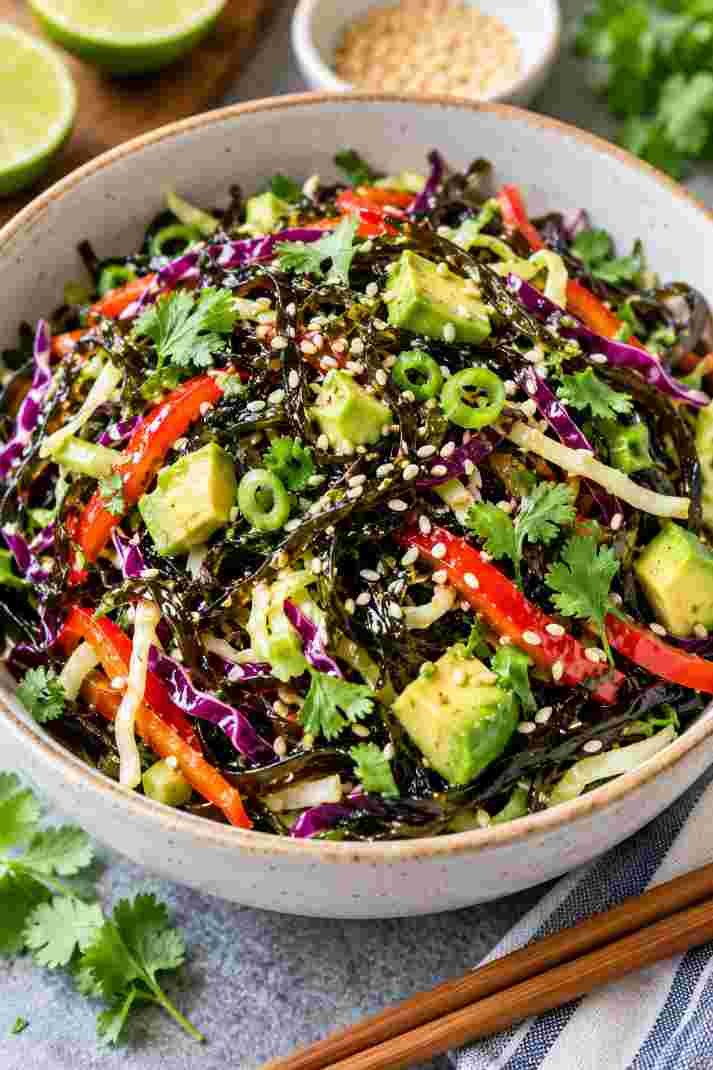
This easy Seaweed Salad is fresh, crunchy, savory, and full of bright sesame-lime flavor. Tender seaweed is tossed with crisp cabbage, sweet bell pepper, green onion, fresh cilantro, and creamy avocado, then finished with a simple homemade dressing. It makes a refreshing side dish for sushi, rice bowls, grilled fish, tofu, or almost any Asian-inspired meal.
What Is Seaweed Salad?
Seaweed salad is a simple Japanese-inspired salad made with rehydrated sea vegetables and fresh vegetables. For this version, arame works especially well because it has a gentle, slightly sweet flavor and becomes pleasantly tender after soaking. The vegetables add the crunch that makes the salad much more interesting than seaweed alone, while sesame oil, soy sauce, lime, ginger, and garlic give it a savory dressing with plenty of fresh flavor.
Ingredients
For the Salad
- 1 ounce dried arame seaweed
- 1 1/2 cups finely sliced green or purple cabbage
- 1 red, orange, or yellow bell pepper, chopped
- 1/2 cup thinly sliced green onions
- 1/4 cup fresh cilantro, finely chopped
- 1 ripe avocado, diced
- 1 tablespoon sesame seeds, optional
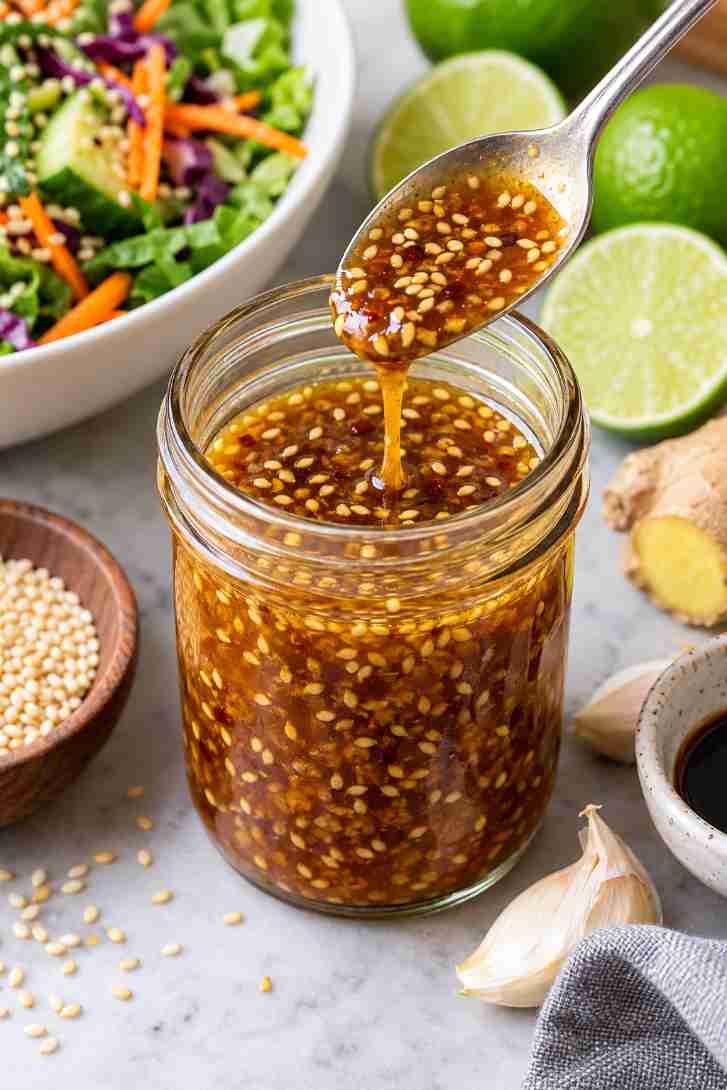
For the Sesame Dressing
- 1/4 cup toasted sesame oil
- 2 tablespoons low-sodium soy sauce or tamari
- 2 tablespoons fresh lime juice
- 2 teaspoons freshly grated ginger
- 1 small garlic clove, minced
- 1/2 teaspoon Dijon mustard
- Pinch of red pepper flakes, optional
Also Read: Pickled Jalapeños
How to Make Seaweed Salad
1. Soak the Seaweed
Place the dried arame in a fine-mesh strainer and rinse it well under cool water. Transfer it to a bowl and cover it with plenty of cool water. Let it soak for about 5 to 10 minutes, or until the seaweed becomes soft and flexible. Drain thoroughly and gently squeeze out excess water. Avoid soaking it much longer than necessary because you still want a little texture in the finished salad.
2. Prepare the Dressing
In a small bowl, whisk together the sesame oil, soy sauce or tamari, lime juice, ginger, garlic, Dijon mustard, and red pepper flakes. Taste the dressing and adjust it to your liking. If you prefer a sharper flavor, add a little more lime juice. For more heat, add another small pinch of red pepper flakes.
3. Combine the Vegetables
Add the drained seaweed to a large mixing bowl. Add the cabbage, bell pepper, green onion, and cilantro. Pour over the sesame dressing and gently toss everything together until the vegetables and seaweed are evenly coated.
4. Add the Avocado
Dice the avocado and add it just before serving. Give the salad one gentle toss so the avocado stays in reasonably large pieces instead of becoming mashed into the dressing. Sprinkle with sesame seeds if desired.
5. Serve
Serve the seaweed salad immediately or chill it for a short time before serving. The flavors become more balanced as the dressing sits with the vegetables, while the cabbage keeps a pleasant crunch.
What You Can Do Better
- Keep the seaweed slightly firm: Do not over-soak the arame. A short soak gives it a better texture and prevents the salad from becoming limp.
- Balance the dressing: Sesame oil is rich, so fresh lime juice is important. Add a little extra lime if the dressing tastes too heavy.
- Use colorful vegetables: Purple cabbage and orange or red bell pepper make the salad especially attractive, but green cabbage works just as well.
- Add avocado at the end: Mixing it in too early can cause it to soften and discolor.
- Toast the sesame seeds: A quick toast in a dry skillet brings out a deeper nutty flavor.
- Make it a meal: Add shelled edamame, baked tofu, cooked shrimp, salmon, or serve the salad over brown rice for something more filling.
Also Read: Cauliflower Mashed Potatoes
Serving Suggestions
Seaweed Salad works especially well as a side dish with sushi, teriyaki vegetables, rice bowls, grilled tofu, salmon, shrimp, or miso soup. For lunch, serve it with edamame and brown rice. You can also add shredded carrots, cucumber, snap peas, or extra cabbage when you want a larger salad.
Storage
Store leftover seaweed salad in a covered container in the refrigerator for up to 3 to 4 days. For the best texture, keep the diced avocado separate and add it just before eating. If the salad has been sitting for a while, give it a gentle toss before serving.
Also Read: Cranberry Salsa
Nutrition Information
The following nutrition information is an estimate based on the ingredients above and can vary depending on the exact brands and quantities used.
| Nutrient | Approximate Amount Per Serving |
|---|---|
| Calories | About 210 kcal |
| Protein | About 3 g |
| Total Fat | About 19 g |
| Carbohydrates | About 10 g |
| Fiber | About 4 g |
| Sodium | About 550–650 mg |
Note: Nutrition values are estimates and will change depending on the type of seaweed, soy sauce or tamari, amount of dressing, and size of the avocado used.
Also Read: Sweet Potato Hash
Recipe at a Glance
| Details | Information |
|---|---|
| Prep Time | 15 minutes |
| Soaking Time | 5–10 minutes |
| Total Time | About 25 minutes |
| Servings | 4 |
| Course | Salad, Side Dish |
| Cuisine | Japanese-inspired |
| Diet | Vegan |
Frequently Asked Questions
Can I use wakame instead of arame?
Yes. Wakame can be used if arame is unavailable, although the flavor and texture will be somewhat different. Follow the soaking instructions on the package because different dried seaweeds can require different soaking times.
Can I make seaweed salad ahead of time?
Yes. The seaweed, vegetables, and dressing can be combined several hours ahead. For the freshest result, add avocado shortly before serving.
Is seaweed salad healthy?
Seaweed can provide nutrients such as iodine, fiber, potassium, and magnesium, although the nutritional profile varies between seaweed varieties. The vegetables and avocado also add fiber and other nutrients.
How long does homemade seaweed salad last?
It can generally be kept covered in the refrigerator for about 3 to 4 days. The texture is best during the first couple of days, particularly if avocado has already been mixed in.
What can I add to seaweed salad?
Try edamame, cucumber, shredded carrot, snap peas, toasted sesame seeds, tofu, shrimp, or cooked salmon. These additions can turn a light side salad into a more substantial meal.
Can I make this salad gluten-free?
Yes. Use gluten-free tamari instead of regular soy sauce and check the labels of the other packaged ingredients to make sure they are gluten-free.