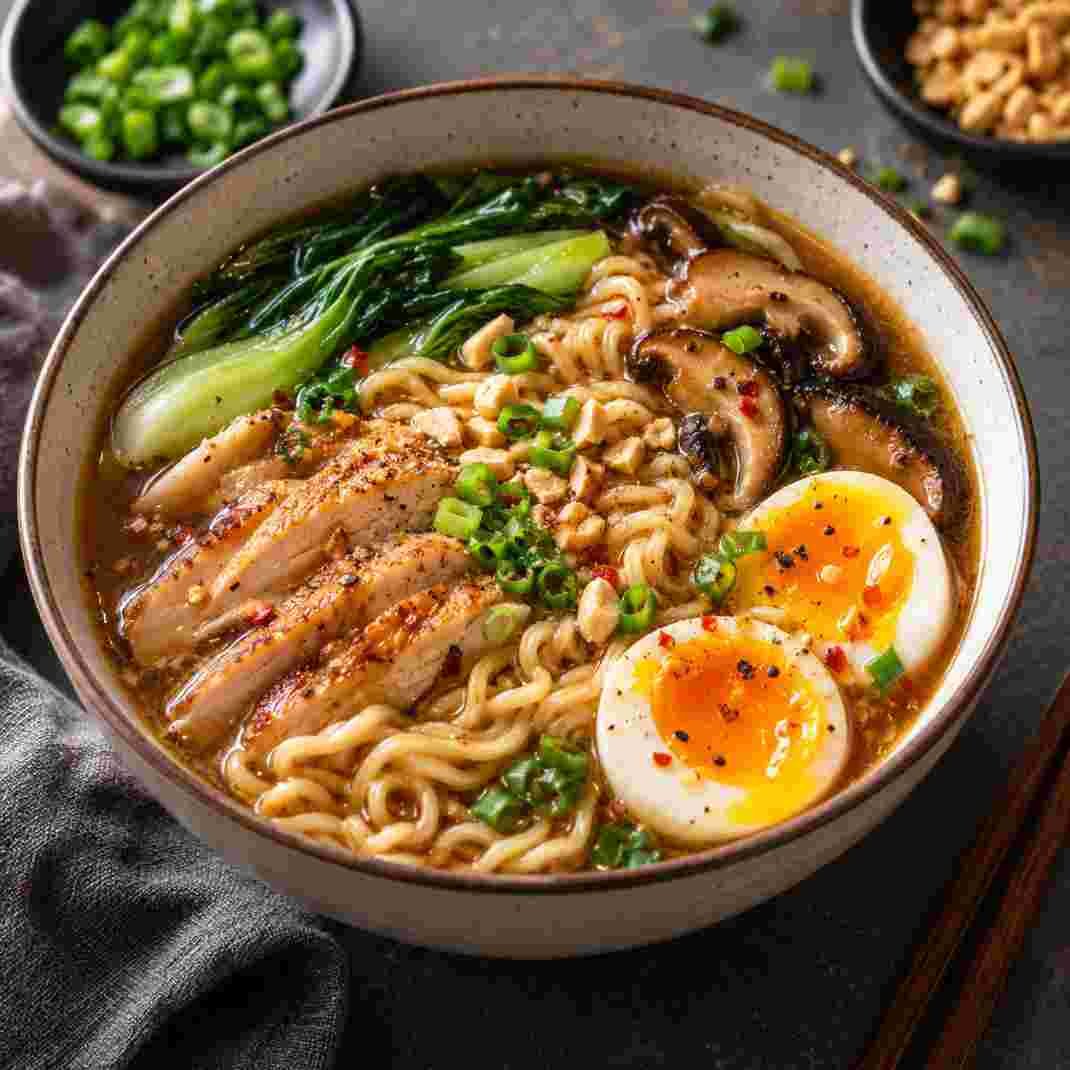
Ramen soup is the kind of meal that feels much more special than the effort it takes to make. Tender chicken, mushrooms, chewy ramen noodles, fresh greens, and a savory broth come together in one comforting bowl. Instead of relying on the seasoning packet that comes with instant noodles, this version builds its own broth with garlic, soy sauce, sesame oil, a touch of honey, and simple spices. The result is rich, savory, slightly spicy, and satisfying enough for a complete meal.
Ramen Soup at a Glance
| Details | Information |
|---|---|
| Preparation Time | 15 minutes |
| Cooking Time | 35 minutes |
| Total Time | 50 minutes |
| Servings | 4 |
| Course | Soup / Main Course |
Ingredients for Ramen Soup
For the Chicken and Mushrooms
- 2 tablespoons olive oil, divided
- 2 tablespoons butter, divided
- 8 ounces mushrooms, sliced
- 1 large boneless, skinless chicken breast
- Salt and black pepper, to taste
For the Broth
- 1/2 cup dry white wine
- 1 tablespoon butter
- 3 garlic cloves, finely minced
- 6 cups low-sodium chicken broth
- 2 tablespoons low-sodium soy sauce
- 2 teaspoons hot sauce
- 2 teaspoons honey
- 3/4 teaspoon toasted sesame oil
- 2 packets instant ramen noodles, seasoning packets discarded
- 6 bok choy leaves, roughly chopped
Seasonings
- 3/4 teaspoon onion powder
- 3/4 teaspoon mustard powder
- 1/4 teaspoon ground ginger
- 1/8 teaspoon white pepper
- A small pinch of red pepper flakes
For Topping
- 2 soft-boiled eggs
- Chopped green onions
- Roughly chopped peanuts
Also Read: Chinese Noodle Soup
How to Make Ramen Soup
1. Brown the Mushrooms
Heat 1 tablespoon of olive oil and 1 tablespoon of butter in a large soup pot over medium-high heat. Add the sliced mushrooms and cook for about 4 minutes, turning occasionally, until they develop a deep golden color. Transfer them to a plate and keep them aside.
2. Prepare and Cook the Chicken
Slice the chicken breast lengthwise into two thinner pieces. Pat the chicken dry and season both sides with salt and pepper. Add the remaining olive oil and butter to the same pot and sear the chicken for about 4 to 5 minutes per side, or until nicely browned and cooked through. Remove it from the pot and let it rest for about 10 minutes before slicing it into strips.
3. Build the Flavorful Broth
Pour the white wine into the same pot and gently scrape the browned bits from the bottom. Let the wine simmer for 4 to 5 minutes, or until it has reduced by roughly half. Add the remaining butter and minced garlic and cook for about 2 minutes.
Pour in the chicken broth, soy sauce, hot sauce, honey, and sesame oil. Stir in the onion powder, mustard powder, ginger, white pepper, and red pepper flakes. Bring the broth to a gentle simmer and allow it to cook for about 10 minutes. This short simmer gives the seasonings time to blend and makes the broth much more flavorful.
4. Cook the Ramen
Bring the broth to a stronger boil and add the ramen noodles. Cook them for about 1 minute, then reduce the heat. Add the bok choy, cooked mushrooms, and sliced chicken. Continue simmering for approximately 3 minutes, or until the noodles are tender but still pleasantly chewy.
5. Finish and Serve
Ladle the ramen soup into serving bowls. Add half of a soft-boiled egg to each bowl and finish with chopped green onions and peanuts. Serve immediately while the broth and noodles are hot.
Also Read: Wonton Soup
How to Make a Soft-Boiled Egg for Ramen
Place the eggs in a saucepan and cover them with cool water. Bring the water gradually to a gentle boil. Once boiling, cook the eggs for about 6 minutes. Transfer them immediately to cool running water to stop the cooking process. Peel carefully and slice the eggs in half just before serving.
What You Can Do Better
The best ramen is all about balance, so a few small changes can make a noticeable difference.
- Control the salt: Ramen noodles and soy sauce can make the broth quite salty. Using low-sodium broth and soy sauce gives you more control over the final flavor.
- Brown the mushrooms properly: Give the mushrooms enough space in the pot so they brown instead of steaming. That extra color adds a deeper savory taste.
- Don’t overcook the noodles: Ramen continues softening in the hot broth, so stop cooking as soon as the noodles become tender.
- Add more vegetables: Bok choy works beautifully, but spinach, kale, shredded cabbage, or sliced carrots can also be added.
- Adjust the heat: Add more hot sauce or red pepper flakes for a spicy bowl, or leave them out for a milder version.
- Use homemade broth: If you have homemade chicken stock available, it can give the soup a fuller, more rounded flavor.
- Serve immediately: Ramen is best when the noodles are fresh and the broth is piping hot.
Also Read: Stuffed Mushroom Recipe
Easy Variations
Vegetable Ramen Soup
Skip the chicken and use vegetable broth. Add extra mushrooms, bok choy, spinach, carrots, and cabbage for a hearty meat-free bowl.
Spicy Ramen Soup
Increase the hot sauce and add extra red pepper flakes. A spoonful of chili crisp can also add heat and texture when serving.
Chicken and Egg Ramen
Keep the chicken and add an extra soft-boiled egg for a more filling meal. The creamy yolk also adds richness to the savory broth.
Ramen with Extra Greens
For a lighter vegetable boost, add spinach or kale during the final few minutes of cooking. They wilt quickly without needing much preparation.
Also Read: How to Make Kale Chips
Storage and Reheating
Allow leftover ramen to cool before transferring it to an airtight container. Refrigerate for up to 3 days. For the best texture, store the noodles and broth separately when possible, since noodles can absorb a lot of liquid as they sit. Reheat the broth gently on the stovetop and add the noodles near the end of reheating.
Nutrition Information
The following is an approximate nutritional estimate per serving. Actual values will vary depending on the ingredients and brands used.
| Nutrient | Approximate Amount |
|---|---|
| Calories | 511 kcal |
| Carbohydrates | 39 g |
| Protein | 27 g |
| Total Fat | 27 g |
| Saturated Fat | 11 g |
| Fiber | 2 g |
| Sugar | 6 g |
| Sodium | 1,465 mg |
| Cholesterol | 59 mg |
| Potassium | 894 mg |
| Calcium | 67 mg |
| Iron | 3 mg |
Note: Nutritional values are estimates and can change depending on the ramen noodles, broth, soy sauce, chicken, toppings, and other ingredients used.
Also Read: Hamburger Steak with Gravy
Frequently Asked Questions
Can I use any type of ramen noodles?
Yes. Instant ramen noodles work well because they cook quickly, but fresh or dried ramen noodles can also be used. Cooking time may need to be adjusted according to the package instructions.
Can I make ramen soup without wine?
Absolutely. Replace the wine with additional chicken broth. The soup will still have plenty of flavor from the garlic, soy sauce, mushrooms, sesame oil, and seasonings.
What vegetables can I add to ramen soup?
Bok choy, spinach, kale, cabbage, carrots, mushrooms, and green onions are all good choices. Add firmer vegetables earlier and delicate greens toward the end.
How can I make the broth less salty?
Use low-sodium broth and low-sodium soy sauce. You can also replace part of the broth with water if the finished soup tastes too salty.
Can I freeze ramen soup?
The broth and cooked chicken can be frozen, but the noodles are better prepared fresh because they can become soft after freezing and reheating. For the best result, freeze the broth and add freshly cooked noodles when serving.