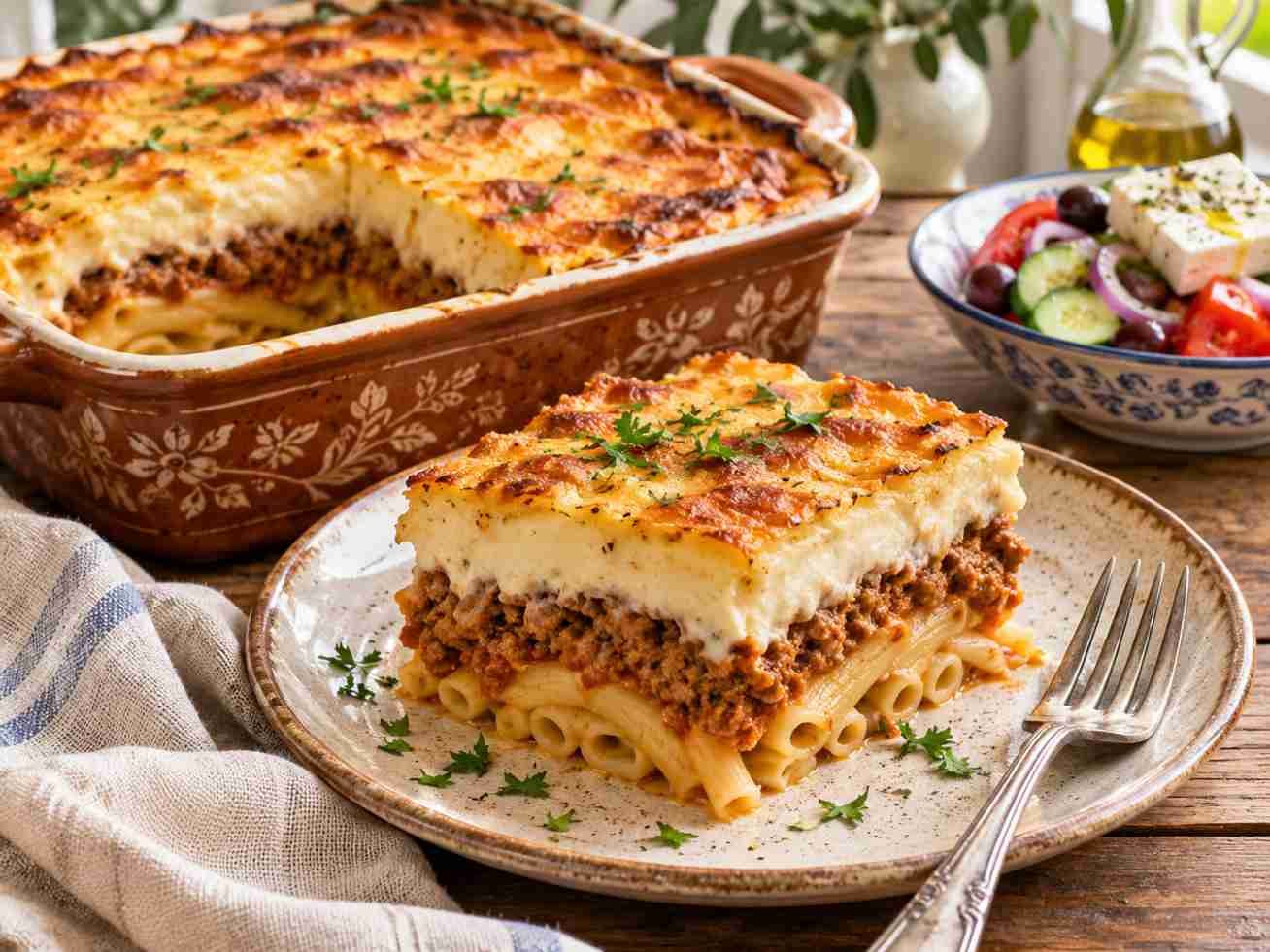
Greek beef pasta bake, better known as Pastitsio, is the sort of dinner that makes a little extra time in the kitchen feel worthwhile. Beneath its golden, creamy topping are layers of tender pasta and a rich beef sauce seasoned with cinnamon, oregano, and tomato. It is hearty, comforting, and particularly good when you have several hungry people to feed.
At first glance, Pastitsio looks a little like lasagna. The idea is similar, but the flavors are distinctly Greek. Instead of flat pasta sheets, it uses long tubular pasta, while the beef filling has a gentle warmth from cinnamon. A thick béchamel sauce finishes the dish and turns beautifully golden in the oven.
One of the best things about making Pastitsio at home is that you can prepare much of it ahead of time. The beef sauce can be cooked the day before, and the finished casserole reheats well. Serve it with a simple Greek salad, and you have a complete dinner that feels special without needing a complicated side dish.
Greek Beef Pasta Bake Recipe Overview
| Recipe Details | Information |
|---|---|
| Cuisine | Greek, Mediterranean |
| Course | Main Course, Dinner |
| Preparation Time | 25 minutes |
| Cooking Time | 1 hour 35 minutes |
| Resting Time | 20 minutes |
| Total Time | 2 hours 20 minutes |
| Servings | 8 |
| Cooking Method | Stovetop and Oven |
| Difficulty | Moderate |
What Is Pastitsio?
Pastitsio is a traditional Greek baked pasta dish made with three main components: pasta, seasoned minced meat, and a thick béchamel topping. These layers are assembled in a deep baking dish and cooked until the surface develops a lightly browned crust.
The pasta commonly used in Greece is a long, hollow variety often sold as Pastitsio No. 2. Its shape gives the finished casserole a distinctive appearance when sliced. Bucatini makes a good alternative, while penne or ziti can be used when Greek pasta is unavailable.
What really separates Pastitsio from an ordinary beef pasta bake is its seasoning. Cinnamon adds warmth to the tomato-based meat sauce without making it sweet, and a small amount of nutmeg gives the white sauce a pleasant, rounded flavor. The result is filling and savory, with a creamy top that balances the intensely flavored beef underneath.
Also Read: Cream Corn Casserole with Cheese
Ingredients for Greek Beef Pasta Bake
This recipe is divided into three parts. Measure the ingredients before you begin, especially those needed for the béchamel, because the white sauce requires regular stirring once it starts cooking.
For the Beef Sauce
| Ingredient | Quantity |
|---|---|
| Ground beef, preferably 85–90% lean | 750 g (1 2/3 lb) |
| Olive oil | 2 tablespoons |
| Yellow onion, finely chopped | 1 large |
| Garlic cloves, minced | 4 |
| Crushed tomatoes | 600 g (about 21 oz) |
| Tomato paste | 2 tablespoons |
| Beef broth | 120 ml (1/2 cup) |
| Ground cinnamon | 1/2 teaspoon |
| Dried oregano | 1 teaspoon |
| Ground allspice | 1/8 teaspoon |
| Bay leaf | 1 |
| Salt | 3/4 teaspoon, or to taste |
| Freshly ground black pepper | 1/2 teaspoon |
For the Pasta Layer
| Ingredient | Quantity |
|---|---|
| Pastitsio pasta, bucatini, or penne | 400 g (14 oz), dry |
| Feta cheese, crumbled | 100 g (3 1/2 oz) |
| Egg whites | 2 large |
| Olive oil | 1 teaspoon |
| Salt for pasta water | As needed |
For the Béchamel Sauce
| Ingredient | Quantity |
|---|---|
| Unsalted butter | 85 g (6 tablespoons) |
| All-purpose flour | 85 g (about 2/3 cup) |
| Whole milk | 900 ml (about 3 3/4 cups) |
| Egg yolks | 2 large |
| Grated Parmesan or Kefalotyri cheese | 100 g (about 1 cup, loosely packed) |
| Ground nutmeg | 1/4 teaspoon |
| Salt | 1/2 teaspoon, or to taste |
| White or black pepper | 1/4 teaspoon |
For the Topping
- 40 g (about 1/3 cup) freshly grated Parmesan or Kefalotyri cheese
- A small pinch of ground nutmeg, optional
How to Make Greek Beef Pasta Bake (Pastitsio)
The easiest way to prepare Pastitsio is to cook the beef sauce first, boil the pasta while the sauce is simmering, and make the béchamel shortly before assembling the casserole. Keeping the components separate until the final stage helps the layers hold their shape.
Step 1: Prepare the Beef Sauce
Heat 2 tablespoons of olive oil in a large, heavy-bottomed saucepan over medium heat. Add the chopped onion and cook for about 5 minutes, stirring occasionally, until softened and beginning to turn golden.
Add the minced garlic and stir for another 30 seconds. It should become fragrant without turning brown.
Increase the heat slightly and add the ground beef. Break it apart with a wooden spoon and cook for 7–9 minutes, or until the meat is browned and no pink remains. If a large amount of fat collects in the pan, carefully drain away the excess.
Stir in the tomato paste and cook for 1 minute. This short cooking step helps develop its flavor before adding the remaining liquids.
Step 2: Simmer Until the Sauce Thickens
Add the crushed tomatoes, beef broth, cinnamon, oregano, allspice, bay leaf, salt, and pepper. Stir until everything is evenly combined.
Bring the mixture to a gentle simmer, then lower the heat. Cook uncovered for approximately 35–45 minutes, stirring occasionally to prevent sticking.
The finished beef mixture should be considerably thicker than a regular spaghetti sauce. When you drag a spoon across the bottom of the pan, the sauce should separate briefly before settling back together.
Remove the bay leaf and taste for seasoning. Set the sauce aside to cool slightly while preparing the remaining layers.
Step 3: Cook the Pasta
Bring a large pot of salted water to a boil. Add the pasta and cook for approximately 2 minutes less than the package instructions recommend. It should still have some firmness because it will continue cooking in the oven.
Drain thoroughly and return the pasta to the warm pot. Toss with 1 teaspoon of olive oil to reduce sticking, then allow it to cool for a few minutes.
Add the crumbled feta cheese. Lightly beat the egg whites in a separate bowl, then stir them through the pasta once it is no longer steaming hot. The egg whites help bind the pasta together during baking, making the casserole easier to slice.
Step 4: Make the Béchamel Sauce
Melt the butter in a medium saucepan over medium-low heat. Add the flour and whisk continuously for about 2 minutes, forming a smooth, pale paste. Avoid letting the flour turn dark brown.
Gradually pour in the milk, adding a small amount at first and whisking until smooth before adding more. Continue until all the milk has been incorporated.
Cook over medium heat for 6–9 minutes, stirring frequently, until the sauce thickens enough to coat the back of a spoon.
Remove the saucepan from the heat. Stir in the grated cheese, nutmeg, salt, and pepper.
Allow the sauce to cool for 5 minutes. In a separate bowl, whisk the egg yolks with a few spoonfuls of the warm sauce to temper them. Slowly stir this mixture back into the saucepan until fully combined.
The béchamel should be thick, creamy, and smooth. Do not return it to a high heat after adding the eggs, as excessive heat may cause them to scramble.
Step 5: Assemble the Pastitsio
Preheat the oven to 180°C (350°F). Lightly grease a deep 23 x 33 cm (9 x 13-inch) baking dish, preferably at least 6 cm (2 1/2 inches) deep.
Spread the prepared pasta evenly across the bottom of the baking dish. If using long bucatini, arrange most of the strands in the same direction for a more attractive appearance when sliced.
Spoon the thick beef sauce over the pasta. Use the back of a spoon to distribute it gently without stirring it into the pasta layer.
Pour the béchamel over the beef and smooth the surface with a spatula. Sprinkle the remaining grated cheese over the top, followed by a very light dusting of nutmeg if desired.
Step 6: Bake Until Golden
Place the baking dish on the middle rack of the preheated oven and bake uncovered for 40–45 minutes, until the top is golden brown and the edges are lightly bubbling.
If the surface starts browning too quickly, cover the dish loosely with aluminum foil for the remaining baking time.
Once baked, remove the Pastitsio from the oven and leave it undisturbed for at least 20 minutes before slicing. This resting period allows the layers to firm up, so the pasta, beef, and creamy topping stay together when served.
Also Read: 6 Best Casserole Recipes for Dinner
What You Can Do Better
A good Pastitsio depends less on complicated cooking techniques and more on getting a few small details right. These adjustments can make a noticeable difference to the final texture and flavor.
Make the Meat Sauce Thick, Not Watery
One of the most common problems with homemade Pastitsio is excess moisture. A thin beef sauce seeps into the pasta and makes the finished casserole difficult to cut. Simmer the sauce uncovered until most of the free liquid has evaporated. It should be moist enough to remain tender but thick enough to hold its own layer.
Undercook the Pasta Slightly
Fully cooked pasta can become too soft after another 40 minutes in the oven. Cooking it a couple of minutes short of al dente keeps it from becoming mushy. Drain it thoroughly so excess water does not collect at the bottom of the casserole.
Keep the Cinnamon Balanced
Cinnamon is one of the ingredients that gives Pastitsio its characteristic Greek flavor. However, too much can overpower the beef. Start with the amount recommended in the recipe and avoid adding extra unless you are familiar with the flavor.
Grate the Cheese Yourself
Freshly grated Parmesan or Kefalotyri blends into the white sauce more smoothly than many packaged grated cheeses. It also creates a more even golden crust. For a stronger flavor, use a combination of Parmesan and Pecorino Romano.
Let the Casserole Rest Before Cutting
Pastitsio is not meant to be served straight from the oven. Cutting it immediately causes the hot béchamel and meat sauce to spread across the plate. Give it at least 20 minutes to settle. For particularly neat portions, refrigerate the baked casserole overnight and reheat before serving.
Also Read: Cheeseburger Casserole
Ingredient Substitutions and Variations
Traditional ingredients give Pastitsio its familiar flavor, but a few substitutions are useful when cooking with what you already have at home.
| Original Ingredient | Alternative | What to Expect |
|---|---|---|
| Pastitsio pasta | Bucatini, penne, or ziti | Similar flavor with a slightly different appearance |
| Kefalotyri cheese | Parmesan or Pecorino Romano | A salty, savory topping with good browning |
| Ground beef | Ground lamb or a mixture of beef and lamb | A richer, more pronounced meat flavor |
| Whole milk | 2% milk | A slightly lighter béchamel sauce |
| Beef broth | Low-sodium vegetable broth | A milder sauce with less beefy depth |
| Feta cheese | Finely grated Parmesan | A less tangy pasta layer |
If using lamb, drain excess fat after browning to keep the meat layer from becoming greasy. For a lighter version, lean ground turkey can also be used, although the flavor will be noticeably different from traditional beef Pastitsio.
What to Serve with Pastitsio
Pastitsio is already a substantial dish, so a fresh side is usually all it needs. A Greek salad made with tomatoes, cucumber, red onion, olives, and feta works especially well because its acidity balances the creamy béchamel.
A simple green salad dressed with lemon juice and olive oil is another good choice. Roasted zucchini, steamed green beans, or grilled vegetables are suitable when you want something warm alongside the casserole.
If serving Pastitsio for a family gathering, consider setting out a large bowl of salad and some crusty bread. The bread is particularly useful for picking up any extra meat sauce left on the plate.
Can You Make Pastitsio Ahead of Time?
Yes. Pastitsio is an excellent make-ahead dinner, and preparing some of its components in advance makes assembling it much easier.
Prepare the beef sauce: Cook the meat sauce up to 2 days ahead. Let it cool promptly, transfer it to an airtight container, and refrigerate. Reheat gently if needed before assembling.
Prepare the entire casserole: Assemble the pasta, meat sauce, and béchamel in a baking dish. Cover tightly and refrigerate for up to 24 hours before baking. Because the dish will be cold, allow approximately 10–15 additional minutes in the oven, checking that the center becomes thoroughly hot.
Bake in advance: The cooked casserole can also be refrigerated and reheated the following day. In fact, the layers often cut more cleanly after spending some time in the refrigerator.
Also Read: Street Corn Chicken Casserole
How to Store and Reheat Leftovers
Refrigerating
Allow the cooked Pastitsio to cool slightly, then refrigerate it in a covered container within 2 hours of baking. Store at 4°C (40°F) or below and consume within 3–4 days.
Freezing
Cut the completely cooled casserole into individual portions and wrap them tightly. Place the wrapped portions in freezer-safe containers or bags. For the best quality, use within 2–3 months.
Thaw frozen portions overnight in the refrigerator before reheating. Freezing may cause the béchamel to become slightly less smooth, but the casserole should still taste good.
Reheating in the Oven
Place the desired portions in an oven-safe dish, cover loosely with foil, and heat at 170°C (340°F) until hot throughout. A small splash of milk around the edges can help prevent the pasta from drying out. Reheat leftovers to an internal temperature of 74°C (165°F).
Reheating in the Microwave
Place an individual slice on a microwave-safe plate, cover loosely, and heat in short intervals until thoroughly hot. Let it stand briefly before eating so the heat distributes evenly.
Nutritional Information
The following values are approximate estimates for one serving when the entire casserole is divided into 8 equal portions. Actual nutrition will vary depending on the fat content of the beef, the type of cheese, the milk used, and the exact brands of ingredients.
| Nutrient | Approximate Amount Per Serving |
|---|---|
| Calories | 850 kcal |
| Protein | 47 g |
| Total Carbohydrates | 61 g |
| Dietary Fiber | 4 g |
| Total Sugars | 12 g |
| Total Fat | 46 g |
| Saturated Fat | 22 g |
| Cholesterol | 205 mg |
| Sodium | 1,050 mg |
| Calcium | 420 mg |
Nutrition values are estimates, not laboratory-tested figures. For dietary or medical purposes, calculate the nutrition using the specific ingredients and serving weights used in your kitchen.
Also Read: Chicken Tortilla Casserole
Frequently Asked Questions
Is Pastitsio the Same as Lasagna?
No. Both are layered baked pasta dishes, but Pastitsio typically uses tubular pasta and a Greek-style meat sauce containing cinnamon or other warm spices. Its thick béchamel topping also gives it a different texture from many Italian lasagna recipes.
What Is the Best Pasta for Pastitsio?
Traditional Greek Pastitsio pasta is the preferred option. Bucatini is a close substitute because it has a long, hollow shape. Penne and ziti work well too, particularly if you are more concerned with flavor than the appearance of the sliced layers.
Can I Make Pastitsio Without Cinnamon?
Yes, although the finished dish will lose one of its characteristic flavors. If you prefer a milder taste, reduce the cinnamon to 1/4 teaspoon rather than leaving it out completely.
Why Is My Pastitsio Watery?
The most likely reasons are a meat sauce that was not reduced enough, pasta that was not drained thoroughly, or slicing the casserole before it had time to rest. The beef mixture should be thick before assembly, and the baked dish should stand for at least 20 minutes before serving.
Why Is My Béchamel Sauce Lumpy?
Lumps usually develop when too much milk is added to the flour and butter mixture at once. Add the milk gradually, whisking until smooth between additions. If small lumps remain, vigorous whisking or carefully passing the sauce through a sieve can improve its texture before the eggs are incorporated.
Can I Use Ground Lamb Instead of Beef?
Absolutely. Ground lamb pairs particularly well with cinnamon, oregano, and tomato. You can replace all the beef with lamb or use equal amounts of both meats. Depending on the fat content, you may need to drain some of the rendered fat before simmering the sauce.
Can I Freeze Pastitsio Before Baking?
Yes. Assemble the casserole in a freezer-safe dish, cool its components properly, wrap tightly, and freeze for up to 2–3 months for best quality. Thaw overnight in the refrigerator before baking. The topping may have a slightly different texture after freezing, but it will still bake into a satisfying meal.