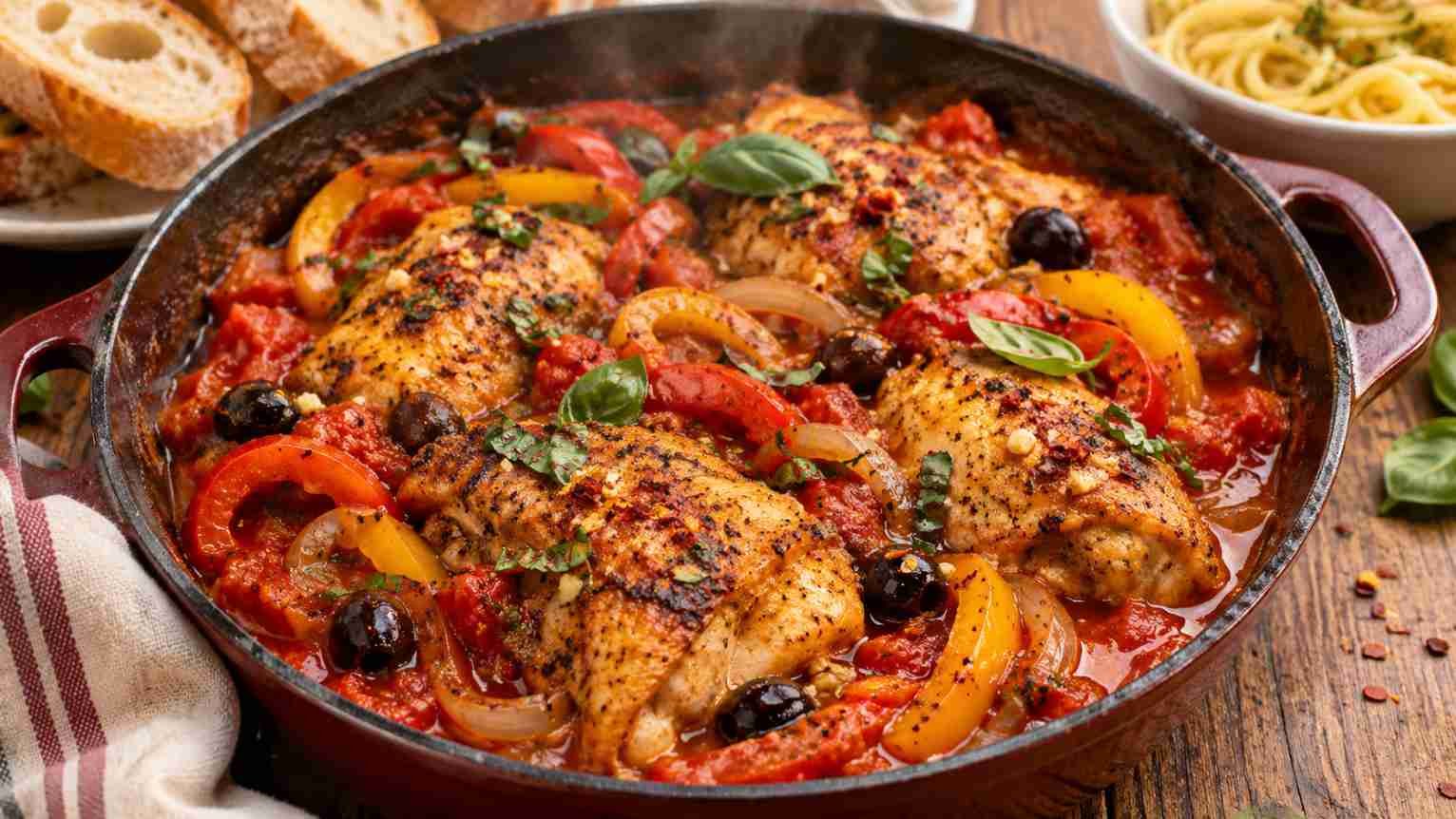
There are evenings when you want something hearty for dinner but don’t feel like spending hours in the kitchen. This Spicy Italian Chicken Casserole is exactly the kind of meal that works on those nights. Tender chicken thighs are cooked in a rich tomato sauce with sweet bell peppers, garlic, onions, Italian herbs, and just enough chili to give everything a pleasant kick.
What makes this dish particularly good is the sauce. The tomatoes slowly cook down with the vegetables and chicken juices, becoming thick, savory, and full of flavor. A handful of olives adds a slightly salty bite, while fresh basil brings a little freshness at the end. Serve it with pasta, mashed potatoes, or thick slices of crusty bread, and you’ve got a complete dinner without much extra effort.
Although it’s called a casserole, you don’t need a casserole dish or a long oven-baking session. Everything comes together in one deep skillet or Dutch oven on the stovetop. The chicken is browned first, the sauce is built in the same pan, and then the two finish cooking together.
Spicy Italian Chicken Casserole Recipe Overview
| Recipe Details | Information |
|---|---|
| Preparation Time | 15 minutes |
| Cooking Time | 35 minutes |
| Total Time | 50 minutes |
| Servings | 4 |
| Cooking Method | Stovetop |
| Difficulty | Easy |
| Cuisine | Italian-inspired |
| Spice Level | Medium, adjustable |
Ingredients for Spicy Italian Chicken Casserole
Most of the ingredients are common pantry staples. Boneless chicken thighs work especially well because they stay tender while simmering in the tomato sauce, but chicken breast can also be used with a shorter cooking time.
For the Chicken
- 750 g boneless, skinless chicken thighs
- 2 tablespoons olive oil, divided
- 1 teaspoon smoked paprika
- 1/2 teaspoon freshly ground black pepper
- 1/2 teaspoon salt, or to taste
- 1/2 teaspoon dried oregano
For the Italian Tomato Sauce
- 1 medium yellow onion, finely chopped
- 4 garlic cloves, minced
- 1 red bell pepper, sliced into strips
- 1 yellow bell pepper, sliced into strips
- 1 tablespoon tomato paste
- 400 g canned crushed tomatoes
- 1/2 cup low-sodium chicken broth
- 1 teaspoon dried Italian seasoning
- 1/2 teaspoon crushed red pepper flakes, or more to taste
- 1/2 teaspoon dried thyme
- 1 teaspoon brown sugar, optional
- 1/3 cup pitted black olives, halved
- 1 tablespoon drained capers, optional
- 1 tablespoon fresh lemon juice
- 2 tablespoons chopped fresh basil
- Salt and black pepper, as needed
Optional Garnishes
- Freshly grated Parmesan cheese
- Extra fresh basil or flat-leaf parsley
- A small pinch of crushed red pepper flakes
Also Read: Cream Corn Casserole with Cheese
How to Make Spicy Italian Chicken Casserole
This recipe is easiest when you prepare the vegetables before heating the pan. Once the chicken is browned, the remaining steps move fairly quickly.
Step 1: Season the Chicken
Pat the chicken thighs dry with paper towels. This small step makes a noticeable difference when browning the meat because excess moisture causes the chicken to steam rather than develop a golden crust. Place the chicken in a bowl and season with smoked paprika, black pepper, salt, and oregano. Rub the seasoning over both sides until evenly coated. If you have a few extra minutes, leave the chicken at room temperature for about 10 minutes while preparing the vegetables.
Step 2: Brown the Chicken
Heat 1 tablespoon of olive oil in a large, deep skillet or Dutch oven over medium-high heat. Add the chicken thighs in a single layer, leaving some space between each piece. Cook for approximately 4 minutes on the first side, then turn and cook for another 3 minutes. The chicken should develop a golden-brown exterior, but it doesn’t need to be fully cooked at this stage. Transfer it to a plate and keep any juices that collect there. If your skillet is small, brown the chicken in two batches rather than overcrowding the pan.
Step 3: Cook the Onion and Bell Peppers
Reduce the heat to medium and add the remaining tablespoon of olive oil to the same skillet. Add the chopped onion and cook for about 3 minutes, stirring occasionally, until it begins to soften. Stir in the sliced red and yellow bell peppers and cook for another 4 minutes. The peppers should become slightly tender while retaining some of their shape. Add the minced garlic and cook for 30 seconds, stirring constantly so it doesn’t burn.
Step 4: Build the Tomato Sauce
Add the tomato paste to the vegetables and stir for about 1 minute. Cooking the paste briefly helps deepen its flavor and removes some of the raw tomato taste. Pour in the crushed tomatoes and chicken broth, scraping the bottom of the skillet with a wooden spoon to release the browned bits left by the chicken. Stir in the Italian seasoning, dried thyme, red pepper flakes, and brown sugar if using. Bring the sauce to a gentle simmer and cook uncovered for 5 minutes, allowing the flavors to begin combining.
Step 5: Return the Chicken to the Pan
Place the browned chicken thighs back into the skillet along with any juices from the plate. Spoon some of the tomato sauce over the chicken and reduce the heat to medium-low. Cover the skillet loosely and simmer for approximately 12–15 minutes, depending on the thickness of the thighs. Turn the pieces once halfway through cooking. The chicken is ready when its thickest part reaches an internal temperature of 165°F (74°C). If the sauce becomes too thick before the chicken finishes cooking, add a few tablespoons of water or chicken broth.
Step 6: Add the Olives and Finish the Sauce
During the final 3–4 minutes of cooking, stir the black olives and capers into the sauce. They provide a savory, slightly briny contrast to the tomatoes. Once the chicken is fully cooked, remove the skillet from the heat and stir in the lemon juice and chopped basil. Taste the sauce before adding more salt, as olives and capers already contribute saltiness. If the sauce tastes too sharp, an extra pinch of sugar can help balance it.
Step 7: Serve While Hot
Let the casserole rest for 3–5 minutes before serving. Spoon the tomato sauce and softened peppers over each piece of chicken, then finish with fresh basil or parsley. Add a little Parmesan if desired. The sauce should be thick enough to cling to the chicken but still loose enough to spoon generously over pasta, rice, or bread.
Also Read: Chicken and Zucchini Casserole
What You Can Do Better
A few adjustments can take this casserole from a simple weeknight meal to something you’d happily serve when friends come over.
1. Don’t Rush the Browning
Give the chicken enough time to develop a proper golden crust before turning it. This creates flavor in the meat and leaves browned bits in the skillet that enrich the tomato sauce. If the chicken sticks when you try to move it, give it another 30 seconds before trying again.
2. Use Good-Quality Tomatoes
Because tomatoes make up most of the sauce, their quality matters. Canned crushed tomatoes with a naturally sweet flavor are ideal. If your tomatoes taste particularly acidic, add a small amount of brown sugar rather than trying to fix the sauce with extra salt.
3. Control the Heat Gradually
Start with 1/2 teaspoon of red pepper flakes for moderate heat. You can add more near the end, but removing too much chili from an already spicy sauce isn’t easy. For a milder family dinner, reduce the flakes to 1/4 teaspoon and serve extra chili separately.
4. Keep the Peppers Slightly Firm
Bell peppers taste best in this casserole when they are tender but haven’t completely collapsed into the tomato sauce. Avoid cooking them too long before adding the chicken. They’ll continue to soften during the final simmer.
5. Finish With Fresh Ingredients
Fresh basil and lemon juice are best added after the heat is turned off. Basil can lose some of its aroma during prolonged cooking, while lemon juice adds a bright finish that balances the rich sauce.
6. Give the Sauce Time to Thicken
If your casserole looks watery after the chicken is fully cooked, transfer the chicken to a warm plate and simmer the sauce uncovered for another 3–5 minutes. Return the chicken briefly before serving. This reduces the liquid without overcooking the meat.
Ingredient Substitutions and Variations
One useful thing about this recipe is how easily it adapts to ingredients already in your kitchen.
| Ingredient | Alternative | Cooking Tip |
|---|---|---|
| Chicken Thighs | Boneless chicken breast | Reduce simmering time and check for doneness early. |
| Crushed Tomatoes | Chopped canned tomatoes | Simmer a little longer for a smoother, thicker sauce. |
| Chicken Broth | Vegetable broth | Works well without significantly changing the flavor. |
| Black Olives | Green olives | Use slightly less if they are particularly salty. |
| Fresh Basil | Fresh parsley | Add just before serving for freshness. |
| Red Pepper Flakes | Fresh red chili | Start with a small amount and increase gradually. |
| Bell Peppers | Zucchini or mushrooms | Adjust cooking time to avoid over-softening. |
Make It Creamier
For a slightly richer sauce, stir in 2–3 tablespoons of heavy cream after the chicken is cooked. This softens the chili heat and gives the tomato sauce a smoother texture. Keep the heat low after adding cream to prevent the sauce from separating.
Add More Vegetables
Zucchini, mushrooms, baby spinach, and diced eggplant all work well. Mushrooms and eggplant should be cooked with the onions and peppers, while spinach can be stirred in during the final few minutes.
Try Bone-In Chicken
Bone-in chicken thighs can also be used, although they require additional cooking time. Simmer them gently in the sauce until they reach 165°F (74°C) internally. Depending on their size, this may take 25–35 minutes after browning. Add more broth if necessary to prevent the sauce from becoming too thick.
Also Read: Beef Enchilada Casserole
What to Serve With Spicy Italian Chicken Casserole
This casserole produces enough sauce to make a simple side dish feel like part of the main meal. Here are a few combinations that work particularly well.
- Crusty Italian bread: The simplest choice for soaking up the tomato sauce. Lightly toast the bread and rub it with a cut garlic clove for extra flavor.
- Spaghetti or penne: Toss the cooked pasta with a few spoonfuls of sauce before placing the chicken on top. Penne is particularly good at catching pieces of pepper and tomato.
- Creamy mashed potatoes: Their mild flavor balances the acidity and heat of the sauce.
- Steamed rice: An easy, filling option when you don’t have bread or pasta available.
- Green salad: A salad with lettuce, cucumber, and a simple lemon dressing provides a refreshing contrast.
- Roasted vegetables: Broccoli, cauliflower, or asparagus work well if you want a vegetable-heavy meal.
How to Store and Reheat Leftovers
Refrigerating
Allow the casserole to cool slightly, then transfer it to shallow, airtight containers and refrigerate within 2 hours of cooking. Store at 40°F (4°C) or below and consume within 3–4 days. The tomato sauce often tastes more developed the following day because the herbs and garlic have had additional time to blend.
Freezing
This casserole freezes well without cream or cheese mixed into the sauce. Portion the cooled chicken and sauce into freezer-safe containers, leaving a little room for expansion. Freeze at 0°F (-18°C) and use within 2–3 months for best quality. Thaw overnight in the refrigerator before reheating.
Reheating
Place the chicken and sauce in a covered skillet over medium-low heat. Add a small splash of water or chicken broth if the sauce has thickened in storage. Heat gently, stirring the sauce occasionally, until the chicken reaches 165°F (74°C) throughout. You can also reheat individual portions in the microwave, using short intervals and stirring the sauce between them.
Nutritional Information
The following values are approximate estimates for one serving when the recipe is divided into four equal portions. They are based on boneless, skinless chicken thighs and the listed ingredients, without pasta, bread, rice, Parmesan, or optional cream. Actual values will vary according to the chicken, tomato products, broth, and brands used.
| Nutrient | Approximate Amount Per Serving |
|---|---|
| Calories | 440 kcal |
| Protein | 38 g |
| Total Fat | 24 g |
| Saturated Fat | 6 g |
| Carbohydrates | 17 g |
| Dietary Fiber | 4 g |
| Total Sugars | 9 g |
| Sodium | 850 mg |
| Cholesterol | 180 mg |
Nutrition note: These are rounded recipe estimates rather than laboratory-tested values. Adding pasta, bread, or other sides will increase the total calories and carbohydrates. Sodium can vary considerably depending on the olives, capers, canned tomatoes, and broth.
Also Read: Chicken Taco Casserole
Common Mistakes to Avoid
Adding the Chicken Before the Sauce Has Developed
Let the tomato mixture simmer briefly before returning the chicken to the skillet. This gives the herbs time to release their flavor and allows the tomato paste to combine properly with the crushed tomatoes.
Cooking Everything Over High Heat
High heat is useful for browning the chicken, but once the tomatoes are added, a gentle simmer is better. Boiling the sauce aggressively can cause excessive evaporation and may leave the chicken less tender.
Adding Too Much Salt at the Beginning
Olives, capers, and chicken broth can all contain significant amounts of sodium. Season the chicken initially, but wait until the finished sauce has been tasted before adding more salt.
Overcooking Chicken Breast
If substituting chicken breast, remember that it cooks faster than thighs. Use a thermometer and remove it once the center reaches 165°F (74°C). Continuing to simmer it unnecessarily can produce a dry texture.
Frequently Asked Questions
Can I Make Spicy Italian Chicken Casserole Ahead of Time?
Yes. You can prepare the entire casserole a day in advance and refrigerate it in an airtight container. Reheat it gently on the stovetop before serving. If you’re planning a dinner gathering, making it ahead can actually be convenient because the sauce reheats beautifully.
Can I Bake This Casserole Instead of Cooking It on the Stovetop?
Yes. Brown the chicken and prepare the tomato sauce in an oven-safe skillet, then return the chicken to the sauce. Cover and bake in a preheated oven at 375°F (190°C) until the chicken reaches 165°F (74°C) internally. Boneless thighs will generally take around 20–25 minutes in the oven, depending on thickness. Check with a thermometer rather than relying only on timing.
Is This Recipe Very Spicy?
With 1/2 teaspoon of red pepper flakes, the casserole has a noticeable but moderate heat. For a mild version, use 1/4 teaspoon or omit the chili entirely. For something hotter, add another 1/2 teaspoon, tasting as you go.
Can I Make It Without Olives and Capers?
Absolutely. Both ingredients add a salty, briny flavor, but the casserole will still taste good without them. If you leave them out, a little extra lemon juice at the end can help brighten the sauce.
How Do I Make the Sauce Less Acidic?
Start by simmering the sauce a little longer, which can mellow the raw tomato flavor. If it still tastes sharp, add a small pinch of brown sugar. Avoid adding too much at once, as the goal is to balance the sauce rather than make it sweet.
Can I Use Fresh Tomatoes Instead of Canned Tomatoes?
Yes, but choose ripe, flavorful tomatoes. You’ll need approximately 500–600 g of fresh tomatoes to replace the 400 g can of crushed tomatoes. Chop them finely and cook the sauce longer to allow excess moisture to evaporate. The final texture may be slightly chunkier.
Can I Make This Recipe Dairy-Free and Gluten-Free?
The casserole itself contains no added dairy or wheat when prepared with the basic ingredients and without Parmesan. However, check the labels on your broth, seasonings, and canned products if you need to avoid gluten or dairy strictly. Serve with rice, potatoes, or another suitable side.