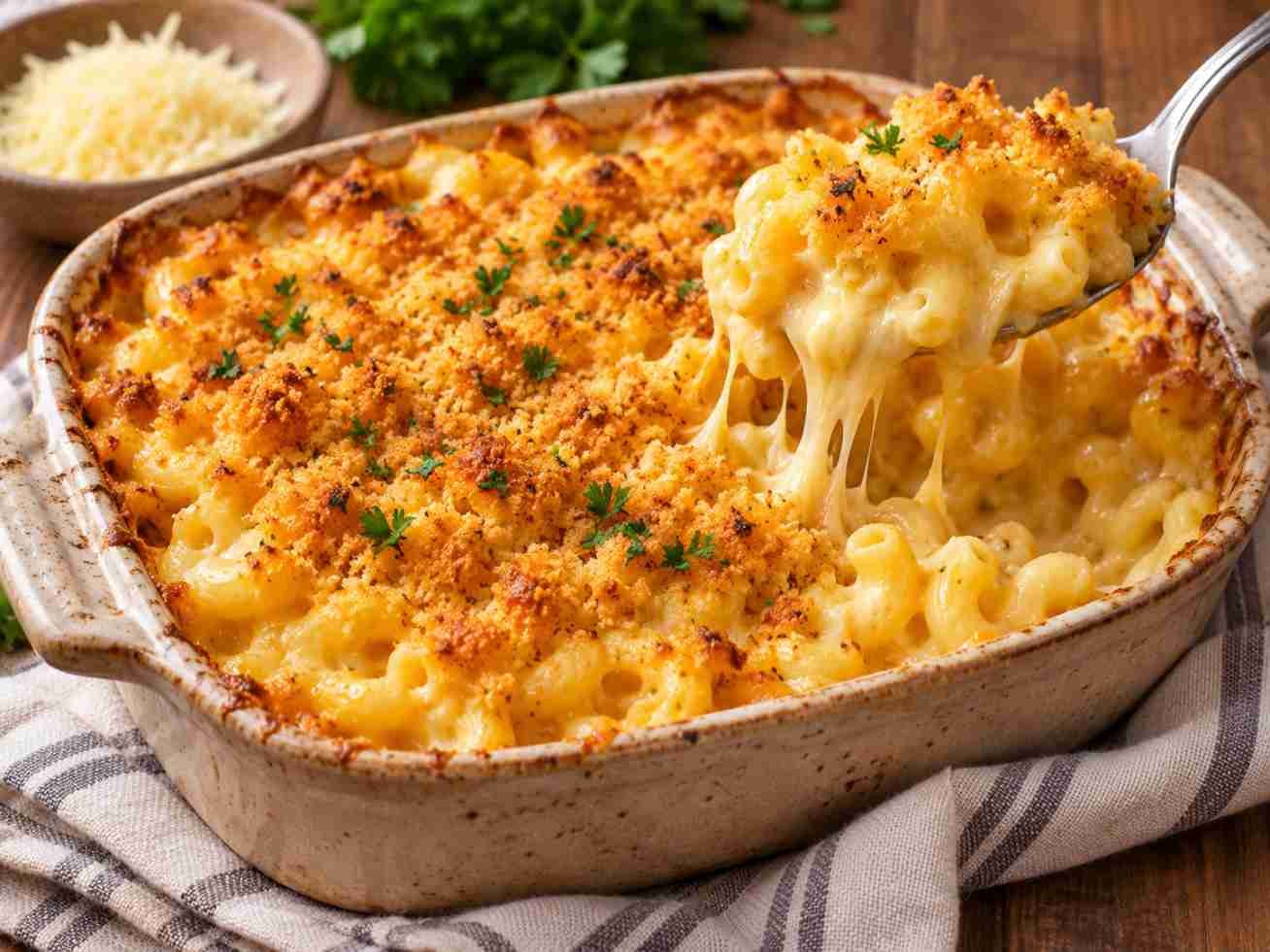
There is something hard to resist about a dish of baked mac and cheese straight from the oven. The edges are bubbling, the top has turned a deep golden brown, and underneath that crisp layer is macaroni coated in a thick, creamy cheese sauce. It is the sort of food that makes everyone come back to the kitchen before dinner is even ready.
This baked mac and cheese recipe uses sharp cheddar for flavor, mozzarella for its smooth melt, and a little Parmesan to give the sauce extra depth. A buttery breadcrumb topping adds just enough crunch to contrast with the soft pasta. The trick is to keep the sauce slightly looser than you might expect before baking, because the macaroni continues to absorb moisture in the oven.
It works equally well as a family dinner, a holiday side dish, or something to bring to a potluck. You can prepare most of it in advance, and the ingredients are easy to find in an ordinary grocery store.
Recipe Overview
| Preparation Time | 15 minutes |
| Cooking Time | 35 minutes |
| Total Time | 50 minutes |
| Servings | 6 |
| Difficulty | Easy |
| Cooking Method | Stovetop and oven |
| Oven Temperature | 375°F (190°C) |
Ingredients for Baked Mac and Cheese
The best results come from using a combination of cheeses rather than relying on just one. Cheddar brings the familiar mac and cheese flavor, mozzarella melts beautifully, and Parmesan adds a slightly salty, savory finish. Whole milk gives the sauce a richer texture without making it unnecessarily heavy.
For the Macaroni and Cheese Sauce
| Ingredient | Quantity |
|---|---|
| Elbow macaroni | 12 oz (340 g) |
| Unsalted butter | 4 tablespoons |
| All-purpose flour | 1/4 cup |
| Whole milk | 3 cups |
| Sharp cheddar cheese, freshly grated | 2 cups |
| Low-moisture mozzarella cheese, grated | 1 cup |
| Parmesan cheese, finely grated | 1/2 cup |
| Dijon mustard | 1 teaspoon |
| Garlic powder | 1/2 teaspoon |
| Smoked paprika | 1/4 teaspoon |
| Salt | 1/2 teaspoon, plus more for pasta water |
| Freshly ground black pepper | 1/4 teaspoon |
For the Crispy Breadcrumb Topping
| Ingredient | Quantity |
|---|---|
| Panko breadcrumbs | 3/4 cup |
| Unsalted butter, melted | 2 tablespoons |
| Parmesan cheese, grated | 2 tablespoons |
| Dried parsley | 1 teaspoon |
Also Read: Tartiflette Recipe
How to Make Baked Mac and Cheese
You will need a large pot for the pasta, a saucepan for the cheese sauce, and a lightly greased 9-by-9-inch baking dish or a similar 2.5-quart ovenproof dish. Set out the ingredients before you begin, particularly the grated cheeses, because the sauce comes together fairly quickly once the milk has thickened.
Step 1: Cook the Macaroni
Bring a large pot of generously salted water to a boil. Add the elbow macaroni and cook it for about 2 minutes less than the package recommends. The pasta should still have a little firmness in the center. This matters because it will continue cooking after you combine it with the hot cheese sauce and place it in the oven.
Drain the macaroni thoroughly, but do not rinse it. Set it aside while you prepare the sauce. Avoid leaving it sitting in a pot of hot water, since that can make the pasta too soft before baking.
Step 2: Make the Butter and Flour Base
Place a medium-large saucepan over medium heat and add 4 tablespoons of butter. Once melted, sprinkle in the flour and whisk continuously for about 1 to 2 minutes. The mixture should become smooth and slightly foamy, with a pale golden appearance.
This butter-and-flour mixture, known as a roux, thickens the milk and gives the finished cheese sauce its creamy consistency. You want to cook away the raw flour taste without browning the mixture too much.
Step 3: Add the Milk
Slowly pour in the milk, starting with a small amount and whisking until the mixture is smooth before adding more. Once all the milk has been incorporated, continue cooking over medium heat for approximately 5 to 7 minutes, stirring frequently.
The sauce is ready for the cheese when it lightly coats the back of a spoon. It should be creamy and pourable rather than thick like mashed potatoes. If it becomes too thick, add a small splash of milk and stir until smooth.
Step 4: Melt in the Cheese
Reduce the heat to low, then remove the saucepan from the burner. Add the cheddar, mozzarella, and Parmesan a handful at a time, stirring gently until each addition melts into the sauce. Stir in the Dijon mustard, garlic powder, smoked paprika, salt, and black pepper.
Taste the sauce before adding more salt. Cheddar and Parmesan can vary considerably in saltiness, so it is better to season gradually. The Dijon mustard should not make the dish taste strongly of mustard; it simply gives the cheese a little extra sharpness.
Do not return the sauce to a vigorous boil after adding the cheese. Too much heat can cause the cheese proteins and fat to separate, leaving the sauce oily or grainy instead of smooth.
Step 5: Combine the Pasta and Cheese Sauce
Add the drained macaroni to the saucepan and fold it through the cheese sauce until every piece is evenly coated. At this stage, the mixture should look quite creamy, with a little extra sauce visible between the pasta. That moisture is important because some will be absorbed during baking.
Transfer the macaroni mixture to your prepared baking dish and spread it into an even layer. There is no need to press it down tightly.
Step 6: Prepare the Breadcrumb Topping
In a small bowl, combine the panko breadcrumbs, melted butter, grated Parmesan, and dried parsley. Mix with a fork until the breadcrumbs are lightly coated in butter. Sprinkle the mixture evenly over the macaroni, reaching all the way to the edges of the baking dish.
Panko is particularly good here because its larger, airy crumbs become crisp without forming a dense crust. Regular dry breadcrumbs will also work, though the topping will have a finer texture.
Step 7: Bake Until Golden
Preheat the oven to 375°F (190°C). Place the baking dish on the middle rack and bake uncovered for 20 to 25 minutes, or until the cheese sauce is bubbling gently around the edges and the breadcrumb topping is golden brown.
If the topping needs a little more color, turn on the broiler for the final 1 to 2 minutes, keeping a close eye on it. Breadcrumbs can go from nicely browned to burnt very quickly. Avoid leaving the casserole in the oven longer than necessary, as excessive baking can dry out the sauce.
Step 8: Rest and Serve
Remove the baked mac and cheese from the oven and let it rest for about 5 minutes. This gives the sauce a chance to settle slightly while keeping the pasta hot and creamy. Serve directly from the baking dish, making sure each portion gets some of the crunchy topping.
Also Read: Cheeseburger Casserole
What You Can Do Better
Use Freshly Grated Cheese
Pre-shredded cheese is convenient, but many packaged varieties contain starches or anti-caking ingredients that can affect how smoothly they melt. Grating the cheese yourself is one of the simplest ways to improve the sauce. A block of sharp cheddar also gives you more control over the flavor.
Keep the Pasta Slightly Undercooked
Macaroni cooked completely on the stovetop can become overly soft in the oven. Take it out of the boiling water while it still has some bite. This small adjustment makes a noticeable difference to the finished texture, especially if you plan to assemble the dish ahead of time.
Do Not Make the Sauce Too Thick
A cheese sauce that looks perfect on the stovetop may become dry after baking. The pasta absorbs moisture as it heats, so leave the mixture slightly saucier than you would for stovetop mac and cheese. If the sauce has thickened too much while you were preparing the topping, stir in a splash of warm milk before transferring everything to the baking dish.
Choose Cheese for Flavor and Melting
Sharp cheddar has plenty of flavor, but it can become oily when overheated. Combining it with mozzarella helps give the sauce a softer, more even texture. For a more sophisticated flavor, replace some of the cheddar with Gruyère or Monterey Jack. Avoid very aged, dry cheeses as the only cheese in the sauce, since they may not melt as smoothly.
Keep the Topping Light
A thick layer of breadcrumbs can overwhelm the creamy pasta underneath. Aim for a thin, even coating rather than a heavy crust. If you prefer mac and cheese without any crunch, simply leave out the breadcrumb topping and sprinkle a little extra cheddar over the surface before baking.
Easy Variations to Try
Three-Cheese Baked Mac and Cheese
Replace the mozzarella with Monterey Jack and use Gruyère instead of Parmesan in the sauce. The result is rich and mildly nutty, with a smooth texture that works particularly well for holiday dinners.
Spicy Baked Mac and Cheese
Add 1 finely chopped jalapeño to the butter before stirring in the flour. You can also mix in a pinch of cayenne pepper or a few dashes of hot sauce. The spice cuts through the richness of the cheese without taking over the whole dish.
Broccoli Mac and Cheese
Stir 1 to 1 1/2 cups of small, lightly steamed broccoli florets into the macaroni before baking. Make sure the broccoli is well drained so it does not release excess water into the sauce. This variation makes a more substantial meal and adds a pleasant change in texture.
Chicken Mac and Cheese
Fold 1 to 1 1/2 cups of chopped, fully cooked chicken into the pasta and cheese sauce. Leftover roast chicken works particularly well. Since the chicken adds bulk, you may want to add another splash of milk to ensure the casserole stays moist.
Also Read: French Onion Chicken Casserole
What to Serve with Baked Mac and Cheese
Because baked mac and cheese is rich and filling, it tastes particularly good alongside something fresh or slightly acidic. A simple green salad with lemon vinaigrette, roasted broccoli, sautéed green beans, or a tomato and cucumber salad can balance the creamy sauce.
For a larger meal, serve it with roast chicken, grilled vegetables, barbecue chicken, or baked fish. It also belongs on a holiday table alongside roasted meat, vegetables, and other traditional side dishes. If serving it as the main course, a crisp salad is often all you need.
Can You Make Baked Mac and Cheese Ahead of Time?
Yes, although a freshly assembled casserole generally has the best texture. You can prepare the pasta and cheese sauce a day ahead, combine them, and place the mixture in a greased baking dish. Let it cool promptly, then cover and refrigerate. Keep the breadcrumb topping separately so it stays dry.
When you are ready to bake, stir a little additional milk into the macaroni if the sauce has become very thick. Sprinkle on the topping and bake at 375°F (190°C) until the center is thoroughly heated and the top is golden. A cold casserole will usually need longer than one assembled while warm. If using a glass dish, follow the manufacturer’s instructions regarding temperature changes to avoid thermal shock.
How to Store and Reheat Leftovers
Refrigerating
Allow leftovers to cool briefly, then transfer them to a shallow airtight container and refrigerate within 2 hours of cooking. Properly refrigerated mac and cheese can be kept for 3 to 4 days. Store any extra topping separately if you want to preserve its crunch.
Reheating
For the creamiest results, place a serving in a microwave-safe bowl and add 1 to 2 tablespoons of milk. Cover loosely and heat in short intervals, stirring between each one, until hot throughout. The extra milk helps loosen the cheese sauce as it warms.
For larger portions, place the macaroni in an oven-safe dish, add a splash of milk, cover with foil, and reheat at 325°F (165°C) until heated through to 165°F (74°C). Remove the foil briefly at the end if you want to crisp the topping.
Freezing
Baked mac and cheese can be frozen for up to 2 months for best quality, although the sauce may become slightly grainy after thawing. Divide it into portions, wrap or seal them well, and freeze promptly. Thaw overnight in the refrigerator before reheating. Adding a little milk during reheating helps restore some creaminess.
Also Read: 6 Best Casserole Recipes for Dinner
Nutritional Information
The following values are approximate estimates for one serving when the recipe is divided into 6 portions. Actual nutrition will depend on the brands and types of cheese, milk, pasta, and breadcrumbs you use. These figures include the breadcrumb topping.
| Nutrient | Approximate Amount per Serving |
|---|---|
| Calories | 720 kcal |
| Carbohydrates | 65 g |
| Protein | 30 g |
| Total Fat | 37 g |
| Saturated Fat | 22 g |
| Cholesterol | 110 mg |
| Sodium | 850 mg |
| Dietary Fiber | 3 g |
| Total Sugars | 8 g |
| Calcium | 650 mg |
Nutrition note: These values are estimates rather than laboratory-tested results. The recipe contains wheat and dairy. Depending on the cheeses and breadcrumbs selected, it may also contain other allergens.
Frequently Asked Questions
Can I Use a Different Type of Pasta?
Absolutely. Elbow macaroni is traditional, but small shells, cavatappi, rotini, and other short pasta shapes are all good choices. Shapes with ridges or hollow centers are especially useful because they hold onto the cheese sauce. Adjust the boiling time according to the pasta package and keep it slightly undercooked before baking.
Why Did My Mac and Cheese Turn Out Dry?
The most common causes are overcooked pasta, a sauce that was too thick before baking, or leaving the casserole in the oven too long. Pasta keeps absorbing liquid as it cooks. Next time, make sure the sauce is generously coating the macaroni before it goes into the oven and remove the dish once the topping is golden and the edges are bubbling.
Can I Make It Without Flour?
Yes, but you will need a different method of thickening the sauce. A flour-free version can use a little cornstarch mixed with cold milk before heating. The quantity and method will need adjusting because cornstarch thickens differently from flour. You can also make a cheese sauce using evaporated milk, although the finished texture will be different from this traditional recipe.
Can I Use Low-Fat Milk?
You can use 2% milk in place of whole milk. The sauce will be a little less rich but should still thicken properly with the butter and flour. Skim milk works less well here because it produces a thinner sauce with less body. If using reduced-fat milk, be especially careful not to overbake the casserole.
How Do I Stop the Cheese Sauce from Becoming Grainy?
Use freshly grated cheese, keep the heat gentle, and remove the saucepan from the burner before stirring in the cheese. Overheating is one of the main reasons cheese sauces separate. Adding the cheese gradually rather than all at once also makes it easier to get a smooth consistency.
Should I Cover Mac and Cheese While Baking?
For this recipe, leave it uncovered so the breadcrumb topping can become crisp. If you are reheating a refrigerated casserole, however, covering it with foil for the first part of baking helps the center warm through without drying out the surface. Remove the foil toward the end to brown the topping.