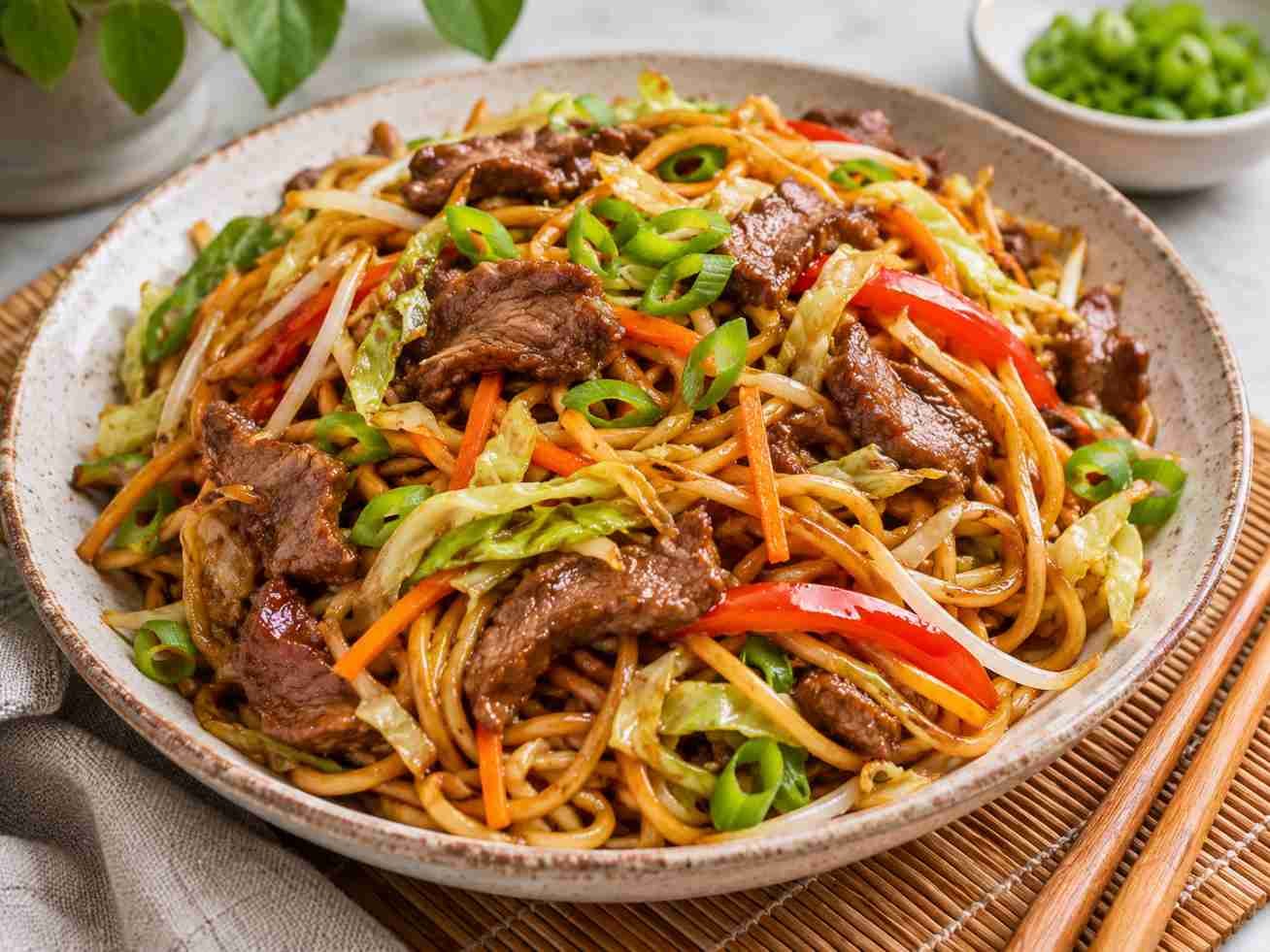
This beef chowmein recipe uses ground beef, which cooks quickly and absorbs the flavors of the sauce particularly well. The vegetables bring freshness and texture, while garlic, ginger, soy sauce, and oyster sauce give the noodles their distinctive savory taste. It is a practical dinner for busy evenings, especially when you want something filling without spending an hour in the kitchen.
Beef Chowmein Recipe Overview
| Details | Information |
|---|---|
| Recipe | Beef Chowmein |
| Cuisine | Chinese-inspired |
| Course | Main Course |
| Preparation Time | 15 minutes |
| Cooking Time | 15 minutes |
| Total Time | 30 minutes |
| Servings | 4 |
| Cooking Method | Stir-frying |
Ingredients for Beef Chowmein
The ingredients are divided into two parts: the noodles and beef mixture, and the sauce that brings everything together. Measure and prepare everything before heating the wok because stir-frying moves quickly once the cooking begins.
For the Noodles and Beef
| Ingredient | Quantity |
|---|---|
| Chow mein noodles or thin egg noodles | 250 g (dry weight) |
| Ground beef | 300 g |
| Vegetable oil | 2 tablespoons |
| Garlic, finely chopped | 3 cloves |
| Fresh ginger, grated | 1 teaspoon |
| Green cabbage, thinly shredded | 2 cups |
| Carrot, cut into thin strips | 1 medium |
| Red bell pepper, thinly sliced | 1 small |
| Bean sprouts | 1 cup |
| Spring onions, sliced | 3 stalks |
| Sesame oil | 1 teaspoon |
| Freshly ground black pepper | To taste |
For the Chowmein Sauce
| Ingredient | Quantity |
|---|---|
| Light soy sauce | 2 tablespoons |
| Dark soy sauce | 1 teaspoon |
| Oyster sauce | 2 tablespoons |
| Rice vinegar | 1 tablespoon |
| Brown sugar | 1 teaspoon |
| Cornstarch | 1 teaspoon |
| Water or unsalted beef stock | 4 tablespoons |
| White pepper | 1/4 teaspoon |
Ingredient note: Light soy sauce provides most of the seasoning, while dark soy sauce gives the noodles a deeper color. Oyster sauce adds a rounded, slightly sweet umami flavor. If oyster sauce is unavailable, mushroom stir-fry sauce is a useful substitute, although the finished flavor will be slightly different.
Also Read: One Pot Creamy Tomato Beef Pasta
How to Make Beef Chowmein
The key to good chowmein is cooking the ingredients in the right order. The beef needs enough heat to brown properly, the vegetables should retain some crunch, and the noodles should spend only a short time in the wok after the sauce is added.
Step 1: Prepare the Noodles
Bring a large pot of water to a boil and cook the noodles according to the package instructions. They should be just tender rather than overly soft because they will continue cooking when stir-fried. Drain thoroughly and rinse briefly under cool water if the package recommends it. Shake off the excess moisture, then toss the noodles with a few drops of oil to help prevent sticking. Set aside while preparing the remaining ingredients.
Step 2: Mix the Chowmein Sauce
In a small bowl, combine the light soy sauce, dark soy sauce, oyster sauce, rice vinegar, brown sugar, white pepper, cornstarch, and water or beef stock. Stir until the cornstarch is completely dissolved. The mixture will look quite thin at this stage, but it will thicken slightly when heated and coat the noodles. Keep the bowl close to the stove so the sauce can be added without interrupting the cooking.
Step 3: Brown the Ground Beef
Heat a large wok or heavy frying pan over medium-high to high heat. Add 1 tablespoon of vegetable oil, followed by the ground beef. Spread the beef across the hot surface and leave it undisturbed for about a minute to encourage browning. Break it into small pieces with a spatula and continue cooking for 4 to 5 minutes, or until the beef is fully cooked, no longer pink, and lightly browned around the edges. Drain excess fat if necessary, leaving a little behind for flavor. Transfer the beef to a plate.
Step 4: Stir-Fry the Vegetables
Add the remaining tablespoon of vegetable oil to the wok. Stir in the garlic and ginger, cooking for about 20 seconds until fragrant. Add the carrot and bell pepper and stir-fry for 1 to 2 minutes. Follow with the shredded cabbage and cook for another minute. Keep the vegetables moving so they cook evenly without becoming limp. They should soften slightly while maintaining a pleasant bite.
Step 5: Combine the Beef and Noodles
Return the browned beef to the wok and toss it with the vegetables. Add the drained noodles, lifting and turning them gently with tongs or two spatulas. Give the prepared sauce another stir because the cornstarch may have settled at the bottom, then pour it evenly over the noodles. Toss for 2 to 3 minutes until the sauce is heated through, slightly thickened, and distributed throughout the dish. If the noodles seem dry, add a tablespoon or two of water rather than pouring in extra soy sauce.
Step 6: Finish and Serve
Add the bean sprouts and most of the sliced spring onions. Stir-fry for another minute, ensuring the sprouts are heated through. Drizzle the sesame oil over the noodles and finish with a little freshly ground black pepper. Taste before adding any additional seasoning, as the soy and oyster sauces already contain salt. Transfer the beef chowmein to serving bowls, scatter the remaining spring onions over the top, and serve immediately while the noodles are hot.
What You Can Do Better
A few small adjustments can make a noticeable difference to the finished dish. You do not need a professional wok burner, but managing heat, moisture, and timing will help you produce noodles with better texture and a fuller flavor.
Let the Beef Develop Some Color
Ground beef tastes much better in chowmein when it has a few browned edges. Avoid stirring constantly from the moment it reaches the pan. Giving the meat a little uninterrupted contact with the hot surface helps it develop a deeper, roasted flavor. If your pan is small, cook the beef in two batches rather than crowding it.
Keep the Noodles Slightly Firm
Overcooked noodles tend to break apart during stir-frying and absorb sauce unevenly. Check them a little earlier than the package’s maximum recommended cooking time. The noodles should be flexible and cooked through but still firm enough to withstand tossing in the wok.
Cut the Vegetables into Thin Pieces
Thin strips of carrot, cabbage, and bell pepper mix naturally with the noodles and cook at roughly the same speed. Large chunks of vegetables take longer to soften and can make the dish difficult to toss. Try to keep the vegetables similar in thickness rather than worrying about perfectly uniform shapes.
Do Not Overload the Pan
A crowded pan traps steam and prevents the ingredients from developing the lightly fried texture associated with chowmein. If you are cooking for four people in a medium-sized frying pan, consider dividing the noodles and prepared ingredients into two batches for the final stir-fry. Combine everything once both batches are cooked.
Adjust the Sauce Instead of Adding More Salt
If the chowmein needs a stronger flavor, a small splash of soy sauce or oyster sauce may be more useful than extra salt. For a brighter finish, add a few drops of rice vinegar. If the sauce tastes too sharp, a small pinch of sugar can help balance it. Taste first and make adjustments gradually.
Also Read: Beef in Black Bean Sauce
Beef Chowmein Variations
Spicy Beef Chowmein
Add 1 to 2 teaspoons of chili garlic sauce to the prepared chowmein sauce. Fresh red chilies or a little chili oil can also be added at the end for extra heat. Start with a small amount, especially if you are serving people who prefer milder food.
Beef and Mushroom Chowmein
Replace the bell pepper with 150 g of thinly sliced mushrooms. Cook the mushrooms over high heat until most of their released moisture evaporates before adding the cabbage. Mushrooms complement the savory beef sauce and give the dish a particularly rich flavor.
Extra Vegetable Chowmein
Add a handful of snow peas, sliced bok choy, or finely chopped broccoli. Keep the total vegetable quantity manageable so the wok does not become overcrowded. Firmer vegetables should go in before the cabbage, while delicate greens should be added toward the end.
Beef Chowmein with Sliced Steak
Ground beef can be replaced with approximately 350 g of thinly sliced flank steak or sirloin. Slice against the grain and stir-fry quickly over high heat until cooked to your preference and safe to eat. Remove the steak from the wok before cooking the vegetables and return it when adding the noodles. This version has a more traditional stir-fried beef texture.
What to Serve with Beef Chowmein
Beef chowmein is substantial enough to serve on its own because it already contains protein, noodles, and vegetables. For a larger meal, pair it with steamed or stir-fried greens, a simple cucumber salad, or a light Asian-style soup. If you are preparing a family-style dinner, vegetable spring rolls or steamed dumplings make convenient additions. Keep the accompanying dishes relatively light because the noodles already have a savory, satisfying sauce.
How to Store and Reheat Beef Chowmein
Refrigerating Leftovers
Allow leftover chowmein to cool promptly, then transfer it to an airtight container and refrigerate within two hours of cooking. Store at 4°C (40°F) or below and consume within 3 to 4 days. For the best texture, keep leftovers in individual portions rather than repeatedly reheating the entire batch.
Reheating on the Stove
Heat a nonstick frying pan over medium heat and add the leftover noodles with 1 or 2 tablespoons of water. Toss gently until thoroughly heated. The additional moisture helps loosen noodles that have become firm in the refrigerator without requiring extra oil or sauce. Reheat until steaming hot throughout.
Reheating in the Microwave
Place the chowmein in a microwave-safe bowl, sprinkle with a little water, and cover loosely with a microwave-safe lid. Heat in short intervals, stirring between them, until the noodles and beef are heated evenly and thoroughly. Avoid extended heating because the noodles can become dry and rubbery.
Can You Freeze Beef Chowmein?
You can freeze cooked beef chowmein in an airtight, freezer-safe container for approximately 2 months for the best quality. However, the noodles and vegetables may become softer after thawing. Cool and freeze the dish promptly, thaw it in the refrigerator, and reheat thoroughly. Freshly prepared chowmein will have the best texture.
Also Read: B85 Beef Sausage Rolls
Nutritional Information
The following values are approximate estimates for one serving when the recipe is divided into four equal portions. Actual nutrition will vary depending on the noodles, the fat content of the ground beef, the sauces used, and the amount of oil retained during cooking.
| Nutrient | Approximate Amount Per Serving |
|---|---|
| Calories | 530 kcal |
| Carbohydrates | 59 g |
| Protein | 28 g |
| Total Fat | 21 g |
| Saturated Fat | 6 g |
| Dietary Fiber | 4 g |
| Total Sugars | 7 g |
| Sodium | 950 mg |
| Cholesterol | 70 mg |
Nutrition note: These figures are estimates rather than laboratory-tested nutritional values. Using leaner beef, reduced-sodium soy sauce, or less oil can change the nutritional profile. The sodium content is especially dependent on the brands of soy sauce and oyster sauce.
Frequently Asked Questions
What Is the Difference Between Chowmein and Lo Mein?
Both dishes use wheat-based noodles, but their preparation is generally different. Chowmein is associated with stir-fried noodles, which may be soft or slightly crisp depending on the regional style. Lo mein typically uses boiled noodles tossed with sauce and other cooked ingredients, resulting in a softer texture. The distinction can vary between restaurants and regional Chinese cooking traditions.
Can I Make Beef Chowmein Without a Wok?
Yes. A large, heavy-bottomed frying pan works very well. The main consideration is to avoid overcrowding. Use medium-high to high heat, cook ingredients in stages, and allow excess moisture to evaporate before adding the noodles.
Which Noodles Are Best for Beef Chowmein?
Thin Chinese egg noodles or packaged chow mein noodles are good choices. Fresh noodles are convenient and usually require less cooking, while dried noodles are easier to store. You can also use thin wheat noodles if chow mein noodles are unavailable. Follow the cooking instructions for whichever variety you choose.
Can I Prepare the Ingredients in Advance?
Absolutely. You can slice the vegetables, mix the sauce, and refrigerate the raw ground beef separately until you are ready to cook. Keep the beef properly chilled and use it within its recommended storage period. Preparing everything ahead makes the actual stir-frying much easier, especially on busy evenings.
Why Does My Chowmein Become Soggy?
Soggy chowmein usually results from overcooked noodles, too much liquid, or overcrowding the pan. Drain the noodles thoroughly, use a sufficiently hot cooking surface, and add only enough sauce to coat the ingredients. Cooking in batches can also improve the final texture.
Can I Use Chicken Instead of Beef?
Yes. Ground chicken or finely sliced boneless chicken can replace the beef. Cook the chicken completely before combining it with the vegetables and noodles. Because chicken is milder than beef, you may prefer slightly less dark soy sauce or a little extra ginger.