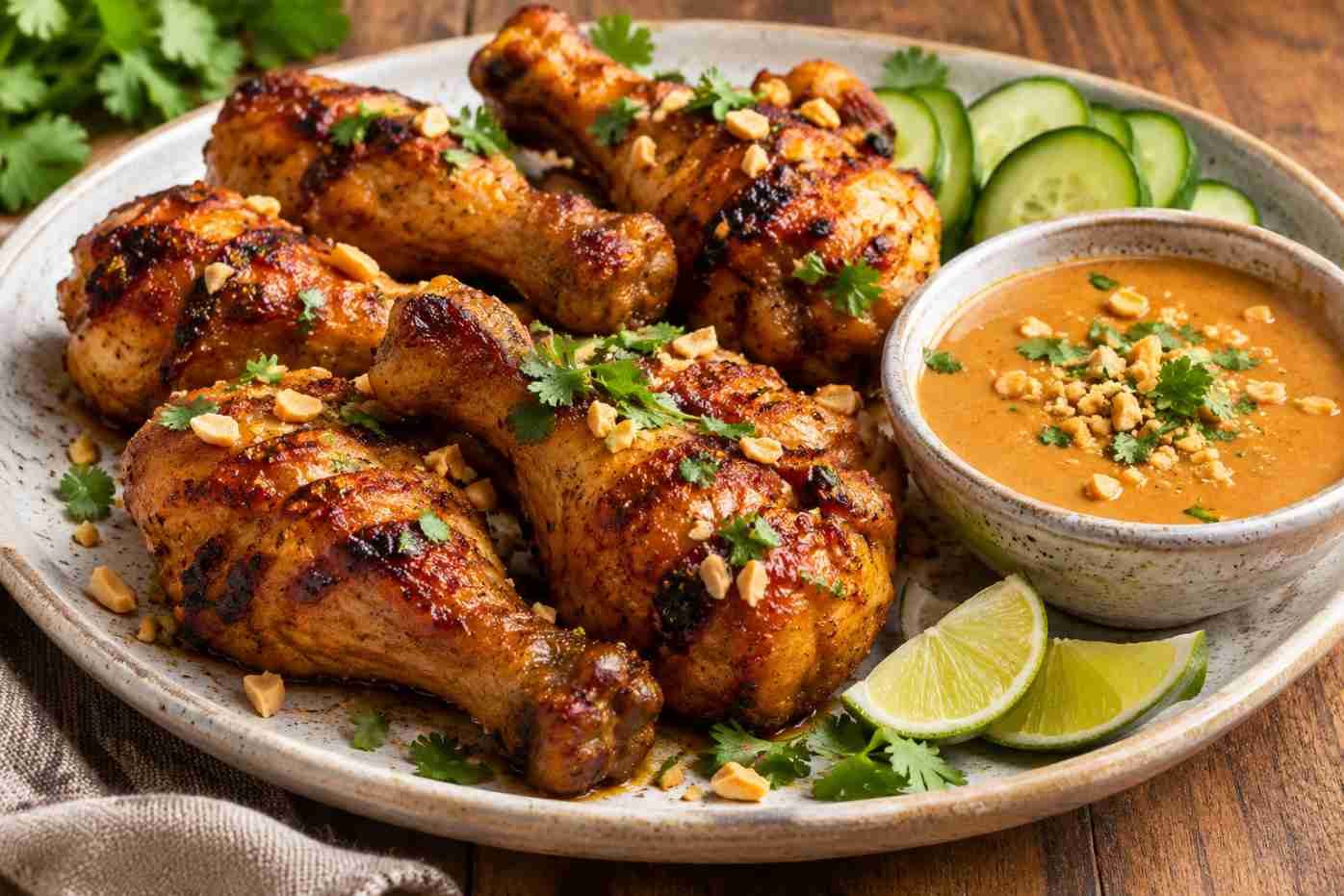
These satay chicken legs take inspiration from the bold, fragrant flavors of Southeast Asian cooking. Instead of threading small pieces of chicken onto skewers, this recipe uses whole drumsticks. They are inexpensive, easy to prepare, and stay wonderfully juicy during roasting. The marinade brings together coconut milk, curry spices, garlic, ginger, and lime, while the peanut sauce adds a rich, savory finish with just enough sweetness and acidity to balance everything.
It is the sort of meal that works equally well for a relaxed family dinner or a weekend gathering. Serve the chicken with steamed jasmine rice, sliced cucumbers, and plenty of peanut sauce. You will probably want a little extra sauce for the rice, too.
Satay Chicken Legs Recipe at a Glance
| Recipe Details | Information |
|---|---|
| Preparation Time | 20 minutes |
| Marinating Time | 2 hours (recommended) |
| Cooking Time | 40–45 minutes |
| Total Time | About 3 hours, including marinating |
| Servings | 5 |
| Cooking Method | Oven roasting |
| Difficulty | Easy |
| Cuisine | Southeast Asian-inspired |
| Main Ingredients | Chicken drumsticks, coconut milk, peanut butter, curry spices |
Ingredients for Satay Chicken Legs with Peanut Sauce
This recipe uses ingredients that are easy to find in most supermarkets. The marinade and peanut sauce share a few ingredients, which keeps the shopping list manageable. Natural peanut butter is especially useful here because its roasted peanut flavor comes through clearly without making the sauce excessively sweet.
For the Chicken and Satay Marinade
- 10 medium chicken drumsticks (approximately 1.4–1.5 kg)
- 1/2 cup full-fat coconut milk
- 2 tablespoons soy sauce
- 1 tablespoon mild curry powder
- 1 tablespoon Thai red curry paste
- 3 garlic cloves, finely minced
- 1 tablespoon freshly grated ginger
- 1 tablespoon brown sugar
- 1 tablespoon fresh lime juice
- 1 tablespoon vegetable oil
- 1/2 teaspoon ground turmeric
- 1/2 teaspoon ground coriander
- 1/2 teaspoon salt, or to taste
For the Homemade Peanut Sauce
- 1/2 cup natural creamy peanut butter
- 3/4 cup full-fat coconut milk
- 1/2 cup water, plus extra as needed
- 1 tablespoon Thai red curry paste
- 1 tablespoon soy sauce
- 1 tablespoon brown sugar
- 1 tablespoon fresh lime juice
- 1 teaspoon rice vinegar
- 1 small garlic clove, finely grated
- 1 teaspoon freshly grated ginger
- 1/4 teaspoon red chili flakes (optional)
For Serving
- Steamed jasmine rice or coconut rice
- Fresh cucumber slices
- Fresh coriander leaves
- Chopped roasted peanuts
- Lime wedges
- Thinly sliced red chilies (optional)
Also Read: Crockpot Whole Chicken
How to Make Satay Chicken Legs with Peanut Sauce
The process is straightforward: prepare the marinade, coat the chicken, roast until golden, and make the peanut sauce while the chicken cooks. Most of the work happens before the drumsticks go into the oven.
Step 1: Prepare the Chicken
Pat the chicken drumsticks dry with paper towels. Removing excess surface moisture helps the marinade cling to the meat and encourages better browning in the oven.
Using a sharp knife, make two shallow cuts across the thickest, meatiest part of each drumstick. The cuts should be deep enough to expose a little flesh without reaching the bone. This gives the marinade more surface area to coat and helps the thicker pieces cook evenly.
Place the prepared drumsticks in a large mixing bowl.
Step 2: Mix the Satay Marinade
In a separate bowl, combine the coconut milk, soy sauce, curry powder, Thai red curry paste, minced garlic, grated ginger, brown sugar, lime juice, vegetable oil, turmeric, ground coriander, and salt.
Whisk until the curry paste is evenly distributed and the mixture becomes a smooth, fragrant marinade. It should have a loose, creamy consistency that spreads easily over the chicken.
Pour the marinade over the drumsticks. Turn each piece several times, rubbing the mixture into the shallow cuts so that every part is well coated.
Step 3: Marinate for Better Flavor
Cover the bowl and refrigerate the chicken for at least 2 hours. For a more developed flavor, leave it in the refrigerator for 6–8 hours or overnight.
If you are short on time, a 30-minute marinade will still provide some flavor, particularly because the chicken has been scored. However, a longer resting period allows the spices and seasonings to work their way into the outer layers of the meat.
Keep the chicken refrigerated throughout marinating. Do not leave raw chicken sitting at room temperature for an extended period.
Step 4: Preheat the Oven
Preheat the oven to 200°C (400°F), or 180°C (356°F) for a fan-assisted oven.
Line a large baking tray with aluminum foil or parchment paper for easier cleaning. Place an oven-safe wire rack over the tray and lightly grease it with oil.
Arrange the drumsticks on the rack, leaving a little space between them. Avoid overcrowding because tightly packed chicken tends to steam rather than roast.
Spread any marinade remaining in the bowl over the chicken before cooking. Discard any leftover raw marinade rather than using it as a finishing sauce.
Step 5: Roast the Chicken Until Golden
Place the tray in the preheated oven and roast for approximately 35–40 minutes, depending on the size of the drumsticks.
The surface should gradually turn a deep golden color, with slightly darker patches where the marinade caramelizes. If you prefer more pronounced roasted edges, switch the oven to the broiler setting for the final 2–4 minutes. Watch carefully because the sugar and coconut milk in the marinade can darken quickly.
Use a meat thermometer to check the thickest part of a drumstick without touching the bone. The chicken must reach an internal temperature of at least 74°C (165°F). Drumsticks often become even more tender when cooked to approximately 80–85°C (176–185°F).
Once cooked, remove the tray from the oven and allow the chicken to rest for about 5 minutes before serving.
Step 6: Prepare the Peanut Sauce
While the chicken is roasting, place a medium saucepan over low to medium-low heat. Add the coconut milk, peanut butter, water, Thai red curry paste, soy sauce, brown sugar, lime juice, rice vinegar, garlic, ginger, and optional chili flakes.
Whisk continuously at first to help the peanut butter dissolve into the coconut milk. As the mixture warms, the ingredients will combine into a smooth sauce.
Allow the sauce to simmer gently for 5–7 minutes, stirring regularly. Avoid a vigorous boil because the sauce can thicken too quickly or catch on the bottom of the pan.
The finished peanut sauce should be thick enough to cling to a spoon but loose enough to pour over the chicken. If it becomes too thick, stir in warm water, one tablespoon at a time, until the consistency is right.
Taste before serving. Add a little extra lime juice if the sauce tastes too rich, more brown sugar if it needs sweetness, or a small splash of soy sauce if it needs more savory depth.
Step 7: Assemble and Serve
Transfer the roasted chicken legs to a serving platter. Sprinkle with chopped roasted peanuts, fresh coriander, and thinly sliced red chilies if you enjoy a little heat.
Pour the warm peanut sauce into a serving bowl and place it alongside the chicken. Serve with freshly steamed jasmine rice, crisp cucumber slices, and lime wedges.
For the best eating experience, spoon a little sauce over the chicken just before serving and keep the remaining sauce on the table for dipping. This preserves the roasted surface while giving everyone as much peanut sauce as they want.
What You Can Do Better
A few small adjustments can make a noticeable difference to the finished dish. These are particularly useful if you want deeper flavor, better browning, or a peanut sauce with the right consistency.
1. Choose Similar-Sized Drumsticks
Chicken legs vary considerably in size. Using pieces of roughly the same weight helps them cook at a similar rate. If some drumsticks are much larger than others, check their internal temperatures individually rather than relying only on the cooking time.
2. Use Full-Fat Coconut Milk
Full-fat coconut milk gives the marinade a rounded flavor and creates a smoother peanut sauce. Light coconut milk can work, but the finished sauce will generally be less creamy and may need slightly longer to reduce.
3. Do Not Add Too Much Sugar
A little sugar is important because it balances the salty and spicy ingredients and helps the chicken develop a caramelized surface. Too much, however, can cause the marinade to burn before the meat is fully cooked. Start with the listed quantity and adjust the peanut sauce separately.
4. Roast on a Wire Rack
A wire rack allows hot air to circulate around the chicken and prevents the underside from sitting in its own juices. If you do not have a rack, place the drumsticks directly on a lightly oiled tray and turn them halfway through cooking.
5. Keep the Peanut Sauce Slightly Loose
Peanut sauce thickens as it cools, especially when made with natural peanut butter. Make it a little thinner than you think necessary while it is still hot. If it thickens before dinner, gently reheat it with a splash of water or coconut milk.
6. Balance the Richness with Fresh Ingredients
Satay chicken and peanut sauce are both rich, so a fresh side dish makes the meal more enjoyable. Cucumber, shredded cabbage, lime, and fresh herbs provide a crisp contrast without competing with the main flavors.
Also Read: Beer Can Chicken Recipe
What to Serve with Satay Chicken Legs
Although these chicken legs are flavorful enough to eat on their own, the right accompaniments turn them into a complete dinner.
- Jasmine Rice: Its gentle fragrance and fluffy texture make it ideal for soaking up peanut sauce.
- Coconut Rice: A richer alternative that complements the coconut milk in the marinade.
- Cucumber Salad: Thinly sliced cucumber tossed with rice vinegar, a pinch of sugar, and a little salt adds freshness.
- Steamed Vegetables: Broccoli, green beans, or bok choy provide color and balance.
- Asian-Style Slaw: Shredded cabbage, carrots, spring onions, and a light lime dressing work especially well.
- Rice Noodles: A good alternative to rice, particularly when tossed with a little peanut sauce.
For an easy weeknight dinner, serve two drumsticks per person with a modest portion of rice and a generous pile of cucumber and vegetables.
Recipe Variations
Spicy Satay Chicken
Increase the red curry paste slightly and add extra chili flakes to the peanut sauce. A small amount of finely chopped fresh chili can also be added just before serving. Remember that different curry paste brands vary in heat, so adjust gradually.
Grilled Satay Chicken Legs
For a smoky outdoor version, cook the marinated drumsticks on a covered grill over medium indirect heat, turning occasionally. Move them briefly over direct heat near the end for additional color. Cook until the thickest part reaches a safe internal temperature.
Satay Chicken Thighs
Boneless chicken thighs are an excellent alternative when you want a quicker meal. Coat them in the same marinade and roast at 200°C (400°F) for approximately 20–25 minutes, depending on thickness, until they reach at least 74°C (165°F).
Less-Sweet Peanut Sauce
Reduce the brown sugar in the sauce to one teaspoon and increase the lime juice slightly. This creates a more savory, tangy sauce with a stronger roasted peanut flavor.
Also Read: Halloween Chocolate Cookies
How to Store and Reheat Leftovers
Satay chicken legs are convenient for meal preparation because the cooked chicken and sauce can be stored separately and reheated when needed.
Refrigerating
Allow leftovers to cool promptly, then transfer the chicken and peanut sauce into separate airtight containers. Refrigerate within 2 hours of cooking. Both can generally be kept in the refrigerator at 4°C (40°F) or below for up to 3–4 days.
Freezing
Cooked chicken legs can be frozen in a freezer-safe container for approximately 2–3 months for best quality. Peanut sauce can also be frozen separately, although its texture may change slightly after thawing.
Thaw frozen leftovers in the refrigerator rather than on the kitchen counter.
Reheating
To reheat the chicken, place it in an oven-safe dish, cover loosely with foil, and warm at 180°C (350°F) until heated through to 74°C (165°F).
Reheat the peanut sauce separately in a small saucepan over low heat. Add a little water or coconut milk and whisk until smooth. Avoid boiling it aggressively, as this can affect the texture.
Nutritional Information
The following figures are approximate estimates for one serving, assuming the recipe makes five servings, with two medium drumsticks and one-fifth of the peanut sauce per person. The estimates exclude rice, vegetables, and optional garnishes. Actual values will vary depending on the size of the chicken legs, whether the skin is eaten, the brands of peanut butter and coconut milk used, and how much marinade and sauce is consumed.
| Nutrient | Estimated Amount Per Serving |
|---|---|
| Calories | Approximately 600 kcal |
| Protein | 40 g |
| Total Fat | 43 g |
| Saturated Fat | 17 g |
| Carbohydrates | 17 g |
| Dietary Fiber | 2 g |
| Total Sugars | 9 g |
| Sodium | 1,000 mg |
| Cholesterol | 150 mg |
Nutrition note: These values are rough estimates rather than laboratory-tested nutrition data. Using skinless chicken, reduced-sodium soy sauce, or a smaller portion of peanut sauce will change the nutritional profile. For precise dietary tracking, calculate the recipe using the exact products and edible chicken weights used.
Also Read: Seafood Boil Recipe with Old Bay Seasoning
Frequently Asked Questions
Can I Make Satay Chicken Legs Without Coconut Milk?
Yes, although coconut milk contributes much of the characteristic richness. For the marinade, you can use plain unsweetened yogurt with a little water to loosen it. For the peanut sauce, regular milk or an unsweetened plant-based milk can be used, but the flavor and texture will be different.
Can I Use Crunchy Peanut Butter?
Absolutely. Crunchy peanut butter gives the sauce small pieces of roasted peanut, which can be quite pleasant. If you prefer a completely smooth dipping sauce, use creamy peanut butter or briefly blend the finished sauce.
Is Satay Chicken Very Spicy?
Not necessarily. The heat depends largely on the red curry paste and any additional chilies. For a milder version, reduce the curry paste and leave out the chili flakes. The peanut butter and coconut milk also help soften the perception of heat.
Can I Prepare the Chicken a Day Ahead?
Yes. You can coat the chicken in the marinade the night before, cover it, and keep it refrigerated until cooking time the next day. This is particularly useful when preparing dinner for guests because most of the hands-on work is already finished.
How Do I Know When Chicken Drumsticks Are Fully Cooked?
The most reliable method is a digital meat thermometer. Insert it into the thickest part of the meat without touching the bone. The internal temperature must reach at least 74°C (165°F). Do not rely only on the color of the juices or the appearance of the skin.
Can I Make the Peanut Sauce Without Soy Sauce?
Yes. You can replace the soy sauce with a small amount of salt, adding it gradually until the sauce tastes balanced. Coconut aminos are another option, although they are generally sweeter, so you may want to reduce the brown sugar.
Is This Recipe Gluten-Free?
It can be made gluten-free by using certified gluten-free tamari instead of regular soy sauce and checking that the curry paste, curry powder, and other packaged ingredients are gluten-free. Always check product labels if preparing the dish for someone with celiac disease or gluten sensitivity.
Can I Cook These Chicken Legs in an Air Fryer?
Yes. Arrange the marinated drumsticks in a single layer in the air fryer basket, leaving space for air circulation. Cook at approximately 190°C (375°F) for 22–28 minutes, turning halfway through. Cooking time will depend on the size of the drumsticks and your air fryer. Check that the thickest part reaches at least 74°C (165°F) before serving.