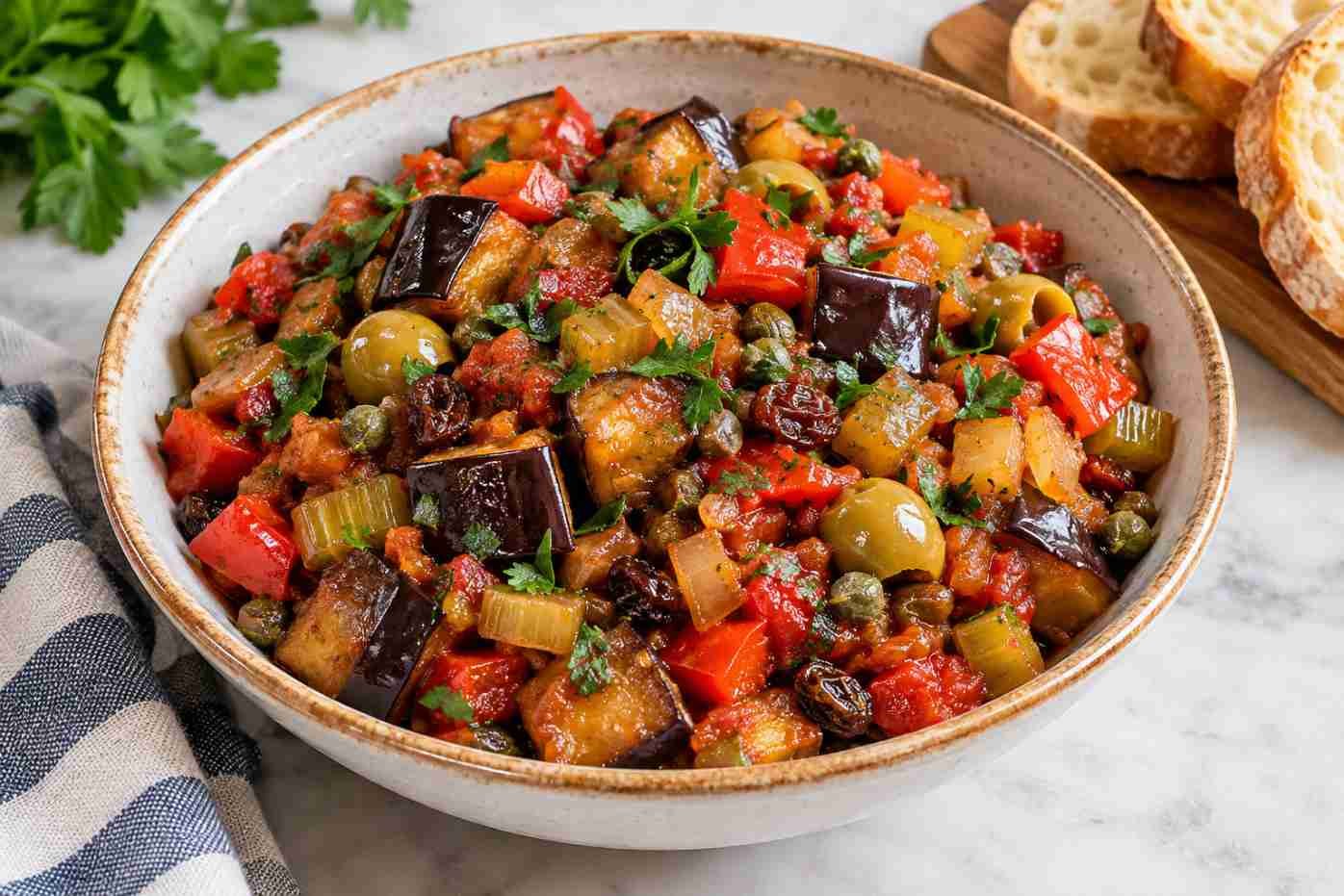
This caponata recipe is a delicious way to turn simple vegetables into a dish full of rich, balanced flavors. Made with eggplant, tomatoes, bell pepper, celery, olives, and capers, this traditional Sicilian dish brings together sweet, sour, salty, and slightly spicy tastes in every bite. Roasting the eggplant instead of deep-frying it gives the vegetables a golden finish while keeping the cooking process simple.
Caponata works well as an appetizer, a side dish, or a light meal. Serve it with toasted bread, spoon it over pasta, or enjoy it alongside grilled vegetables and your favorite main course. It can also be prepared ahead of time, making it a useful recipe when you want something flavorful without spending the whole day in the kitchen.
What Is Caponata?
Caponata is a traditional Sicilian vegetable dish from southern Italy. Eggplant is its main ingredient, usually cooked with tomatoes, onions, celery, olives, capers, and vinegar. Many versions also include raisins or a little sugar to balance the sharpness of the vinegar and the salty flavor of the olives.
The sweet-and-sour balance is known in Italian as agrodolce. Recipes differ between regions and families, so there is no single version that represents every Sicilian kitchen. Some cooks fry the eggplant, while others roast it. This recipe uses roasted eggplant for a golden texture and a simpler cooking method.
Caponata Recipe Details
| Recipe Information | Details |
|---|---|
| Preparation Time | 20 minutes |
| Cooking Time | 40 minutes |
| Total Time | About 1 hour |
| Servings | 6 side servings |
| Cuisine | Sicilian, Italian |
| Course | Appetizer or side dish |
| Cooking Method | Roasting and simmering |
| Dietary Notes | Vegetarian; can be made vegan and gluten-free |
Ingredients for Caponata
These ingredients create a balanced caponata with tender eggplant, a rich tomato base, and a pleasant mix of sweet and tangy flavors. Use fresh vegetables and good-quality olive oil for the best result.
| Ingredient | Quantity |
|---|---|
| Eggplant | 1 large, about 1¾ pounds, cut into 1-inch cubes |
| Extra-virgin olive oil | 4 tablespoons, divided |
| Fine salt | ½ teaspoon, or to taste |
| Yellow onion | 1 medium, chopped |
| Red bell pepper | 1, chopped |
| Celery | 2 stalks, thinly sliced |
| Garlic | 2 cloves, minced |
| Crushed tomatoes | 1 can (14 ounces), preferably fire-roasted |
| Green olives | ¼ cup, pitted and roughly chopped |
| Raisins | ¼ cup, red or golden |
| Red wine vinegar | 3 tablespoons, or to taste |
| Capers | 2 tablespoons, drained |
| Honey or sugar | 1 tablespoon |
| Red pepper flakes | ¼ teaspoon, or to taste |
| Bay leaf | 1 |
| Fresh herbs | ¼ cup chopped parsley, mint, basil, or a combination |
| Black pepper | To taste |
| Toasted bread or crostini | Optional, for serving |
Also Read: Vegetarian Succotash
How to Make Caponata
Step 1: Prepare the Eggplant
Preheat your oven to 425°F (220°C). Line a large baking tray with parchment paper. Place the cubed eggplant on the tray, sprinkle with ¼ teaspoon of salt, and drizzle with 3 tablespoons of olive oil. Toss until the pieces are lightly coated. Spread them in a single layer so they roast rather than steam.
Roast for 30–35 minutes, stirring halfway through, until the eggplant is tender and golden brown. The edges should have a little color, but the pieces should still hold their shape.
Step 2: Cook the Onion, Pepper, and Celery
While the eggplant roasts, heat the remaining tablespoon of olive oil in a large, heavy-bottomed saucepan over medium heat. Add the chopped onion, red bell pepper, and sliced celery. Season with the remaining salt and a little black pepper.
Cook for about 9–12 minutes, stirring regularly, until the vegetables soften and the onion begins to turn golden. Taking time at this stage helps develop a deeper flavor in the finished dish.
Step 3: Add Garlic and Tomatoes
Add the minced garlic to the pan and cook for about 30 seconds, just until fragrant. Avoid letting it brown too much, as burnt garlic can make the sauce taste bitter. Stir in the crushed tomatoes and mix well with the vegetables.
Step 4: Add the Sweet and Tangy Ingredients
Add the chopped green olives, raisins, red wine vinegar, capers, honey or sugar, red pepper flakes, and bay leaf. Stir everything together until the ingredients are evenly distributed.
Reduce the heat to medium-low and let the mixture simmer for about 10 minutes. Stir occasionally so the sauce cooks evenly and does not stick to the bottom of the pan. The raisins add little pockets of sweetness, while the olives, capers, and vinegar give the sauce its characteristic sharp flavor.
Step 5: Combine the Roasted Eggplant
Remove the bay leaf and discard it. Gently fold the roasted eggplant into the tomato mixture. Cook for another 2–3 minutes, allowing the eggplant to absorb some of the sauce without becoming completely mushy.
Stir in most of the chopped fresh herbs, keeping a small amount aside for garnish. Remove the saucepan from the heat.
Step 6: Adjust the Flavor
Taste the caponata before serving. If it tastes too sweet, add a little more vinegar. If it is too sharp, add a small amount of honey or sugar. For more heat, add a pinch of red pepper flakes. Add salt carefully because olives and capers already contribute plenty of saltiness.
The goal is a balanced mixture in which no single flavor completely overpowers the others. Finish with the reserved fresh herbs.
Step 7: Rest and Serve
Let the caponata rest for about an hour at room temperature, or refrigerate it for a few hours to allow the flavors to develop. If possible, prepare it a day ahead for an even more blended taste.
Serve it warm or at room temperature, with toasted bread or crostini if desired. It can also be served chilled, depending on your preference.
What You Can Do Better
A few small changes can make your homemade caponata taste better without making the recipe more complicated.
- Roast the eggplant until golden: Do not remove it from the oven as soon as it becomes soft. A little browning adds a deeper, richer flavor to the finished dish.
- Cut the vegetables evenly: Similar-sized pieces cook at a more consistent rate and make the final dish easier to serve.
- Balance the vinegar carefully: Add the vinegar as directed, then adjust it after cooking. The right amount should brighten the tomatoes without making the whole dish taste sour.
- Choose flavorful olives: Good-quality green olives add a pleasant salty, savory taste. Remember that different varieties vary in saltiness, so adjust the added salt accordingly.
- Give it time to rest: Caponata often tastes even better after several hours in the refrigerator because the flavors have more time to blend.
- Use fresh herbs at the end: Parsley, basil, and mint add freshness. Stir some in at the end and save a little for serving.
- Avoid overcooking the eggplant in the sauce: Roast it separately and fold it in near the end. This helps the pieces keep their shape.
- Adjust the sweetness to your taste: Raisins already provide sweetness, so start with the suggested amount of honey or sugar and add more only if needed.
Also Read: Ultimate Veggie Pizza
Tips and Easy Variations
Make It Vegan
Replace the honey with sugar. Check the labels on packaged ingredients if you need to make sure every ingredient meets your dietary requirements.
Make It Gluten-Free
The caponata itself is naturally gluten-free when made with suitable ingredients. Serve it with gluten-free crackers or bread instead of regular crostini.
Try Other Vegetables
You can add chopped zucchini, yellow squash, or a little carrot to the vegetable mixture. Keep the eggplant and tomatoes as the main ingredients so the dish retains its familiar character.
Leave Out the Raisins
If you prefer a less sweet caponata, skip the raisins. You can also reduce the honey or sugar. Taste the sauce before making further adjustments.
Add Pine Nuts
Sprinkle toasted pine nuts over the finished dish for a little crunch. Add them just before serving so they retain their texture.
How to Serve Caponata
Caponata is versatile enough for casual meals and special gatherings. Its bold flavor works well with simple dishes that do not compete with the vegetables.
- With toasted bread: Spoon caponata onto crostini, crusty bread, or sturdy crackers for an easy appetizer.
- Alongside a main course: Serve it with grilled vegetables, fish, or other savory dishes as a flavorful side.
- With pasta: Toss a few spoonfuls through warm pasta for a simple vegetable-based meal.
- In sandwiches: Use it as a filling or topping with crusty bread and fresh greens.
- On a sharing platter: Serve it alongside olives, cheese, crackers, and other small bites.
- With salads: Pair it with a fresh tomato salad or leafy greens to balance its rich, tangy flavor.
Also Read: Roasted Pumpkin Seeds
How to Store Caponata
Allow the caponata to cool before transferring it to a clean, airtight container. Refrigerate it promptly and keep it chilled. For the best quality, use it within about 4–5 days.
You can enjoy leftovers cold, bring them to room temperature before serving, or warm them gently in a saucepan. If the mixture seems thick after refrigeration, stir it well before serving.
For longer storage, freeze the cooled caponata in a freezer-safe container, leaving a little space at the top. Use it within about 2–3 months for good quality. Thaw it in the refrigerator and reheat gently. The texture of the eggplant may soften slightly after freezing.
Nutritional Information
The following values are estimates for one serving when the recipe is divided into six portions. Actual nutrition will vary depending on the size of the vegetables, the amount of oil used, the brands of canned tomatoes and olives, and any changes you make to the ingredients.
| Nutrient | Estimated Amount per Serving |
|---|---|
| Calories | 190–220 kcal |
| Carbohydrates | 24–28 g |
| Protein | 3–4 g |
| Total Fat | 10–12 g |
| Dietary Fiber | 6–8 g |
| Sugars | 14–17 g |
| Sodium | 450–650 mg |
Nutrition note: These figures are approximate and have not been laboratory-tested. They are intended as a general guide, not as medical or dietary advice. Serving the caponata with bread, crackers, or other accompaniments will increase the total nutritional values of the meal.
Also Read: Creamy Golden Milk
Frequently Asked Questions
Can I Make Caponata Ahead of Time?
Yes. Caponata is well suited to make-ahead cooking. Prepare it a few hours before serving and refrigerate it once cooled. Letting it rest gives the sweet, sour, and savory flavors more time to come together.
Should Caponata Be Served Hot or Cold?
You can serve caponata warm, at room temperature, or chilled. Many people prefer it at room temperature because the flavors are easier to appreciate without the dish being too hot or too cold.
Why Does Caponata Taste Sweet and Sour?
The sweet-and-sour taste comes from the balance of vinegar with ingredients such as raisins and honey or sugar. This combination is called agrodolce in Italian. You can adjust the balance to suit your preference.
Can I Use Fresh Tomatoes Instead of Canned Tomatoes?
Yes. Use ripe, chopped tomatoes and cook the sauce until they soften and release their juices. The cooking time may vary depending on how juicy the tomatoes are. Canned crushed tomatoes are convenient and provide a consistent sauce.
Do I Need to Salt the Eggplant Before Cooking?
No. For this recipe, you can season the eggplant and roast it directly. Roasting helps it develop a golden exterior and tender center without requiring a separate salting and draining step.
Can I Make Caponata Without Capers?
Yes, although capers contribute a distinctive tangy, salty flavor. If you leave them out, taste the finished dish and adjust the vinegar and seasoning as needed.
Is Caponata a Main Dish or a Side Dish?
Caponata is commonly served as an appetizer or side dish, but you can also enjoy it as a light meal. Serve it with bread, pasta, or another accompaniment if you want a more filling option.