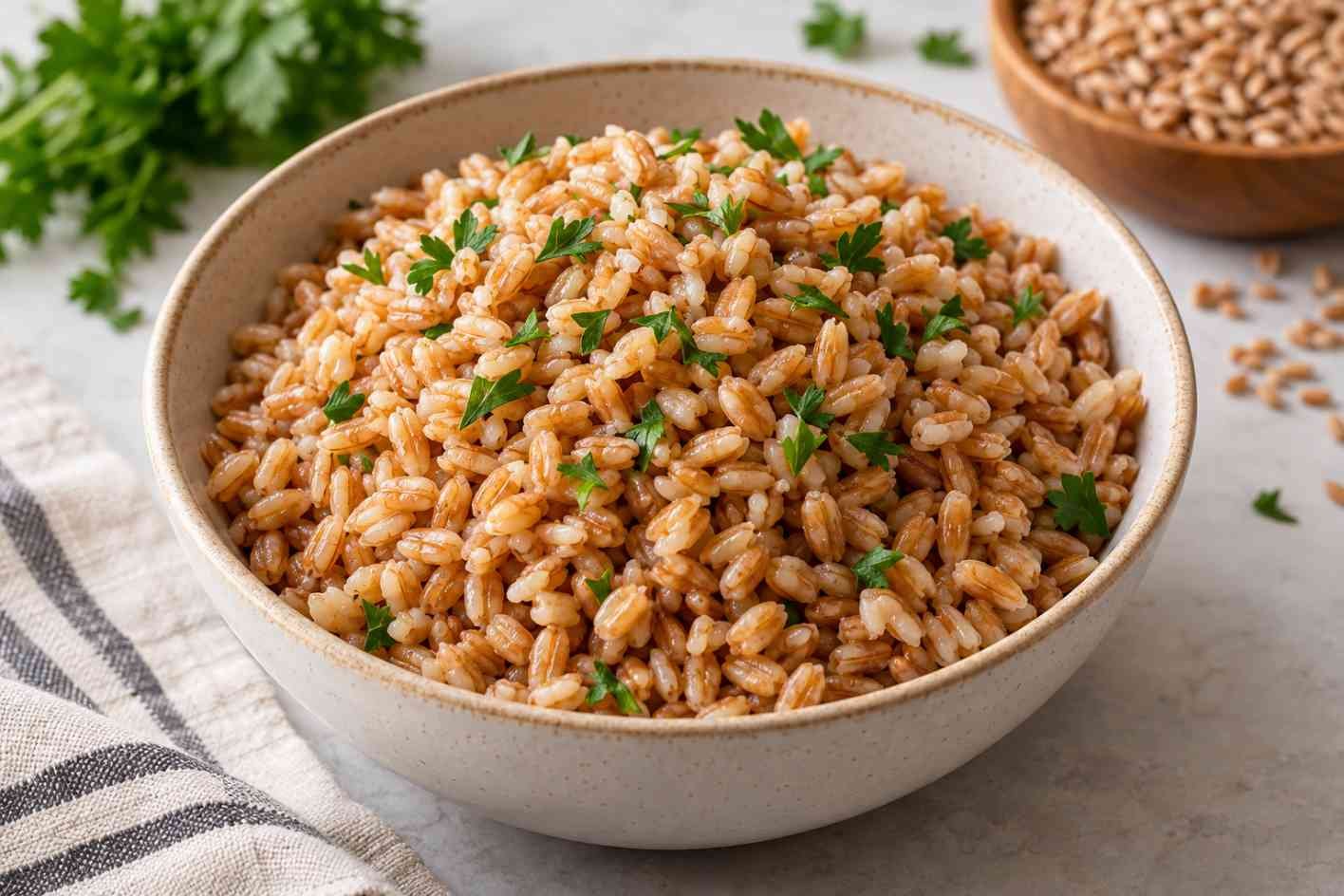
Farro is a hearty whole grain with a nutty flavor and a pleasantly chewy texture. It is a great alternative to rice, quinoa, or pasta when you want something a little different on your plate. Once cooked, farro works well in fresh salads, warm grain bowls, soups, and simple side dishes.
The good news is that cooking farro does not require any special equipment or complicated steps. The easiest method is to boil it in salted water until the grains are tender but still slightly chewy, then drain the excess water. The cooking time depends on the type of farro you buy, but with a little attention, it is easy to get the texture right.
What Is Farro?
Farro is an ancient wheat grain that has been used in cooking for thousands of years. It is especially popular in Italian cuisine, where it is served in soups, salads, and rustic grain dishes. Farro has a mild, earthy taste with a nutty flavor that pairs well with vegetables, herbs, cheese, beans, and roasted meats.
Farro is sold in three main forms: whole grain, semi-pearled, and pearled. Whole-grain farro retains its outer bran and usually takes the longest to cook. Semi-pearled farro has some of the bran removed, while pearled farro has most or all of it removed and cooks more quickly.
One important thing to remember is that farro is a type of wheat, so it contains gluten and is not suitable for people who need to avoid gluten completely.
How to Cook Farro: Recipe at a Glance
| Recipe Detail | Information |
|---|---|
| Preparation Time | 5 minutes |
| Cooking Time | 15–40 minutes, depending on the type |
| Total Time | 20–45 minutes |
| Servings | About 3 cups cooked farro |
| Cooking Method | Stovetop |
| Main Ingredients | Farro, water, and salt |
| Dietary Information | Vegan when prepared without optional animal-based additions |
Ingredients for Cooking Farro
You only need a few basic ingredients to prepare a simple batch of farro. Olive oil and garlic are optional, but they add extra flavor if you plan to serve the grains as a side dish.
- 1 cup dry farro: Choose whole-grain, semi-pearled, or pearled farro. Check the package for any specific cooking instructions.
- 4 cups water: Use enough water to cover the grains generously while they cook. You may need a little more for a large saucepan.
- 1/4 teaspoon salt: Add it to the cooking water and adjust the seasoning to taste.
- 1 teaspoon extra-virgin olive oil (optional): Adds a smooth, savory finish.
- 1 small garlic clove, minced or pressed (optional): Gives the cooked farro a little extra flavor.
Also Read: Vanilla Pear Holiday Punch
How to Make Farro on the Stove
Step 1: Rinse the Farro
Place the dry farro in a fine-mesh strainer and rinse it under cool running water. Move the grains around with your fingers to remove any dust or loose residue. Let the excess water drain before cooking.
Step 2: Bring the Water to a Boil
Add the rinsed farro to a medium saucepan with about 4 cups of water and the salt. Make sure there is enough water to cover the grains by several inches. Bring everything to a boil over medium-high heat.
You can use vegetable broth instead of water if you want a deeper, savory flavor. Just keep in mind that broth may already contain salt, so adjust the seasoning accordingly.
Step 3: Simmer Until Tender
Once the water begins to boil, reduce the heat to maintain a gentle simmer. Cook the farro uncovered, stirring occasionally so the grains cook evenly.
Pearled farro may be ready in about 15 minutes, while semi-pearled and whole-grain varieties can take around 25–40 minutes. Cooking times vary by brand and grain size, so begin tasting the farro before the expected finish time.
The grains should be tender enough to bite through but still have a pleasant chew. If they are hard in the center, continue cooking for a few more minutes.
Step 4: Drain the Excess Water
When the farro reaches your preferred texture, pour it into a fine-mesh strainer or colander to remove the remaining water. Let it drain well for a minute or two.
This method is similar to cooking pasta, and it is useful because you do not have to measure the water perfectly or worry about the pan drying out before the grains are ready.
Step 5: Add Flavor and Serve
Return the drained farro to the saucepan while it is still warm. Stir in a little olive oil and minced garlic if desired. Taste and add more salt or freshly ground black pepper as needed.
Your farro is now ready to serve. Enjoy it warm as a side dish, let it cool for a salad, or add it to a grain bowl with vegetables and your favorite dressing.
Also Read: Apple Fritter Cake
How Long Does Farro Take to Cook?
The cooking time depends mainly on how much of the grain’s outer bran has been removed. Use the following table as a starting point, then check the package instructions and taste the grains as they cook.
| Type of Farro | Approximate Cooking Time | Texture |
|---|---|---|
| Pearled farro | About 15 minutes | Soft with a light chew |
| Semi-pearled farro | About 20–30 minutes | Tender and chewy |
| Whole-grain farro | About 25–40 minutes or longer | Firm, hearty, and chewy |
These times are estimates, not strict rules. Some whole-grain varieties may take longer, especially if they have not been soaked. If the package gives a different cooking time, use it as your guide and check for doneness as you go.
What You Can Do Better
A few small adjustments can make a noticeable difference in the flavor and texture of cooked farro. Here are some practical ways to improve the results.
- Salt the water: Farro has a naturally mild flavor, so salting the cooking water helps season the grains from the inside.
- Do not guess the cooking time: Start checking the grains early, especially if you are using pearled farro. Remove them from the heat when they are tender but not mushy.
- Toast the dry grains for extra flavor: Before adding water, toast the dry farro in a saucepan with a small amount of olive oil for a few minutes, stirring often. It should smell nutty. If you rinse it first, drain it very well and dry it before toasting to avoid excess splattering.
- Use broth when it suits the dish: Vegetable broth adds flavor to farro that will be served on its own or with roasted vegetables.
- Season while the grains are warm: Warm farro absorbs flavors well. Try olive oil, lemon juice, garlic, parsley, or a little grated Parmesan if it fits your meal.
- Cook extra for later: A larger batch saves time during the week. Refrigerate what you will use soon and freeze the rest in meal-sized portions.
Also Read: Simple Strawberry Smoothie
How to Use Cooked Farro
Once you have a batch of cooked farro ready, there are plenty of ways to use it. Its chewy texture holds up well in both warm and cold dishes.
- Farro salad: Toss cooled farro with cucumber, tomatoes, red onion, fresh herbs, and a lemon-olive oil dressing.
- Grain bowls: Combine warm farro with roasted vegetables, chickpeas, leafy greens, and tahini or yogurt dressing.
- Soups and stews: Stir cooked farro into vegetable soup or bean stew for a heartier meal.
- Simple side dish: Serve it with roasted vegetables, grilled chicken, fish, or tofu.
- Herbed farro: Mix warm grains with olive oil, lemon zest, parsley, and black pepper for a fresh, simple side.
How to Store Cooked Farro
Allow leftover farro to cool, then transfer it to an airtight container. Keep it in the refrigerator and use it within 3–4 days. If you are making farro ahead for meal prep, divide it into smaller portions so you can take out only what you need.
For longer storage, freeze cooked farro in airtight, freezer-safe containers or bags for up to 3 months for best quality. Thaw it in the refrigerator or reheat it directly from frozen with a small splash of water. Heat until steaming hot, stirring as needed.
Nutritional Information for Farro
Farro provides carbohydrates for energy, along with plant-based protein, fiber, and minerals such as iron and magnesium. Its exact nutritional value depends on the variety, processing method, and serving size.
The table below gives approximate values for 1 cup of cooked farro, prepared with water and without optional oil or other toppings. These figures are estimates and can vary by product.
| Nutrient | Approximate Amount per Cup Cooked |
|---|---|
| Calories | 200–220 kcal |
| Carbohydrates | 40–45 g |
| Protein | 7–8 g |
| Dietary Fiber | 5–7 g |
| Total Fat | 1–2 g |
| Iron | Varies by variety and brand |
| Magnesium | Varies by variety and brand |
Nutrition note: These values are general estimates, not laboratory-tested nutrition facts for this specific recipe. Check the packaging for the most accurate information, particularly if you are tracking calories, carbohydrates, or fiber. Adding olive oil, cheese, broth, or other ingredients will also change the final nutrition values.
Also Read: Caprese Sandwich
Frequently Asked Questions
Do I need to soak farro before cooking it?
No, soaking is not always necessary. Most pearled farro can be cooked without soaking. Whole-grain farro may take longer, and soaking it beforehand can help shorten the cooking time. Check the package for specific directions.
What is the best water-to-farro ratio?
For the stovetop method described here, use about 4 cups of water for 1 cup of dry farro and drain any excess when the grains are tender. This approach is forgiving because the grains can cook for longer without the pan running dry. If you use an absorption method, follow the water ratio recommended for your particular variety.
How do I know when farro is done?
Taste a few grains. Properly cooked farro should be tender enough to chew comfortably while retaining a slight firmness. It should not have a hard, crunchy center or fall apart into mush.
Can I cook farro in vegetable broth?
Yes. Vegetable broth adds a savory flavor and works especially well when farro is served as a side dish or used in grain bowls. Taste before adding extra salt because some broths are already salty.
Is farro gluten-free?
No. Farro is a type of wheat and contains gluten. It is not suitable for people with celiac disease or those who need to avoid gluten completely.
Can I make farro ahead of time?
Yes. Cooked farro keeps well in the refrigerator for about 3–4 days when stored in an airtight container. You can also freeze it in portions for convenient meals later.
Does farro expand when cooked?
Yes. One cup of dry farro generally yields around 2½–3 cups of cooked grains, although the final amount depends on the type of farro and how long it cooks.