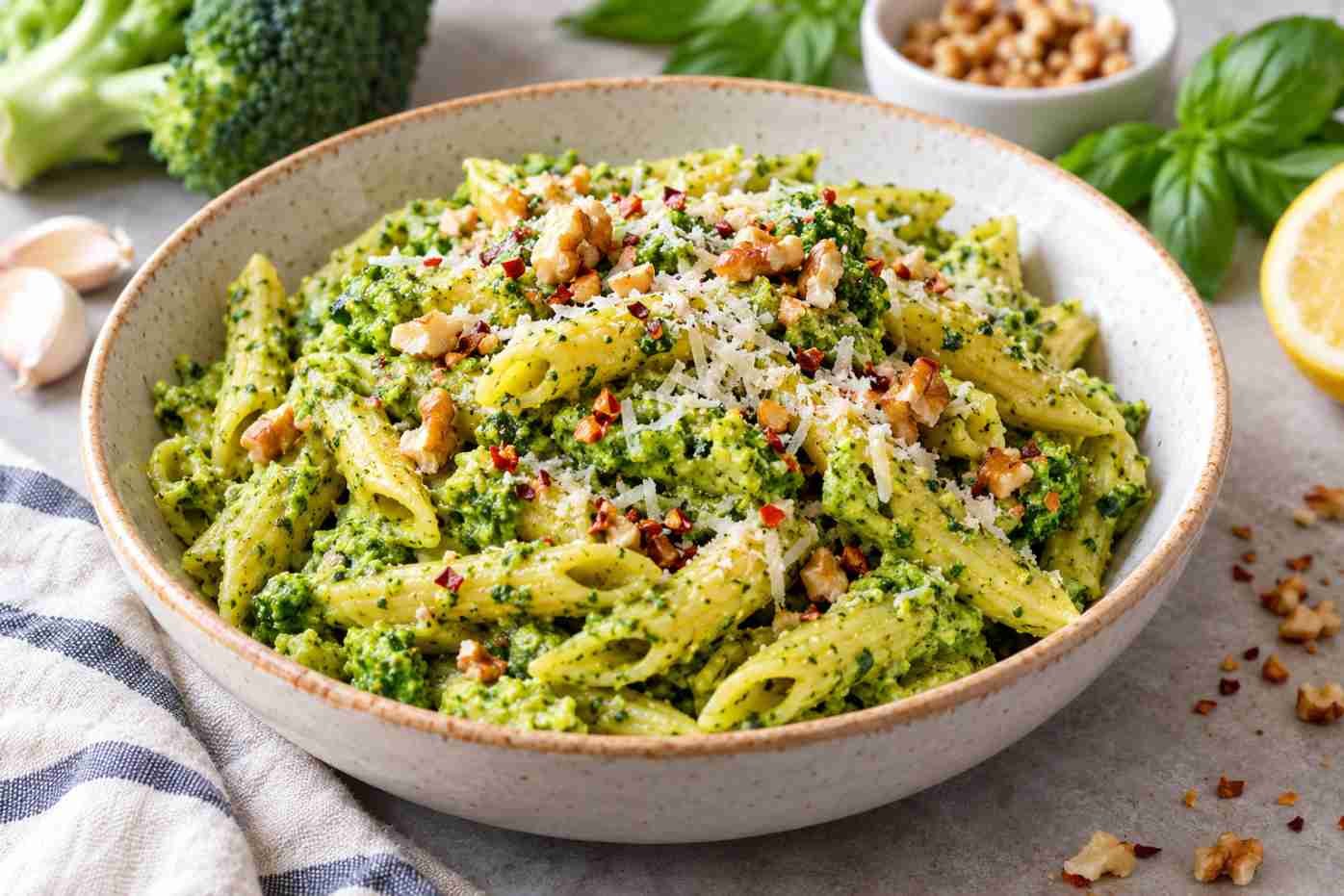
Broccoli pesto pasta is a simple, flavorful meal that brings together tender pasta, fresh broccoli, garlic, lemon, and a rich homemade pesto sauce. Instead of relying only on basil for its green color and flavor, this recipe uses broccoli as the main ingredient in the sauce. A handful of nuts, Parmesan cheese, and extra-virgin olive oil give it a satisfying texture, while lemon juice keeps the flavors fresh.
This recipe is a good choice for busy weeknights when you want something comforting without spending too much time in the kitchen. The broccoli cooks quickly, and you can use the same pot of water for the pasta to save time and washing up. The finished dish is creamy without needing heavy cream, and it works well as both a main meal and a side dish.
Broccoli Pesto Pasta Recipe at a Glance
| Recipe Detail | Information |
|---|---|
| Preparation Time | 10 minutes |
| Cooking Time | 15 minutes |
| Total Time | 25 minutes |
| Servings | 4 |
| Course | Main Course |
| Cuisine | Italian-inspired |
| Cooking Method | Boiling and blending |
| Difficulty | Easy |
Ingredients for Broccoli Pesto Pasta
The ingredients are easy to find in most grocery stores. Fresh broccoli creates the base of the sauce, while basil, nuts, cheese, and lemon help give the pesto its familiar savory flavor.
For the Pasta
- 8 ounces (225 g) pasta, such as fusilli, penne, rotini, or spaghetti
- 1 medium head of broccoli, cut into small florets (about 3 to 4 cups)
- Salt, for the cooking water
- 1/2 cup reserved pasta cooking water, as needed
For the Broccoli Pesto
- 1 cup fresh basil leaves, lightly packed
- 1/3 cup walnuts, almonds, or pine nuts
- 1/3 cup freshly grated Parmesan cheese
- 1/4 cup extra-virgin olive oil
- 2 garlic cloves, peeled
- 1 tablespoon fresh lemon juice
- 1/2 teaspoon salt, or to taste
- 1/4 teaspoon freshly ground black pepper
Optional Toppings
- Extra grated Parmesan cheese
- A small handful of toasted nuts
- Red pepper flakes for a little heat
- A small drizzle of olive oil
Also Read: Roasted Cauliflower Steak
How to Make Broccoli Pesto Pasta
Step 1: Prepare the Broccoli
Bring a large pot of salted water to a boil. Add the broccoli florets and cook for about 3 to 4 minutes, until they become bright green and tender enough to blend easily. Avoid cooking them for too long, as overcooked broccoli can lose its fresh flavor and color.
Remove the broccoli with a slotted spoon and let excess water drain away. Keep the cooking water in the pot because you will use it to cook the pasta next.
Step 2: Cook the Pasta
Return the broccoli cooking water to a boil and add the pasta. Cook according to the package instructions until al dente, which means the pasta should be tender but still have a slight bite.
Before draining, reserve at least half a cup of pasta water. This starchy water helps loosen the pesto and allows it to coat the pasta evenly. Drain the pasta and set it aside.
Step 3: Toast the Nuts
Place the walnuts, almonds, or pine nuts in a dry skillet over medium-low heat. Toast them for about 2 to 4 minutes, stirring frequently until they smell nutty and become lightly golden.
Keep an eye on them because nuts can burn quickly. Transfer them to a plate and allow them to cool slightly before blending.
Step 4: Make the Broccoli Pesto
Add the cooked broccoli, fresh basil, toasted nuts, Parmesan cheese, garlic, lemon juice, salt, and black pepper to a food processor or blender. Pulse a few times to break down the ingredients.
With the machine running, gradually pour in the olive oil. Blend until the mixture becomes a thick, green sauce. It does not need to be completely smooth; a little texture from the nuts and broccoli makes the pesto more interesting.
If the sauce looks too thick, add one or two tablespoons of reserved pasta water and blend again. Taste the pesto and adjust the lemon juice, salt, or pepper as needed.
Step 5: Combine the Pasta and Pesto
Place the drained pasta in a large bowl or return it to the cooking pot with the heat switched off. Add the broccoli pesto and toss until the pasta is evenly coated.
Pour in the reserved pasta water a little at a time until the sauce reaches your preferred consistency. The warm pasta water helps the pesto cling to the noodles and creates a silky finish without adding cream.
Step 6: Garnish and Serve
Divide the broccoli pesto pasta between four bowls. Finish with extra Parmesan, toasted nuts, or a pinch of red pepper flakes if desired. Serve immediately while the pasta is warm and the sauce is fresh.
Also Read: Marry Me Chicken Pasta Recipe
What You Can Do Better
A few small changes can make a noticeable difference in the taste and texture of broccoli pesto pasta. The goal is to keep the broccoli fresh, bring out the flavor of the nuts, and make sure the sauce coats every piece of pasta.
1. Do Not Overcook the Broccoli
Cook the broccoli only until tender. If it becomes too soft or dull in color, the pesto may taste less fresh. Small florets cook more evenly and blend more easily than large pieces.
2. Toast the Nuts Before Blending
Toasting brings out the natural oils and nutty flavor of walnuts, almonds, and pine nuts. This simple step gives the pesto a deeper taste without requiring extra ingredients.
3. Use Pasta Water Instead of Extra Oil
It can be tempting to add more olive oil when the sauce seems thick, but reserved pasta water is often the better choice. Its starch helps bind the pesto to the pasta while keeping the sauce moist and smooth.
4. Balance the Sauce with Lemon
Broccoli, nuts, and Parmesan have rich, earthy flavors. Fresh lemon juice adds brightness and prevents the pesto from tasting too heavy. Start with the recommended amount and add a little more if needed.
5. Add the Pesto Away from Direct Heat
Once the pasta is cooked, toss it with the pesto after turning off the heat. This helps preserve the fresh basil flavor and prevents the cheese from becoming sticky or clumping together.
Tips for Ingredient Substitutions
| Ingredient | Possible Substitute | What to Expect |
|---|---|---|
| Walnuts or pine nuts | Almonds or pumpkin seeds | A slightly different nutty flavor and texture |
| Parmesan cheese | Vegetarian hard cheese or nutritional yeast | A cheesy flavor with an option for dairy-free cooking |
| Fresh basil | Baby spinach or a mixture of spinach and basil | A milder, greener sauce |
| Regular pasta | Whole-wheat or gluten-free pasta | A different texture and nutritional profile |
| Fresh garlic | Roasted garlic | A milder, sweeter garlic flavor |
Note: For a vegan version, omit the Parmesan and use nutritional yeast or a suitable vegan cheese. For a nut-free version, use pumpkin seeds only if they are safe for your dietary needs. Check pasta and cheese labels if you have food allergies or follow a strict gluten-free or vegetarian diet.
Also Read: Mini Meatloaf Recipe
How to Store and Reheat Broccoli Pesto Pasta
Allow leftover pasta to cool, then transfer it to an airtight container and refrigerate within two hours of cooking. For the best quality, eat it within 3 to 4 days.
To reheat, place the pasta in a skillet over low heat and add a splash of water. Stir gently until warmed through. You can also use a microwave, heating in short intervals and stirring between each interval. A little extra olive oil or water can help restore the sauce’s texture.
If you want to prepare the pesto ahead of time, store it separately in an airtight container in the refrigerator and use it within about 3 days for the best freshness. A thin layer of olive oil on top can help reduce contact with air. Freezing the pesto separately is also a practical option; thaw it in the refrigerator before use.
Nutritional Information
The following nutrition figures are estimates for one serving, assuming the recipe makes four servings and uses the listed ingredients. Actual values will vary depending on the pasta, nuts, cheese, and amount of oil used.
| Nutrient | Approximate Amount per Serving |
|---|---|
| Calories | 480 kcal |
| Protein | 15 g |
| Total Carbohydrates | 54 g |
| Dietary Fiber | 6 g |
| Total Fat | 23 g |
| Saturated Fat | 4 g |
| Total Sugars | 4 g |
| Sodium | Approximately 400–600 mg |
Nutrition disclaimer: These figures are estimates, not laboratory-tested values. Sodium levels can change considerably with the amount of salt in the cooking water, Parmesan cheese, and added seasoning.
Also Read: Alfredo Fettuccine Pasta Recipe
Frequently Asked Questions
Can I make broccoli pesto pasta without a food processor?
Yes. Use a blender, or finely chop the cooked broccoli, basil, nuts, and garlic with a knife. Mix everything with the cheese, lemon juice, and olive oil, then add pasta water until you get a sauce-like consistency. The texture will be chunkier, but the flavor will still be good.
Can I use frozen broccoli?
Yes. Frozen broccoli works well, especially when fresh broccoli is unavailable. Cook it until tender according to the package directions, drain it thoroughly, and let excess moisture escape before blending. Too much water can make the pesto thin.
Which pasta shape works best?
Fusilli, rotini, and penne are excellent choices because their shapes hold the sauce well. Spaghetti also works if you prefer long noodles. Choose a pasta shape you enjoy and cook it until al dente.
Is broccoli pesto pasta vegetarian?
It can be vegetarian, but traditional Parmesan may contain animal-derived rennet. Choose a cheese labeled vegetarian if that matters to you. The recipe can also be made vegan by replacing the Parmesan with nutritional yeast or vegan cheese.
Can I make the pesto in advance?
Yes. Prepare the pesto ahead of time and refrigerate it in a sealed container. For the freshest flavor, use it within about 3 days. Cook the pasta shortly before serving and loosen the pesto with warm pasta water when combining them.
How can I make the sauce creamier?
Blend the broccoli thoroughly and add reserved pasta water gradually while tossing the pasta. You can also add a little more Parmesan for richness. Heavy cream is not necessary to achieve a smooth, well-coated sauce.