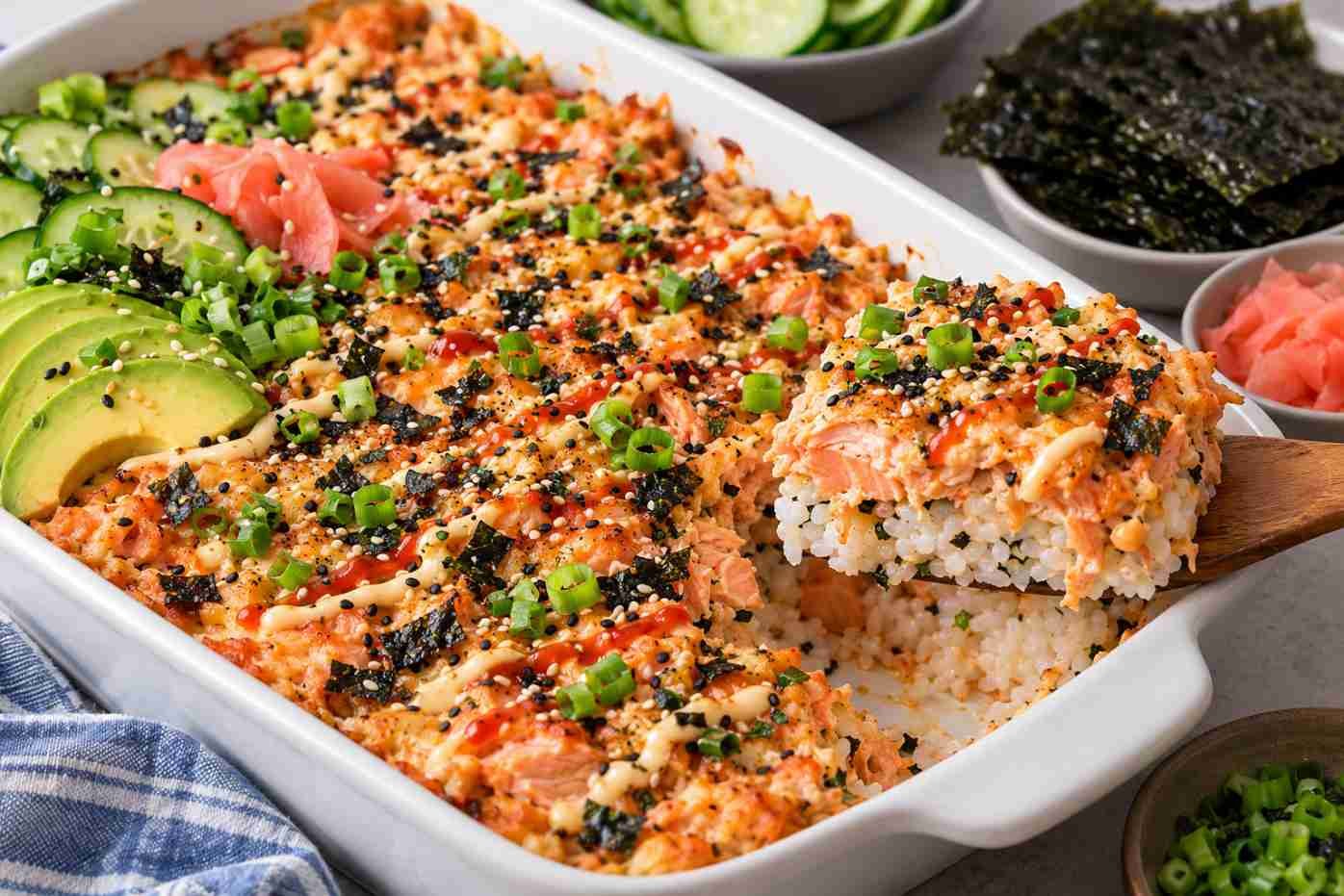
Salmon Sushi Bake brings the flavors of a salmon sushi roll to your dinner table without the need to roll individual pieces. It combines seasoned sushi rice, tender salmon, creamy mayonnaise, a little heat from sriracha, and savory Japanese-inspired seasonings in one baking dish. Once baked, it can be topped with fresh cucumber, avocado, and green onions, then scooped onto roasted seaweed sheets for serving.
This dish is a good choice for family dinners, casual gatherings, or a weekend meal when you want something different from the usual rice and fish. The rice forms a soft, slightly tangy base, while the salmon mixture adds richness and savory flavor. Fresh toppings provide a cool, crunchy contrast to the warm layers.
The best part is that you do not need special sushi-rolling skills. Prepare the rice, mix the salmon with its seasonings, layer everything in a baking dish, and let the oven bring it together.
Salmon Sushi Bake Recipe Overview
| Detail | Information |
|---|---|
| Recipe Name | Salmon Sushi Bake |
| Preparation Time | 20 minutes |
| Cooking Time | 30 minutes |
| Total Time | 50 minutes |
| Servings | 8 |
| Cooking Method | Baking |
| Main Ingredients | Salmon, sushi rice, mayonnaise, and seasonings |
| Difficulty | Easy |
| Serving Style | Warm, with seaweed sheets and fresh toppings |
Also Read: Veggie Sushi Bowl
Ingredients for Salmon Sushi Bake
The ingredients are divided into three groups so you can prepare each layer without missing anything. Short-grain sushi rice gives the base its familiar texture, while salmon and a creamy, spicy mixture create the main topping.
For the Sushi Rice
- 2 cups uncooked sushi rice
- 1/4 cup rice vinegar
- 2 tablespoons granulated sugar
- 1 teaspoon salt
For the Salmon Mixture
- 2 pounds salmon fillet
- 3/4 teaspoon salt
- 1/2 teaspoon freshly ground black pepper
- 1/2 cup Kewpie mayonnaise
- 2 tablespoons sriracha sauce, or adjust to taste
- 2 tablespoons soy sauce
- 2 teaspoons toasted sesame oil
- 3 green onions, thinly sliced
For Assembly and Serving
- 1/4 cup furikake seasoning, divided
- 1/2 English cucumber, thinly sliced or diced
- 2 green onions, thinly sliced
- 1 avocado, sliced or diced
- Pickled ginger, as desired
- Roasted nori or seaweed sheets, for serving
- Extra mayonnaise and sriracha, optional
Also Read: Sushi Bake Recipe
How to Make Salmon Sushi Bake
Step 1: Cook and Season the Rice
Rinse the sushi rice under cold running water until the water becomes mostly clear. This removes excess surface starch and helps the cooked grains hold a better texture. Cook the rice according to the package instructions.
In a small bowl, mix the rice vinegar, sugar, and salt until the sugar and salt dissolve. Pour the mixture over the warm rice and gently fold it in. Avoid crushing the grains. Set the seasoned rice aside while you prepare the salmon.
Step 2: Bake the Salmon
Preheat your oven to 400°F (200°C). Line a 9-by-13-inch baking dish with parchment paper and place the salmon fillet inside. Season it with salt and black pepper.
Bake for approximately 15 to 20 minutes, depending on the thickness of the fillet. The salmon should flake easily with a fork and reach a safe internal temperature of 145°F (63°C). Let it cool slightly before handling.
Step 3: Prepare the Creamy Salmon Mixture
Transfer the cooked salmon to a large bowl and remove the skin if necessary. Use a fork to break the fish into small flakes.
Add the Kewpie mayonnaise, sriracha, soy sauce, toasted sesame oil, and sliced green onions. Stir gently until the salmon is evenly coated. The mixture should be creamy and easy to spread without becoming completely smooth.
Taste a small amount and adjust the spice level if needed. If you prefer a milder dish, start with less sriracha and add more later.
Step 4: Layer the Rice and Salmon
Spread the seasoned rice evenly across the bottom of the prepared baking dish. Press it down gently with the back of a spoon so the layer is even.
Sprinkle half of the furikake seasoning over the rice. Spread the creamy salmon mixture on top, covering the rice from edge to edge. Finish by scattering the remaining furikake over the salmon.
These layers help give the dish its sushi-inspired flavor in every serving.
Step 5: Bake Until Hot
Return the assembled dish to the oven at 400°F (200°C) for about 10 minutes, or until the layers are heated through.
For a lightly browned top, switch the oven to broil for the final 1 to 2 minutes. Watch it closely because the surface can brown quickly. Remove the dish from the oven and allow it to rest briefly before adding the fresh toppings.
Step 6: Add Fresh Toppings and Serve
Scatter the cucumber and remaining green onions over the warm bake. Add sliced avocado and a little pickled ginger on the side. If you enjoy a richer or spicier finish, drizzle extra mayonnaise and sriracha over the top.
Serve warm with roasted nori sheets. Spoon a portion of the rice and salmon onto a seaweed sheet, fold it like a small hand roll, and enjoy. You can also serve individual portions in bowls with cucumber, avocado and seaweed on the side.
Also Read: Miso Salmon Rice Bowl Recipe
What You Can Do Better
A few small adjustments can make Salmon Sushi Bake easier to prepare and improve its flavor and texture.
1. Use the Right Rice
Short-grain sushi rice works best because it becomes slightly sticky without turning into a solid mass. Long-grain rice can work in a pinch, but the texture will be different. Rinse the rice well before cooking, and season it while it is still warm so the vinegar mixture spreads evenly.
2. Adjust the Spice to Your Taste
Two tablespoons of sriracha give the salmon a noticeable kick. For a milder family-friendly version, begin with one tablespoon. People who enjoy more heat can add extra sriracha at the table instead of making the entire dish spicy.
3. Keep the Salmon Tender
Avoid overbaking the salmon during the first stage. Thin fillets cook faster than thick ones, so start checking early. Flake the fish gently and mix it with the sauce only after cooking. This helps preserve some texture instead of turning the topping into a paste.
4. Add Fresh Toppings at the End
Cucumber and avocado are best added after baking. The cucumber stays crisp, and the avocado keeps its fresh flavor and color. If you add these ingredients before the final bake, they may soften too much.
5. Make It Ahead Without Losing Texture
You can cook the rice and prepare the salmon mixture up to one day ahead. Refrigerate them separately in covered containers, then assemble and bake when you are ready to eat. Allow extra heating time if the ingredients are cold.
6. Make Simple Substitutions
Kewpie mayonnaise gives the dish a rich, slightly sweet flavor, but regular mayonnaise also works. If you cannot find furikake, use a combination of toasted sesame seeds and finely crumbled roasted nori. Reduced-sodium soy sauce can help lower the salt content, although the final nutrition will depend on the brands and quantities used.
Also Read: Sushi Rice Recipe
Nutritional Information for Salmon Sushi Bake
Salmon provides protein and beneficial omega-3 fatty acids, while the rice supplies carbohydrates for energy. The mayonnaise and sesame oil contribute much of the dish’s fat, and soy sauce can contribute a substantial amount of sodium.
The following figures are approximate values for one serving of the recipe, divided into eight portions. Actual nutrition will vary with ingredient brands, portion sizes, and optional toppings.
| Nutrient | Approximate Amount per Serving |
|---|---|
| Calories | 458 kcal |
| Carbohydrates | 42 g |
| Protein | 27 g |
| Total Fat | 19 g |
| Saturated Fat | 3 g |
| Fiber | 2 g |
| Sugar | 4 g |
| Cholesterol | 68 mg |
| Sodium | 990 mg |
| Potassium | 659 mg |
| Calcium | 31 mg |
| Iron | 2 mg |
These estimates do not account for every optional topping or additional drizzle of mayonnaise and sriracha. For a lighter version, use less mayonnaise, measure the sesame oil carefully, and choose reduced-sodium soy sauce. Changing the ingredients will also change the nutritional values.
How to Store and Reheat Leftovers
Allow the food to cool slightly, then refrigerate leftovers promptly in airtight containers. For food safety, refrigerate cooked salmon and rice within two hours of cooking, and do not leave them sitting at room temperature for an extended period.
- Refrigerator: Store leftovers for 3 to 4 days. Keep fresh toppings separate when possible.
- Microwave: Heat an individual portion, loosely covered, until steaming hot throughout. A small splash of water over the rice can help prevent it from drying out.
- Oven: Cover the dish with foil and warm it at 350°F (175°C) until heated through. Add fresh toppings after reheating.
- Freezer: Freeze portions without fresh toppings for up to one month for best quality. Thaw in the refrigerator before reheating; the rice and creamy topping may change texture slightly.
If you prepare the salmon ahead of time, count its storage period from the day it was first cooked rather than starting a new storage period after assembling the bake.
Also Read: Poke Bowl Recipe
Frequently Asked Questions
Can I use regular mayonnaise instead of Kewpie mayonnaise?
Yes. Regular mayonnaise works well and gives the salmon mixture a creamy texture. Kewpie mayonnaise has a richer flavor and slight sweetness, but it is not essential to the recipe.
Can I make Salmon Sushi Bake less spicy?
Yes. Reduce the sriracha to one tablespoon or use less according to your taste. You can also leave out the extra spicy drizzle when serving.
What can I use instead of furikake?
Use toasted sesame seeds and finely crumbled roasted nori as a simple alternative. The flavor will be slightly different, but both ingredients add a savory finish.
How do I serve Salmon Sushi Bake?
Serve it warm with roasted seaweed sheets, cucumber, avocado, and pickled ginger. Scoop a little rice and salmon onto a sheet of nori and fold it before eating. You can also serve it in bowls.
Can I prepare Salmon Sushi Bake in advance?
Yes. Cook and season the rice and prepare the salmon mixture up to one day ahead. Keep both refrigerated in separate covered containers, then assemble and bake shortly before serving.
Is Salmon Sushi Bake healthy?
It can be part of a balanced meal because salmon supplies protein and omega-3 fats. However, mayonnaise, soy sauce, and the rice contribute calories, fat, carbohydrates, and sodium. Portion size and ingredient choices make a difference.