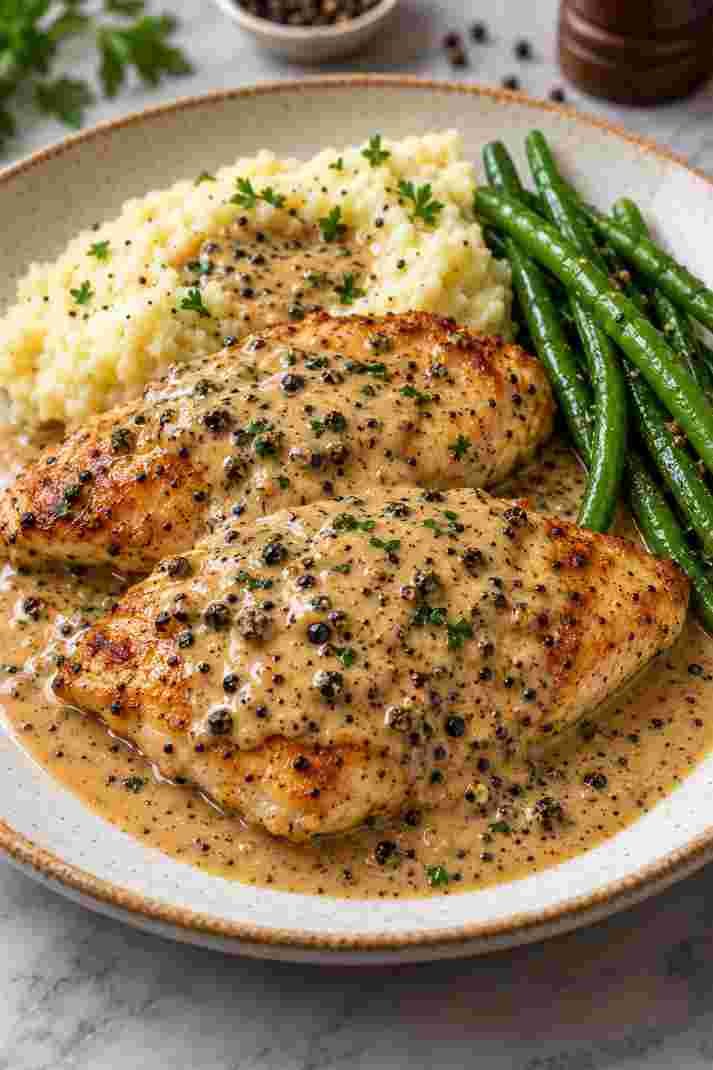
Chicken au Poivre is a simple French-inspired dinner built around golden pan-seared chicken and a rich, creamy black pepper sauce. The sauce has a deep savoury flavour from beef stock, a little warmth from crushed peppercorns, and a smooth finish from cream. It feels like something you would order at a cosy French bistro, but the whole dish comes together in one pan in about 30 minutes.
What Is Chicken au Poivre?
Chicken au Poivre is a chicken version of the classic French steak au poivre. Instead of steak, thin pieces of chicken are quickly seared until golden and then finished in a creamy peppercorn sauce. Traditionally, the sauce gets much of its character from cracked black pepper, brandy or cognac, and a rich stock.
The important part is the pepper. You want the peppercorns crushed into coarse pieces rather than ground into a fine powder. That gives the sauce little bursts of peppery heat without making the entire dish taste harsh.
Ingredients
For the Chicken
- 2 large boneless, skinless chicken breasts
- 3/4 teaspoon salt
- 2 tablespoons neutral cooking oil
For the Pepper Sauce
- 2 teaspoons whole black peppercorns, coarsely crushed
- 1/3 cup brandy or cognac
- 1 1/2 cups low-sodium beef stock
- 3/4 cup heavy cream
Also Read: Oven Roasted Sausage and Potatoes
How to Make Chicken au Poivre
1. Prepare the Chicken
Place the chicken breasts on a cutting board and carefully slice each one horizontally into two thinner pieces. This gives you four pieces that cook quickly and evenly. Season both sides with salt. There is no need to cover the chicken with black pepper at this stage because the sauce will provide plenty of peppery flavour later.
2. Sear Until Golden
Heat the oil in a large heavy skillet over medium-high to high heat. Once the oil is hot, add the chicken and cook for about 2 to 3 minutes on each side, or until the outside is nicely golden and the chicken is almost cooked through. Transfer the chicken to a plate and let it rest while you make the sauce.
3. Deglaze the Pan
Turn the heat off before adding the brandy or cognac. Carefully pour it into the hot pan. It will bubble vigorously, so take care while adding it. Scrape the browned bits from the bottom of the skillet as the liquid bubbles. Those browned pieces are packed with flavour and become part of the sauce.
4. Reduce the Beef Stock
Return the skillet to high heat and pour in the beef stock. Let it simmer rapidly for about 4 minutes, or until the liquid has reduced noticeably. The reduction gives the finished sauce a deeper, more concentrated flavour.
5. Add the Cream and Pepper
Stir in the heavy cream and coarsely crushed black peppercorns. Reduce the heat slightly and let the sauce simmer for another 3 to 4 minutes. Stir occasionally and scrape around the edges of the pan. The sauce should become thick enough to lightly coat the back of a spoon.
6. Finish the Chicken in the Sauce
Return the chicken and any juices that collected on the plate to the skillet. Lower the heat and gently simmer for another 2 to 3 minutes, spooning the sauce over the chicken as it warms through. The sauce should become glossy and slightly thicker.
7. Serve
Serve the chicken immediately while the sauce is warm and silky. Spoon plenty of the pepper sauce over each piece of chicken. Mashed potatoes, roasted potatoes, green beans, sautéed mushrooms, or crusty bread all work particularly well because they give you something to soak up the sauce.
Also Read: Pumpkin Spice Donuts
What You Can Do Better
- Crush the peppercorns yourself: Freshly crushed pepper has a much better aroma and texture than very finely ground pepper.
- Don’t overcrowd the pan: Give the chicken enough room to brown properly. If your skillet is small, cook the chicken in batches.
- Keep the browned bits: Don’t wash or wipe out the skillet after cooking the chicken. Those browned bits add valuable flavour to the sauce.
- Reduce before adding the cream: Allowing the beef stock to reduce first prevents the finished sauce from becoming thin and watery.
- Don’t overcook the chicken: Since the chicken goes back into the sauce at the end, it does not need to be completely cooked during the initial searing stage.
- Adjust the pepper: If you prefer a milder sauce, start with slightly less crushed pepper and add more at the end if needed.
- Watch the sauce closely: Cream sauces can thicken quickly. If yours becomes too thick, loosen it with a small splash of cream or beef stock.
Can You Use Chicken Thighs?
Yes. Boneless, skinless chicken thighs are an excellent alternative to chicken breast. They stay juicy and have a little more richness. For even cooking, lightly flatten thicker pieces before searing.
Also Read: Chicken and Potato Soup
Can You Make Chicken au Poivre Without Alcohol?
Yes. The brandy or cognac adds depth to the sauce, but you can leave it out if you prefer not to cook with alcohol. The sauce will still be creamy, peppery, and savoury. For a little extra depth, allow the beef stock to reduce well before adding the cream.
How to Crush Black Peppercorns
You don’t need special equipment. Place the peppercorns in a small bag and crush them with the bottom of a heavy pan or a rolling pin. The goal is a coarse, uneven texture rather than fine pepper powder. This gives the sauce a more interesting bite.
What to Serve With Chicken au Poivre
The creamy pepper sauce practically begs for potatoes. Mashed potatoes are an easy choice, while roasted potatoes give the meal a little more texture. Steamed or sautéed green beans add freshness, and sautéed mushrooms work especially well with the savoury sauce.
If you have some good crusty bread on hand, serve it alongside the chicken. It is an easy way to make sure none of that sauce is left behind.
Also Read: Chicken Stuffed Peppers
Storage and Reheating
Store leftover Chicken au Poivre in an airtight container in the refrigerator for up to 3 days. Reheat it gently over low heat rather than using very high heat, as the cream sauce can become too thick or separate. Add a small splash of beef stock or cream while reheating to bring the sauce back to a smooth consistency.
This dish is best enjoyed fresh and is not ideal for freezing because the creamy sauce can change texture after thawing.
Chicken au Poivre Nutrition
The following is an approximate nutritional estimate per serving, assuming the recipe makes four servings and does not include side dishes.
| Nutrient | Amount Per Serving |
|---|---|
| Calories | Approximately 440 kcal |
| Protein | Approximately 35 g |
| Carbohydrates | Approximately 3 g |
| Total Fat | Approximately 27 g |
| Saturated Fat | Approximately 12 g |
| Cholesterol | Approximately 146 mg |
| Sodium | Approximately 788 mg |
| Fiber | Approximately 1 g |
| Sugar | Approximately 1 g |
Nutritional values are estimates and can vary depending on the brands and exact quantities of ingredients used.
Chicken au Poivre Recipe at a Glance
| Details | Information |
|---|---|
| Prep Time | 10 minutes |
| Cook Time | 20 minutes |
| Total Time | About 30 minutes |
| Servings | 4 |
| Course | Main Course |
| Cuisine | French-inspired |
| Cooking Method | Stovetop |
Also Read: Banana Bread with Mayo
Frequently Asked Questions
What does au poivre mean?
Au poivre is a French expression associated with dishes prepared with pepper, particularly the classic steak au poivre served with a peppercorn sauce.
Is Chicken au Poivre spicy?
It has a noticeable peppery kick, but it is not the same kind of heat you get from fresh chillies. Using coarsely crushed black pepper gives the sauce warmth and aroma while the cream balances its intensity.
Can I use chicken stock instead of beef stock?
Yes, although beef stock gives the sauce a deeper and richer savoury character. Chicken stock will produce a lighter sauce and is a perfectly workable substitute.
Why is my pepper sauce too thick?
The sauce may have reduced a little too far. Stir in a small amount of cream or beef stock over low heat until it reaches a smooth, spoonable consistency.
Can I prepare Chicken au Poivre ahead of time?
You can prepare it ahead, but it is best reheated gently. Add a splash of cream or stock while warming the sauce and avoid boiling it aggressively.