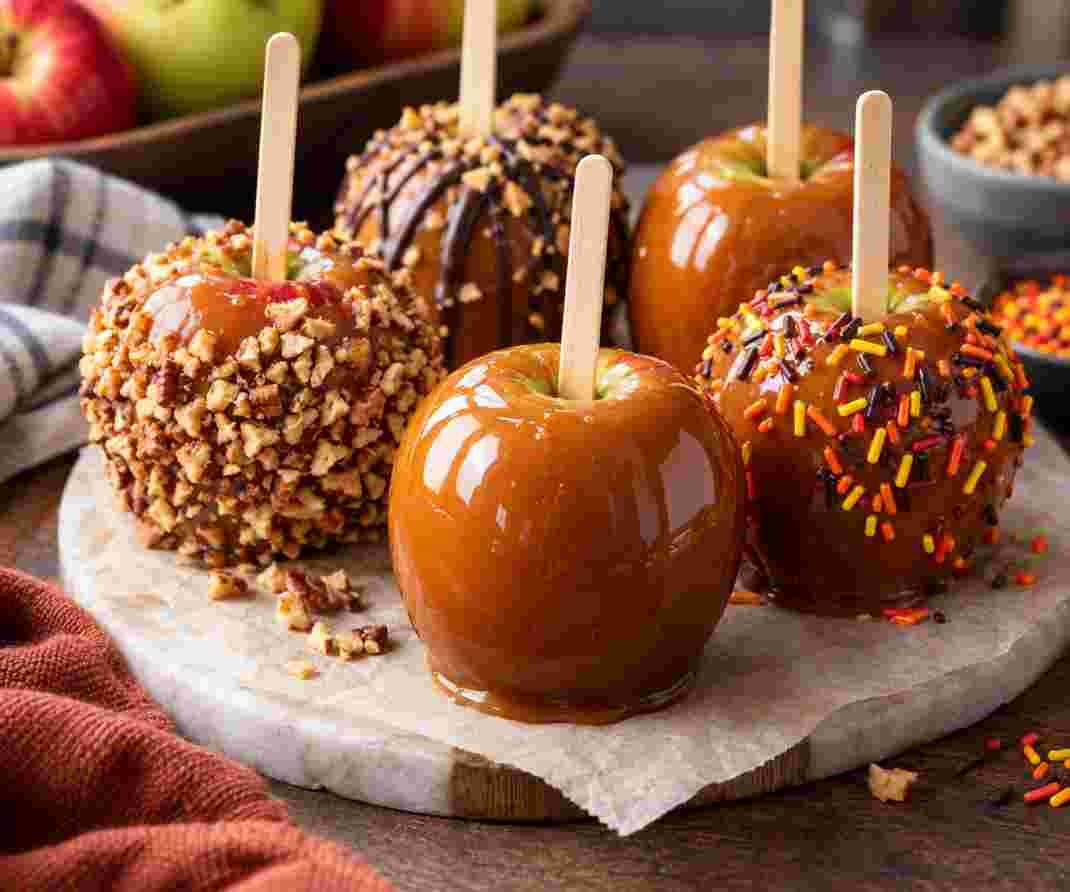
Homemade Caramel Apples are one of those treats that instantly feel like fall. Crisp, cold apples are dipped into warm, buttery caramel and left to set into a soft, chewy coating. They are sweet without being overly complicated, and you can finish them with chopped nuts, chocolate, sprinkles, or simply enjoy them plain. Making caramel from scratch takes a little attention, especially when checking the temperature, but the result is worth the extra effort.
Why Homemade Caramel Apples Are Worth Making
There is a noticeable difference between a homemade caramel coating and one made from melted caramel candies. A scratch-made caramel has a smoother texture and a richer buttery flavor, while the slight tartness of a crisp apple keeps the dessert from becoming one-note sweet. These apples also make a fun treat for Halloween parties, fall gatherings, school events, or homemade food gifts.
Ingredients
| Ingredient | Amount |
|---|---|
| Small to medium apples | 8–9 |
| Heavy cream | 1 3/4 cups |
| Light corn syrup | 1 cup |
| Brown sugar | 2 cups, packed |
| Unsalted butter | 1/4 cup, softened |
| Salt | 1/2 teaspoon |
| Pure vanilla extract | 1/2 teaspoon |
What Kind of Apples Work Best?
Choose firm apples that are small to medium in size and have smooth, unblemished skin. Granny Smith is a classic choice because its tart flavor contrasts beautifully with the sweet caramel, but Honeycrisp, Fuji, or another crisp apple can work just as well. The important thing is to keep the apples cold and completely dry before dipping them.
Also Read: Pineapple Upside Down Cake
How to Make Homemade Caramel Apples
1. Prepare the Apples
Wash the apples thoroughly and dry them very well. Any moisture or slippery residue on the surface can make it difficult for the caramel to grip the fruit. Remove the stems and push a sturdy caramel apple stick firmly into the top of each apple. Keep the prepared apples chilled while you make the caramel.
2. Prepare Your Baking Sheet
Line a large baking sheet with a silicone baking mat. This makes it much easier to remove the finished caramel apples once the coating has set. If you do not have a silicone mat, lightly grease the baking sheet with butter.
3. Cook the Caramel
Add the heavy cream, corn syrup, brown sugar, butter, and salt to a heavy-bottomed saucepan. Cook the mixture over medium heat, stirring until the butter has completely melted and everything is combined. Attach a candy thermometer to the saucepan, making sure the thermometer does not touch the bottom of the pan.
4. Bring the Caramel to the Right Temperature
Let the caramel cook until it reaches about 235°F to 240°F (113°C to 116°C). This temperature is important because caramel that is not cooked enough may slide off the apples, while caramel cooked too far can become overly firm. Cooking time can vary, so use the thermometer rather than the clock as your guide.
5. Add the Vanilla and Cool
Remove the saucepan from the heat and gently stir in the vanilla extract. Let the caramel cool for about 10 to 15 minutes. It should still be warm enough for dipping but thick enough to cling to the apples. If it looks too runny, give it a little more time to cool.
6. Dip the Apples
Hold an apple by the stick and dip it into the warm caramel, turning it gently until most of the apple is covered. Lift it out and allow the excess caramel to drip back into the pan. Place the coated apple on the prepared baking sheet. Repeat with the remaining apples.
7. Let Them Set
Allow the caramel apples to sit at room temperature for about 45 minutes, or until the coating has firmed up. Once set, they can be served immediately or wrapped individually for gifting.
Also Read: Caramel Sauce Recipe
What You Can Do Better
- Dry the apples completely: Moisture can prevent the caramel from sticking properly.
- Use a candy thermometer: Guessing the caramel temperature can leave you with a coating that is either too soft or too hard.
- Keep the apples cold: Chilled apples help the warm caramel set more quickly.
- Choose a heavy-bottomed pan: It helps distribute heat evenly and reduces the chance of scorching.
- Do not rush the cooling stage: Caramel that is too hot will run down the sides instead of forming a good coating.
- Dip lightly if preferred: A thinner caramel layer makes the apples easier to bite and lets more of the fresh apple flavor come through.
Fun Topping Ideas
Plain caramel apples are delicious, but this recipe is also an easy excuse to get creative. While the caramel is still soft, roll the apples in finely chopped peanuts, pecans, toasted coconut, crushed cookies, or toffee pieces. You can also let the caramel set and then drizzle the apples with melted chocolate before adding a few sprinkles.
Also Read: Baked Apples Recipe
How to Store Caramel Apples
For the best texture, caramel apples are best enjoyed the day they are made. Once the caramel has completely set, wrap individual apples in cellophane and keep them in a cool place. Avoid placing freshly dipped apples directly on parchment or wax paper because the caramel can stick to those surfaces. If you need to keep them longer, store them properly and allow them to come closer to room temperature before serving.
Recipe Details
| Prep Time | 10 minutes |
|---|---|
| Cook Time | 15–20 minutes |
| Cooling & Setting Time | About 45 minutes |
| Total Time | About 1 hour 15 minutes |
| Servings | 8–9 caramel apples |
| Course | Dessert |
| Method | Stovetop |
Nutrition Information
The nutrition below is an approximate estimate per caramel apple and can vary depending on the size of the apple and how much caramel remains on each one.
| Nutrient | Approximate Amount |
|---|---|
| Calories | 430–480 |
| Carbohydrates | 70–75g |
| Sugar | 60–65g |
| Fat | 15–18g |
| Saturated Fat | 9–11g |
| Protein | 2–3g |
| Fiber | 3–4g |
| Sodium | 150–200mg |
Also Read: Bread and Butter Pudding
Frequently Asked Questions
Why is my caramel sliding off the apples?
The most common reasons are moisture, waxy residue, apples that are too warm, or caramel that has not reached the proper temperature. Wash and dry the apples thoroughly, keep them cold, and use a candy thermometer when cooking the caramel.
Can I use different types of apples?
Yes. Granny Smith gives you the strongest sweet-and-tart contrast, but Honeycrisp, Fuji, and other firm, crisp apples are also excellent choices.
Can I add toppings to caramel apples?
Absolutely. Add chopped nuts, toffee, coconut, crushed cookies, sprinkles, or chocolate while the caramel is still soft so the toppings stick.
Do I need a candy thermometer?
A candy thermometer is strongly recommended. Caramel depends heavily on temperature, so a thermometer gives you a much more reliable result than trying to judge doneness by appearance alone.