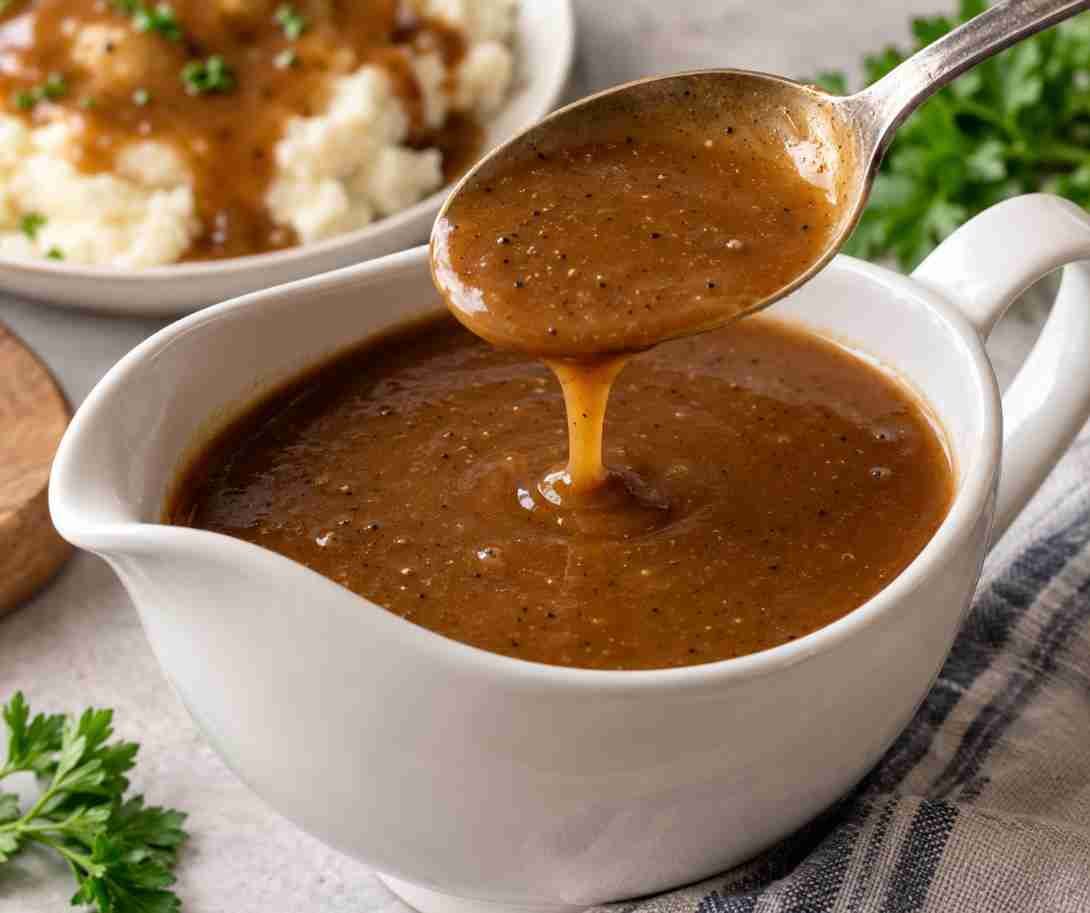
This easy brown gravy recipe is rich, savory, smooth, and ready in about 15 minutes. You do not need meat drippings to make it, which makes it a handy recipe when you want a comforting homemade sauce without waiting for a roast or chicken to finish cooking. Beef broth gives the gravy its deep flavor, while a little chicken broth keeps it balanced rather than overly heavy. It is especially good spooned over mashed potatoes, biscuits, roast meat, meatloaf, or a plate of crispy fries.
Brown Gravy Recipe at a Glance
| Detail | Information |
|---|---|
| Prep Time | 5 minutes |
| Cook Time | 10 minutes |
| Total Time | 15 minutes |
| Servings | About 4 |
| Yield | About 2¼ cups |
| Course | Sauce, Side Dish |
Ingredients
- 1 cup beef broth
- 1 cup chicken broth
- 1 beef bouillon cube or 1 teaspoon concentrated beef bouillon
- 1 teaspoon onion powder
- ½ teaspoon garlic powder
- 1½ teaspoons Worcestershire sauce
- 2 to 3 drops browning sauce, optional
- ¼ cup cold water
- 3 tablespoons cornstarch
- 1 tablespoon cold unsalted butter
Also Read: Hamburger Steak with Gravy
How to Make Brown Gravy
1. Combine the broth and seasonings
Pour the beef broth and chicken broth into a medium saucepan. Add the beef bouillon, onion powder, garlic powder, and Worcestershire sauce. Whisk everything together and place the saucepan over medium-high heat.
2. Add browning sauce if desired
If you want a darker, more traditional brown color, add a couple of drops of browning sauce. Go slowly here because a little is enough. It is mainly useful for color, while the broth and seasonings provide the actual flavor.
3. Make the cornstarch slurry
In a small bowl, whisk the cold water and cornstarch until completely smooth. Make sure there are no dry pockets of cornstarch left. Starting with cold water helps prevent lumps when the mixture is added to the hot gravy.
4. Thicken the gravy
Bring the broth mixture to a gentle boil. While whisking continuously, slowly pour in the cornstarch slurry. The gravy should begin thickening fairly quickly.
5. Simmer
Reduce the heat to medium-low and let the gravy gently simmer for about 2 to 3 minutes. Keep whisking occasionally until it reaches the consistency you like. If it becomes thicker than you want, whisk in a small splash of broth or water.
6. Finish with butter
Remove the saucepan from the heat and swirl in the cold butter. This final step gives the gravy a smoother, richer texture and a glossy finish. Taste before serving and adjust the seasoning if needed.
Also Read: Beef Cube Steak Recipe
What You Can Do Better
The biggest difference between ordinary gravy and really good gravy is depth of flavor. Using only one type of broth can leave the sauce tasting a little flat, so combining beef and chicken broth gives it a fuller taste. Worcestershire sauce adds a subtle savory note without making the gravy taste strongly of Worcestershire.
For an even more flavorful version, sauté finely chopped mushrooms, onions, or shallots in a little butter before adding the broth. Fresh thyme, rosemary, or sage can also be added while the gravy simmers. Remove whole herbs before serving.
If you have leftover beef, chicken, pork, or roast drippings, you can use some of them in place of part of the broth. Drippings bring extra roasted flavor and make the gravy taste closer to the kind made from a traditional roast.
Roux vs. Cornstarch Slurry
There are two common ways to thicken gravy: a roux and a slurry. A roux combines fat and flour before liquid is added, while a slurry mixes cornstarch with cold water and adds it to the hot liquid.
| Method | What It Uses | Best For |
|---|---|---|
| Roux | Fat and flour | Rich, traditional gravies |
| Cornstarch slurry | Cornstarch and cold water | Quick, smooth gravy without flour |
For this recipe, the cornstarch slurry keeps the process quick and allows the broth flavors to remain at the center. It also makes the recipe suitable for anyone avoiding wheat, provided the broth, bouillon and Worcestershire sauce used are gluten-free.
Also Read: Mississippi Pot Roast Recipe
How to Serve Brown Gravy
Brown gravy is one of those sauces that can make a simple meal feel much more complete. Pour it generously over creamy mashed potatoes, spoon it over meatloaf, or serve it with roast beef or chicken.
- Mashed potatoes
- Meatloaf
- Roast beef
- Roast chicken
- Biscuits
- Chicken-fried steak
- French fries or poutine-style potatoes
- Steamed or roasted vegetables
Can You Make Brown Gravy With Meat Drippings?
Yes. If you have pan drippings from beef, chicken, or pork, save them instead of throwing them away. They can be added to the gravy for extra roasted flavor. If the drippings are particularly salty or strongly seasoned, reduce the amount of bouillon and taste the gravy before adding more salt.
Also Read: Beef Short Ribs Slow Cooker
How to Store Brown Gravy
Let leftover gravy cool, then transfer it to an airtight container and refrigerate it. It should keep for up to 5 days. The gravy will usually thicken as it cools, so reheat it gently in a saucepan and whisk in a little broth or water until it returns to the desired consistency.
Brown gravy can also be frozen for longer storage. Thaw it in the refrigerator and reheat slowly, whisking well as it warms.
Recipe Tips
- Always mix cornstarch with cold water first. Adding dry cornstarch directly to hot liquid can create lumps.
- Whisk while adding the slurry. This distributes the starch evenly and produces a smoother gravy.
- Do not overdo the browning sauce. A few drops are enough for color.
- Taste before adding extra salt. Beef bouillon, broth, and Worcestershire sauce can already contain quite a bit of sodium.
- Finish with cold butter. Adding it after removing the pan from the heat gives the gravy a silky texture.
Also Read: Pork Loin Chop Recipe Slow Cooker
Frequently Asked Questions
Can I make brown gravy without drippings?
Absolutely. Beef broth, chicken broth, seasonings, and a simple cornstarch slurry are enough to make flavorful brown gravy without any leftover meat drippings.
Why is my brown gravy too thick?
Whisk in a small amount of warm broth or water until the gravy reaches the consistency you prefer. Add the liquid gradually so you do not thin it too much.
Why did my gravy turn lumpy?
The most common reason is adding cornstarch directly to hot liquid. Always mix cornstarch with cold water until smooth before adding it to the saucepan, and whisk continuously as you pour it in.
Can I use soy sauce instead of Worcestershire sauce?
Yes. A small amount of low-sodium soy sauce can provide a similar savory boost. Keep in mind that soy sauce can be quite salty, so taste the gravy before adding any additional salt.
Can I make this gravy ahead of time?
Yes. Prepare the gravy ahead, refrigerate it, and gently reheat it when needed. Add a splash of broth or water while reheating if it has become too thick.
Also Read: Cube Steak Recipe
Nutrition Information
The approximate nutrition per serving is shown below. Actual values will vary depending on the broth, bouillon, butter, and other brands used.
| Nutrient | Approximate Amount |
|---|---|
| Calories | 69 kcal |
| Carbohydrates | 9 g |
| Protein | 1 g |
| Total Fat | 3 g |
| Saturated Fat | 2 g |
| Cholesterol | 8 mg |
| Sodium | 702 mg |
| Potassium | 97 mg |
| Fiber | 1 g |
| Sugar | 1 g |
| Calcium | 7 mg |
| Iron | 1 mg |