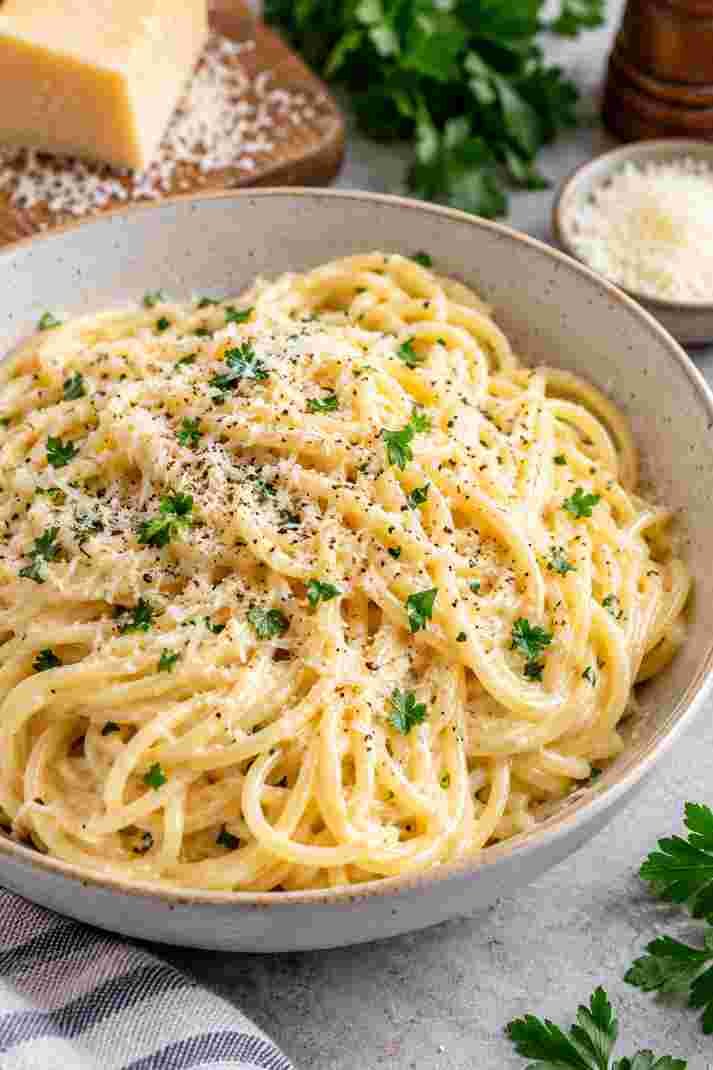
Parmesan cheese pasta is the kind of dinner you can turn to when you want something warm, creamy, and comforting without spending a lot of time in the kitchen. The sauce is simple, but freshly grated Parmesan gives it plenty of flavor, while a little pasta water helps everything come together smoothly. It is an easy meatless meal that works just as well for a quick weeknight dinner as it does for a simple weekend lunch.
Why This Parmesan Cheese Pasta Works
There is no complicated sauce to prepare separately. The hot pasta does most of the work. When it is tossed with warm cream and Parmesan, the cheese melts into the liquid and creates a light, silky coating. Saving some of the pasta cooking water is also important because its starch helps loosen the sauce without making it watery.
Ingredients
- 12 ounces spaghetti – Spaghetti works especially well, but linguine or fettuccine can also be used.
- 1 cup half-and-half – This gives the pasta a creamy texture without making the sauce overly heavy. You can use 1/2 cup milk and 1/2 cup heavy cream instead.
- 3/4 cup freshly grated Parmesan cheese – Freshly grated Parmesan melts much more smoothly than packaged pre-shredded cheese.
- Salt – For seasoning the pasta water and adjusting the finished dish.
- Black pepper – Freshly ground pepper adds a little bite and balances the richness of the cheese.
- 2 tablespoons fresh parsley, chopped – Optional, but it adds a fresh finish to the pasta.
Also Read: Garlic Parmesan Chicken
How to Make Parmesan Cheese Pasta
1. Cook the Pasta
Bring a large pot of water to a rolling boil and season it generously with salt. Add the spaghetti and cook according to the package directions until it is al dente. Before draining, scoop out about 1 cup of the cooking water and keep it nearby.
2. Combine the Pasta and Cream
Drain the pasta and return it to the warm pot. Pour in the half-and-half and gently toss the noodles so they are evenly coated. Keep the heat very low or remove the pot from the burner if it is already hot enough.
3. Add the Parmesan
Add the freshly grated Parmesan a little at a time, tossing continuously with tongs. Give the cheese time to melt into the warm pasta rather than adding it all at once. The sauce should become glossy and cling to the noodles.
4. Adjust the Consistency
If the pasta looks too thick or the cheese is not forming a smooth sauce, add a small splash of the reserved pasta water and toss again. Continue adding it gradually until you reach a creamy consistency that coats the pasta without becoming runny.
5. Season and Serve
Taste the pasta and add salt and freshly ground black pepper as needed. Divide it between serving bowls and finish with chopped parsley and a little extra Parmesan if you like. Serve immediately while the sauce is warm and creamy.
Also Read: American Chop Suey
What You Can Do Better
The biggest difference between good Parmesan pasta and a disappointing bowl of cheesy noodles usually comes down to the cheese and the temperature. Grate the Parmesan yourself and use it finely grated so it melts more easily. Avoid boiling the cream mixture after adding the cheese, as excessive heat can cause Parmesan to become grainy or clump together. Also, do not throw away all of the pasta water. A few spoonfuls can make a surprisingly big difference when you need to loosen the sauce.
For extra flavor, you can add a small minced garlic clove, a pinch of red pepper flakes, or a little butter. If you want to make the meal more filling, grilled chicken, sautéed shrimp, roasted broccoli, or cooked mushrooms all pair nicely with the creamy Parmesan sauce.
Tips for the Best Parmesan Cheese Pasta
- Use freshly grated Parmesan: It melts more evenly and gives the sauce a better texture.
- Keep some pasta water: The starchy water helps bring the sauce together and prevents the pasta from becoming dry.
- Do not rush the cheese: Add Parmesan gradually while tossing the hot pasta.
- Serve right away: Creamy cheese sauces naturally thicken as they cool, so the pasta is best served immediately.
- Season carefully: Parmesan is naturally salty, so taste the pasta before adding a lot of additional salt.
Also Read: Chicken Pot Pie with Biscuits
Easy Variations
Garlic Parmesan Pasta: Sauté a finely minced garlic clove in a little butter before tossing it with the cooked pasta.
Spicy Parmesan Pasta: Add a pinch of red pepper flakes for gentle heat.
Chicken Parmesan Pasta: Add sliced cooked chicken for a more substantial main course.
Vegetable Parmesan Pasta: Toss in sautéed mushrooms, spinach, broccoli, or peas for extra vegetables.
Lemon Parmesan Pasta: Add a small amount of fresh lemon zest and a squeeze of lemon juice just before serving for a brighter flavor.
What to Serve With Parmesan Cheese Pasta
This pasta can easily stand on its own, but it also works well with simple sides. A crisp green salad, roasted vegetables, garlic bread, or steamed broccoli can turn it into a more complete dinner. If you are serving it as a side dish, pair it with grilled chicken, roasted fish, or another simple protein.
Also Read: Sausage and Tortellini Soup
Storage and Reheating
Store leftover Parmesan cheese pasta in an airtight container in the refrigerator for up to 3 days. The sauce will thicken as it sits. When reheating, add a splash of milk, cream, or water and warm the pasta gently in a skillet or microwave, stirring occasionally. Avoid overheating it, since high heat can make the cheese sauce separate.
Parmesan Cheese Pasta Nutrition
The following nutrition information is an approximate estimate for one serving based on the recipe quantities above. Actual values can vary depending on the pasta, dairy products, Parmesan cheese, and portion size you use.
| Nutrient | Approximate Amount Per Serving |
|---|---|
| Calories | 450 kcal |
| Carbohydrates | 68 g |
| Protein | 18 g |
| Total Fat | 13 g |
| Saturated Fat | 7 g |
| Fiber | 3 g |
| Sugar | 6 g |
| Sodium | 375 mg |
| Cholesterol | 37 mg |
Also Read: Beef Short Ribs Slow Cooker
Frequently Asked Questions
Can I use milk instead of half-and-half?
Yes. The sauce will be lighter and less rich, but milk works. For a closer substitute, combine equal parts milk and heavy cream.
Why is my Parmesan cheese clumping?
Very high heat, pre-shredded cheese, or adding the Parmesan too quickly can cause clumping. Use finely grated fresh Parmesan and toss it gradually with the hot pasta. A little reserved pasta water can also help smooth out the sauce.
Can I use a different type of pasta?
Absolutely. Linguine, fettuccine, angel hair, or even short pasta shapes can be used. Choose a shape that holds onto the creamy Parmesan sauce.
Can I make this pasta without cream?
Yes. You can use milk for a lighter version and rely more heavily on reserved pasta water to create a smooth coating. The result will not be quite as rich, but it can still be delicious.