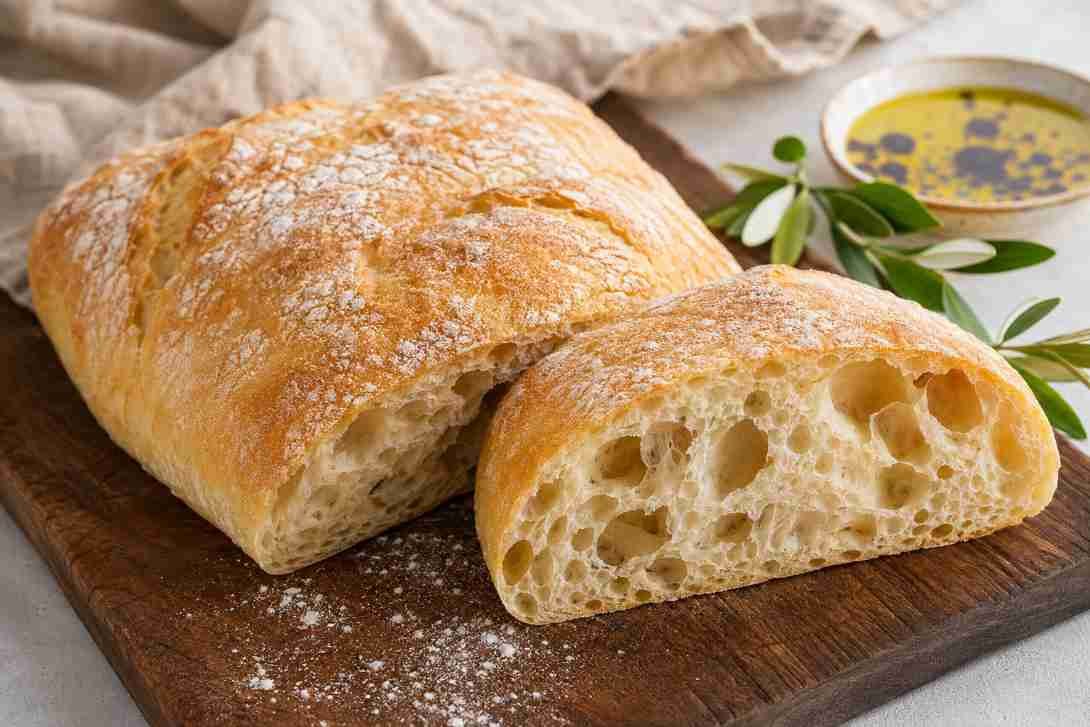
Ciabatta bread is a classic Italian bread known for its rustic appearance, crisp golden crust, and airy interior filled with large holes. Unlike enriched breads, ciabatta relies on a high-hydration dough that creates its signature chewy texture. This homemade ciabatta bread recipe delivers bakery-style results using simple pantry ingredients and a slow rise that develops exceptional flavor. Whether used for sandwiches, garlic bread, or served alongside soups and pasta, this bread is a rewarding baking project that fills your kitchen with the aroma of freshly baked artisan bread.
Main Essence of This Dish
The beauty of ciabatta bread lies in its simplicity. A wet dough, gentle handling, and adequate fermentation create a loaf with a crackly crust and light, open crumb. Unlike many traditional bread recipes that require extensive kneading, ciabatta develops structure through resting and folding. The result is a versatile artisan loaf with authentic Italian character and a texture that is both chewy and tender.
Ingredients
| Ingredient | Amount |
|---|---|
| Bread flour | 500 g (about 4 cups) |
| Warm water | 400 ml (1⅔ cups) |
| Instant yeast | 2 teaspoons |
| Salt | 2 teaspoons |
| Olive oil | 1 tablespoon |
| Extra flour | For dusting |
Equipment Needed
- Large mixing bowl
- Rubber spatula
- Baking sheet or pizza stone
- Parchment paper
- Kitchen towel or plastic wrap
- Wire cooling rack
Also Read: Caprese Chicken Recipe
How to Make Ciabatta Bread
Step 1: Prepare the Dough
In a large mixing bowl, whisk together the bread flour, instant yeast, and salt. Add the warm water and olive oil. Stir with a spatula until a rough, sticky dough forms and no dry flour remains. The dough will be wetter than traditional bread dough, which is essential for achieving ciabatta’s signature texture.
Step 2: First Rise
Cover the bowl with plastic wrap or a clean kitchen towel. Let the dough rise at room temperature for 2 to 3 hours, or until doubled in size and filled with visible air bubbles.
Step 3: Stretch and Fold
With damp hands, gently lift one side of the dough and fold it over itself. Rotate the bowl and repeat several times. This process strengthens the dough without kneading. Cover and allow it to rest for another 30 minutes.
Step 4: Shape the Loaves
Dust your work surface generously with flour. Carefully transfer the dough onto the surface without deflating it. Divide it into two equal portions and gently shape each into a rough rectangle. Place the dough pieces onto parchment paper dusted with flour.
Step 5: Final Proof
Loosely cover the shaped loaves and let them rest for 30 to 45 minutes while the oven preheats.
Step 6: Bake
Preheat the oven to 450°F (230°C). Place a baking stone or baking sheet inside the oven while it heats. Transfer the ciabatta onto the hot surface and bake for 22 to 28 minutes, or until the loaves are deeply golden brown with a crisp crust.
Step 7: Cool Before Slicing
Remove the bread from the oven and place it on a wire rack. Allow it to cool completely before slicing to preserve its airy crumb structure.
Also Read: Swordfish Steak Recipe
Tips for Perfect Ciabatta Bread
- Use bread flour for the best chew and structure.
- Resist adding extra flour to the dough.
- Handle the dough gently to keep the air bubbles intact.
- Allow enough time for fermentation and rising.
- Bake in a fully preheated oven for maximum crust development.
- Cool completely before cutting into the loaf.
Serving Suggestions
- Make hearty sandwiches and paninis.
- Serve with olive oil and balsamic vinegar.
- Pair with soups, stews, and pasta dishes.
- Turn it into crispy garlic bread.
- Use toasted slices for bruschetta.
Also Read: Hawaiian Chicken Recipe
Storage Instructions
Store ciabatta bread in a paper bag or bread box at room temperature for up to 2 days. For longer storage, wrap tightly and freeze for up to 3 months. Reheat in a warm oven for a freshly baked texture.
Nutritional Information
The following values are approximate and based on one serving.
| Nutrient | Amount Per Serving |
|---|---|
| Calories | 180 |
| Carbohydrates | 35 g |
| Protein | 6 g |
| Fat | 2 g |
| Saturated Fat | 0.3 g |
| Fiber | 1.5 g |
| Sugar | 0.5 g |
| Sodium | 320 mg |
Common Mistakes to Avoid
- Adding too much flour because the dough feels sticky.
- Skipping the stretch-and-fold process.
- Overhandling the dough during shaping.
- Underbaking the bread.
- Slicing the loaf while it is still warm.
Also Read: Blueberry Muffins Recipe
Frequently Asked Questions
Why is ciabatta dough so sticky?
Ciabatta uses a high hydration level. The extra water creates the open crumb and airy texture that make this bread unique.
Can I use all-purpose flour instead of bread flour?
Yes, but bread flour provides better gluten development and a chewier texture. All-purpose flour will produce a slightly softer loaf.
How do I get large holes inside the bread?
Allow sufficient fermentation time and handle the dough carefully so the trapped air remains inside during shaping and baking.
Can ciabatta bread be frozen?
Absolutely. Wrap the cooled loaf tightly and freeze for up to three months. Thaw at room temperature and warm in the oven before serving.