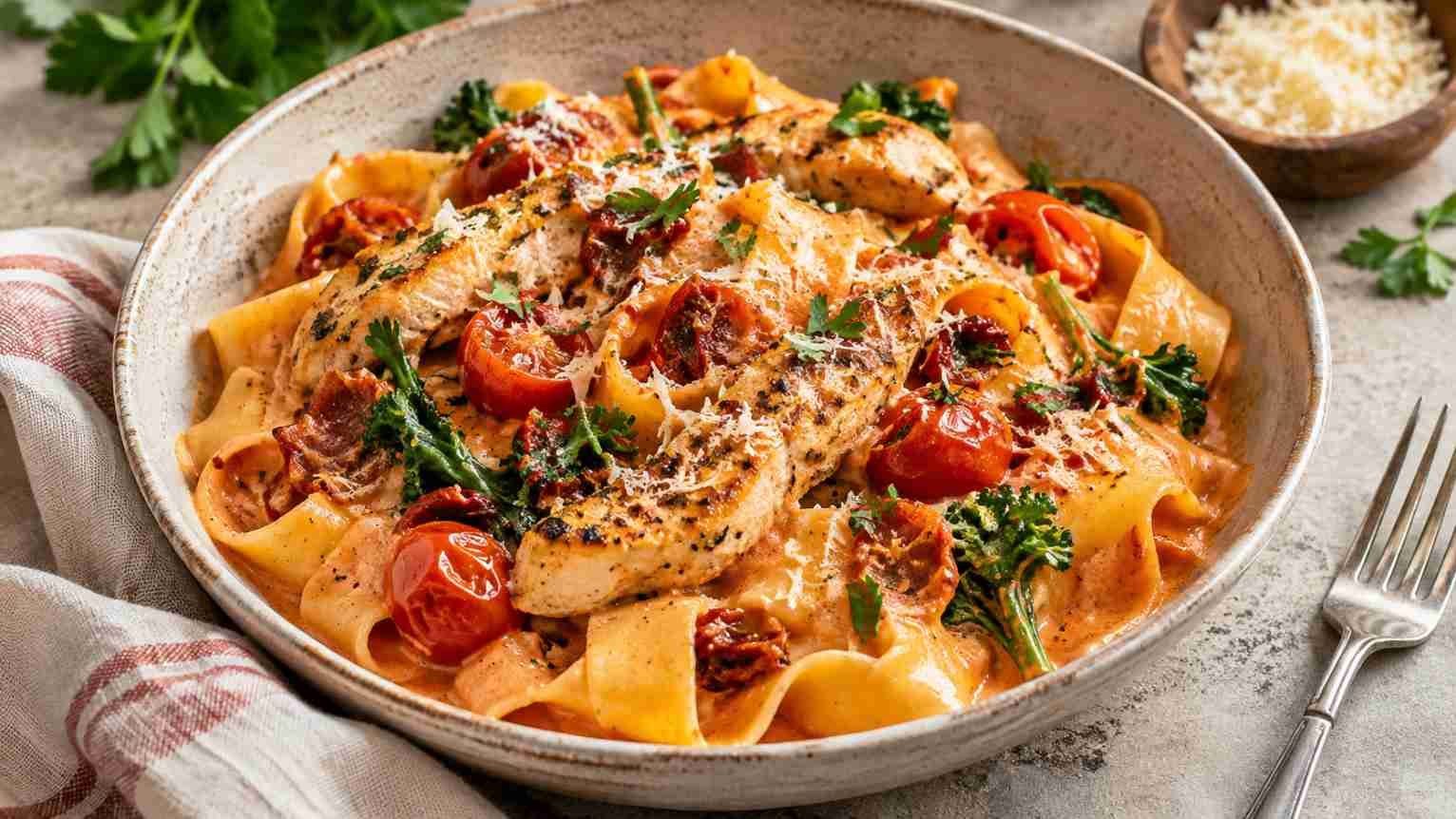
There is something particularly satisfying about a bowl of wide, silky pasta coated in a rich tomato sauce. Add tender chicken, smoky bacon, a little garlic, and a splash of cream, and you have a dinner that feels far more elaborate than the effort it takes to make.
This Chicken & Tomato Pappardelle brings together sweet cherry tomatoes, intensely flavored sun-dried tomatoes, and juicy pieces of chicken in a creamy, slightly spicy sauce. The broad pasta ribbons catch the sauce beautifully, while broccoli rabe adds a pleasant bitterness that keeps the dish from becoming too heavy.
It is the sort of meal that works just as well for a relaxed family dinner as it does for a weekend gathering. Most of the cooking happens in one large skillet, and the ingredients are easy to adjust depending on what you have in your kitchen.
Chicken & Tomato Pappardelle Recipe Overview
| Recipe | Chicken & Tomato Pappardelle |
|---|---|
| Preparation Time | 20 minutes |
| Cooking Time | 30 minutes |
| Total Time | 50 minutes |
| Servings | 4 generous portions |
| Course | Main Course |
| Cuisine | Italian-inspired |
| Difficulty | Moderate |
| Cooking Method | Stovetop |
Ingredients for Chicken & Tomato Pappardelle
The sauce gets its character from two kinds of tomatoes. Sun-dried tomatoes bring a concentrated, slightly tangy flavor, while fresh cherry tomatoes soften during cooking and add sweetness. Using both gives the finished pasta a more interesting flavor than relying on tomato sauce alone.
For the Pasta and Chicken
- 12 oz (340 g) pappardelle pasta: Wide ribbons of pasta are ideal for holding the creamy sauce.
- 1 lb (450 g) boneless, skinless chicken breast: Cut into bite-sized strips so the pieces cook evenly.
- 3 strips thick-cut bacon: Chopped into small pieces for a smoky, savory flavor.
- 2 tablespoons olive oil: For cooking the chicken, preferably oil reserved from the sun-dried tomato jar.
- 1/2 teaspoon salt: Adjust according to the saltiness of the bacon and broth.
- 1/2 teaspoon freshly ground black pepper: For seasoning the chicken.
For the Creamy Tomato Sauce
- 1/2 cup oil-packed sun-dried tomatoes: Drained and roughly chopped.
- 1 1/2 cups cherry tomatoes: Halved.
- 4 garlic cloves: Finely minced.
- 1/2 teaspoon red pepper flakes: Increase slightly if you prefer a spicier sauce.
- 3/4 cup chicken broth: Preferably low-sodium.
- 3/4 cup heavy cream: Gives the sauce its smooth, velvety consistency.
- 1/2 cup dry white wine: Optional; replace with additional chicken broth if preferred.
- 1 tablespoon tomato paste: Deepens the tomato flavor and gives the sauce a richer color.
- 2 cups chopped broccoli rabe: Tough stems removed.
- 1/3 cup freshly grated Parmesan cheese: Plus extra for serving.
- 2 tablespoons fresh parsley: Chopped, for finishing.
Also Read: Slow Cooker Bone In Chicken Breast
How to Make Chicken & Tomato Pappardelle
The easiest way to prepare this dish is to have everything chopped and measured before turning on the stove. Once the chicken starts cooking, the sauce comes together fairly quickly. Use a large, deep skillet so there is enough room to toss the pasta without spilling sauce over the sides.
Step 1: Prepare the Pasta
Bring a large pot of water to a rolling boil and season it generously with salt. Add the pappardelle and cook according to the package instructions, stopping about one minute before the pasta reaches your preferred tenderness.
Before draining, scoop out approximately one cup of the starchy cooking water and set it aside. Drain the pasta without rinsing it. The starch left on the surface will help the sauce cling to the ribbons later.
If you are using fresh pappardelle, wait until the sauce is almost ready before cooking it. Fresh pasta usually needs only a few minutes in boiling water, and it can become too soft if left sitting after draining.
Step 2: Season and Cook the Chicken
Pat the chicken strips dry with paper towels and season them with salt and black pepper. Drying the surface helps the chicken develop some color rather than simply steaming in the pan.
Heat the olive oil in a large skillet over medium-high heat. Add the chicken in a single layer, working in batches if necessary. Cook for approximately 3 to 5 minutes per side, depending on the thickness of the strips, until lightly golden and cooked through.
The thickest pieces should reach an internal temperature of 165°F (74°C). Transfer the chicken to a plate and keep it nearby. Avoid cooking it for too long at this stage because it will return to the sauce before serving.
Step 3: Cook the Bacon and Garlic
Reduce the heat to medium and add the chopped bacon to the same skillet. Cook for about 4 to 6 minutes, stirring occasionally, until the fat renders and the edges become crisp.
If the skillet contains an excessive amount of fat, carefully spoon some out, leaving roughly one tablespoon behind. Add the minced garlic and red pepper flakes, then stir for about 30 seconds until fragrant.
Keep a close eye on the garlic. It should become aromatic without turning dark brown, which can introduce a bitter flavor into the finished sauce.
Step 4: Add the Tomatoes
Stir the chopped sun-dried tomatoes and tomato paste into the skillet. Cook for approximately one minute, allowing the tomato paste to darken slightly and coat the bacon and garlic.
Add the halved cherry tomatoes and cook for another 3 to 4 minutes. Some of the tomatoes should begin to soften and release their juices, while others will retain their shape.
Press a few of the softened tomatoes gently against the skillet with the back of a spoon. This releases additional juice and helps create a sauce with both smooth and chunky textures.
Step 5: Build the Creamy Sauce
Pour in the white wine, if using, and stir while scraping the browned bits from the bottom of the skillet. Allow the wine to simmer for about 2 minutes so some of the liquid reduces.
Add the chicken broth and bring the mixture to a gentle simmer. Reduce the heat to medium-low, then slowly stir in the heavy cream.
Let the sauce simmer gently for approximately 4 to 5 minutes, stirring occasionally. It should begin to thicken but remain loose enough to coat the pasta. Avoid boiling the cream aggressively, as high heat can affect its texture.
Step 6: Add the Broccoli Rabe
Stir the chopped broccoli rabe into the sauce and cook for about 3 to 4 minutes, or until the stems are tender and the leaves have wilted. If you prefer a milder flavor, blanch the broccoli rabe in boiling water for 1 to 2 minutes before adding it to the skillet.
Broccoli rabe has a naturally bitter edge, which works particularly well against the richness of the cream and bacon. If it is unavailable, baby spinach makes an easy substitute, although it will give the dish a milder flavor.
Step 7: Return the Chicken to the Skillet
Add the cooked chicken and any juices collected on the plate back into the sauce. Stir gently and allow everything to heat through for another minute or two.
Sprinkle in the grated Parmesan and stir until incorporated. Taste the sauce before adding more salt. The bacon, cheese, and sun-dried tomatoes already contribute plenty of seasoning.
Step 8: Toss the Pasta with the Sauce
Add the drained pappardelle directly to the skillet. Using tongs, gently lift and turn the pasta until the ribbons are coated with the creamy tomato sauce.
If the sauce looks too thick, add reserved pasta water a few tablespoons at a time. The starchy water helps loosen the sauce without making it watery.
Let the pasta cook in the sauce for approximately one minute, stirring carefully. This final step allows the pasta to absorb some of the flavor and creates a better coating than simply spooning sauce over cooked noodles.
Step 9: Finish and Serve
Remove the skillet from the heat and scatter chopped parsley over the pasta. Add a little extra Parmesan and a few turns of freshly ground black pepper.
Divide the pappardelle among four warm bowls, making sure each portion has plenty of chicken, tomatoes, and sauce. Serve immediately while the pasta is hot and the sauce is still silky.
Also Read: Thai Basil Chicken & Coconut Rice
What You Can Do Better
A good pasta dish often comes down to a handful of small decisions rather than complicated cooking techniques. Here are a few ways to improve the flavor and texture of Chicken & Tomato Pappardelle.
1. Brown the Chicken Instead of Crowding the Pan
Chicken develops a more appealing flavor when it has direct contact with a hot skillet. If the pan is overcrowded, moisture collects and the meat starts steaming. Cook in two batches if necessary, giving the strips enough space to develop a lightly golden surface.
2. Use the Oil from the Sun-Dried Tomatoes
Oil-packed sun-dried tomatoes often come in oil that has absorbed some of their flavor. Using a little of this oil to cook the chicken or garlic gives the sauce an extra layer of tomato flavor without requiring another ingredient.
3. Do Not Overcook the Pappardelle
Wide pasta ribbons are delicate, especially when freshly made. Cook them just until slightly firm, then finish them in the skillet. They will continue absorbing moisture from the sauce, so fully cooking them before tossing can result in overly soft pasta.
4. Balance the Cream with Tomato Acidity
Heavy cream makes the sauce rich, but too much can mute the tomato flavor. If the finished dish tastes flat, try adding a small squeeze of lemon juice rather than more salt. A little acidity can make the tomatoes taste brighter.
5. Add the Parmesan Away from High Heat
Freshly grated Parmesan melts more smoothly when the sauce is hot but not boiling vigorously. Lower the heat before adding it, and stir gradually. This helps prevent the cheese from clumping together.
6. Adjust the Broccoli Rabe to Your Taste
The bitterness of broccoli rabe is part of what makes this dish interesting, but not everyone enjoys it. Blanching it first softens that bitterness. For a gentler alternative, use baby spinach or tender kale leaves.
7. Save More Pasta Water Than You Think You Need
Creamy sauces tend to thicken as they cool. Keeping extra pasta water nearby gives you an easy way to adjust the consistency, both while tossing the pasta and just before serving.
Ingredient Substitutions and Variations
This recipe is flexible enough to accommodate a few changes without losing its character. The most important elements are the chicken, tomatoes, pasta, and a sauce that is rich enough to coat the broad noodles.
| Original Ingredient | Alternative | What Changes |
|---|---|---|
| Pappardelle | Tagliatelle or fettuccine | Similar texture with slightly narrower pasta ribbons. |
| Chicken breast | Boneless chicken thighs | Richer flavor and a more forgiving texture. |
| Broccoli rabe | Baby spinach or kale | A milder, less bitter vegetable component. |
| Heavy cream | Half-and-half | A lighter sauce that may need gentle reduction. |
| Dry white wine | Chicken broth with a little lemon juice | Maintains some acidity without using wine. |
| Bacon | Smoked turkey bacon | A different smoky flavor and potentially less rendered fat. |
| Parmesan | Pecorino Romano | A sharper, saltier finish. |
Also Read: Best Hawaiian Style Korean Fried Chicken Recipe
What to Serve with Chicken & Tomato Pappardelle
Because this pasta already contains chicken, vegetables, and a rich sauce, it does not need an elaborate side dish. Something fresh or lightly acidic is usually the best companion.
Fresh Green Salad
A simple salad of arugula, cucumber, and lettuce dressed with olive oil and lemon juice provides a crisp contrast to the creamy pasta. Keep the dressing light so it does not compete with the tomato sauce.
Garlic Bread
Warm garlic bread is particularly useful for soaking up any sauce left in the bowl. A crusty baguette brushed with garlic butter and toasted until golden works well.
Roasted Vegetables
Roasted asparagus, zucchini, or green beans make a good addition when serving the pasta for a larger dinner. Season them simply with olive oil, salt, and black pepper.
Tomato and Cucumber Salad
For a lighter accompaniment, combine sliced cucumbers, fresh tomatoes, red onion, and a splash of vinegar. The cool, crunchy vegetables balance the richness of the main dish.
How to Store and Reheat Leftovers
Refrigerating
Allow the pasta to cool briefly, then transfer it to a shallow, airtight container and refrigerate within two hours of cooking. Store at 40°F (4°C) or below and use within 3 to 4 days.
The pasta will continue absorbing sauce as it sits, so leftovers may appear noticeably thicker than the freshly cooked dish. This is normal.
Reheating on the Stovetop
Place the leftover pasta in a skillet over medium-low heat and add a splash of chicken broth, water, or milk. Stir gently until the sauce loosens and the chicken and pasta are heated thoroughly to 165°F (74°C).
Avoid high heat, which can make the cream sauce separate and cause the chicken to become dry.
Reheating in the Microwave
Transfer a portion to a microwave-safe bowl and add one or two tablespoons of water or broth. Cover loosely and heat in short intervals, stirring between each interval until evenly heated to 165°F (74°C).
Can You Freeze It?
Freezing is possible, but it is not the best option for this particular pasta. Cream-based sauces sometimes separate after thawing, and pappardelle can lose its texture. For better results, freeze the cooked chicken and tomato mixture before adding the cream and pasta, then finish the sauce fresh when you are ready to serve.
Nutritional Information
Chicken & Tomato Pappardelle is a substantial meal containing protein from the chicken, carbohydrates from the pasta, and fat from the cream, bacon, and cheese. The tomatoes and broccoli rabe also contribute fiber and a variety of vitamins and minerals.
The following figures are approximate estimates for one of four generous servings, based on the ingredient quantities listed above. Actual values will vary depending on the brands used, portion sizes, amount of cooking fat retained, and optional substitutions.
| Nutrient | Estimated Amount Per Serving |
|---|---|
| Calories | 980 kcal |
| Total Carbohydrates | 90 g |
| Protein | 53 g |
| Total Fat | 43 g |
| Saturated Fat | 19 g |
| Dietary Fiber | 7 g |
| Total Sugars | 11 g |
| Cholesterol | 205 mg |
| Sodium | 1,050 mg |
| Potassium | 1,100 mg |
Nutrition note: These are rounded, illustrative estimates rather than laboratory-tested values or a verified nutrition calculation. For precise dietary tracking, calculate the recipe using the exact ingredients and brands you purchase.
Also Read: Jamaican Jerk Chicken Pasta Recipe
Frequently Asked Questions
Can I Make Chicken & Tomato Pappardelle Without Cream?
Yes. You can prepare a lighter version by omitting the heavy cream and using additional chicken broth, a little olive oil, and some reserved pasta water. The sauce will be less rich but will still have plenty of flavor from the tomatoes, garlic, and bacon. A small amount of Parmesan added at the end will help bring everything together.
What Is the Difference Between Pappardelle and Fettuccine?
Both are long, flat pasta shapes, but pappardelle is generally wider than fettuccine. Its broad ribbons are particularly good with hearty sauces containing pieces of meat and vegetables. Fettuccine is narrower and works well with smoother sauces, although either pasta can be used in this recipe.
Can I Use Fresh Tomatoes Instead of Sun-Dried Tomatoes?
You can, but the sauce will taste different. Sun-dried tomatoes have a concentrated flavor that fresh tomatoes cannot completely replace. If you omit them, add more cherry tomatoes and an extra teaspoon or two of tomato paste to strengthen the sauce.
Is Chicken & Tomato Pappardelle Spicy?
The recipe has a mild kick from red pepper flakes rather than intense heat. For a completely mild version, leave them out. If you enjoy spicy food, increase the amount gradually and taste the sauce before serving.
Can I Use Leftover Cooked Chicken?
Absolutely. Leftover roasted chicken or shredded rotisserie chicken can save preparation time. Skip the chicken-browning step and add the cooked meat near the end, allowing it to heat thoroughly in the sauce. Reduce the salt if the chicken is already heavily seasoned.
Can I Prepare This Dish Ahead of Time?
The tomato sauce can be prepared a day ahead and refrigerated in an airtight container. For the best texture, cook the pasta fresh and finish the sauce with cream and Parmesan shortly before serving. This prevents the noodles from absorbing too much liquid while sitting in the refrigerator.
What Can I Use Instead of Broccoli Rabe?
Baby spinach is the easiest substitute because it cooks quickly and has a mild flavor. Kale also works, although it needs a little more time to soften. If you want to keep a slightly bitter note in the dish, try chopped escarole.
How Do I Prevent the Cream Sauce from Becoming Too Thick?
Keep the heat gentle and avoid reducing the sauce for too long. If it becomes thicker than you prefer, add reserved pasta water or warm chicken broth a little at a time, stirring until it reaches the desired consistency. Remember that the sauce will thicken slightly as the pasta cools.