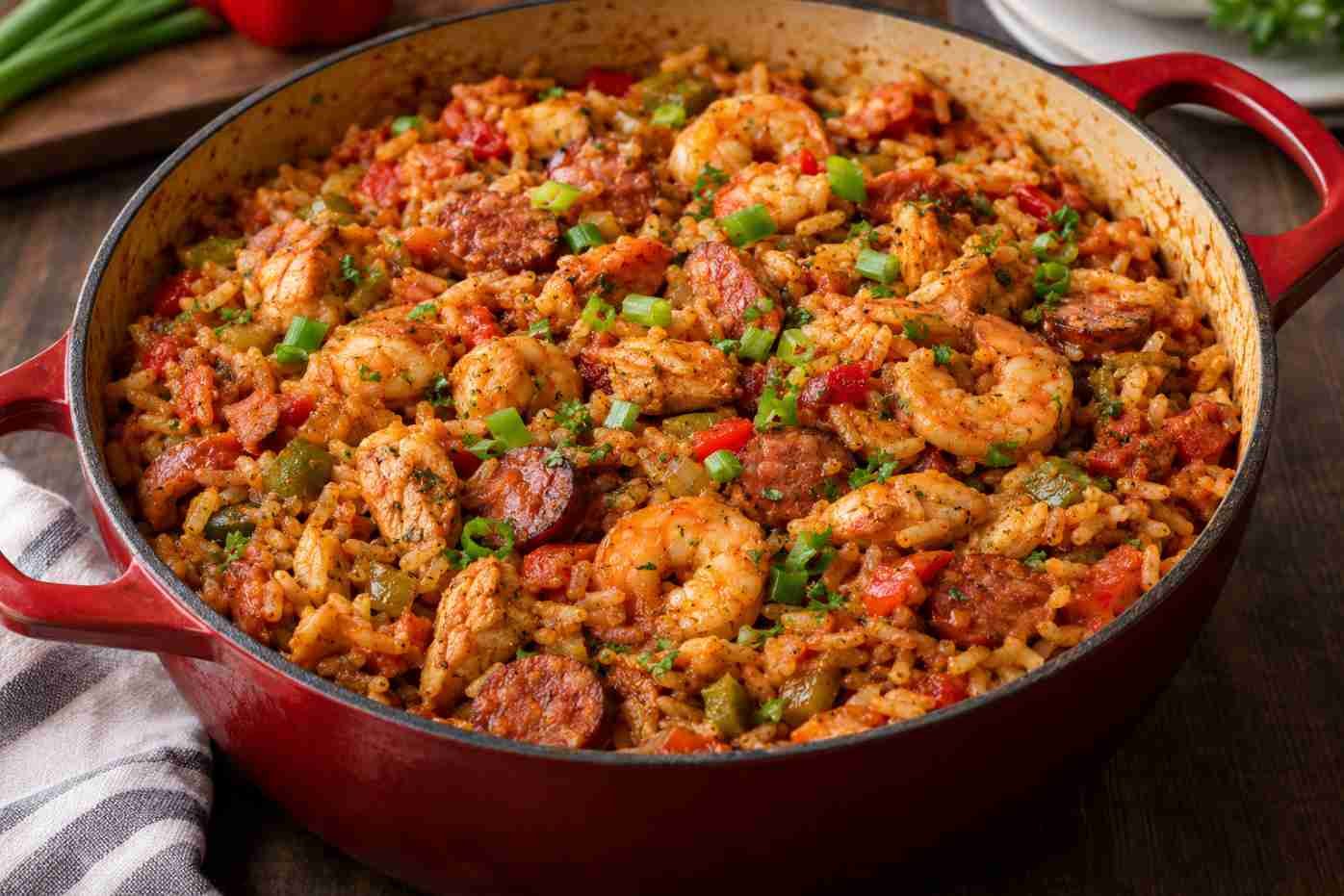
Jambalaya is a hearty Louisiana rice dish packed with smoky sausage, tender chicken, juicy shrimp, vegetables, and a delicious blend of spices. Every spoonful brings together a little heat, rich tomato flavor, and the satisfying taste of perfectly cooked rice. It is a wonderful choice when you want to prepare something filling without using several pots and pans.
This Creole-style jambalaya recipe combines chicken, shrimp, and smoked sausage with long-grain rice, tomatoes, bell peppers, celery, and homemade Cajun seasoning. The ingredients cook together so the rice absorbs the flavors of the meat, vegetables, and broth. The result is a colorful, comforting meal that works equally well for a family dinner or a weekend gathering.
What Is Jambalaya?
Jambalaya is a traditional dish associated with Louisiana, particularly New Orleans and the surrounding region. Its cooking traditions reflect the cultural influences that have shaped Louisiana cuisine, including French, Spanish, African, and Caribbean influences.
There are two well-known styles of jambalaya: Creole and Cajun. Creole jambalaya, sometimes called red jambalaya, includes tomatoes, giving the rice its reddish color. Cajun jambalaya generally skips tomatoes and develops its flavor through browned meat, vegetables, spices, and stock.
This recipe follows the Creole style. It uses the traditional combination of onion, celery, and bell pepper, often called the holy trinity of Louisiana cooking. Chicken, shrimp, and smoked sausage make the dish especially satisfying.
What You Can Do Better
A good jambalaya is all about building flavor without making the rice mushy. Browning the chicken and sausage first creates a richer base for the dish, while cooking the vegetables in the same pot helps them absorb those savory flavors.
You can also adjust the seasoning to suit your taste. Use smoked paprika for a deeper smoky flavor, cayenne pepper for extra heat, or a little more chicken stock if the rice needs additional moisture. Long-grain rice is the best choice because it cooks into separate, fluffy grains rather than becoming sticky.
If andouille sausage is difficult to find, use another good-quality smoked sausage. The flavor will be slightly different, but the dish will still have that delicious smoky character.
Jambalaya Recipe Details
| Preparation Time | 20 minutes |
|---|---|
| Cooking Time | 40–50 minutes |
| Total Time | About 1 hour 10 minutes |
| Servings | 5 people |
| Course | Main Course, Dinner |
| Cuisine | Louisiana, Creole, American |
| Cooking Method | One-pot cooking and oven baking |
Also Read: Marry Me Pot Roast
Ingredients for Jambalaya
These ingredients make approximately five generous servings. Most are easy to find in a regular supermarket, although andouille sausage may require a visit to a speciality store. You can use another smoked sausage if necessary.
For the Jambalaya
- 1 tablespoon vegetable oil
- 150 g smoked bacon, chopped
- 200 g smoked sausage or andouille sausage, sliced
- 300 g boneless, skinless chicken thighs, cut into bite-sized pieces
- 12 large raw shrimp, peeled and deveined
- 4 garlic cloves, finely minced
- 1 tablespoon butter
- 1 large onion, chopped
- 2 celery stalks, chopped
- 2 medium green bell peppers, chopped
- 1¼ cups uncooked long-grain white rice
- 2½ cups low-sodium chicken broth
- 200 g crushed tomatoes
- 2 tablespoons tomato paste
- 1 cup sliced green onions
For the Creole Seasoning
- 2 teaspoons fresh thyme or 1 teaspoon dried thyme
- 4 teaspoons sweet paprika
- 1 teaspoon garlic powder
- 1 teaspoon onion powder
- ½ teaspoon cayenne pepper
- ½ teaspoon ground black pepper
- ½ teaspoon salt, or according to taste
Also Read: Crockpot Chili Recipe
How to Make Jambalaya
Follow these steps to prepare flavorful jambalaya with tender meat, juicy shrimp, and rice that holds its shape. A large oven-safe Dutch oven or deep pan with a tight-fitting lid works best.
Step 1: Prepare the Creole Seasoning
Start by mixing paprika, thyme, garlic powder, onion powder, cayenne pepper, black pepper, and salt in a small bowl. Stir everything together until evenly combined. Keep this seasoning mixture nearby because you will add it to the rice and broth later. If you prefer a milder dish, reduce the cayenne pepper.
Step 2: Brown the Bacon and Sausage
Heat vegetable oil in a large oven-safe pot over medium-high heat. Add the chopped bacon and cook briefly until some of its fat begins to melt. Add the sliced smoked sausage and cook for approximately 3–4 minutes, turning occasionally until the edges become golden brown. Transfer both to a plate and leave the flavorful fat in the pot.
Step 3: Cook the Chicken and Shrimp
Add the chicken pieces to the same pot and cook until the outside develops a light golden color. The chicken does not need to be completely cooked at this stage because it will finish cooking with the rice. Remove it and place it with the bacon and sausage. Next, cook the shrimp for about 1–2 minutes on each side until they begin to turn pink. Remove them and keep them separately for later.
Step 4: Sauté the Vegetables
Add butter to the pot, followed by minced garlic, chopped onion, celery, and green bell peppers. Cook for approximately 3–4 minutes, stirring occasionally. The vegetables should become slightly soft while still retaining some texture. Scrape the bottom of the pot gently to loosen any browned bits left behind by the meat. These add extra flavor to the finished dish.
Step 5: Add Rice and Seasoning
Pour the uncooked long-grain rice into the pot and stir gently so the grains become coated with the butter and vegetable mixture. Add crushed tomatoes, tomato paste, chicken broth, and the prepared Creole seasoning. Mix everything until the tomato paste dissolves into the liquid. Return the cooked chicken, bacon, and sausage to the pot, including any juices collected on the plate.
Step 6: Cook the Rice
Bring the mixture to a gentle boil. Once bubbles appear across the surface, give it one final stir and make sure the rice is mostly submerged in the liquid. Cover the pot with a tight-fitting lid and transfer it to a preheated oven at 180°C (350°F). Bake for approximately 25–30 minutes, checking the rice after 20 minutes. Cooking time can vary depending on the pot and oven, so check that the grains are tender before moving to the next step.
Step 7: Add Shrimp and Green Onions
When the rice is nearly cooked, remove the pot from the oven. Add the previously cooked shrimp and sliced green onions. Gently fold them into the rice without stirring too aggressively. Cover the pot again and return it to the oven for another 3–5 minutes, allowing the shrimp to heat through and finish cooking.
Step 8: Fluff and Serve
Remove the pot from the oven and let the jambalaya rest for a few minutes. Gently fluff the rice with a fork so the chicken, sausage, shrimp, and vegetables are distributed throughout. Sprinkle additional green onions over the top if desired. Serve warm while the rice is moist and the smoky flavors are at their best.
Also Read: Slow Cooker Chicken Fajita Sliders
Tips for Making the Best Jambalaya
Choose the Right Rice
Long-grain white rice is a reliable choice because it generally cooks into separate grains. Avoid using risotto rice or other varieties that release a lot of starch, as they can make the finished dish too sticky. Basmati rice can also work if long-grain American rice is unavailable, although it will add a slightly different aroma.
Do Not Skip Browning the Meat
Browning the bacon, sausage, and chicken before adding the rice makes a noticeable difference. The browned edges and leftover cooking juices give the broth a deeper, savory taste. Take your time with this step rather than putting all the meat into the pot at once.
Adjust the Spice Level
Creole seasoning brings warmth and flavor, but jambalaya does not have to be extremely hot. Start with the suggested cayenne quantity and add more if you enjoy spicy food. A little hot sauce at the table is another easy way to let everyone adjust their own serving.
Use Smoked Sausage
Andouille sausage is traditionally associated with jambalaya because of its distinctive smoky and spicy flavor. If you cannot find it, smoked beef sausage, smoked pork sausage, or chorizo can be used. The flavor will vary depending on the sausage, but a smoky variety will give you a satisfying result.
Avoid Overstirring the Rice
Unlike risotto, jambalaya does not need constant stirring. Once the broth and rice are combined, keep stirring to a minimum. Too much agitation can release excess starch and make the rice sticky. Using the oven method also helps distribute heat more evenly throughout the pot.
What to Serve with Jambalaya
Jambalaya is a complete meal on its own because it already contains rice, meat, seafood, and vegetables. However, a few simple sides can make dinner feel more special.
- Garlic Bread: Serve warm garlic bread alongside jambalaya to soak up the flavorful tomato broth.
- Green Salad: A fresh salad with lettuce, cucumber, and a light dressing provides a refreshing contrast to the rich rice.
- Coleslaw: Creamy or vinegar-based coleslaw adds a cool, crunchy texture to the meal.
- Roasted Vegetables: Roasted carrots, broccoli, or green beans make an easy vegetable side.
- Cornbread: Soft cornbread is a popular Southern-style accompaniment that pairs nicely with the smoky seasoning.
How to Store and Reheat Jambalaya
Refrigerator
Allow leftover jambalaya to cool slightly before transferring it to airtight containers. Refrigerate promptly and use within 3–4 days. Since this recipe contains cooked rice, avoid leaving it at room temperature for extended periods.
Freezer
You can freeze leftover jambalaya in individual airtight containers for convenient meals later. For the best quality, use within 2–3 months. Thaw overnight in the refrigerator before reheating. The texture of the shrimp and rice may change slightly after freezing.
Reheating
Place the jambalaya in a saucepan with a small splash of chicken broth or water. Heat over medium-low heat, stirring gently until it is steaming hot throughout. You can also reheat individual portions in the microwave, covering the container and stirring halfway through. Only reheat leftovers once, and make sure they are thoroughly hot before serving.
Also Read: Slow Cooker Sweet Slow Cooker Pork Tacos
Jambalaya Nutritional Information
Jambalaya is a filling meal that provides carbohydrates from rice, protein from chicken and shrimp, and fat from the sausage and bacon. The exact nutritional values depend on the type of sausage, bacon, broth, and quantities used.
The following values are approximate estimates for one serving when the recipe is divided into five portions.
| Nutrient | Amount per Serving |
|---|---|
| Calories | Approximately 700 kcal |
| Carbohydrates | 51 g |
| Protein | 31 g |
| Total Fat | 40 g |
| Saturated Fat | 14 g |
| Cholesterol | 155 mg |
| Sodium | 1,400 mg |
| Dietary Fiber | 4 g |
| Sugar | 5 g |
Note: Nutritional information is an estimate, not a laboratory analysis. Actual values will vary according to the ingredients and portion sizes used.
Frequently Asked Questions
1. What is the difference between Cajun and Creole jambalaya?
Creole jambalaya generally includes tomatoes, giving the rice a reddish color and a slightly tangy flavor. Cajun jambalaya usually does not contain tomatoes and gets its deeper color and flavor from browning the meat and vegetables.
2. Can I make jambalaya without shrimp?
Yes. You can leave out the shrimp and prepare the dish with chicken and smoked sausage. You can also increase the amount of chicken or vegetables to make up for the missing seafood.
3. Which sausage is best for jambalaya?
Andouille sausage is the traditional choice because it has a distinctive smoky and spicy flavor. Smoked beef sausage, smoked pork sausage, or chorizo can be used as alternatives.
4. Can I cook jambalaya on the stovetop?
Yes. After adding the broth, tomatoes, rice, and meat, cover the pot and cook over low heat until the rice is tender. Check occasionally to make sure the bottom is not burning, and avoid frequent stirring.
5. Why is my jambalaya rice mushy?
Mushy rice can result from using too much liquid, choosing a high-starch rice variety, or stirring too frequently. Use long-grain rice, measure the broth carefully, and allow the rice to cook without unnecessary stirring.
6. Can I prepare jambalaya ahead of time?
Yes. You can chop the vegetables, prepare the seasoning, and cut the meat a day ahead. Store the prepared ingredients separately in the refrigerator. For the best rice texture, cook the complete dish shortly before serving.
7. Is jambalaya very spicy?
Jambalaya can be mildly seasoned or quite spicy, depending on the amount of cayenne pepper, sausage, and hot sauce used. You can easily reduce the heat by adjusting the seasoning.
8. Can I use basmati rice for jambalaya?
Yes. Basmati rice works as an alternative to long-grain white rice. However, it has a distinct fragrance that gives the dish a slightly different flavor from traditional Louisiana jambalaya.