Caramelized onions are one of those simple kitchen staples that can completely change a dish. With just onions, olive oil, and a little patience, you can create deeply golden, sweet, and savory onions that add incredible flavor to burgers, sandwiches, pasta, pizzas, soups, grain bowls, and more. The secret is cooking them slowly over low heat until their natural sugars develop a rich caramel-like flavor. While the process takes time, the result is worth every minute.
Main Essence of This Dish
The beauty of caramelized onions lies in transformation. Sharp, pungent raw onions gradually become soft, sweet, and rich as they cook slowly. No special ingredients are needed, just time and steady heat. Their deep flavor adds restaurant-quality taste to everyday meals and makes even simple dishes feel special.
Recipe Information
| Recipe Detail | Information |
|---|---|
| Preparation Time | 10 minutes |
| Cooking Time | 60-75 minutes |
| Total Time | 70-85 minutes |
| Servings | 8 servings |
| Difficulty | Easy |
| Diet | Vegan, Gluten-Free |
Ingredients
- 4 medium yellow onions, thinly sliced
- 2 tablespoons extra-virgin olive oil
- 1/2 teaspoon sea salt
- 1 to 2 tablespoons water (optional, if needed during cooking)
Also Read: Vinegar Chicken with Oranges and Olives Recipe
How to Make Caramelized Onions
Step 1: Slice the Onions
Peel the onions and slice them into thin, even strips. Try to keep the slices uniform so they cook at the same rate. Separate the onion layers with your hands before adding them to the pan.
Step 2: Start Cooking
Heat the olive oil in a large skillet over medium heat. Add the sliced onions and cook for about 5 minutes, stirring frequently. The onions should begin to soften and turn translucent.
Step 3: Add Salt
Sprinkle the salt over the onions and stir well. Salt helps draw out moisture, which encourages even cooking.
Step 4: Cook Low and Slow
Reduce the heat to medium-low. Continue cooking the onions for 50 to 70 minutes, stirring every few minutes. As they cook, they will shrink, soften, and gradually change from pale yellow to golden brown.
Step 5: Prevent Burning
If the onions start sticking to the pan or browning too quickly, lower the heat and add a splash of water. Scrape up any browned bits from the bottom of the skillet and mix them back into the onions.
Step 6: Finish
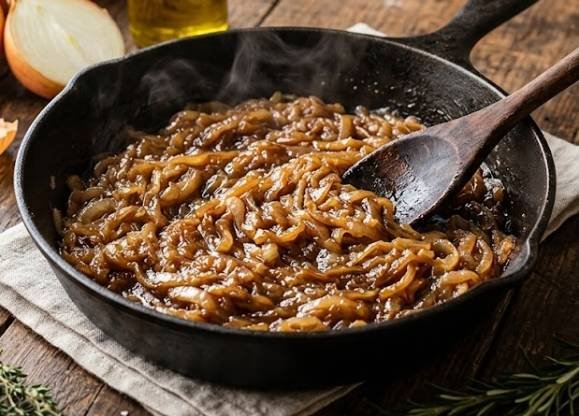
The onions are ready when they are deeply golden brown, very soft, and jammy in texture. Remove from heat and use immediately or store for later.
Also Read: Chicken with Mustard Cream Sauce Recipe
Tips for Perfect Caramelized Onions
- Use yellow onions for the best balance of sweetness and flavor.
- Cook slowly; high heat will burn the onions instead of caramelizing them.
- Stir regularly but not constantly to allow proper browning.
- A heavy-bottomed skillet or cast-iron pan works best.
- Make a large batch since onions shrink significantly during cooking.
Ways to Use Caramelized Onions
- Top burgers and sandwiches
- Add to grilled cheese sandwiches
- Stir into pasta dishes
- Use on homemade pizza
- Mix into mashed potatoes
- Add to omelets and scrambled eggs
- Use in French onion soup
- Serve alongside grilled meats and vegetables
Also Read: Baked Pork Ribs in Oven Recipe
Storage Instructions
Allow the onions to cool completely before storing. Place them in an airtight container and refrigerate for up to 5 days. For longer storage, freeze portions in freezer-safe containers for up to 3 months. Thaw overnight in the refrigerator before using.
Nutritional Information
The following nutrition information is approximate and based on one serving.
| Nutrient | Amount Per Serving |
|---|---|
| Calories | 60 |
| Carbohydrates | 7g |
| Protein | 1g |
| Fat | 3.5g |
| Saturated Fat | 0.5g |
| Fiber | 1g |
| Sugar | 4g |
| Sodium | 145mg |