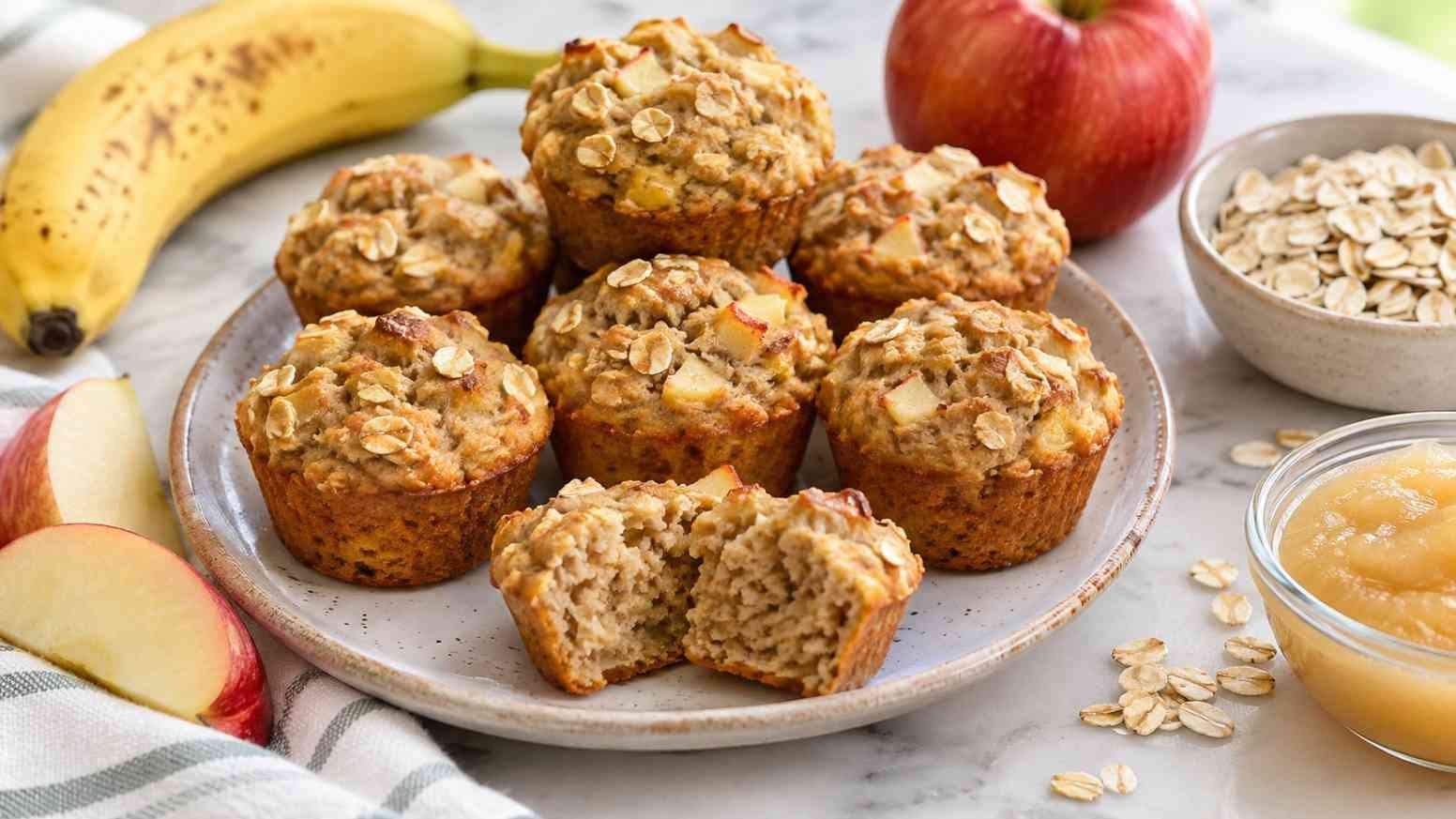
Baby Apple Banana Oat Muffins are a simple homemade snack made with ripe bananas, applesauce, oats, and a touch of cinnamon. These little muffins have a soft, moist texture and a mild fruity sweetness that comes entirely from the ingredients themselves. Unlike traditional bakery muffins, they do not require refined flour, butter, or added sugar. They make a convenient breakfast or afternoon snack for babies who are ready for soft finger foods, as well as for toddlers and older children.
One of the nicest things about making these muffins at home is that you probably already have most of the ingredients in your kitchen. A ripe banana that has been sitting on the counter, a handful of oats, and some unsweetened applesauce can easily be turned into a batch of miniature muffins. The preparation requires very little effort, and the muffins can be frozen in individual portions, making them particularly useful on busy mornings.
Recipe Overview
| Preparation Time | 10 minutes |
| Cooking Time | 13–15 minutes |
| Cooling Time | 20 minutes (approximately) |
| Total Time | 45 minutes |
| Servings | Approximately 24 mini muffins |
| Course | Breakfast, Snack |
| Cuisine | American |
| Cooking Method | Baking |
| Difficulty Level | Easy |
| Calories | Approximately 26 kcal per mini muffin |
Ingredients for Baby Apple Banana Oat Muffins
The ingredient list is short and uses everyday kitchen staples. Choose a fully ripe banana and unsweetened applesauce for the best natural sweetness and texture. Measuring the oats accurately is particularly important, as adding too many can make the muffins dry and heavy.
| Ingredient | Quantity |
|---|---|
| Old-fashioned rolled oats or quick oats | 1¼ cups (106 g) |
| Large ripe banana | 1 (approximately 136 g peeled) |
| Unsweetened applesauce | ⅓ cup (80 g) |
| Large egg | 1 |
| Peeled and finely grated apple | ¾ cup (approximately 85 g) |
| Ground cinnamon | 1 teaspoon |
| Baking powder | 1½ teaspoons |
| Baking soda | ½ teaspoon |
| Neutral cooking oil | A small amount for greasing |
Also Read: Eggnog Crumble Muffins
Understanding the Ingredients
Rolled Oats
Oats form the base of these muffins and replace regular wheat flour. Once blended, they create a fine mixture that absorbs moisture from the fruit and helps hold the muffins together. Oats also provide dietary fiber, carbohydrates, and small amounts of protein. If you need a gluten-free recipe, select oats that are specifically certified gluten-free.
Ripe Banana
A banana with plenty of brown spots on its peel is ideal for this recipe. As bananas ripen, their starches gradually convert into sugars, giving them a sweeter flavor and softer consistency. The banana contributes moisture and helps bind the ingredients without requiring additional sweeteners.
Unsweetened Applesauce
Applesauce prevents the muffins from becoming overly dry and adds a subtle apple flavor throughout the batter. It also reduces the need for added fat. Homemade applesauce works equally well, provided it has a smooth consistency and does not contain added sugar.
Egg
The egg helps the muffins maintain their shape after baking and contributes protein and fat. It provides structure to the oat-based batter, which can otherwise be quite delicate. Make sure egg has been introduced appropriately into your child’s diet before offering these muffins.
Fresh Apple
Finely grated apple adds moisture and little pockets of fruity flavor. For younger babies, grating the peeled apple is preferable to leaving firm chunks in the batter. The apple should soften completely during baking so that the finished muffins are easy to break apart.
Ground Cinnamon
A small amount of cinnamon brings warmth to the banana and apple flavors. It gives the muffins a pleasant aroma without the need for added sugar. You can reduce the quantity or leave it out if your child prefers milder flavors.
Also Read: Jumbo Nutella Stuffed Muffins
How to Make Baby Apple Banana Oat Muffins
Step 1: Prepare the Oven and Muffin Pan
Preheat your oven to 350°F (175°C). Lightly grease a 24-cup mini muffin pan with a neutral cooking oil. You can also use silicone muffin cups or lightly greased paper liners. Oat-based muffins tend to stick more easily than traditional flour-based muffins, so preparing the pan properly makes a noticeable difference.
Step 2: Prepare the Fruit
Peel the banana and break it into smaller pieces. Wash and peel the apple, remove its core, and grate it finely. If the apple releases an excessive amount of juice, gently squeeze out a little moisture, but avoid making the grated fruit completely dry.
Step 3: Blend the Muffin Batter
Add the banana, applesauce, egg, oats, cinnamon, baking powder, and baking soda to a blender or food processor. Blend until the oats are finely broken down and the ingredients form a thick, mostly smooth batter. Scrape the sides of the blender if necessary to ensure no dry oats remain at the bottom.
Step 4: Add the Grated Apple
Transfer the batter to a mixing bowl and gently fold in the grated apple. Distribute the fruit evenly throughout the mixture. The batter should be thick enough to scoop but not so stiff that it resembles dough. If it seems unusually thick, stir in a teaspoon or two of water.
Step 5: Fill the Muffin Cups
Spoon the prepared batter into the mini muffin pan, filling each cavity approximately three-quarters full. Try to distribute the batter evenly so that all the muffins finish baking at roughly the same time. Avoid adding hard toppings or whole nuts when preparing muffins for babies.
Step 6: Bake the Muffins
Place the muffin pan on the middle rack of the preheated oven and bake for approximately 13–15 minutes. The muffins should feel set on top and spring back slightly when gently pressed. Insert a toothpick into the center of one muffin to check whether the batter has cooked through. If wet batter remains, continue baking for another minute or two.
Step 7: Cool Before Serving
Leave the muffins in the pan for about 10 minutes before carefully transferring them to a wire cooling rack. Allow them to cool completely before serving to a baby. The texture will become more stable as the muffins cool, making them easier to remove from the pan without breaking.
Also Read: Cranberry Orange Muffins
What You Can Do Better
Choose an Extra-Ripe Banana
Since this recipe contains no added sugar, the ripeness of the banana makes a considerable difference. A firm yellow banana may produce muffins with very little sweetness, whereas a soft, brown-speckled banana gives the batter a fuller flavor.
Weigh the Oats Instead of Estimating
It is surprisingly easy to pack too many oats into a measuring cup. Excess oats absorb the moisture needed to keep these muffins tender. Using approximately 106 grams of oats gives you a more consistent starting point.
Keep the Fruit Pieces Small
Finely grated fruit distributes more evenly than large pieces and helps produce a softer muffin. This is especially important when baking for babies who are still developing their chewing skills. Check that the cooked apple is completely tender before serving.
Avoid Overbaking
These muffins are supposed to remain slightly moist inside. Leaving them in the oven until they develop a dark brown crust can make them unnecessarily firm. Begin checking them around the 13-minute mark, as miniature muffins can bake quickly.
Use a Silicone Muffin Pan
A silicone muffin pan can make removing these delicate muffins much easier. If you prefer a metal pan or paper liners, apply a light coating of cooking oil before adding the batter.
Do Not Add Unnecessary Sweeteners
The combination of ripe banana and apple provides enough sweetness for a baby-friendly snack. Maple syrup, coconut sugar, brown sugar, and other sweeteners are unnecessary. Honey should never be given to babies under 12 months because of the risk of infant botulism.
Also Read: Maple Brown Sugar Muffins
Recipe Variations and Ingredient Substitutions
Once you are comfortable with the basic recipe, you can experiment with different fruits and flavors. Keep the overall moisture content similar to the original batter, since adding too much wet fruit can prevent the muffins from setting properly.
| Variation | Suggested Changes |
|---|---|
| Banana Blueberry Oat Muffins | Replace grated apple with finely chopped or thoroughly crushed blueberries. |
| Apple Pear Oat Muffins | Use finely grated ripe pear instead of fresh apple. |
| Carrot Banana Oat Muffins | Replace part of the grated apple with finely grated carrot and ensure it cooks until completely soft. |
| Pumpkin Oat Muffins | Replace the banana with approximately ⅓ cup of plain pumpkin puree. |
| Strawberry Banana Muffins | Use finely chopped strawberries in place of grated apple and remove excess surface moisture. |
| Yogurt Oat Muffins | Replace applesauce with an equal quantity of plain, unsweetened yogurt. |
| Egg-Free Oat Muffins | Try replacing the egg with ¼ cup of mashed banana. Expect a softer, denser texture. |
| Gluten-Free Oat Muffins | Use certified gluten-free rolled oats and check the other ingredient labels. |
Note: Ingredient substitutions may change the baking time, sweetness, and consistency of the finished muffins. The alternative combinations are suggestions and have not all been independently kitchen-tested.
Also Read: Pumpkin Muffins
Nutritional Information
Baby Apple Banana Oat Muffins contain carbohydrates from oats and fruit, along with small amounts of protein, fat, and dietary fiber. The following nutritional values are estimated using standard ingredient composition data for a batch of 24 mini muffins prepared without added sugar or salt.
| Nutrient | Amount Per Mini Muffin |
|---|---|
| Calories | 26 kcal |
| Total Carbohydrates | 4.8 g |
| Dietary Fiber | 0.7 g |
| Total Sugars | 1.3 g |
| Added Sugars | 0 g |
| Protein | 0.9 g |
| Total Fat | 0.6 g |
| Saturated Fat | 0.1 g |
| Cholesterol | 8 mg |
| Sodium | 40–55 mg |
| Potassium | 43 mg |
| Calcium | 10–20 mg |
| Iron | 0.2 mg |
Nutritional information is approximate and may vary depending on ingredient brands, fruit size, the amount of oil used for greasing, and the final number of muffins. Although no table salt is added, baking powder and baking soda contribute sodium.
Nutritional Benefits of Apple Banana Oat Muffins
Provides Dietary Fiber
Oats, bananas, and apples contain dietary fiber, which contributes to normal digestive function as part of a varied diet. Oats also contain beta-glucan, a naturally occurring soluble fiber.
Contains Naturally Occurring Sugars
The sweetness in these muffins comes from whole fruit and unsweetened applesauce rather than added syrups or refined sugar. This allows young children to become familiar with the natural flavors of fruit and grains.
Supplies Carbohydrates for Energy
Oats and fruit provide carbohydrates that the body can use for energy. These muffins can form part of a balanced breakfast or snack when offered alongside other age-appropriate foods.
Contributes Protein and Essential Minerals
The egg and oats provide modest amounts of protein, while the other ingredients contribute minerals such as potassium and iron. However, these mini muffins are not a complete meal or a substitute for iron-rich complementary foods.
Are Apple Banana Oat Muffins Suitable for Babies?
These muffins may be introduced from around six months of age, provided the baby shows signs of developmental readiness for complementary foods and can manage soft textures. Age alone does not determine whether a particular food is suitable. The muffins should be soft enough to squash easily between your thumb and index finger.
For younger babies, offer appropriately sized soft strips or pieces according to their feeding skills. Older babies who have developed a pincer grasp may be able to manage small, soft pieces. Always remove the paper liner, check the texture, seat the child upright, and supervise closely during meals. Avoid serving dry, hard, or sticky clumps of muffin.
Egg is a common food allergen. Introduce allergens in an age-appropriate manner and consult your child’s healthcare professional if there is a history of food allergies or other feeding concerns.
Also Read: Healthy Banana Nut Muffins
How to Store Baby Apple Banana Oat Muffins
Room Temperature
Once completely cooled, the muffins can be stored in an airtight container for up to one day in a cool, dry kitchen. Because they contain fresh fruit and have a relatively moist texture, refrigeration is preferable in warm or humid weather.
Refrigerator
Place the cooled muffins in a clean, airtight container and refrigerate at 40°F (4°C) or below. For a baby-friendly meal preparation routine, use the refrigerated muffins within three days.
Freezer
Arrange the completely cooled muffins in a single layer inside a freezer-safe container or reusable freezer bag. Separate layers with parchment paper if necessary. Freeze for up to three months for the best quality. Label the container with the date so that older batches can be used first.
Thawing and Reheating
Transfer the required number of muffins to the refrigerator to thaw overnight. Alternatively, defrost them in the microwave when needed. Check carefully for hot spots after reheating and allow the muffins to cool to a safe serving temperature before offering them to a child.
| Storage Method | Recommended Duration |
|---|---|
| Room Temperature | Up to 1 day in a cool environment |
| Refrigerator | Up to 3 days |
| Freezer | Up to 3 months for best quality |
Serving Suggestions
These miniature muffins can be served on their own or alongside other foods to create a more varied breakfast or snack. Plain, unsweetened yogurt makes a pleasant accompaniment, while mashed avocado can provide additional dietary fat. Soft ripe fruit is another simple option for children who can safely manage the texture.
For toddlers and older children, pair the muffins with scrambled eggs, cottage cheese, or a bowl of fresh fruit. Adults can enjoy them with yogurt or a cup of coffee. Their mild cinnamon flavor makes them particularly pleasant when served slightly warm.
Also Read: Strawberry Mini Muffins
Common Baking Problems and How to Fix Them
| Problem | Possible Reason | Solution |
|---|---|---|
| Muffins are too dry | Too many oats or excessive baking | Weigh the oats and check the muffins earlier. |
| Muffins are wet inside | Excess moisture or insufficient baking | Reduce excess fruit juice and bake a little longer. |
| Muffins stick to the pan | Insufficient greasing | Use silicone cups or grease the pan thoroughly. |
| Muffins taste bland | The banana was not ripe enough | Use a soft banana with brown spots. |
| Muffins do not rise properly | Old baking powder or baking soda | Check the freshness of the raising agents. |
| Muffins fall apart | They were removed while still hot | Allow them to cool before removing them. |
Frequently Asked Questions
Can I make baby apple banana oat muffins without sugar?
Yes. This recipe is prepared without added sugar. Ripe bananas, applesauce, and fresh apple provide naturally occurring sugars that give the muffins their mild sweetness.
Can I use oat flour instead of rolled oats?
Yes, finely ground oat flour can be used in place of rolled oats. Measure it by weight rather than volume, since oat flour and whole oats occupy different amounts of space in a measuring cup. Start with approximately 106 grams.
Can I make these muffins without a blender?
Yes. Use finely ground oat flour, mash the banana thoroughly with a fork, and combine the ingredients in a mixing bowl. The finished muffins may have a slightly different texture, but a blender is not essential when the oats are already finely ground.
Can I make homemade applesauce for this recipe?
To prepare homemade applesauce, peel and core an apple, cut it into small pieces, and cook it with a little water until completely tender. Blend or mash it into a smooth puree and allow it to cool before adding it to the muffin batter. There is no need to add sugar.
Can I make regular-sized muffins instead of mini muffins?
Yes, although larger muffins require a longer baking time. Consider adding an extra ⅓ cup of oats for additional structure. Bake at 350°F (175°C) and begin checking for doneness after approximately 20 minutes. The exact baking time will depend on the size and depth of your muffin pan.
Can I give these muffins to a seven-month-old baby?
They may be suitable for a seven-month-old who is developmentally ready for soft finger foods and has been introduced appropriately to the ingredients. Always check that the muffins are soft, offer them in a suitable shape and size, and supervise closely while the baby eats.
Can I add peanut butter to the muffin batter?
A small amount of smooth, unsalted peanut butter can be incorporated into the batter if peanuts have been introduced safely. Avoid whole peanuts, chopped nuts, or thick spoonfuls of peanut butter when feeding babies, as these can present choking hazards.
Are these muffins dairy-free?
Yes. The basic recipe contains no milk, butter, or yogurt. However, replacing applesauce with dairy yogurt would change this. Always check packaged ingredient labels if preparing food for a child with an allergy.
Why are my oat muffins denser than regular muffins?
Oats do not develop the same gluten structure as wheat flour. Combined with the naturally moist fruit ingredients, this creates a softer and somewhat denser muffin rather than the light, airy texture of a traditional bakery muffin.