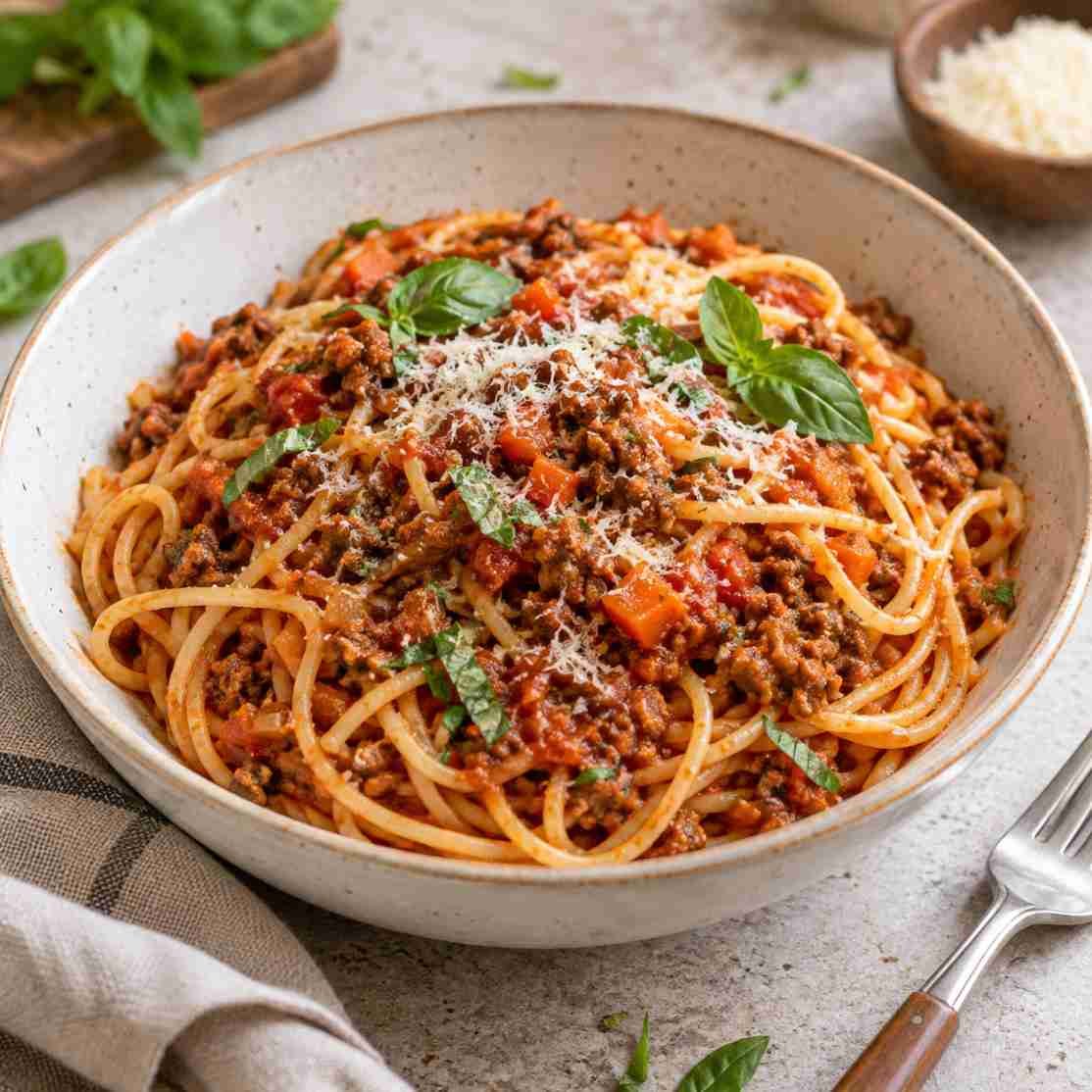
Healthy spaghetti Bolognese is a comforting pasta dinner made with lean mince, tomatoes, carrots, onions and garlic. The sauce cooks slowly until the vegetables soften and the flavours come together, creating a rich, savoury topping for a bowl of spaghetti. This lighter version uses extra-lean beef and pork, plenty of vegetables and very little added oil. It is suitable for a family dinner, and the sauce can be prepared ahead of time for busy weekdays. Serve it with wholewheat spaghetti for extra fibre or use regular spaghetti if that is what you have in the cupboard.
Recipe Overview
| Recipe Detail | Information |
|---|---|
| Preparation Time | 10 minutes |
| Cooking Time | 50 minutes |
| Total Time | 1 hour |
| Servings | 8 portions of sauce |
| Difficulty | Easy |
| Cooking Method | Stovetop |
| Main Ingredients | Lean mince, tomatoes, carrots, onions and spaghetti |
Note: The sauce serves eight people. The quantity of spaghetti can be adjusted to suit your appetite and the number of portions you are preparing.
What You Can Do Better
A good Bolognese does not need a heavy sauce or a large amount of oil to taste satisfying. Lean beef and pork provide a savoury base, while finely chopped carrots, onions and celery add flavour and texture. As the sauce simmers, the carrots bring a gentle sweetness that balances the acidity of the tomatoes.
For a more balanced meal, serve the sauce with wholewheat spaghetti, which generally provides more fibre than regular white pasta. You can also add finely chopped mushrooms or grated courgette to increase the vegetable content without changing the character of the dish too much. Allowing the sauce enough time to simmer is another simple improvement: it helps the ingredients blend together and gives the sauce a thicker consistency.
Ingredients for Healthy Spaghetti Bolognese
Use the following ingredients to make a generous batch of homemade Bolognese sauce. Most are everyday kitchen staples, and you can find the rest in a standard supermarket.
For the Bolognese Sauce
- 2 onions, finely chopped
- 3 garlic cloves, crushed or finely chopped
- 1 celery stick, finely chopped
- 500 g extra-lean beef mince, ideally less than 5% fat
- 500 g lean pork mince, ideally less than 5% fat
- 2 tins chopped tomatoes, 400 g each
- 2 carrots, peeled and very finely chopped or grated
- 1 red wine-flavoured stock pot, or 1 beef stock cube
- 2 bay leaves
- Low-calorie cooking spray or a small amount of cooking oil
- Salt and black pepper, to taste
For Serving
- Spaghetti, regular or wholewheat
- Fresh parsley or basil, chopped (optional)
- A little grated Parmesan cheese (optional)
Ingredient tip: Check the stock pot or stock cube label before adding salt, as some varieties already contain a considerable amount. If you prefer not to use pork, replace it with an equal quantity of lean beef or turkey mince.
Also Read: Roasted Green Beans
How to Make Healthy Spaghetti Bolognese
Step 1: Prepare the Vegetables
Finely chop the onions and celery, then crush or chop the garlic. Peel the carrots and chop them into very small pieces or grate them. Smaller pieces soften more quickly and distribute evenly through the sauce, making this a useful trick if you want the vegetables to blend into the finished dish.
Step 2: Soften the Onion, Garlic and Celery
Place a large saucepan or deep sauté pan over medium heat and coat it with low-calorie cooking spray. Add the onion, garlic and celery. Cook for about 8 minutes, stirring occasionally, until the vegetables have softened. Keep the heat moderate so the garlic does not burn and turn bitter.
Step 3: Brown the Mince
Add the lean beef and pork mince to the pan. Break up any large clumps with a wooden spoon and cook until the meat is browned. Stir regularly so the mince cooks evenly. If the pan becomes crowded, give the meat a little extra time to brown rather than rushing this step.
Step 4: Add the Tomatoes and Seasoning
Stir in the chopped carrots, tinned tomatoes, stock pot or crumbled stock cube, and bay leaves. Season lightly with salt and black pepper. Mix everything thoroughly so the stock and tomato juices are distributed throughout the mince.
Step 5: Simmer the Sauce
Bring the mixture to a gentle simmer, then lower the heat. Cook uncovered for approximately 45 minutes, stirring from time to time, until the carrots are tender and the sauce has thickened. If it becomes too thick before the vegetables soften, add a small splash of water. Taste the sauce near the end and adjust the seasoning if necessary. Remove the bay leaves before serving.
Step 6: Cook the Spaghetti
When the sauce is nearly ready, bring a large pan of water to the boil. Add the spaghetti and cook according to the packet instructions until it is tender but still has a slight bite. Drain well. For a more fibre-rich meal, choose wholewheat spaghetti; otherwise, regular spaghetti works perfectly well.
Step 7: Serve and Enjoy
Divide the spaghetti between serving bowls and spoon the hot Bolognese sauce over the top. Finish with chopped parsley or basil and a small sprinkle of Parmesan, if desired. A fresh green salad or steamed vegetables make a simple side dish.
Also Read: Baked Spaghetti Recipe
Nutritional Information
The table below provides an estimated nutritional guide for one serving of the Bolognese sauce, based on eight portions and excluding spaghetti, cheese and other toppings. Actual values will vary depending on the mince you use, the stock product and the amount of cooking oil.
| Nutrient | Estimated Amount per Serving |
|---|---|
| Calories | Approximately 200–270 kcal |
| Protein | Approximately 25–32 g |
| Carbohydrates | Approximately 10–16 g |
| Fat | Approximately 6–12 g |
| Fibre | Approximately 3–5 g |
| Sugars | Approximately 6–10 g |
Important: These figures are estimates for the sauce only, not laboratory-tested values. Adding spaghetti increases the calories, carbohydrates and fibre in the meal. For accurate figures, calculate the nutrition using the specific ingredients and quantities you use.
Tips for the Best Healthy Bolognese
- Choose lean mince: Beef and pork with a low fat percentage help keep the sauce lighter while retaining a meaty flavour.
- Chop the vegetables finely: Small pieces soften into the sauce and make every spoonful more balanced.
- Give it time: A gentle simmer helps the sauce develop a deeper flavour. Avoid boiling it rapidly, which can reduce the liquid too quickly.
- Season gradually: Stock products can be salty, so taste the sauce before adding extra salt.
- Measure the pasta: Adjust the spaghetti portions to your needs instead of assuming that the sauce and pasta must be served in equal quantities.
- Make extra: The sauce freezes well, so cooking a large batch can save time on another day.
Also Read: Ground Beef Meatballs
Variations You Can Try
Make It with Beef Only
If you do not eat pork, replace the pork mince with an additional 500 g of lean beef mince. Turkey mince is another option if you prefer a different flavour.
Add More Vegetables
Finely chopped mushrooms, grated courgette or diced red pepper can be added with the carrots. Mushrooms contribute a deeper savoury flavour, while courgette softens nicely into the sauce.
Use Wholewheat Spaghetti
Wholewheat spaghetti is a practical swap when you want to increase the fibre content of the meal. Cook it according to the packet instructions and check it a little before the recommended time if you prefer it firm.
Make a Vegetarian Version
Replace the meat with cooked lentils or plant-based mince and use vegetable stock instead of beef stock. Adjust the cooking time to suit the substitute and simmer until the sauce reaches the desired consistency.
How to Store and Reheat
In the refrigerator: Let the sauce cool, transfer it to an airtight container and refrigerate promptly. Use within 3 days.
In the freezer: Divide the cooled sauce into individual portions and freeze in suitable containers for up to 3 months for best quality. Label each container with the date.
To reheat: Warm the sauce in a saucepan over medium-low heat, stirring occasionally. Add a splash of water if it has thickened too much. You can also microwave it in a suitable covered container, stirring halfway through and checking that it is piping hot throughout.
For the best texture, cook fresh spaghetti when you are ready to eat. If freezing leftover pasta as well, be aware that it may become softer when reheated.
Also Read: Mozzarella Stuffed Chicken Breast
Frequently Asked Questions
Is healthy spaghetti Bolognese good for a balanced diet?
It can fit into a balanced diet because it provides protein from the mince and vegetables from the sauce. Serving it with wholewheat pasta and a side of greens can add more fibre and variety.
Can I make the Bolognese sauce ahead of time?
Yes. The sauce can be prepared in advance and stored in the refrigerator for up to 3 days. Reheat it thoroughly and cook the spaghetti separately when you are ready to serve.
Can I freeze healthy spaghetti Bolognese?
Yes. Freeze the sauce in individual portions for up to 3 months for best quality. Defrost it in the refrigerator before reheating, or reheat from frozen carefully until piping hot throughout.
How can I make the sauce thicker?
Simmer it uncovered for a little longer, stirring occasionally. This allows excess liquid to evaporate naturally. Avoid adding flour unless you specifically want to change the texture.
Can I use regular spaghetti instead of wholewheat?
Absolutely. Regular spaghetti works well with this sauce. Wholewheat pasta is simply an alternative that generally provides more fibre.
What can I serve with Bolognese besides spaghetti?
You can serve the sauce with tagliatelle, penne, fusilli or another pasta shape. For extra vegetables, try courgetti or serve a smaller pasta portion with a side salad.